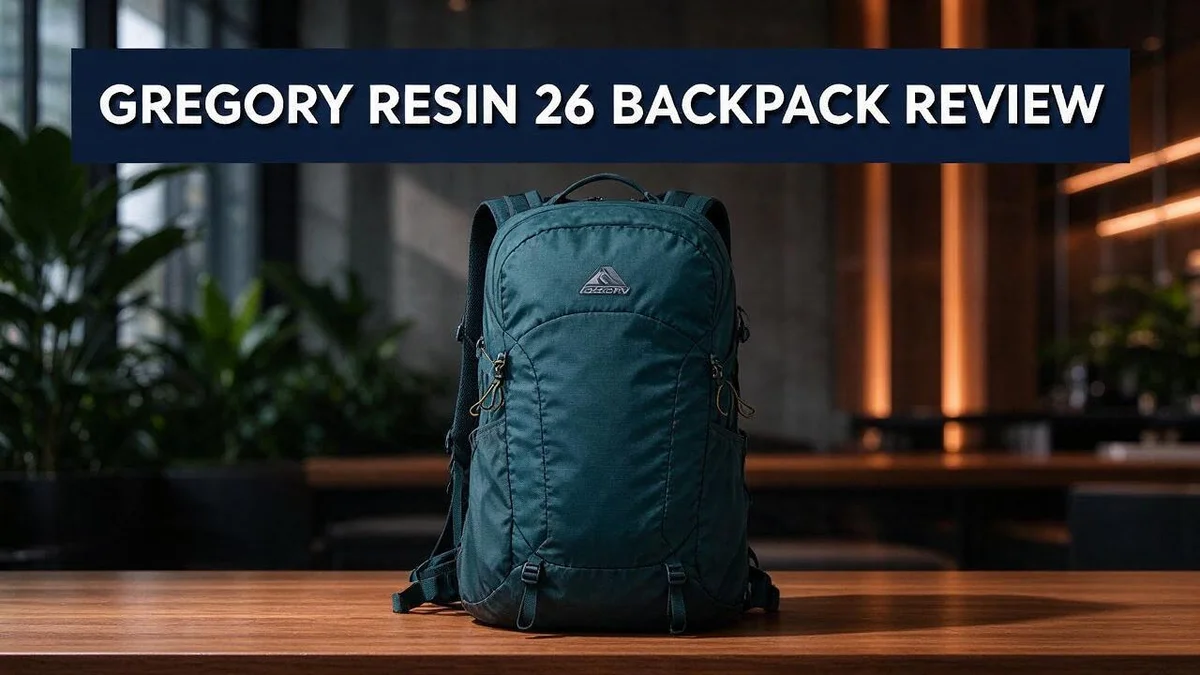
Gregory Resin 26 Backpack Review: Capacity, Materials, Comfort, and Verdict
Are you looking for a pack that handles your daily adventures? The Gregory Resin 26 Backpack deserves a closer look. It belongs to the Resin line, which offers several sizes for different trips.
Made with recycled content is one reason many hikers pay attention. The fabrics use recycled materials, and the maker says this choice cuts the carbon footprint by 59 percent. That number catches the eye of eco minded shoppers.
The 26 liter model comes in a roll top style. This design gives you a different way to close and pack your gear. Keep reading to see what this pack offers and whether it suits your next trip.
In a Nutshell
-
Three size options: You can choose 22L, 25L, or 26L based on how much gear you carry. The 26L roll top gives you extra room for longer outings.
-
Lower carbon claim: The manufacturer says the Resin line cuts its carbon footprint by 59 percent. This claim comes from the brand, so you can look for outside confirmation.
-
Rhune as a rival: The Rhune pack comes in 20L, 22L, and 25L versions. You can compare sizes side by side before you decide.
-
Vintage versus modern: Gregory’s research looks at older packs and newer models. The comparison covers materials, durability, and ergonomics.
-
Missing test results: The current research does not include durability test results. It also lacks feedback from real users about drawbacks.
-
Smart next step: Read recent reviews from hikers who own the pack. Try it on in person to check how the weight sits on your back.
Build and Materials

Last update on 2026-11-12 / Affiliate links / Images from Amazon Product Advertising API
A pack’s build tells you a lot about how it will handle real trips. This section looks at what the Gregory Resin 26 is made from and how to judge its construction.
Fabric is the first thing to check. Recycled fabrics still need tight weaves and solid coatings. These features help a pack resist scrapes, tears, and light rain on the trail.
Look closely at the seams. Stitching should run straight and even. Loose threads or wide gaps can signal weak spots that may grow under heavy loads.
Zippers and closures matter too. Smooth zippers open without snagging. Strong buckles and straps keep the pack secure when you hike over rough ground.
The roll top closure needs a close look. The fold should sit flat, and the buckles should grip firmly. Check that the material does not stretch or sag over time.
Support comes from the frame and back panel. A firm back panel keeps weight close to your body. Press on it and watch whether it holds its shape.
Materials research has gaps. The current research does not list frame design or fabric weight. Gregory’s comparison of vintage and modern packs covers materials, but the excerpt shares no findings.
Handle the pack in person if you can. Feel the padding, pull on the straps, and load it with some weight. This simple test shows more than any spec sheet.
Hip belts and shoulder straps deserve attention too. Padding should feel firm but not stiff. Edges should not pinch your shoulders or rub your skin.
Check the hardware as well. Metal parts and plastic clips should feel solid. Loose or rattling pieces often wear out faster than the fabric around them.
Compare before you decide. Put the Resin beside a rival like the Rhune. Notice how each one feels, opens, and carries. Small differences add up over many miles on the trail.
Ask about materials before you buy. Store staff and hikers who own the pack can share real wear stories. Their notes can fill gaps that research leaves open.
Capacity and Organization
Capacity is only part of the story. How a pack organizes gear matters just as much on a long day outdoors.
Start by listing the items you carry most often. Think about water, snacks, rain gear, a first aid kit, and a headlamp.
Then decide where each item should live. Gear you reach for often belongs in quick access spots, while bulky layers can sit deeper inside.
Look for a hydration sleeve. A sleeve keeps the reservoir upright and separate from your clothing. This helps you drink without stopping your pace.
External attachment points also add useful space. Loops and straps can hold trekking poles, a tent, or a sleeping pad, so your interior stays free for food and layers.
Sorting gear helps too. Small pouches or packing cubes keep rain shells, socks, and snacks from mixing. Organized packing makes it easier to find things fast.
Pack weight matters as well. Heavy items should sit close to your back and centered between your shoulders. This placement keeps your balance steady on uneven ground.
Current research does not list pocket counts or internal layout details. That gap means you should check these features yourself. Open every zipper, count the pockets, and test how easily you reach your water.
Measure your gear before you decide. Pile your sleeping bag, jacket, and food together, then compare that pile to the volumes the manufacturer lists.
Think about the trips you take most. Day outings need fewer compartments, while overnight trips call for more sorting space. Choose the layout that fits how you travel.
Good organization turns a busy pack into a calm one. Take time to test each compartment, and you will feel more confident on the trail.
Comfort and Carrying
Comfort decides whether a pack feels good after a few hours on the trail. A pack that feels fine for ten minutes can ache by noon. Judge comfort over time, not just at the first try.
Start with torso fit. Torso length matters more than height. Measure from the bony bump at the base of your neck down to your hip bones.
Next, think about load position. Heavy gear should rest close to your back. Items far from your spine pull you backward and strain your shoulders.
Balance changes the ride. Place dense items in the middle of the pack. Keep soft clothing near the outer edges so the weight stays centered.
Pack size affects comfort too. The 26L option holds more gear, so it can feel heavier when full. Shorter trips may suit the smaller sizes better.
Airflow deserves attention on warm days. A pack that sits tight against your back can trap heat. Sweat builds up on long climbs and makes fabric feel clammy.
Friction causes problems too. Damp straps can rub skin raw. A thin base layer under the straps helps reduce chafing on long days.
Stand tall while you walk. A slouched posture pushes the pack forward and strains your neck. Good posture keeps the load stable.
Stability on uneven ground matters as well. A pack that bounces with every step wastes energy. Try stairs, slopes, and quick turns before you leave home.
Weather changes the feel too. Rain soaked fabric gains weight and can shift on your back.
Look for reviewer comments about soreness. Notes about neck or lower back pain reveal how the pack performs over many miles.
The current research does not report comfort test results. It also lacks details on padding density. Treat any cushioning claims as untested for now.
Comfort comes down to fit, load, and airflow. Test the Resin 26 with real weight before a big trip. Then decide with confidence.
Top 3 Alternatives
Looking for a different daypack? These three options work well for hikers and day trips.
Osprey Talon 22


Last update on 2026-11-12 / Affiliate links / Images from Amazon Product Advertising API
The Osprey Talon 22 suits longer day hikes. It has a ventilated back panel that keeps you cool on warm trails. The hipbelt moves weight onto your hips, so your shoulders stay fresh. You also get a hydration sleeve for your water reservoir.
Osprey Daylite Plus

Last update on 2026-11-12 / Affiliate links / Images from Amazon Product Advertising API
The Osprey Daylite Plus is great for quick outings. It packs small and weighs very little. A front stash pocket holds gloves, maps, or your phone. Many people use it for school, errands, or short walks.
Deuter Speed Lite 21

Last update on 2026-11-12 / Affiliate links / Images from Amazon Product Advertising API
The Deuter Speed Lite 21 brings a sporty fit. It has a breathable mesh back and side pockets for water bottles. This pack suits fast hikes, trail runs, and travel days when you want to stay light.
Choosing the right option is simple. Think about your trip length and how much gear you carry. Pay attention to how your back feels after a few hours. Try each pack on before you buy, so you find the best match for your body.
Durability and Care
Good care helps any backpack last longer, and the Resin 26 is no different. Simple habits make a big difference over time.
Clean the pack after every muddy trip. Grit and sand act like sandpaper on fabric. A soft brush and mild soap usually do the job.
Avoid hot water and harsh detergents. They can weaken coatings and fade colors. Let the pack air dry away from direct heat.
Never dry it on a radiator or near a campfire. Heat can warp foam padding and melt synthetic parts. Patience pays off here.
Empty the pack before storing it. Leftover snacks attract pests and cause odors. Store it in a cool, dry closet instead of a damp garage.
Hang the pack loosely or lay it flat. Folding it tightly for months can create permanent creases. Loose storage keeps the shape.
Protect the bottom from rough ground. Set the pack on a clean surface rather than dirt. Abrasion often wears out the base first.
Overloading wears out fabric faster. Stuffing the pack beyond its intended size stretches seams and straps. Keep loads within a comfortable range for the best results.
Wet gear needs attention too. Dry tents and rain jackets before packing them away. Trapped moisture can cause mildew and musty smells.
Many owners keep a small patch kit on their gear list. Fabric tears happen on rocks and branches. Quick fixes stop small holes from growing.
Check the pack after each season. Look for loose threads, worn edges, or faded spots. Early spotting makes repairs easier.
The current research does not include durability test data. Real owner feedback fills that gap. Read long term reviews to see how the fabric holds up after many seasons.
Gear care also protects your back. A worn strap or flattened padding changes how weight sits. Replace worn parts early so the pack keeps its support.
Treat the pack with respect, and it will serve you for many trips. Good habits matter more than any single feature.
Pros and Cons
Pros
– Fabrics use recycled content.
– The Resin line offers several sizes for different trip lengths.
– The 26L roll-top version gives a different way to access gear.
– Eco-minded buyers get a clear material story to weigh.
Cons
– The 59% carbon figure comes from the maker, not independent testing.
– No durability test results appear in the current research.
– The vintage versus modern comparison lacks published findings.
– Real user feedback on drawbacks is limited so far.
Who Should Buy It
Not every hiker needs the same kind of pack. The Resin 26 suits a few specific groups best. Think about your trips before you decide.
Weekend hikers who camp for one or two nights will likely find this pack useful. It carries enough gear for short trips without feeling like a burden. Day trippers may find it too big, so they should compare sizes first.
New backpackers often feel unsure about what to buy. This model gives them a simple place to start. They can learn how their body responds to a loaded pack before buying more gear.
Travelers who switch between city streets and mountain paths may appreciate a pack that handles both. No one has tested this model for urban use yet, though. Try it on in person first.
Heavy load carriers need room for bulky winter layers, tents, or extra food. This pack may feel tight for them. They may want to look at other packs with more room.
Ultralight fans chasing the lightest possible setup may prefer a minimal pack instead. Their priorities differ from those of the average buyer. Know your own style before you commit.
Commuters who want a daily bag may find the Resin 26 handy for light errands. Its fit matters more than its look for everyday use. Still, it works best as a trail companion first.
Gift buyers looking for a present for an active friend can also consider this pack. Choose a size based on the friend’s usual trip length. A wrong size often causes more trouble than a wrong color.
Ask yourself three simple questions. How many nights will you spend outside? How much gear do you usually carry? Will you hike in wet weather often? Your answers will point you toward the right choice.
Choose the pack that matches your habits, not someone else’s.
Final Verdict
The Gregory Resin 26 deserves a spot on your shortlist. It brings recycled fabrics and a clean, practical build to the trail.
The research still leaves some questions open. Key tests are missing, so this verdict rests on the facts we have. Smart shoppers treat that gap as a reason to test the pack in person.
Think of this pack as an all rounder. It fits well when your load is moderate and your plans stay flexible. Its shape suits steady walking more than fast scrambling.
Extreme trips with very heavy loads call for different gear.
Fit matters more than any spec sheet. Load the pack with books or water bottles. Then walk around the store for a few minutes.
Watch how the hip belt sits on your hips. Shoulder straps should hug your shoulders without digging in. A pack that feels fine at first can still cause sore spots after hours on the trail.
Bring your own gear list to the fitting. Lay out your sleeping bag, stove, and clothing on the floor. If everything fits with room to spare, the pack will likely handle your trips well.
Ask the shop about return options too. A fair return policy lets you test the pack on a few short hikes at home. That kind of real world testing beats any marketing claim.
Read recent owner reviews with care. Look for comments about straps, zippers, and seams after months of use. Pay attention to repeated complaints, since one bad review may stand alone. Compare those comments with your own needs.
Overall, the Resin 26 offers a solid package for many hikers. With honest fit checks and realistic expectations, it can serve you well on weekend trails and beyond.
Trust your instincts, too. If the pack feels right after a full test, it probably is right for you.
Frequently Asked Questions
Which size should I pick: 22L, 25L, or 26L?
Start with your longest typical trip. Pack your usual gear first, then check how much room it takes. A 22L setup suits lighter loads, while a 25L gives more space for food and layers.
Does the roll-top design keep my gear dry?
The research does not confirm water resistance. A roll-top closure seals the pack well, but it does not make it waterproof. Pack electronics and sleeping gear in dry bags, and bring a rain cover for wet weather.
How does the Resin 26 compare with the Rhune?
The research lists the Rhune in 20L, 22L, and 25L sizes. It appears next to the Resin, but the source does not call it a direct rival. Try both packs on, and compare the hip belt feel, pocket layout, and how the load sits on your back.
How should I care for recycled-content fabrics?
Check the care label from the maker first. In general, spot clean with mild soap and cool water. Then air dry the pack away from direct heat. Good care helps the fabric last longer on every trip.

Hi, I’m Luna Beck — the founder and voice behind Urban Pack Vault. I’m passionate about helping people find bags that perfectly match their lifestyle. From backpacks to travel luggage, I research, review, and recommend so you never have to second-guess your next purchase.