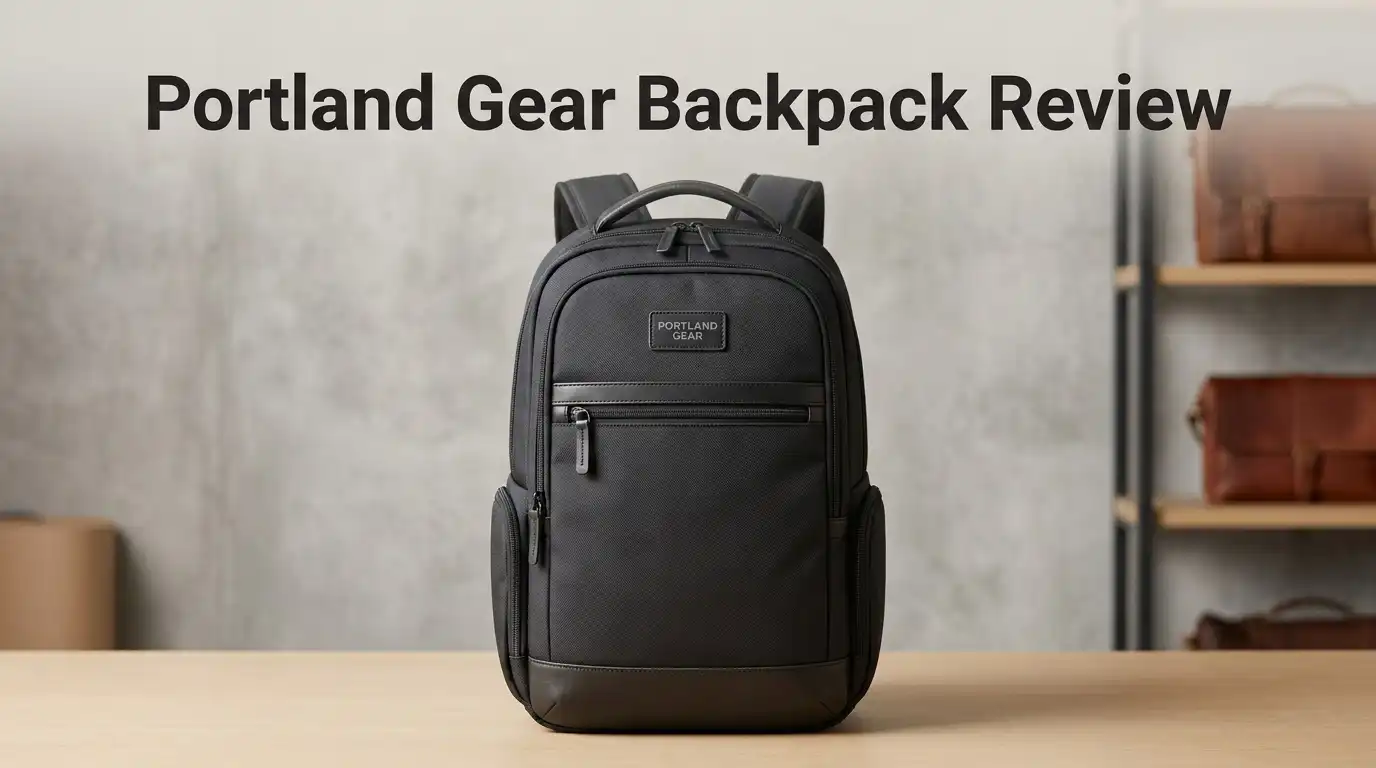
Portland Gear Backpack Review 2026: Worth It?
Finding a backpack that survives rain, fits a laptop, and still looks good in an office is harder than it sounds. Most bags nail one of those things and fail the rest.
The Portland Gear Cascade Backpack keeps showing up in travel award lists, commuter threads, and packing videos, which makes shoppers curious and a little suspicious at the same time. A $109 backpack sits in an awkward price zone. It costs more than a mall bag and less than a premium camera pack.
This review walks through the real experience of using the Cascade. You will read about the unboxing, the fabric, the odd wireframe top, and the parts that genuinely annoy people.
In a Nutshell:
- The Cascade Standard holds 21 liters and swallows a 16 inch laptop, a lunch container, gym clothes, a book, and a 32 ounce water bottle at the same time. Testers repeatedly call it a Mary Poppins bag for good reason.
- The Pop Top wireframe opening is the standout feature. The mouth springs open into a wide square like a tote, so bulky items drop in without a fight, then the shape narrows again when zipped.
- Weatherproofing is genuine. The 100% polyester shell carries a TPU matte coating that sheds rain and wipes clean with a damp cloth.
- Organization is the weakest area. The main compartment has no dividers, so small items sink to the bottom. The light grey lining helps, but it does not solve the problem.
- Comfort depends on your load. Padded straps feel fine at moderate weight, though some owners find the bag heavy and shoulder unfriendly once fully packed.
- Price sits at $109 for the Standard and $104 for the Compact, which feels fair but not cheap given the limited internal structure.
What Is the Portland Gear Cascade Backpack?

Last update on 2026-11-15 / Affiliate links / Images from Amazon Product Advertising API
Portland Gear started as a local apparel brand in Oregon and grew into a bag company. The Cascade Backpack is its flagship product. The brand markets it as a weatherproof daily carry bag built for commuting, school, and travel.
The Cascade comes in two sizes. The Standard holds 21 liters and measures roughly 16 inches tall, 11 inches wide, and 8.5 inches deep. The Compact holds 13.5 liters for people who want a smaller profile. Both share the same design language and the same signature top opening.
The shell uses 100% polyester with a thermoplastic polyurethane coating. A faux leather version also exists for a dressier look. Color choices run wide, with black, navy, forest, cloud, blush, iris, and several seasonal shades.
The pitch is simple. Portland Gear wants one bag that works for a train ride on Monday and a flight on Friday. The Cascade is not a hiking pack and it is not a camera bag, although some photographers have adopted it because the top loading design suits lenses.
Portland Gear Cascade Standard Backpack, 21L
The Standard is the version most buyers pick. Its 21 liter capacity lands close to a small weekender duffle, which explains why people keep overpacking it and getting away with it.
Inside you get one deep main compartment, a padded laptop sleeve that fits a 16 inch machine, one zippered flat pocket, and two small slip pockets. Outside there are two open side sleeves, a front zippered pocket, and a hidden zippered pocket that sits flat against your back.
That back pocket deserves praise. Keys, wallet, and passport sit against your spine, which feels safer in a crowded subway car. You can also reach it while wearing the bag.
Two top grab handles, a front handle, and a rear luggage sleeve round out the carry options. The chest buckle adjusts up and down, and it doubles as a way to secure the bag to a suitcase handle.
Weight sits around 2.5 pounds empty, which is noticeable but not extreme for a structured bag of this size.
Portland Gear Cascade Compact Backpack, 13.5L
No products found.
The Compact is the same idea in a smaller shell. It holds 13.5 liters and weighs about 2 pounds. Portland Gear designed it to slip under an airline seat with room to spare.
This size suits shorter commutes, coffee shop work sessions, and city days where you only need a laptop, a bottle, and a few essentials. It keeps the Pop Top wireframe opening, the padded laptop sleeve, the interior organization pockets, and the adjustable chest buckle.
The tradeoff is obvious. You lose the ability to pack gym clothes and a lunch box together. Once you add a 32 ounce bottle and a sweater, the Compact fills fast.
Buy the Compact if you currently use a 15 liter daypack and wish it opened wider. Buy the Standard if you ever pack a change of clothes. Several owners report buying the Compact first and upgrading within a month, which is an expensive way to learn your own habits.
One small gripe carries over from the larger size. The zipper pulls jingle slightly while you walk.
Top 3 Alternative for Portland Gear Cascade Backpack

Last update on 2026-11-15 / Affiliate links / Images from Amazon Product Advertising API
Bellroy Classic Backpack Compact

Last update on 2026-11-14 / Affiliate links / Images from Amazon Product Advertising API
Peak Design Everyday Backpack 20L
No products found.
Portland Gear Cascade Tote Bag, 20.5L
Unboxing the Cascade Backpack
The delivery box is plain and slim. Portland Gear ships the bag compressed inside a recycled poly bag with a simple hang tag and a small card about the brand. There is no tissue paper theater and no branded dust bag.
Pull it out and the first thing you notice is the fabric. It feels rubbery and smooth, closer to a rain jacket than a canvas bookbag. Run a thumb across it and water beads sit on the surface instead of soaking in.
The bag arrives slightly creased from packing, especially around the base. Those creases relax within a day or two once you load it.
Open the top and the wireframe springs apart with a satisfying snap. It surprises most first time owners. The grey interior lining is bright enough to see the bottom of the bag in dim light, which sounds minor until you have dug through a black lined pack.
Setup takes about two minutes. Adjust the shoulder straps, slide the chest buckle to a comfortable height, and you are done. No assembly, no removable frames, no instruction manual to read.
Build Quality and Weatherproof Fabric
The shell fabric is the strongest part of this backpack. Polyester with a TPU matte coating handles light rain, snow, and spilled coffee without drama. Water rolls off and you wipe the surface dry.
This is water resistance, not submersion proofing. Sit in a downpour for thirty minutes and moisture can creep through zipper edges. Portland Gear uses sealed zipper compartments on several pockets, which helps, though no backpack at this price stays bone dry forever.
The base panel is structured and firm. The bag stands upright on its own next to a desk or a train seat rather than flopping over. That single detail wins a lot of fans.
Stitching looks clean at stress points, and the top handles feel solidly anchored. Zippers are chunky and glide well, even when the bag is stuffed.
Durability reports are mostly positive after a year of daily use. One recurring complaint involves a zipper end that deformed under heat near an airplane seat. That case looks rare, but heat is worth avoiding with coated fabrics.
The Pop Top Wireframe Opening Explained
This is the feature people buy the bag for. A flexible wire sits inside the top hem of the main compartment. Unzip the bag and the opening expands into a wide square, almost like a small tote.
Why does that matter? Traditional backpacks have a narrow curved zipper line. You end up shoving sneakers sideways and squeezing a lunch box through a gap. The Cascade removes that fight completely.
Loading becomes a drop in motion instead of a stuffing motion. You see the entire interior at once, place items flat, and zip up. The frame collapses inward as the zipper closes, so the bag keeps a slim silhouette on your back.
The wireframe also helps the bag hold its shape when half empty. Many soft packs sag and look sad when underfilled. This one stays presentable.
There is a minor cost. The wire adds weight and a little rigidity, so the bag never packs down flat for storage. Keep that in mind if you like collapsible travel bags.
Pockets, Storage, and Interior Layout
Let us count what you get. Outside: two open side sleeves, one front zippered pocket, and one hidden zippered pocket on the back panel. Inside: a padded laptop sleeve, one zippered flat pocket, and two open slip pockets for pens and lip balm.
That sounds generous on paper. In practice the balance tilts heavily toward one huge open cavity.
Real world packing looks like this. A MacBook Air and a notebook in the sleeve. Headphones, lunch container, a novel, and gym clothes in the main compartment. Keys and wallet in the rear security pocket. Bottle on one side, umbrella on the other.
The hidden back pocket is the smartest design choice here. It sits against your body, stays reachable while wearing the bag, and discourages pickpockets in crowded places.
The side sleeves are perforated so rain or condensation drains out instead of pooling. They fit a 32 ounce bottle, which many competing bags cannot manage.
Still, you will occasionally fish around the main compartment hunting for one small item.
Comfort During Long Commutes
Shoulder straps are padded and adjustable, with a removable style chest buckle for stability. For a two hour door to door commute involving a car, a train, and a subway, most users report the bag stays comfortable.
Comfort correlates directly with load. At moderate weight the padding does its job and the straps distribute pressure evenly. Owners with neck or shoulder issues have described it as manageable even when full.
Not everyone agrees. Some reviewers find the bag heavy on the shoulders at only half capacity and call the straps underwhelming for the price. The empty weight of roughly 2.5 pounds starts you at a disadvantage before you pack anything.
There is no hip belt and no load lifter system. This is a commuter bag, not a trekking pack, so long walks with 20 pounds inside will be tiring.
The luggage sleeve on the back rescues airport days. Slide it over a suitcase handle and your shoulders get a break between gates. The chest buckle can also clip around a handle for extra security.
Travel Test: Does It Fit Under the Seat?
Yes, and this is the reason frequent fliers keep recommending it. The Standard at 21 liters slides under a standard economy seat without crushing its contents, which means it qualifies as a personal item on most airlines.
Verify your specific carrier before flying. Budget airlines with strict personal item sizers can be unforgiving, and a fully stuffed Cascade sits at the upper edge of acceptable. Packing it slightly under capacity is the safe move.
For a one night trip, the bag holds a laptop, a change of clothes, toiletries, a bottle, and snacks. Pair it with a carry on roller and you can skip checked luggage for most short trips.
Top handle access matters more than people expect. Grabbing the bag from under the seat by a sturdy handle beats dragging it by a strap.
The weatherproof shell also earns its keep during travel. Airport curbs, rainy taxi lines, and damp hotel floors do not faze it. Wipe the bottom panel clean and it looks new again.
Pros and Cons of the Portland Gear Backpack
Here is the honest scoreboard after weeks of daily use and a look at what other long term owners report.
Pros
- The Pop Top wireframe opening makes loading bulky items genuinely easy, and nothing else in this price range matches it.
- Weatherproof TPU coated polyester sheds rain and wipes clean in seconds.
- Capacity punches above its size, holding a work load and a gym load together.
- The hidden back security pocket keeps valuables safe and reachable.
- Side sleeves fit a full 32 ounce bottle and drain water through perforations.
- The structured base keeps the bag upright when set down, which saves spills and hassle.
- A luggage sleeve, three grab handles, and a chest buckle cover most carry situations.
- Around 18 color options, so it works for office, school, or casual wear.
Cons
- The main compartment has no dividers, so organization suffers.
- Empty weight is high compared with simple nylon daypacks.
- Side pockets lack stretch and get tight when the bag is full.
- Some users find the straps uncomfortable under heavier loads.
- Zipper pulls jingle audibly while walking.
- The $109 price feels steep next to similar bags with more internal structure.
What the Portland Gear Backpack Does Not Do Well
Every honest review needs this section, so here it is without softening.
Organization is the real weakness. The main compartment is one deep bucket. Portland Gear added a light grey lining to improve visibility, which helps, but it does not replace dividers. Small items migrate to the bottom and you will dig. A removable divider or a simple mesh partition would fix this, and its absence at this price is disappointing.
Weight is the second issue. At roughly 2.5 pounds empty, the Standard starts heavier than many 20 liter competitors. Several owners say it feels heavy on the shoulders even when half loaded, and the strap padding does not fully compensate.
The side pockets look great until the bag is stuffed. Without stretch fabric, squeezing a wide bottle into a packed bag becomes a wrestling match.
This bag is also not a technical outdoor pack. No hip belt, no ventilated back panel, no rain cover. Long hikes and sweaty summer walks are not its element.
Finally, some shoppers question the value, arguing the construction does not clearly justify the premium over cheaper coated polyester packs.
Price and Value in 2026
The Cascade Standard sells for $109 and the Compact for $104. Those numbers have stayed stable through 2026, with occasional seasonal discounts and bundle offers.
Where does that sit in the market? Below Peak Design and Rains, above mainstream department store bags, and roughly level with Osprey and Baggallini commuter packs. You are paying for the wireframe opening, the weatherproof shell, and the clean aesthetic.
Value depends entirely on how you carry. If you hate cramming items through a narrow zipper, the Pop Top alone justifies the spend. If you already own a well organized 20 liter pack and simply want more waterproofing, the upgrade feels thin.
Portland Gear sells the bag through its own site, Amazon, and select retailers. Amazon listings often move hundreds of units per month, which suggests genuine demand rather than pure marketing hype.
Watch for holiday promotions and bundle kits that add packing accessories. Those bundles improve the value equation noticeably, especially if the organization gap bothers you.
Who Should Buy It and Who Should Skip It
Buy the Cascade if you commute on public transport. Long multimodal commutes involving trains, buses, and walking are exactly the scenario this bag handles best. One bag replaces a backpack plus a lunch tote.
Buy it if you fly several times a year and refuse to check luggage. The under seat fit and the personal item capacity are legitimately impressive.
Buy it if you live somewhere wet. Pacific Northwest weather shaped this design, and it shows.
Skip it if you need compartmentalized organization. Photographers, gear heavy professionals, and anyone who carries many small accessories will feel frustrated without dividers.
Skip it if you drive to work and carry only a laptop. A lighter, simpler pack will serve you better and cost less.
Skip it if you hike or need ventilation and a hip belt. Choose a technical daypack instead.
Parents, students, and nurses have all reported good results with the Standard size, mainly because the wide opening speeds up packing when you are in a hurry.
Care, Cleaning, and Long Term Ownership
Maintenance is refreshingly simple. Wipe the exterior with a damp cloth and mild soap. The TPU coating resists stains, so train floor grime and coffee splashes come off without scrubbing.
Avoid machine washing. Tumbling can damage the coating and the internal wireframe. Spot cleaning is the correct approach, and it works well in practice.
Keep the bag away from direct heat sources. Coated polyester can soften near hot surfaces, and at least one owner reported a zipper component deforming after contact with heat during a flight.
Store the bag upright rather than folded. The wireframe holds its shape best when it is not compressed under other luggage for months.
Check the shoulder strap stitching every few months if you carry heavy loads. Catching a loose thread early prevents a bigger repair later.
Portland Gear handles warranty claims directly through its customer service team, and policies can change, so read the current terms on the brand site before purchase. Buying through Amazon adds an easy return window, which lowers the risk if the fit disappoints you.
Final Verdict: Is the Portland Gear Backpack Worth It in 2026?
The Portland Gear Cascade Backpack earns its reputation, with one clear caveat. The Pop Top wireframe opening solves a problem every backpack owner has lived with, and once you use it, narrow top zippers feel primitive. Add a weatherproof shell, a smart hidden security pocket, and generous capacity, and you get a bag that genuinely improves commutes and short trips.
The caveat is organization. One large open compartment with no dividers means you will dig for small items. Pair the bag with two or three small pouches and the problem mostly disappears, though buyers should not need to solve that themselves at $109.
Rating: 4.3 out of 5. Excellent access, excellent weather protection, average organization, average weight.
Choose the Standard 21L for commuting and travel. Choose the Compact 13.5L for light daily carry. Choose something else if you need structured compartments or a ventilated back panel.
For most commuters and frequent fliers in 2026, this bag is an easy recommendation.
Frequently Asked Questions
Is the Portland Gear Cascade Backpack waterproof?
It is water resistant, not fully waterproof. The 100% polyester shell has a TPU matte coating that repels rain and wipes clean. Light to moderate rain poses no problem for your laptop or clothes. Extended heavy downpours can eventually let moisture through zipper seams, so a rain cover helps in extreme weather.
Does the Cascade Backpack fit under an airplane seat?
Yes. Both the Standard 21L and the Compact 13.5L fit under a standard economy seat and qualify as a personal item on most airlines. Testers confirm it slides in without squeezing the contents. Always check your specific airline dimensions, especially with budget carriers that measure personal items strictly.
What size laptop fits in the Portland Gear backpack?
The Standard holds up to a 16 inch laptop in its padded sleeve. A MacBook Air, a MacBook Pro 16, and most 15 inch Windows machines fit comfortably. The Compact also includes a padded sleeve, though larger 16 inch machines are a tighter squeeze in that size.
How heavy is the Portland Gear Cascade Backpack?
The Compact weighs about 2 pounds empty. The Standard weighs roughly 2.5 pounds. That is heavier than a basic nylon daypack because of the structured base and the internal wireframe. Some owners consider this a drawback once the bag is fully loaded.
Is the Portland Gear backpack good for school?
Yes, for high school and college students it works well. It holds textbooks, a laptop, a water bottle, and lunch at once. The weatherproof shell protects books in rain or snow. Students who prefer heavily compartmentalized bags may find the single large compartment frustrating.
What are the best alternatives to the Portland Gear Cascade?
The Bellroy Classic Backpack Compact offers better internal organization at a similar price. The Peak Design Everyday Backpack 20L suits camera users with its FlexFold dividers. The Portland Gear Cascade Tote Bag gives you the same weatherproof build in a tote format for office days.
Does Portland Gear make the backpack in other colors?
Yes. The Cascade comes in roughly 18 colors across both sizes, including black, navy, forest, cloud, blush, iris, and tan. Availability shifts seasonally, so popular shades sell out. A faux leather version exists for anyone wanting a dressier finish.

Hi, I’m Luna Beck — the founder and voice behind Urban Pack Vault. I’m passionate about helping people find bags that perfectly match their lifestyle. From backpacks to travel luggage, I research, review, and recommend so you never have to second-guess your next purchase.