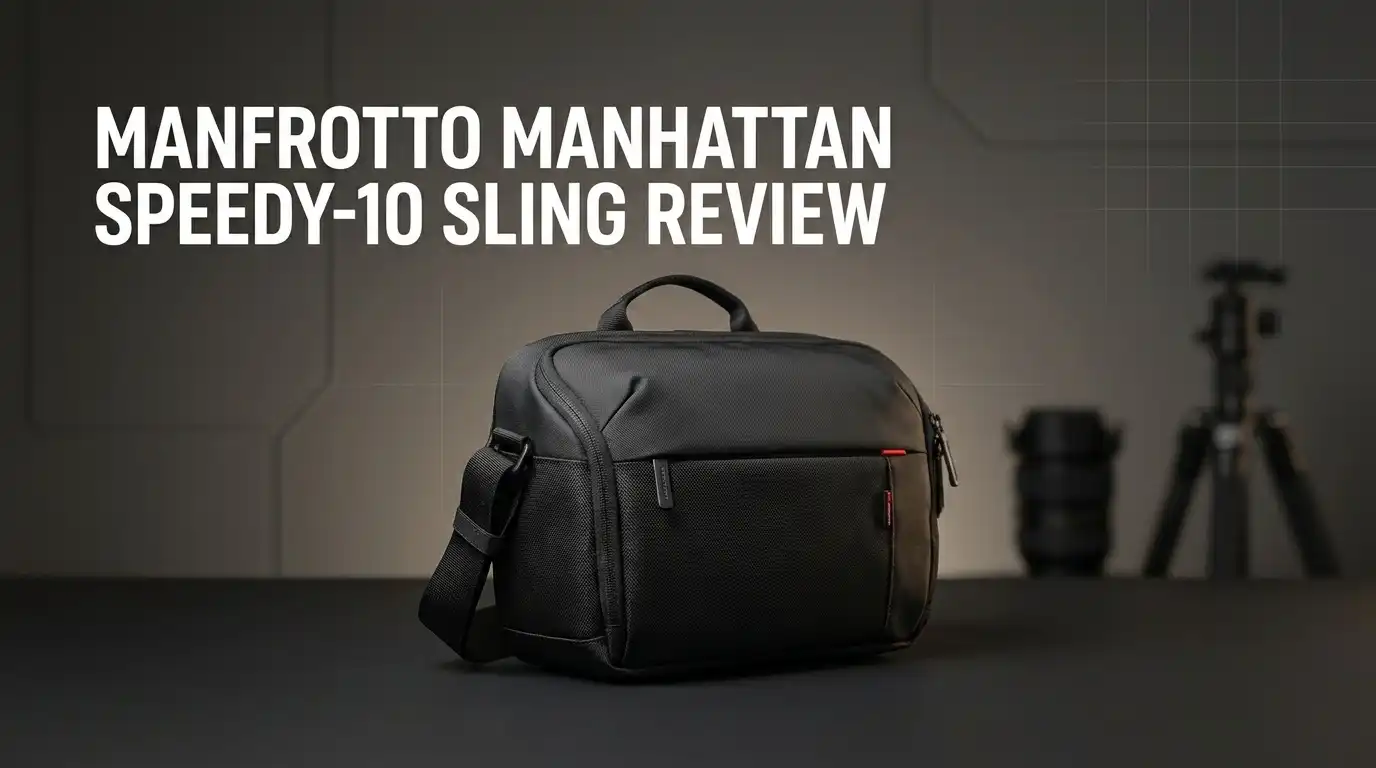
Manfrotto Manhattan Speedy-10 Sling Review 2026
If you carry a camera every day, you know how quickly a bag can feel heavy. The Manfrotto Manhattan Speedy-10 aims to solve that problem with a compact, easy-to-reach design.
This black fabric bag uses a simple zip closure. It holds one mirrorless or DSLR camera with up to three lenses. You can also fit a 12 inch laptop or a 12.9 inch iPad Pro. A tripod carry option adds extra convenience for photo walks and quick shoots.
In this review, we look at what the bag does well. We also explain who it suits best. Let’s see if it earns a spot on your shoulder.
In a Nutshell
-
Built for camera gear: This bag holds one mirrorless or DSLR camera with up to three lenses. Your main kit stays protected in one place.
-
Room for a laptop or tablet: The bag fits a 12 inch laptop and a 12.9 inch iPad Pro. You can carry your editing tools along with your camera.
-
Tripod carry support: You can attach a tripod to the outside of the bag. Your hands stay free while you walk between shoots.
-
Strong listed features: Product listings focus on the mix of camera, lens, and tablet space. These claims come from seller pages, so real owner feedback is still limited.
-
No stated drawbacks yet: The research shows no cons for this model. Still, check the size of your gear before you order.
-
Alternatives worth comparing: Peak Design Everyday Sling 10L, Think Tank TurnStyle, and Wandrd PRVKE are well known picks. Look at how each one fits your daily routine.
Build and Materials

Last update on 2026-11-12 / Affiliate links / Images from Amazon Product Advertising API
Materials shape how a bag feels after months of use. The Speedy-10 uses fabric, and that choice affects weight and flexibility. Fabric also bends to fit your body.
The research does not name the exact fabric type or thickness. That detail matters. Thicker outer material usually handles scrapes better, while thinner material keeps the bag light.
Check the product page for the fabric specs before you decide. This is especially useful if you shoot in rough places like trails or construction sites.
Black is a practical color for this kind of bag. Dust, dirt, and small stains show less on dark fabric. You can carry it to a shoot or a city walk without worrying much about looks.
The zip closure plays a big role too. A zip keeps your gear covered and helps stop items from falling out when you bend.
Test how smoothly the zipper runs. A stiff or snagging zip can slow you down when you need a lens fast. Good zippers also feel safer in crowded places.
Inside, your gear needs protection from bumps. The listings show room for a camera, several lenses, and a tablet or laptop. Those items should stay apart.
Pressing a lens against a laptop can cause scratches over time. Look for internal dividers or a padded layout that keeps each item in its own space.
Seams and stitching show how well the bag will last. Look at the corners, handle joints, and base for loose thread or thin spots. Strong stitching holds up under heavy loads.
Try the bag with your real gear before you commit. Load your camera, lenses, and tablet. Walk around for a few minutes. Notice whether the shape stays stable or sags.
A bag that stands up on its own when empty often keeps its shape better on the go.
Capacity and Organization
Good organization turns a bag into a daily helper. Most photographers pack in a rush and then search for gear later. A clear plan saves time on every shoot.
Start with the biggest item. Place your camera body first, then add lenses around it. This method keeps heavy items steady and easy to reach.
Think about how you use each lens. Pack the lens you grab most often near the top. Keep less used lenses lower down, where they stay out of your way.
Small accessories cause the most clutter. Batteries, memory cards, cables, and filters can get lost fast. Store them in a small case or pouch so they stay together.
Tablet and laptop placement matters too. Keep these flat items away from the camera gear. This simple habit reduces pressure on your lenses and keeps the bag balanced.
If your bag has outer pockets, use them for items you need fast, such as your phone or a small notebook. Keep the easy-to-reach spots for things you touch often.
Label small cases with tape or a marker. Labels help you find the right card or cable in seconds, even in dim light.
Check the layout before you buy. Look at the product page for interior pockets or dividers. Current listing details do not confirm these features, so verify them yourself.
Test your setup at home. Pack your full kit, close the bag, and lift it. Walk around for ten minutes. Notice where the weight sits and whether anything shifts.
Adjust as needed. Move heavier items closer to your back. Remove extras you never use. A lighter load feels better on long walks.
Think about the day ahead. A portrait shoot needs fewer lenses than a full travel day. Pack only what the day needs. Less gear means less clutter and less strain on the bag.
Count the items each time you leave. A quick check prevents missing batteries or memory cards. Over time, this routine becomes second nature.
Repeat this setup every time you pack. Consistency saves time and stress.
Comfort and Carry
Comfort decides whether you enjoy carrying your gear all day. A bag can hold everything and still feel heavy. Think about how the bag sits on your body.
Carry style matters a lot here. A sling rests across one shoulder, and the bag sits at your side. This setup lets you swing it around to reach your camera fast.
Balance is the key idea. When you load a camera body, several lenses, a tablet, and a laptop, the weight pulls hard on one side. Keep heavy items close to your back. That placement keeps the bag from pulling your shoulder down.
On a short walk, almost any bag feels fine. On a long day through a city or a trail, small discomfort turns into real strain. Walk around your home with the full kit for ten minutes. Notice whether the strap digs in or slides off.
Strap width and padding deserve a close look. The research does not list the strap padding or width for this model. Check the product page or touch the bag in a store if you can. A thick, soft strap spreads weight more evenly. A thin strap can cut into your skin after an hour.
Side switching is another useful test. Many photographers move the bag from one hip to the other between shoots. Try this motion with your real load. A bag that swings smoothly keeps you moving without fuss.
Access while moving also affects comfort. You should not have to stop and set the bag down each time you want a lens cap or a memory card. A sling that rotates to the front makes quick changes easy. Practice the motion at home so it feels natural outside.
Weather changes comfort too. Warm days make a snug strap feel sticky. Wear the clothes you plan to use with the bag. Then adjust the strap length until the bag rests above your hip.
Finally, trust your own test. Carry the bag for a full loop around your block. If your shoulder aches or the bag bounces hard, the setup needs changes. Comfort should feel steady, not something you must fight.
Top 3 Alternatives
Peak Design Everyday Sling

Last update on 2026-11-12 / Affiliate links / Images from Amazon Product Advertising API
Looking for a sleek sling for daily carry? The Peak Design Everyday Sling is a strong choice. It keeps your camera gear close and easy to reach. Many commuters choose it for city walks and daily rides.
Key feature: The side-access design lets you grab your lens or phone without taking the bag off your shoulder. The padded interior also protects your gear from bumps.
Lowepro Slingshot Edge


Last update on 2026-11-12 / Affiliate links / Images from Amazon Product Advertising API
If you want a compact option, the Lowepro Slingshot Edge fits the bill. It sits neatly on your back and swings around to your chest in seconds. Photographers often like it for quick street shoots and light hikes.
Why it works: The bag holds a mirrorless camera, extra lenses, and small accessories. Its lightweight build keeps your load comfortable all day. It also suits quick trips when you need to travel light.
Think Tank Retrospective

Last update on 2026-11-12 / Affiliate links / Images from Amazon Product Advertising API
Need a bag with a classic look and serious protection? The Think Tank Retrospective delivers both. Its rugged shell and soft interior keep your equipment safe on busy trips.
Best for: Travelers and photographers who carry a larger kit. The adjustable dividers let you customize the layout. The sling strap spreads the weight well, so your shoulder stays comfortable during long days on location.
Laptop and Tablet Fit
Your laptop and tablet need their own space inside the bag. The research says this bag fits a 12″ laptop and a 12.9″ iPad Pro. Those numbers are a useful start, but they do not tell the full story.
Measure your devices with their cases on. A thin case adds little bulk. A thick protective case can make the tablet hard to slide in. Remove the case, test the fit, and then decide which version you prefer.
Check the pocket for quick access. Airport lines move fast, and you may need your laptop without unpacking the whole bag. Look for a pocket that opens wide and lies flat when the bag rests on a table.
Watch how the devices sit against your back. A laptop that presses tight against your spine can feel stiff after an hour. Slimmer devices often rest closer to the body, which keeps the load steady.
Plan for corners and edges. Tablets and laptops have hard corners. When the bag drops onto stairs or pavement, those corners take the hit first. Wrap your devices in a sleeve or a soft cloth for extra cushion.
Leave room for chargers. A laptop charger and a tablet cable need space too. If they press against the devices, the zipper may strain. Keep a small pouch for cables in a side pocket.
Ask one simple question. Can you lift the laptop out with one hand while standing? If the answer is no, the placement needs work. Try this test at home with your own devices before you rely on the bag.
Consider how often you carry both devices. If you carry the laptop every day and the tablet only on weekends, place the laptop in the easiest spot. Your daily habit should guide the layout.
Place the heavier device low. A laptop set low keeps the weight near your hips. A tablet set high can pull the strap onto your shoulder. Low placement makes the bag feel lighter on long walks.
Pros and Cons
Pros
- Fits one camera with up to three lenses.
- Holds a 12 inch laptop and a 12.9 inch iPad Pro.
- Offers a tripod carry option.
- Black fabric style blends in on city streets.
- Zip closure keeps the main compartment secure.
Cons
- Camera capacity stops at one body. Photographers with two bodies need another option.
- Fabric material may need extra care in wet weather.
- Large kits may feel tight with only three lenses.
- Listings alone do not show how well it holds up over time.
Who Should Buy It
The Speedy-10 suits a certain kind of shooter. It works well for people who split their time between work and photo walks. One bag can carry gear for both parts of the day. Clean, simple lines make it easy to use without fuss.
Commuters who shoot on the side will likely appreciate it. Many people photograph during lunch breaks or after work. They need a bag that looks neat on a crowded train or bus. A low profile design helps it blend into daily life.
Travelers who want a light day pack may also benefit. Sightseeing often means carrying a camera, snacks, and a water bottle. This bag keeps the main gear close while leaving your other hand free. Many tourists prefer one bag over several small pouches.
Street photographers who work fast should give it a look. They often want a camera ready within seconds. A compact bag keeps them light on their feet. Quick shots matter more than carrying extra gear.
Hobbyists with one camera body are a strong match. Many new photographers start with a single body and a few lenses. They do not need a large pack for that setup. They also appreciate a bag that feels light on the shoulder. This bag gives them room to grow into their hobby.
Who should look elsewhere? Photographers with a full studio kit will likely need more space. Hikers who cover long trails with heavy loads may prefer a backpack with a hip belt. Those who need to carry several bodies every day should compare other models first.
Think about your daily routine before you decide. Write down what you carry most days. Count your lenses, devices, and small accessories. Honest answers make it much easier to choose well.
In short, this bag suits focused, light shooters. It fits city life, short trips, and casual photo outings nicely. Readers with heavier needs should look at bigger options.
Final Verdict
Our overall take is simple. The Speedy-10 offers a practical mix of camera space and device storage. It works best as a daily companion, not a full gear hauler.
Before you buy, compare it with rivals. The Peak Design Everyday Sling 10L and the Think Tank TurnStyle are popular picks. The Wandrd PRVKE and the MindShift PhotoCross also deserve a look. Each one takes a slightly different approach to layout and comfort.
Shop with your routine in mind. Think about where you go each day. A bag for a quiet studio day differs from one for a busy train commute. Match the bag to your real schedule, not a perfect one.
Run a simple field test. Pack your usual kit and walk for twenty minutes. Then sit down, stand up, and reach for your camera three times. Note which moves feel smooth and which feel awkward.
The tripod carry option adds flexibility for shoots that need stability. Still, a tripod adds weight. Only bring one when your plan calls for it.
The features shown here come from product listings, not from long-term owner reports. That gap means you should treat the specs as a starting point. Your own experience will tell the real story.
Good gear should feel invisible. If the Speedy-10 fits your life, you will barely notice it on your back. If it pulls at your shoulders or hides your gear, keep shopping. Either outcome helps you choose with confidence.
Check the return policy before you buy. That way, you can send the bag back if it does not fit your needs.
Final recommendation: The Speedy-10 deserves a spot on your shortlist if you carry one camera body, a few lenses, and a tablet or laptop. Test it before you commit, and let your daily routine make the final call.
Frequently Asked Questions
Is the Speedy 10 a sling or a messenger?
Product listings call it a small messenger, but the research title calls it a sling. Either way, it rides on one shoulder and opens fast for quick grabs. Check the shape in person to see if it feels right for your body.
Which alternatives should I compare it with?
Start with the Peak Design Everyday Sling 10L and the Think Tank TurnStyle. You can also look at the Wandrd PRVKE, the MindShift PhotoCross, and the Hex Ranger Mini. Each one serves a similar daily carry routine, so compare the pockets and fit side by side.
How does a sling differ from a backpack for daily use?
A sling keeps your gear at your side. You can swing it around in seconds to reach your camera. A backpack spreads weight across both shoulders, which feels easier on long walks with a heavy load.
Who should choose a different style of camera bag?
Photographers who carry a larger kit may want a backpack instead. Look at a backpack when your gear list grows past three lenses. Hiking days and long travel often call for more room and better weight support.

Hi, I’m Luna Beck — the founder and voice behind Urban Pack Vault. I’m passionate about helping people find bags that perfectly match their lifestyle. From backpacks to travel luggage, I research, review, and recommend so you never have to second-guess your next purchase.