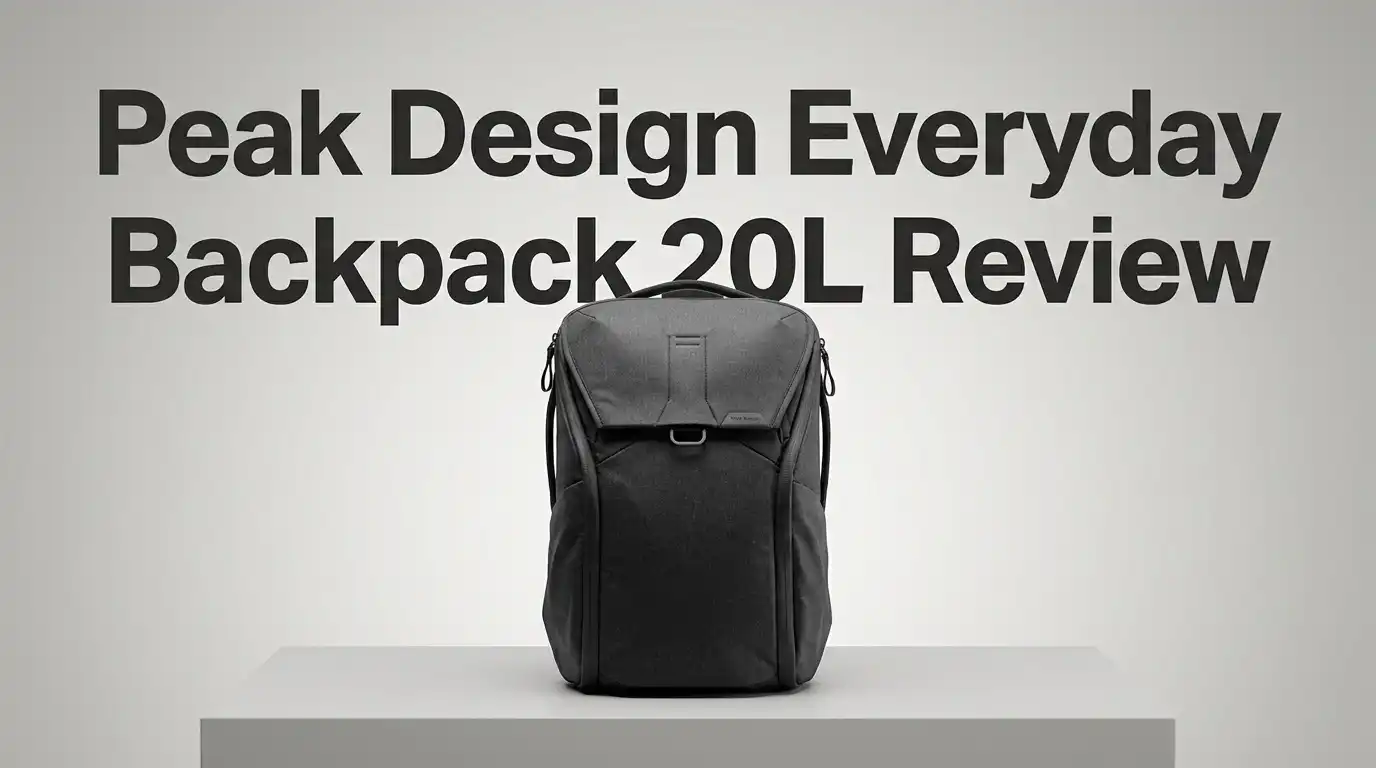
Peak Design Everyday Backpack 20L Review 2026: Still Worth It?
The Peak Design Everyday Backpack 20L has been a favorite among photographers and commuters for years. It costs more than most bags its size.
It also promises more than most bags its size. So the real question in 2026 is simple. Does this backpack still earn its price tag, or has the competition caught up?
I carried this pack through airports, coffee shops, train rides, and a few rainy walks. I loaded it with a mirrorless camera, two lenses, a 15 inch laptop, chargers, snacks, and a water bottle.
In A Nutshell:
- Build quality is excellent. The 400D recycled nylon shell feels tough, sheds light rain well, and still looks clean after months of use. Peak Design also backs it with a lifetime warranty, which few brands match.
- The MagLatch top and dual side doors make access fast. You can grab a camera from either side without setting the bag down. This is the single best feature of the whole design.
- FlexFold dividers are genuinely clever. They fold, flip, and create shelves that hold gear in place. Camera users get real protection without a bulky insert.
- It is heavy for a 20L bag. Empty weight lands around three pounds, and closer to four pounds once dividers go in. You feel that extra weight on long days.
- Comfort is average, not great. The shoulder straps are thin and the back panel sits flat against your spine. This bag suits short commutes far better than long hikes.
- The price stings. Retail sits near $279.95, though Amazon often lists it closer to $230. You pay a premium for the access system and the warranty, not for comfort.
Peak Design Everyday Backpack 20L: Quick Overview

Last update on 2026-11-14 / Affiliate links / Images from Amazon Product Advertising API
The Everyday Backpack 20L is now in its second version, and that version fixed most of the complaints people had about the first. The bag measures roughly 18.3 inches tall, 11.8 inches wide, and 8.3 inches deep when you use the lower MagLatch setting. That footprint fits under most airline seats without a fight.
Capacity sits at 20 liters, but the top closure expands or compresses the bag. That flexibility matters more than the raw number. You can cinch it down for a light day or pop the latch up for a jacket and a sweater.
The laptop sleeve holds a 15 inch machine. A second sleeve behind it holds a tablet or a slim notebook. Both sleeves sit against the back panel, so weight stays close to your spine.
Peak Design includes FlexFold dividers in the box. The 20L version normally ships with two. Each divider creates two padded shelves, which means you can build three rough zones inside the main compartment.
Colors include Black, Ash, Midnight, Bone, and Sage. The Black hides scuffs best. The Ash looks sharper in photos but shows dirt faster near the base.
Every external strap uses Peak Design hardware, so camera straps, cord loops, and tripod straps all clip in without extra adapters.
The Unboxing Experience
Peak Design keeps packaging simple, and I respect that. The bag arrives in a recycled cardboard box with no plastic bags inside. You lift the lid and the backpack sits there fully formed, not squashed flat like cheaper packs.
The first thing I noticed was the smell. It smells like clean fabric, not chemicals. The second thing I noticed was the weight. I actually said “oh” out loud when I picked it up empty. This bag has real heft before you put anything in it.
Inside the main compartment you find the FlexFold dividers already installed, plus a small card explaining the MagLatch system. There is also a printed note about the lifetime warranty. Peak Design tucks a few Anchor Links for camera straps into a side pocket.
Playing with the MagLatch takes about five minutes to click. You pull the aluminum hook up, drop it into one of four ladder positions, and the magnets snap it home. It feels satisfying in a way zippers never do.
The side doors open wide on the first try, which surprised me. Some bags need breaking in. This one worked smoothly straight out of the box. Stitching looked clean everywhere I checked, and no loose threads showed up along the seams.
Top 3 Alternative for Peak Design Everyday Backpack 20L

Last update on 2026-11-14 / Affiliate links / Images from Amazon Product Advertising API
WANDRD PRVKE 21L Photography Bundle

Last update on 2026-11-14 / Affiliate links / Images from Amazon Product Advertising API
Lowepro Flipside BP 300 AW III

Last update on 2026-11-14 / Affiliate links / Images from Amazon Product Advertising API
Thule Covert DSLR Backpack 24L
Build Quality And Materials
Peak Design uses a 400D recycled nylon canvas shell with a DWR coating. In plain English, water beads up and rolls off instead of soaking in. I walked through a fifteen minute drizzle and the inside stayed dry.
The zippers are weatherproof YKK units. They run smoothly, though a few owners report a dark powder shedding from the coating during the first weeks. Mine did this slightly, and it stopped after a month. It wipes off with a damp cloth.
The frame sheet inside gives the bag structure. Load it or empty it, the shape holds. That means it stands up on its own instead of flopping over onto the floor, which sounds minor until you use a bag that flops.
Hardware feels premium. The MagLatch hook is anodized aluminum. The strap adjusters are metal, not plastic. Small leather tabs mark the corners of the side doors.
Durability reports from long term owners are mostly positive. The most common failure point is a side door zipper after heavy daily use. Peak Design honors its lifetime warranty on those claims, which softens the risk considerably.
One honest note. The exterior fabric attracts cat hair and lint. It cleans easily, but it is not invisible. If you own pets, the Black version will need a lint roller now and then.
MagLatch, Side Doors, And Daily Access
The MagLatch is the star feature. You grab the top handle, lift the hook, and the lid opens. One hand does the job. Four ladder positions let you shrink or expand the bag by several liters.
The learning curve is real but short. For the first two days I fumbled the hook. By day three my hand found it without looking.
The two side doors are the reason photographers love this pack. Each door unzips in a wide arc, roughly 270 degrees on the Zip variant and a generous sweep on this model. You swing the bag to your hip, open a door, and pull out a camera body while standing in line.
Each door also has a stretchy external pocket. A 32 ounce water bottle fits. A small tripod fits. Both at once is a squeeze.
Internal organization is thoughtful. The side door flaps carry slim pockets for SD cards, batteries, cables, and pens. Small items stay visible instead of sinking to the bottom.
There is one genuine flaw here. The top opening is narrow compared to a clamshell bag. Packing bulky soft items like a bunched hoodie takes effort. You stuff rather than place. For gear this is fine. For clothes it feels awkward.
Camera Carry And FlexFold Dividers
If you shoot photos, this is where the money goes. Each FlexFold divider is a padded panel with two hinged origami style folds. You can lay it flat as a shelf, angle it up as a wall, or fold half of it down for a taller item.
My test load was a mirrorless body with a 35mm lens attached, a 70 to 200mm zoom, a flash, and spare batteries. Everything sat in its own padded slot with nothing touching. The dividers grip the walls with hook and loop strips, so shelves do not sag under weight.
Larger setups do hit the ceiling fast. A full frame DSLR with a battery grip eats most of one shelf. A 20 liter bag simply cannot hold three big lenses plus a laptop plus lunch.
Drone pilots and video shooters usually prefer the 30L for this reason. The 20L is best for one body and two or three compact lenses.
Remove both dividers and the bag turns into a normal daypack with a clean interior. That conversion takes thirty seconds. This is the flexibility that keeps the bag relevant for people who only shoot occasionally.
Tripod carry works through the side straps. A travel tripod rides securely. A full size studio tripod feels unbalanced and pulls the bag sideways.
Laptop, Tablet, And Work Use
The dedicated laptop sleeve is rated for 15 inch machines. My 15 inch laptop slid in with room to spare. A 16 inch laptop in a thick case will fight you, and some owners report it does not fit at all.
If you carry a 16 inch machine, measure first. This is the most common disappointment I see in owner feedback.
The tablet sleeve sits behind the laptop sleeve. Both are padded and both have soft lining. Neither has a false bottom, so your device rests near the base of the bag. Set the pack down gently.
For office use the bag performs well. The internal pockets swallow a charging brick, a mouse, a notebook, and pens. The top compartment holds keys and sunglasses in easy reach.
A hidden security pocket sits along the back panel. A passport or wallet fits there, out of sight when the bag is worn.
The luggage pass through strap on the rear slides over a suitcase handle. It works, though it sits a little low and the bag can tilt backward on a tall suitcase.
There is no water bottle pocket separate from the camera side pockets. That means a wet bottle sits next to your gear compartment access. I never had a leak, but the thought crossed my mind.
Comfort: The Honest Truth
This is where I have to be blunt. The Everyday Backpack 20L is not a comfort king. The shoulder straps are slim and use a firm foam that prioritizes durability over cushioning. They dig in slightly once the bag passes fifteen pounds.
The back panel is mostly flat. There is minimal airflow channeling. On a warm day you will feel a sweaty patch across your back. Bags from hiking brands do this far better.
The sternum strap helps a lot and I recommend using it. It pulls the straps inward and stops them sliding off your shoulders.
There is no hip belt in the box. Peak Design sells one separately. Without it, all the weight rides on your shoulders.
Tall users report another quirk. The bag sits fairly low on the back, so weight can rest near the hips rather than high on the spine. Whether that bothers you depends on your torso length.
Verdict on comfort: fine for a thirty minute commute, tiring on a five hour walk. If you plan to hike with camera gear all day, look at a pack with a real suspension system instead. This bag was built for cities, not trails.
What It Does Not Do Well
Every honest review needs this section, so here it is.
It is heavy. Three pounds empty for a 20 liter bag is a lot. Add dividers and a laptop and you start near seven pounds before real gear goes in.
It is not a hiking pack. No ventilation channel, no included hip belt, thin straps. The design fights you on long trails.
It is not great for clothes. The narrow top opening makes packing soft bulky items clumsy. Weekend travelers often prefer a clamshell bag.
It is expensive. Near $280 at retail puts it above many capable competitors that carry more gear.
The interior is dark grey. Small black accessories disappear in there. A bright orange lining would have solved this.
The MagLatch takes practice. It also makes a distinct click. In a quiet room, people hear you open your bag.
Zipper coating shedding bothers some owners in the first weeks. It is cosmetic, but at this price it should not happen.
Capacity limits are real. You cannot fit a big DSLR kit and a laptop and a jacket at the same time. Something gets left behind. Many buyers eventually upgrade to the 30L for that reason.
Pros And Cons
Pros
- Excellent build quality with 400D recycled nylon and weatherproof YKK zippers
- MagLatch top gives one handed access and adjustable capacity
- Dual side doors let you reach gear without removing the bag
- FlexFold dividers protect camera gear and convert the bag to a plain daypack in seconds
- Smart small pockets for cards, cables, and batteries
- Hidden security pocket against the back panel
- Luggage pass through strap for airport travel
- Lifetime warranty with a strong reputation for honoring claims
- Clean professional look that suits offices and cafes
- Fits under most airline seats
Cons
- Heavy for its 20 liter capacity
- Thin shoulder straps and flat back panel limit long term comfort
- No hip belt included
- Narrow top opening makes packing clothes awkward
- Laptop sleeve struggles with 16 inch machines
- Dark interior hides small black items
- High price compared with rivals
- Poor ventilation on warm days
- Side door zippers are the most reported failure point
- Limited room for large DSLR kits with multiple long lenses
Who Should Buy It In 2026

Last update on 2026-11-14 / Affiliate links / Images from Amazon Product Advertising API
Buy this bag if you carry a camera and a laptop through a city on a regular basis. That is the exact use case it was built for, and nothing handles that mix more gracefully.
Buy it if you value access speed. Grabbing a lens through a side door while standing on a sidewalk feels like a small luxury every single time.
Buy it if you want one bag that looks professional in a meeting and still protects gear on a weekend shoot. The clean exterior gives nothing away about what is inside.
Skip it if comfort is your top priority. Skip it if you hike for hours with gear. Skip it if you carry a 16 inch laptop in a thick case.
Skip it if you need to pack clothes for a three day trip. The narrow top and modest volume will frustrate you.
Consider the 30L version instead if you shoot with a full frame DSLR and multiple long lenses, or if you want a light weekend bag. The extra ten liters costs only a little more.
The Everyday Backpack Zip 20L is another option. It trades the MagLatch for a simple zipper, weighs less, and costs less. Some owners actually prefer it for daily commuting.
Final Verdict
The Peak Design Everyday Backpack 20L remains one of the best designed camera backpacks you can buy in 2026. The access system still has no true equal. The materials still feel worth the money. The lifetime warranty still lowers the long term risk.
It is not perfect. It is heavy, it breathes poorly, and the straps could be kinder to your shoulders. Anyone claiming this bag is flawless has not carried it fully loaded for a full day.
My rating sits at roughly 8.5 out of 10. The design brilliance earns high marks. The comfort compromises pull it back from a perfect score.
Watch for Amazon pricing. The bag often lists well below the $279.95 retail figure, and at $230 the value case gets much stronger.
Would I buy it again? Yes, for city work and travel days. For long hikes with gear, I would reach for something with a proper harness. Choose based on your daily route, not on the marketing photos.
Frequently Asked Questions
Is the Peak Design Everyday Backpack 20L waterproof?
No, it is weather resistant rather than waterproof. The nylon shell has a DWR coating and the zippers resist moisture, so light rain and snow are fine. Heavy sustained rain may eventually reach the contents through seams. A rain cover is not included.
Does a 16 inch laptop fit in the 20L?
Officially the sleeve holds a 15 inch laptop. Some slim 16 inch models slide in, but a thick case will not fit. Measure your device before ordering, or choose the 30L version for more sleeve room.
How many FlexFold dividers come with the 20L?
The 20L normally ships with two FlexFold dividers. Each divider creates two padded shelves, giving you three storage zones. You can buy extra dividers separately if you need more separation.
Can this bag work as carry on luggage?
Yes, it fits under most airline seats and easily counts as a personal item. The luggage pass through strap slides over a suitcase handle. It is too small for a multi day clothing trip on its own.
Is the 20L or 30L better for travel?
The 30L suits travel better because it holds clothes plus gear. The 20L works best as a daily commuter and day shoot bag. Choose the 20L if you want a smaller, lighter footprint.
Does Peak Design honor the lifetime warranty?
Owner reports are consistently positive. Peak Design has replaced zippers, buckles, and whole bags for customers with genuine defects. Keep your proof of purchase and file the claim through their official support page.
Is the Everyday Backpack Zip a better value?
The Zip costs less, weighs less, and uses a simple zipper instead of the MagLatch. It gives up the expandable top and some organization. Many commuters prefer it, while photographers usually stick with this version.

Hi, I’m Luna Beck — the founder and voice behind Urban Pack Vault. I’m passionate about helping people find bags that perfectly match their lifestyle. From backpacks to travel luggage, I research, review, and recommend so you never have to second-guess your next purchase.