Peak Design Everyday Sling 6L V2 Review 2026: Worth Buying?
Camera bags usually force a choice. You either get fast access or you get good organization. The Peak Design Everyday Sling 6L V2 promises both in a bag that weighs just over a pound.
I have carried this sling through airports, city streets, rainy afternoons, and long shoot days. It has impressed me more than once. It has also annoyed me more than once.
This review covers everything you actually need to know before you spend the money. I will walk you through the unboxing, the materials, the real capacity, and the comfort.
In a Nutshell:
- Build quality is excellent. The shell uses 100% recycled 400D double poly coated nylon canvas with a DWR finish. It shrugs off light rain and resists scuffs. The UltraZip zippers glide smoothly even after months of use.
- Capacity sits in a sweet spot. The 6L holds one mirrorless or small DSLR body with a lens attached, plus one or two extra lenses. It also swallows a tablet up to 11 inches in the padded rear sleeve.
- The strap system is the star feature. The swivel strap and one handed quick release adjuster let you spin the bag forward, grab your camera, and tighten everything again in about three seconds.
- The comfort is good but not flawless. The strap could use more padding. Heavier loads slide down your back and need adjusting. Smaller frames may find the 6L bulky as a waist pack.
- There is no water bottle pocket. This is the single most common complaint from owners, and it still has not been fixed.
- Price is high. You pay a premium for the design and the lifetime guarantee. Budget slings cost half as much, but they do not match the hardware or the finish.
Peak Design Everyday Sling 6L V2 Overview

Last update on 2026-11-14 / Affiliate links / Images from Amazon Product Advertising API
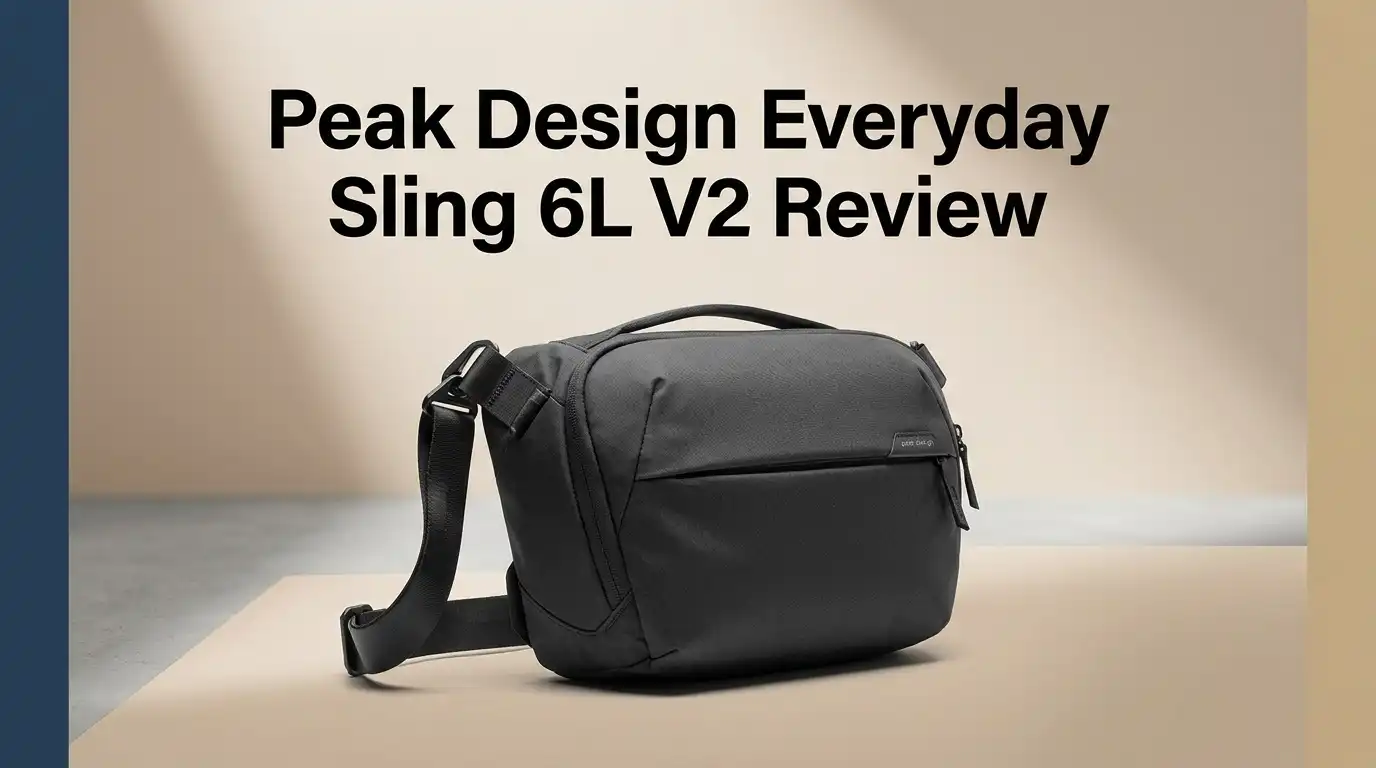
The Everyday Sling 6L V2 is the middle child of a three size family. Peak Design sells a 3L, a 6L, and a 10L version. The 6L measures roughly 9.44 by 13.4 by 5.12 inches and weighs about 1.28 pounds empty. Add the two FlexFold dividers and you are closer to 1.7 pounds.
Peak Design markets this bag as a crossover product. It works as a camera bag, a tech bag, or a simple daypack. The company even jokes that it fits five beers. That is a surprisingly useful benchmark.
Colors include Black, Ash, Midnight, and a few seasonal releases. Midnight is a deep navy that looks sharp without screaming camera gear. The whole point of this bag is that it does not look like a camera bag, and that matters more than you might think.
The Unboxing Experience
Peak Design ships the sling in a simple recycled cardboard box with no plastic inside. You pull the lid, and the bag sits there wrapped in a thin paper sleeve. There is no foam, no clamshell, no wasted material. A small folded card explains the lifetime guarantee and points you to a setup video.
The first thing I noticed was the smell of fresh coated nylon. The second was the stiffness. A brand new Everyday Sling feels almost like cardboard. The fabric holds its shape, the flap snaps shut hard, and the dividers feel rigid.
Do not panic. After roughly two weeks of daily use, the shell softens and the bag starts to drape properly. Several owners mention this break in period, and it is real. Early stiffness is the normal state, not a defect.
Top 3 Alternative for Peak Design Everyday Sling 6L V2

Last update on 2026-11-14 / Affiliate links / Images from Amazon Product Advertising API
Peak Design Everyday Sling 10L

Last update on 2026-11-14 / Affiliate links / Images from Amazon Product Advertising API
Peak Design Everyday Sling 3L

Last update on 2026-11-14 / Affiliate links / Images from Amazon Product Advertising API
Lowepro Slingshot Edge 150 AW
Design and Build Quality
The shell fabric does the heavy lifting here. It is a 400D recycled nylon canvas with two layers of poly coating and a durable water repellent treatment. Water beads up and rolls off. The Ash and Midnight versions use bluesign certified fabric, which means the dyeing and finishing process meets strict environmental standards.
The zippers deserve their own paragraph. Peak Design developed the UltraZip in partnership with Zoom Zippers. They pull smoothly with one finger and show no sign of grinding after heavy use. Weather flaps sit over the main zipper track.
One honest flaw: the outer fabric wrinkles. The thin top layer creases at the corners and on the flap over time. It does not affect function at all, but if you want a bag that looks showroom fresh forever, this is not it.
Comfort and Carry Options
The swivel strap is the feature that sells this bag. The strap rotates at the attachment point, so the sling spins around your body smoothly instead of twisting the webbing. You can wear it on either shoulder. You can wear it across your chest, on your back, on your hip, or tucked under one arm like a purse.
My favorite position is the side carry under the arm. It stays put and gives instant access.
Here is the honest part. The back panel is plain. There is light padding and nothing clever. With a full load, the bag slides down your back as you walk, especially over slick jacket fabric. You end up nudging it back into place. The shoulder pad could also use about 20% more cushioning for long days.
Inside the Main Compartment
Open the top flap and you get one large padded space with two FlexFold dividers. These origami style dividers fold into shelves, walls, or flat platforms. You can build two levels inside a 6L bag, which sounds impossible until you try it.
My standard setup uses one divider as a horizontal shelf. The camera body sits on one side. A second lens and a battery pack sit below.
Two stretch pockets sit on the interior side walls. They hold a phone, a power bank, or a folded cable pouch.
The inner flap holds the best organization. A zippered stretch pocket covers four small elastic sleeves. I keep SD cards, spare batteries, and a cleaning cloth there. The fourth sleeve is slightly awkward to reach because the zipper panel covers it.
Camera Gear Capacity Tested
Real numbers matter more than marketing photos. I fit a Sony A7 III with a 28 to 70mm lens attached, plus a 10 to 18mm lens and a small LED light. That filled the bag to a comfortable level.
Full frame shooters should plan on one body and one or two lenses. Micro Four Thirds users can pack noticeably more.
Peak Design shows promotional images with a body, three lenses, and a drone inside. That is technically possible. It is also too cramped to be useful. Filling any camera bag past 70% makes lens changes frustrating.
The extra space compared to the 3L comes mostly in height, not width. That makes the 6L better for longer lenses. A DJI Mini drone with its controller also fits with room to spare.
Everyday Carry Without a Camera
Plenty of owners never put a camera in this bag. The 6L works beautifully as a tech sling or a small personal item for flights.
A typical no camera load for me looks like this: an 11 inch tablet in the rear sleeve, a charging brick, a cable pouch, a paperback, sunglasses, a snack, and a packable rain shell. Everything fits and the bag still closes flat.
Remove the dividers and the interior becomes one open bucket. The bag loses about 0.4 pounds and gains usable space.
The front slip pocket handles quick grab items. Keys, a wallet, a passport, and a phone all live there. The opening is a little stiff on a new bag, so reaching in one handed takes practice during the first few weeks.
The Strap and Quick Release Adjuster
Peak Design built an aluminum adjuster onto the seatbelt style webbing. Pull the tail and the strap tightens. Squeeze the lever and it loosens instantly. You can do both with one hand while walking.
This sounds like a small thing. It is not. The adjuster turns a sling from a bag you wear into a tool you operate. Loosen, swing forward, shoot, tighten, keep moving.
The strap also reverses, so you can switch shoulders when one starts to ache. My previous sling lacked this, and the difference is obvious after a full day.
The weakness is padding. The shoulder section has a thin pad bonded to the webbing. It is adequate for 6L loads. Push past 10 pounds and your shoulder will remind you about it.
Weather Resistance and Durability
The DWR coating handles rain well. I have walked through steady drizzle for 20 minutes and found everything inside completely dry. The weather flaps over the zippers do their job. This is not a submersible dry bag, so do not treat it like one, but normal weather is a non issue.
Durability over months has been solid. No zipper failures, no seam separation, no hardware loosening.
One durability note worth mentioning: the FlexFold dividers develop loose threads along their edges. Reviewers across the entire Everyday V2 line report this. It stays cosmetic and does not spread into real damage, but it looks untidy inside an otherwise premium bag.
Peak Design backs the sling with a lifetime guarantee, and their replacement service has a strong reputation.
What This Sling Does Not Do Well
Honest reviews list the failures. Here are mine after extended use.
There is no water bottle pocket. None. You either strap a bottle to the external cord hooks or put a wet bottle next to your electronics. This is the biggest design miss.
The waist pack mode is overrated at this size. The 6L is too tall to sit comfortably on your hips. It overwhelms smaller frames and sags unless you crank the strap uncomfortably tight.
The back panel offers minimal ventilation, so your shirt gets damp in hot weather.
The price feels steep compared to similar sized competitors.
Finally, the bag slips down your back during active movement. You will adjust it often on uneven ground or during long walks.
Pros and Cons
Pros
- The swivel strap and one handed quick release adjuster make access genuinely fast
- FlexFold dividers create flexible two level storage inside a small bag
- Recycled 400D nylon with DWR coating handles rain and daily abuse well
- UltraZip zippers stay smooth and show no wear over months
- Padded rear sleeve fits an 11 inch tablet with a magnetic closure
- Minimal styling means it does not look like camera gear
- Lifetime guarantee from a certified B Corporation
- External cord hooks carry a tripod or a jacket neatly
Cons
- No dedicated water bottle pocket at all
- Shoulder strap padding is thinner than the load deserves
- Bag slides down your back when fully packed
- Waist carry works poorly at this size
- Outer fabric wrinkles and creases over time
- Divider edges fray slightly with use
- Premium price compared to similar capacity rivals
- Stiff out of the box and needs a break in period
Size Comparison Between 3L, 6L and 10L
Picking the right size prevents regret. The 3L weighs under a pound and holds a compact camera or one small mirrorless body with a pancake lens. It has no tablet sleeve. It works best as a minimalist everyday carry.
The 6L adds a tablet sleeve, a second FlexFold divider, and real lens capacity. It is the balance point of the lineup and the size most people should buy.
The 10L fits two bodies or a body with three lenses, plus a 13 inch laptop. It also starts to feel like a backpack worn wrong.
My simple rule: if you carry one camera and a lens or two, buy the 6L. If you carry a working kit, buy the 10L. If you carry a phone and a compact, buy the 3L.
Price and Value in 2026
Last update on 2026-11-14 / Affiliate links / Images from Amazon Product Advertising API
The Everyday Sling 6L sits around the 130 dollar mark at full price, with sales dropping it lower during major shopping events. That is a lot for six liters of space.
You are paying for hardware, materials, and a guarantee. The aluminum adjuster, the custom zippers, the recycled bluesign fabric, and the lifetime warranty all cost money to produce. Cheaper slings copy the shape but use plastic buckles and generic zippers that fail within a year or two.
Is it worth it? If you carry a camera several times a week, yes. The access speed alone changes how often you actually shoot. If the bag sits in a closet most months, a cheaper sling will serve you just as well and leave money in your pocket.
Who Should Buy the Everyday Sling 6L V2
This bag suits street photographers, travel photographers, and content creators who carry one body and a couple of lenses. It suits commuters who want a tidy tech bag with real padding. It suits travelers who need a personal item that slides under a seat without a fight.
Buy it if fast one handed access matters to you. That is the entire argument for this product.
Skip it if you need a water bottle pocket, if you carry heavy kits for eight hours straight, or if you have a very small frame and want hip carry to work.
Also skip it if budget is tight. The performance gap between this sling and a 60 dollar alternative is real, but it is not enormous.
Final Verdict
The Peak Design Everyday Sling 6L V2 earns its reputation. The materials feel premium, the organization is clever without being fussy, and the strap system solves a problem that most camera bags ignore. After months of use, mine still looks and works close to new.
It is not perfect. The missing bottle pocket is frustrating. The strap padding is thin. The bag drifts down your back when loaded. These are real complaints, not nitpicks.
Still, I keep reaching for it. That is the strongest endorsement I can give any bag. If you want a compact sling that handles a camera kit and a normal day at the same time, this is still the one to beat in 2026.
Frequently Asked Questions
Does the Peak Design Everyday Sling 6L fit a full frame camera?
Yes. It fits a full frame body such as a Sony A7 series or a Canon R series with a standard zoom attached. Plan on one extra lens alongside it. A large telephoto lens will take up most of the interior on its own.
Is the Everyday Sling 6L waterproof?
It is water resistant, not waterproof. The recycled nylon shell has a DWR coating and poly backing, and the zippers sit under weather flaps. Light rain and splashes cause no problems. Heavy sustained downpours or submersion will eventually let water through.
Can it be used as a personal item on flights?
Yes. The 6L measures about 9.4 by 13.4 by 5.1 inches, which fits under almost every airline seat. It also slides over a luggage handle when paired with the external straps. Many travelers use it as their in flight essentials bag.
What size tablet fits in the sleeve?
The padded rear sleeve holds a tablet up to 11 inches, including an iPad Pro 11 inch model. It uses a magnetic closure and lies flat when empty. A 13 inch device will not fit, so look at the 10L for that.
How does the 6L compare to the 3L?
The 6L is three liters larger, adds a tablet sleeve, and includes a second FlexFold divider. Most of the extra room comes in height. The 3L is lighter and better for minimal loads, while the 6L handles a real camera kit.
Is the V2 better than the V1?
Yes. The V2 added the swivel strap, the UltraZip zippers, the improved quick release adjuster, and recycled fabric throughout. The shape also changed for better ergonomics. If you are choosing between them, the V2 is the clear upgrade.

Hi, I’m Luna Beck — the founder and voice behind Urban Pack Vault. I’m passionate about helping people find bags that perfectly match their lifestyle. From backpacks to travel luggage, I research, review, and recommend so you never have to second-guess your next purchase.