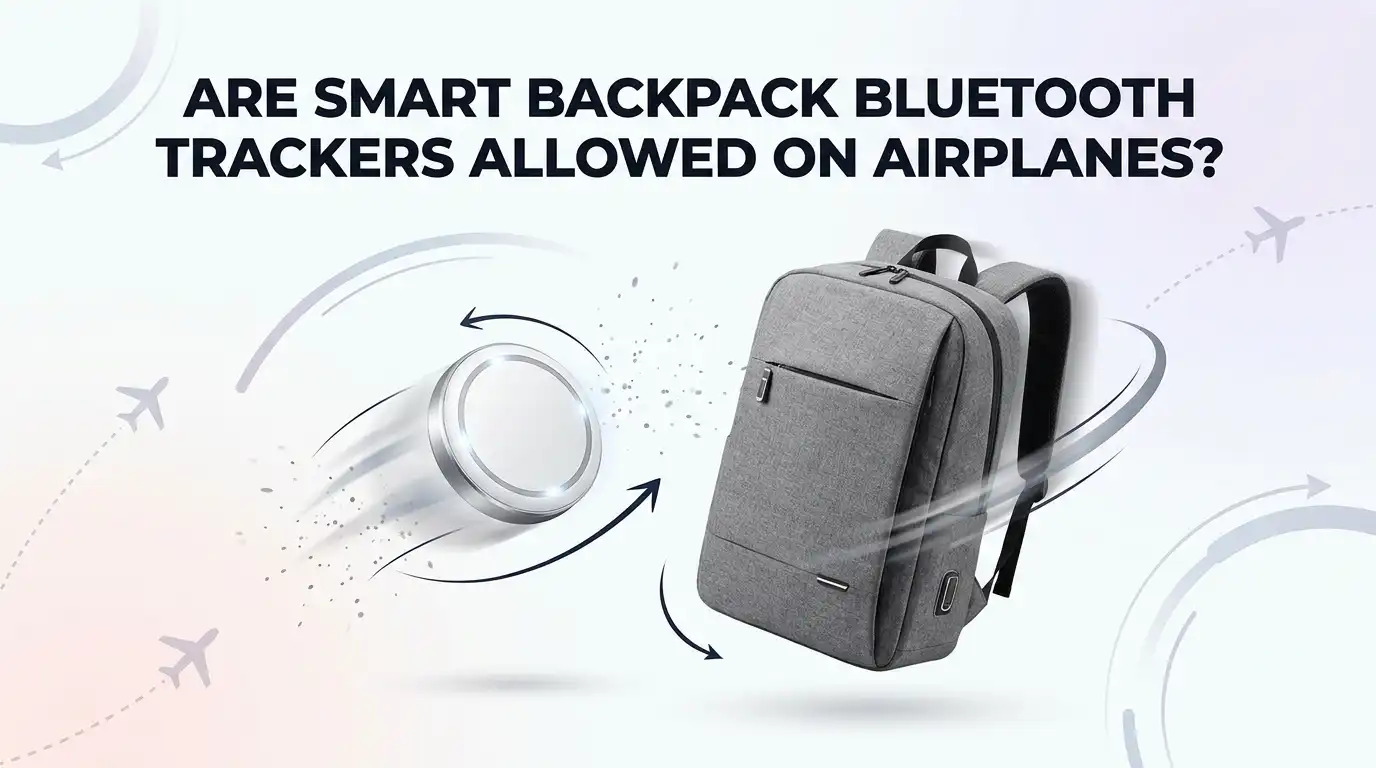
Are Smart Backpack Bluetooth Trackers Allowed On Airplanes?
Smart backpacks make travel easier. Many of them come with built in Bluetooth trackers, and some let you attach your own tag like an AirTag or a Samsung SmartTag. But a big question stops many travelers at the airport gate.
Can you actually fly with these devices? The short answer is yes, in most cases. The longer answer depends on the battery, the bag, and the airline you pick. This guide breaks down the rules in plain words.
You will learn what the FAA says, what airlines allow, and how to pack your tracker the smart way. By the end, you will feel confident walking through security with your smart backpack.
Key Takeaways
- Bluetooth trackers are allowed on planes. The TSA and FAA both permit these devices in carry on bags and checked bags. There is no blanket ban on them anywhere in the United States.
- Small batteries are the key. Trackers like AirTags use tiny coin batteries. These sit far below the FAA limits, so they cause zero problems in checked or carry on luggage.
- Smart backpacks with big built in batteries have rules. If the battery cannot be removed, the FAA wants the bag in the cabin with you, not in the cargo hold.
- Removable batteries win every time. A bag with a battery you can pull out is the most flexible choice for flying. You take the battery into the cabin and check the bag freely.
- Check your airline before you fly. International carriers sometimes add their own rules. A quick check saves you stress at the counter.
- Turn devices off in checked bags. Any electronic device inside checked luggage should be fully powered down, not just sleeping.
What Is a Smart Backpack Bluetooth Tracker?
A smart backpack Bluetooth tracker is a small device that helps you find your bag. It sends a signal to your phone using Bluetooth. Your phone shows you where the bag sits on a map.
Some backpacks come with the tracker built right into the fabric. Others have a pocket where you drop in a tag you buy separately. Popular tags include the Apple AirTag, the Tile, and the Samsung SmartTag. These little gadgets run on tiny batteries.
They do not use much power at all. This matters a lot for air travel, as you will see. The tracker itself is harmless. The concern for airlines is always the battery inside it, not the tracking feature.
Are Bluetooth Trackers Allowed on Airplanes?
Yes, Bluetooth trackers are allowed on airplanes. The TSA permits them in both carry on and checked baggage. The FAA agrees with this position. Millions of travelers now fly with AirTags and similar tags inside their bags.
These devices help you locate lost luggage fast. The rule exists because the batteries in most trackers are extremely small. A standard AirTag uses a coin cell battery. This battery is far below the safety limit set by the FAA.
So the device poses no fire risk in the cargo hold. You can pack a Bluetooth tracker without asking permission at the counter.
The only real caution comes with large smart backpacks that hold big rechargeable batteries. Those follow a different set of rules, which we cover below.
What the FAA Says About Trackers and Batteries
The FAA sets clear rules through its PackSafe program. Baggage location tracking devices powered by lithium batteries are treated as portable electronic devices. You attach them to your bag or place them inside.
The FAA allows these in checked baggage as long as the battery stays small. The limit for a lithium ion battery is a Watt hour rating not exceeding 2.7 Wh. For a lithium metal battery, the limit is a lithium content not exceeding 0.3 grams.
Almost every Bluetooth tracker sits well under these numbers. The FAA also tells travelers to check with the airline first. This is friendly advice, not a warning. It simply covers cases where airlines add extra rules of their own for international routes.
Carry On vs Checked Baggage: Where Should Your Tracker Go?
You can put a Bluetooth tracker in either bag. Both options are legal. The choice comes down to how you want to use it. Many travelers place the tracker inside checked luggage. This way, if the airline loses your bag, you can see where it went.
A tracker in a checked bag gives you power the airline does not always have. Others keep the tracker in a carry on for smaller items. There is no wrong answer here. Think about which bag you worry about most. Then place your tracker there.
Pros of checked baggage placement: you track lost luggage yourself, you gain peace of mind on connecting flights, and you help the airline find your bag faster.
Cons of checked baggage placement: the signal can be weak in the cargo hold, and the battery must stay small to follow the rules.
The Big Rule: Removable vs Non Removable Batteries
This is the most important rule for smart backpacks. The FAA cares about whether you can take the battery out. A tracker tag has a tiny fixed battery, so it flies with no fuss. But a smart backpack with a large power bank is different.
If the battery cannot be removed, the FAA wants the whole bag in the cabin with you. The reason is safety. A crew member can act fast if a battery overheats in the cabin.
In the cargo hold, no one can reach it. If your smart backpack has a removable battery, you get the best of both worlds. You pull the battery out, carry it into the cabin, and check the empty bag if you wish.
How to Check Your Tracker’s Battery Rating
Checking your battery takes only a minute. Look at the device or the battery itself for a printed label. The label shows the Watt hour rating, often written as Wh. Trackers rarely list a number this high because they are so small.
If you only see amp hours and volts, you can do the math. Multiply amp hours by voltage to get Watt hours. For example, a 2 Ah battery at 3.7 volts gives about 7.4 Wh. Most coin cell tracker batteries fall far below the 2.7 Wh checked bag limit.
If your smart backpack holds a bigger power bank, check that number too. The FAA allows lithium ion batteries up to 100 Wh in carry on bags with no special approval.
Which Airlines Allow Bluetooth Trackers?
Nearly every airline now allows Bluetooth trackers. U.S. carriers follow TSA and FAA rules, so trackers are fine on all of them. Many major airlines have gone further. A large group of carriers now partner with Apple to let you share an AirTag location directly with their bag tracking systems.
This makes finding a lost bag even easier. In 2022, Lufthansa briefly said it would ban active AirTags in checked bags. The airline reversed that decision within days after strong pushback.
Today, activated trackers are welcome again on Lufthansa. This story shows one thing clearly. Bans do not last, because the safety data supports these small devices. Still, always confirm the policy for your exact airline before an international trip.
Step by Step: How to Pack Your Smart Backpack for a Flight
Packing your smart backpack the right way removes all stress. Follow these simple steps in order. Each step keeps you inside the rules and ready for security.
- Find your battery type. Check if your backpack has a built in battery or a removable one. This decides your whole plan.
- Remove large batteries if you can. Pull out any power bank and carry it in the cabin. Never place spare lithium batteries in checked bags.
- Keep small trackers where you want. Coin cell tags can stay in checked or carry on bags with no worry.
- Power off devices in checked bags. Turn electronics fully off, not to sleep mode.
- Confirm your airline policy. A two minute check on the airline website saves trouble. Then zip up and fly with confidence.
Common Problems Travelers Face and How to Fix Them
Travelers hit a few common snags with smart backpacks. The good news is that each one has a simple fix. The first problem is a non removable battery that is too large for checked bags. The fix is easy.
Carry the whole backpack into the cabin instead. The second problem is a weak tracker signal in the cargo hold. This is normal. The tag updates its location once it passes near another phone. So the location will refresh even from inside a plane hold.
The third problem is confusion at the airport counter. Staff sometimes ask about smart bags. Show them your removable battery or explain the small tag. A calm, clear answer solves this fast. Knowing the rules ahead of time keeps you relaxed.
International Travel and Bluetooth Trackers
International rules can differ slightly from U.S. rules. The core idea stays the same across the world. Small trackers are allowed, and large batteries need extra care. The FAA itself advises travelers to check with the airline for international flights.
Different countries follow guidance from IATA, the global airline body. IATA also asks travelers to check the Watt hour rating and confirm with the carrier. This does not mean trackers are banned abroad.
It simply means you should read the airline page for your route. Some carriers ask that trackers be turned off during the flight if they sit in a checked bag. A quick search of your airline name plus the word tracker gives you the answer in seconds.
Pros and Cons of Using a Bluetooth Tracker in Your Backpack
A Bluetooth tracker adds real value to travel, but it helps to see the full picture. Weighing both sides helps you decide how to use one. Below is a balanced look at the benefits and the drawbacks.
Pros: You find lost luggage fast, often before the airline does. You gain peace of mind on long trips with many connections. You can prove where your bag went if it goes missing. The batteries are tiny and follow the rules with ease. Setup takes only a few minutes with your phone.
Cons: The signal depends on nearby phones, so remote areas update slowly. A tracker cannot stop theft, it only shows location. Some models need a specific phone brand to work fully. Battery replacement is needed once a year for most tags.
Safe Alternatives to Bluetooth Trackers
Bluetooth trackers are great, but they are not your only option. A few alternatives suit different travel needs. GPS trackers use cellular networks instead of Bluetooth. These update your location in real time from anywhere, even remote spots.
They cost more and often need a subscription, but they follow the same battery rules for flights. Another option is a simple luggage tag with your contact details. This is old school but reliable.
A bright bag or a colorful strap also helps you spot your luggage fast. You can combine methods too. Many travelers use a Bluetooth tag plus a bright bag cover. Each layer adds a little more protection for your belongings.
Frequently Asked Questions
Can I put an AirTag in my checked luggage?
Yes, you can put an AirTag in checked luggage. The TSA and FAA both allow it. The tiny coin battery sits far below all safety limits. Many travelers use this exact method to track lost bags.
Do I need to turn off my Bluetooth tracker on a plane?
Small trackers can usually stay on. Some airlines ask that trackers in checked bags be powered down on certain routes. Check your airline page to be sure. Devices in checked bags should generally be fully off.
Are smart backpacks banned on airplanes?
Smart backpacks are not banned. The rule depends on the battery inside. If the battery is removable, take it into the cabin and check the bag freely. If it is fixed and large, carry the whole bag on board.
What is the battery limit for a tracker in checked luggage?
The FAA allows a lithium ion battery up to 2.7 Wh in a checked bag equipped with a tracker. Lithium metal batteries must stay under 0.3 grams of lithium. Nearly every tracker meets these limits easily.
Will my tracker work inside the plane’s cargo hold?
Your tracker may not update while inside the hold. It refreshes its location when it passes near another phone. So you often see the location update once the plane lands and bags move through the airport.
Can I bring a GPS tracker instead of a Bluetooth one?
Yes, GPS trackers are allowed too. They follow the same battery rules as Bluetooth tags. GPS gives real time location using cellular networks. This works well in remote areas where Bluetooth tags update slowly.
Final Thoughts
Smart backpack Bluetooth trackers are welcome on airplanes. The rules are friendly to travelers who pack smart. Keep your tracker battery small, and it flies in any bag with no fuss. If your smart backpack holds a large battery, pull it out and carry it in the cabin.
Turn off electronics in checked bags, and confirm your airline policy for international trips. Follow these simple steps, and you will never worry about your tracker at security again.
A little planning gives you peace of mind and a bag you can always find. Safe travels, and enjoy the freedom that a good tracker brings to every trip.

Hi, I’m Luna Beck — the founder and voice behind Urban Pack Vault. I’m passionate about helping people find bags that perfectly match their lifestyle. From backpacks to travel luggage, I research, review, and recommend so you never have to second-guess your next purchase.