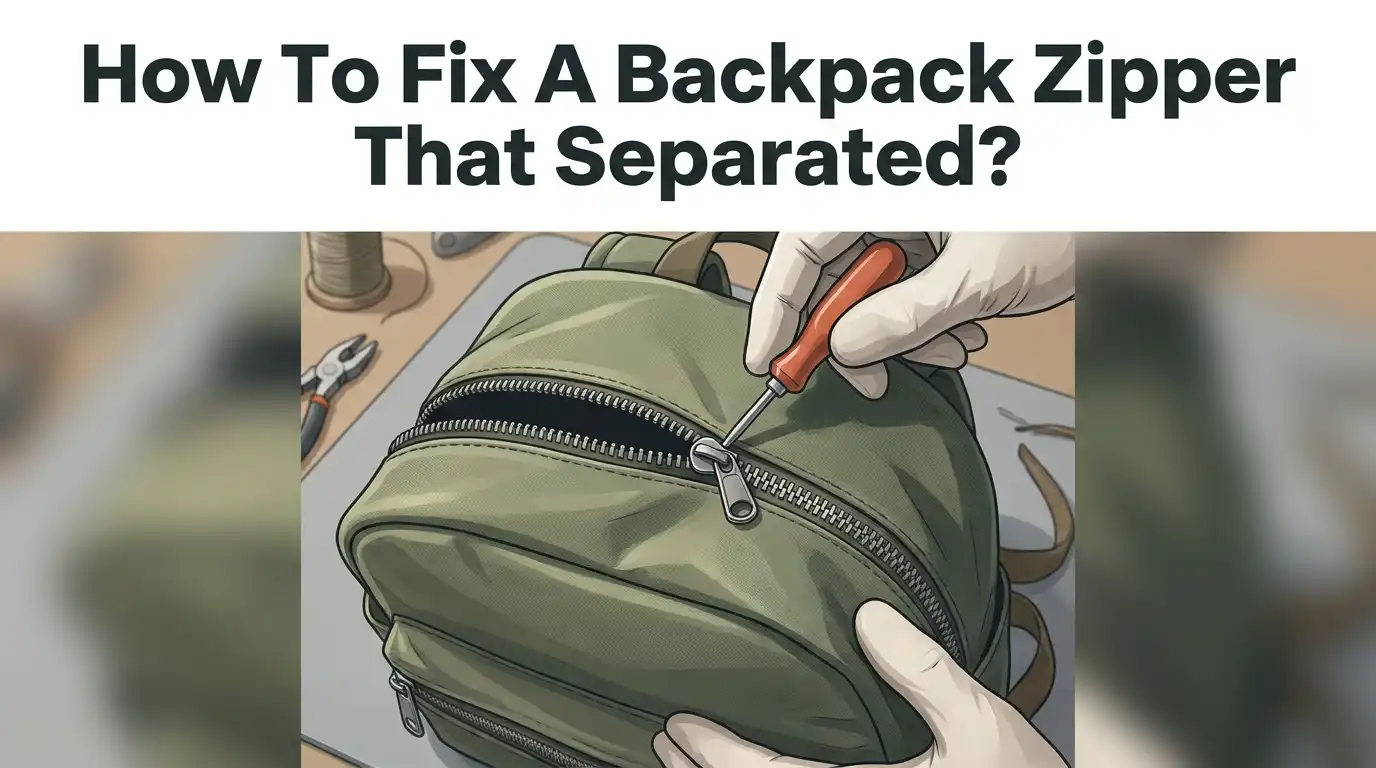
How To Fix A Backpack Zipper That Separated?
Your backpack zipper just split open, and now the two sides refuse to stay together. It’s frustrating, especially when you’re about to head out the door.
The good news? A separated backpack zipper is one of the most fixable problems you’ll face. You don’t need to rush to a repair shop or toss your bag out.
Most zipper separations happen when the slider loses its grip on one or both sides of the teeth. This causes the teeth to pull apart instead of locking together as you zip.
This guide walks you through exactly how to fix it, step by step. You’ll learn how to remove the slider, realign the teeth, and reattach everything properly.
You’ll also find out why zippers keep splitting and how a simple lubrication trick can stop it from happening again.
Whether your zipper separated mid-use or won’t stay closed at all, this article covers it all. No special skills are needed, just a little patience and the right technique.
In a Nutshell
Here is a quick summary of what you need to know:
-
A separated zipper happens when the slider loses grip on one or both sides of the teeth, causing them to split apart.
-
You can fix it by removing the U-shaped stops at the end of the zipper, pulling the slider off, and pressing the teeth back together.
-
Gently squeeze the slider with pliers to tighten its grip before putting it back on the teeth.
-
Lubrication is key. Rubbing pencil graphite along the teeth helps the slider move smoothly and prevents future splits.
-
Never force the slider aggressively. This is the most common mistake and it causes the slider or teeth to break permanently.
-
If your zipper keeps separating after the fix, check that the teeth are fully aligned before reinserting the slider, and make lubrication a regular habit.
The whole repair takes just a few minutes and requires basic tools you likely already have at home.
Why Does a Backpack Zipper Separate in the First Place?
A backpack zipper separates because the slider loses its grip on the teeth. Think of the slider as a clamp. When it works properly, it holds both sides of the teeth together tightly. Over time, this clamp weakens.
Wear and tear is the main culprit. Every time you open and close your backpack, the slider experiences friction. The metal or plastic gradually becomes loose and worn. The teeth themselves can also shift out of alignment, especially if you’ve tugged on the zipper hard or overstuffed your backpack.
Misalignment happens when one side of the zipper teeth moves forward while the other stays behind. This creates a gap. The slider can no longer grip both sides equally, so it slides past one side without catching it. Your zipper splits open.
Moisture and dirt also play a role. When water, dust, or debris gets trapped between the teeth, it prevents them from locking together properly. The slider struggles to maintain contact with both sides.
Forcing the zipper too hard accelerates this problem. If you yank on a stuck or partially closed zipper, you push the teeth out of alignment faster. The slider can twist or bend, losing its ability to grip evenly.
Cheap materials make separation more likely. Some backpacks use low quality sliders made from soft plastic or thin metal. These wear out quickly and lose their grip after just a few months of regular use.
The good news? Understanding why zippers separate helps you prevent it. Regular lubrication keeps teeth smooth and aligned. Gentle handling protects the slider from damage. Keeping your zipper clean removes debris that causes misalignment.
Once you know what causes the problem, fixing it becomes straightforward.
Tools You Will Need Before You Start
Before you start fixing your separated backpack zipper, gather the right tools. Having everything ready makes the job faster and prevents frustration.
You’ll need a pair of small pliers with a narrow tip. These work best for prying open misaligned zipper teeth and removing the U shaped stops at the zipper end. Regular pliers work, but needle nose pliers give you better control in tight spaces.
A pencil is essential for lubrication. Rub the graphite along the zipper teeth to help the slider move smoothly. Graphite reduces friction and prevents future splitting. This simple step makes a huge difference in how well your zipper works after repair.
Keep a soft cloth nearby. Use it to wipe away dirt and debris from the zipper before you start. A clean zipper is easier to work with and helps you see exactly where the teeth misaligned.
You might want a magnifying glass if you have one. Separated zippers involve small parts, and seeing clearly helps you align everything correctly. Good lighting in your work area matters just as much.
Have a small flat head screwdriver on hand. Sometimes you need extra leverage to pry teeth apart gently. The flat tip gives you better control than pliers alone.
Finally, keep a small container of water nearby. If you accidentally use too much graphite, water helps you clean the zipper without damaging it. A damp cloth works perfectly for this.
These tools cost very little and you probably have most of them at home already. The key is gathering everything before you begin. This prevents you from stopping midway through the repair to search for a tool. Working with a complete set keeps your focus on the repair itself, making it more likely you’ll succeed on your first try.
How To Assess the Damage Before Attempting a Fix
Before you attempt any repair, you need to understand exactly what happened to your zipper. Take time to examine the damage carefully. This step prevents you from making mistakes that could make things worse.
Start by opening your backpack fully and looking at the zipper from both sides. Check if the teeth are completely separated or just misaligned. A completely separated zipper has teeth that have pulled apart entirely. A misaligned zipper has teeth that are still touching but not lined up properly.
Run your finger gently along the zipper track. Feel for bent teeth, twisted metal, or plastic pieces that broke off. Look for visible gaps between the left and right sides of the teeth. Pay special attention to the area where separation started, as this shows you the weak point.
Inspect the slider itself. The slider is the metal or plastic piece that moves up and down. Check if it still grips both sides of the teeth or if it only holds one side. A weak slider is often the real problem behind separation.
Look at the U shaped stops at the zipper’s end. These small pieces prevent the slider from falling off. If they’re bent or missing, this explains why your zipper separated.
Test the slider gently by moving it slightly. Does it move smoothly or does it stick? Does it pull teeth from one side only? This tells you if the slider needs adjustment or replacement.
Check for dirt, dust, or moisture trapped between the teeth. Debris prevents teeth from aligning properly. Wipe away any visible dirt with a dry cloth.
Finally, determine if the damage is fixable or if replacement is necessary. Most separated zippers can be repaired if the teeth aren’t broken and the slider still works. If teeth are snapped off or the slider is cracked, repair becomes much harder.
Step-By-Step: How To Fix a Separated Backpack Zipper
Start by examining your zipper closely to understand what went wrong. Look at both sides of the zipper track where the teeth should interlock. Gently run your finger along the teeth to feel if they’re properly aligned. If one side sits forward while the other lags behind, you’ve found your problem.
Next, check the slider itself. This small metal or plastic piece holds the teeth together as it moves. Press it gently with your finger to see if it grips both sides equally. A weak grip on one side means the teeth will separate during use.
Look for the U shaped stops at the bottom and top of your zipper. These metal pieces prevent the slider from falling off. If these stops look bent or damaged, they won’t hold the slider in place properly.
Inspect the zipper teeth carefully for bent, broken, or missing teeth. Run your finger along the entire length. Even one damaged tooth can cause separation problems. Missing or severely bent teeth mean you may need zipper replacement instead of repair.
Check between the teeth for dirt, dust, or moisture. Debris trapped in the zipper prevents proper alignment and causes separation. This is fixable with cleaning.
Test the slider movement gently. Move it slightly up and down to feel if it catches or binds. Smooth movement means the slider itself is okay. Rough or stuck movement indicates internal damage.
Finally, determine if your zipper is worth fixing. If teeth are intact, the slider works, and only misalignment occurred, you can fix it. If multiple teeth are broken or the slider is cracked, replacement makes more sense. Most separated zippers are fixable with the right approach. Understanding your specific problem helps you choose the best solution and prevents wasted effort on irreparable damage.
How To Lubricate a Zipper To Prevent Future Separation
Lubrication keeps your zipper working smoothly and stops it from separating again. A well lubricated zipper moves easier and experiences less friction between the teeth.
Graphite is your best option for zipper lubrication. A regular pencil works perfectly because pencil lead is pure graphite. Simply rub the pencil tip along both sides of the zipper teeth. Move the slider up and down gently several times to spread the graphite evenly. This distributes the lubricant into all the small spaces between the teeth.
The graphite method has real advantages. It doesn’t attract dirt like oil based lubricants do. Graphite stays dry and won’t stain your backpack fabric. It works on both metal and plastic zippers without causing damage.
Apply lubricant regularly to prevent future problems. Check your zipper every few months and add more graphite if needed. This simple habit stops separation before it starts. Pay special attention to zippers that get heavy use.
Moisture and dirt cause most separation issues. Keep your backpack dry when possible. Wipe down zippers with a soft cloth after exposure to rain or dust. Remove any visible debris from between the teeth immediately.
Test your slider movement after lubrication. It should glide smoothly without catching or sticking. If the slider still feels rough, apply a bit more graphite and test again.
Don’t use thick oils or grease on zippers. These substances trap dirt and make your zipper sticky. Avoid WD 40 and similar products on backpack zippers because they attract dust and grime.
Store your backpack in a dry location. Humidity causes corrosion on metal zippers and swelling on plastic ones. A cool, dry closet is ideal for long term storage.
These simple lubrication steps keep your backpack zipper functioning properly for years. Consistent maintenance is far easier than fixing separation problems repeatedly.
How To Squeeze and Realign the Slider for a Lasting Fix
When your zipper separates, the slider loses its grip on one or both sides of the teeth. The good news is that squeezing and realigning the slider often fixes this problem permanently.
Start by removing the slider completely. Use small tipped pliers to gently pry open the misaligned side of the zipper. Once you can access the U shaped stops at the zipper’s end, remove them carefully with your pliers. Now you can slide the slider off the track entirely.
Next, press the zipper teeth back together by hand. Run your fingers along both sides of the zipper to ensure the teeth align properly. Check that no teeth are bent or twisted. This alignment step is crucial because a misaligned track causes the slider to separate again.
Now comes the squeezing technique. Use your pliers to gently compress the slider from both sides. You want to tighten the slider’s grip on the teeth without cracking the plastic or metal. Squeeze it gradually and test the fit frequently. The slider should grip the teeth more firmly after this adjustment.
Before you reattach the slider, apply graphite lubricant along the zipper teeth. Use a regular pencil by rubbing the tip along both sides of the track. This helps the slider move smoothly and prevents future separation.
Slide the slider back onto the track carefully. Move it slowly up and down to check that it grips both sides evenly. If one side still separates, remove the slider again and squeeze it a bit more.
Finally, reattach the U shaped stops using your pliers. Crimp them firmly so they hold the slider in place. Test your zipper several times by opening and closing it gently.
This method works because it restores the slider’s grip and ensures proper tooth alignment. Handle everything gently to avoid breaking the zipper mid repair.
Common Mistakes To Avoid When Fixing a Separated Zipper
Many people damage their zippers further by rushing through the fix. The biggest mistake is forcing the slider back onto misaligned teeth. Aggressive force snaps the slider or breaks the teeth permanently. Your zipper needs gentle, patient handling.
Skipping the realignment step causes repeated separation. Some people reattach the slider without pressing the teeth together first. The teeth won’t catch properly, and your zipper splits again immediately. Take time to align everything before reinserting the slider.
Neglecting lubrication is another common error. People fix the separation but never add graphite to the teeth. Without lubrication, friction builds up and causes the same problem to return within weeks. Lubrication is not optional if you want a lasting repair.
Using wrong lubricants destroys zippers quickly. Thick oils, grease, or silicone sprays trap dirt between the teeth. Your zipper becomes sticky and separates more easily. Stick with graphite only for best results.
Forgetting to remove the U shaped stops creates frustration. These small metal or plastic pieces hold the slider in place. If you don’t remove them first, you cannot pull the slider off the track. Work slowly and use small tipped pliers to avoid bending these stops.
Pulling the slider sideways instead of straight causes misalignment. The slider must come off horizontally along the track. Yanking it at an angle damages the teeth and warps the slider itself.
Not checking your work before using the backpack leads to disappointment. Test the slider movement gently after reattachment. Open and close it several times to confirm smooth operation. Catch any problems early before the zipper separates again during use.
Finally, rushing the entire process is your worst enemy. Take breaks between steps. Zippers respond better to careful, methodical work than hurried repairs.
Final Thoughts
A separated backpack zipper is a frustrating problem, but it is absolutely fixable with the right approach. The entire process comes down to three core actions: removing the slider, realigning the teeth, and squeezing the slider back into proper shape.
Patience is the single most important factor throughout this repair. Rushing any step increases the risk of breaking the slider or snapping the zipper teeth completely.
Always start by assessing the damage before touching anything. Look at where the separation begins and identify whether the slider has lost its grip or the teeth are physically damaged.
If the teeth are intact, your repair has a very high chance of success. Broken or missing teeth, however, usually mean the zipper needs a full replacement.
The squeezing technique works because it tightens the slider’s grip on both rows of teeth. A loose slider is the root cause of most separation problems, so fixing that grip solves the issue at its source.
Lubrication plays a supporting role that many people underestimate. Graphite keeps the teeth moving smoothly and reduces the stress placed on the slider during everyday use.
Regular maintenance after the repair matters just as much as the fix itself. Check your zipper every few months and run a pencil along the teeth to keep everything moving freely.
Avoid forcing the zipper at any point during normal use. If you feel resistance, stop and investigate instead of pulling harder.
This repair is a genuine skill worth knowing. Most backpack zippers separate multiple times over the life of the bag, so understanding the fix saves you money and extends the life of your gear.
A well-maintained zipper can last for years beyond its expected lifespan. Take care of it consistently, and it will rarely let you down.
Frequently Asked Questions
Why does my zipper keep separating even after I fix it?
Separated zippers usually return if you skip the lubrication step. Graphite lubricant (like pencil lead) helps the slider grip both sides of the teeth firmly. Without it, the slider loses contact again quickly. Apply lubricant along the entire zipper track after your repair. Move the slider up and down gently to spread it evenly. This prevents repeated separation.
What should I do if the slider won’t fit back on the track?
Your zipper teeth may not be fully aligned yet. Press them together more firmly by hand along the entire length. Check both sides carefully to ensure they line up perfectly. The teeth must touch completely before you reattach the slider. If gaps remain, the slider cannot grip properly and will slip off again.
Can I use oil or other lubricants instead of graphite?
Avoid oils, silicone sprays, and waxes on zippers. These products attract dirt and create sticky buildup over time. Graphite is the best choice because it lubricates without collecting debris. A regular pencil works perfectly for this purpose. Just rub the pencil tip along both sides of the zipper teeth.
How do I know if my zipper is too damaged to repair?
Inspect the metal or plastic teeth closely. If teeth are bent, broken, or missing, repair becomes very difficult. Minor separation with intact teeth fixes easily. Run your fingers along the entire zipper to feel for damage. If most teeth are straight and present, you have a good chance of success.
Is it normal for the zipper to feel stiff after repair?
Yes, stiffness is common immediately after fixing. The slider grip is tighter now, which causes resistance. Continue moving the slider up and down gently over several uses. The zipper will loosen slightly as you use it normally.

Hi, I’m Luna Beck — the founder and voice behind Urban Pack Vault. I’m passionate about helping people find bags that perfectly match their lifestyle. From backpacks to travel luggage, I research, review, and recommend so you never have to second-guess your next purchase.