
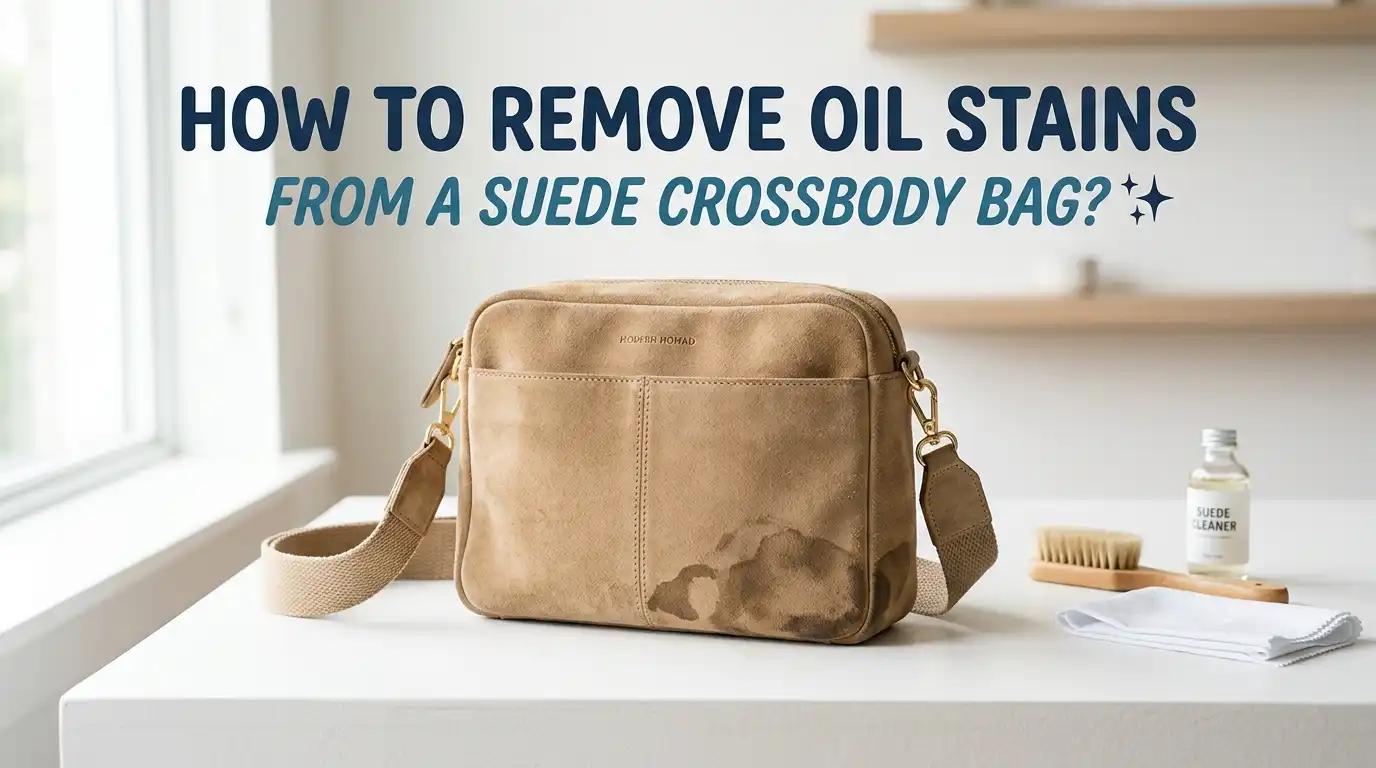
How To Remove Oil Stains From A Suede Crossbody Bag?
Oil stains on a suede crossbody bag feel like a small disaster. One drop of salad dressing, a smear of sunscreen, or a greasy fingerprint can leave a dark mark on the soft surface. Suede is delicate, so panic feels natural. You may worry that you have ruined a favorite accessory forever.
Good news. You can fix most oil stains at home with cheap items you already own. This guide walks you through every method, step by step, in plain language.
You will learn what works, what to avoid, and when to call a professional. Keep reading, because the right move in the first hour often saves the bag.
In A Nutshell:
- Act fast and blot, never rub. Fresh oil lifts far more easily than old oil. Press a dry cloth on the spot to soak up surface grease before it sinks into the nap.
- Powder is your best friend. Cornstarch, baking soda, or talcum powder draw oil out of suede naturally. This is the safest and most proven home method.
- Keep water to a minimum. Suede hates moisture. Too much liquid leaves rings and stiffens the fibers, which creates a bigger problem than the stain.
- Test every product first. Always try your cleaner on a hidden spot, like the inside flap or bottom corner, before you touch the visible stain.
- A suede brush restores the look. After cleaning, gentle brushing lifts the flattened nap and brings back the soft, even texture you love.
- Know your limit. Designer bags, large stains, or set in marks deserve a professional suede cleaner. There is no shame in handing it over.
What Makes Suede So Tricky With Oil Stains
Suede comes from the soft inner layer of animal hide. It has a fuzzy surface called the nap. That fuzzy texture feels lovely, but it also acts like a sponge. Oil spreads through the tiny fibers and clings to them fast.
Unlike smooth leather, suede has no protective top coat. So liquids sink straight in. This is why a grease spot looks darker and feels stiff. The oil coats each fiber and blocks the natural softness.
Water makes things worse on suede. It leaves stiff rings and can change the color. So you cannot simply wash an oil stain away like you would with a cotton shirt. You need dry methods and gentle care. Understanding this helps you pick the right fix and avoid damage.
Act Fast: Why Fresh Oil Stains Are Easier To Remove
Speed matters more than any product. The moment you spot the stain, the clock starts. Fresh oil sits near the surface, where it is simple to absorb. Old oil sinks deep into the fibers and bonds with them.
Grab a clean, dry cloth or a paper towel right away. Press it gently on the spot. Blot, do not rub. Rubbing pushes the oil deeper and spreads the mark wider. Lift the cloth, fold to a clean section, and press again.
Keep blotting until no more oil transfers to the cloth. This step alone removes a large share of fresh grease. You may not fully clear the stain yet, but you stop it from setting. Less oil left behind means an easier cleanup later.
Gather Your Tools Before You Start
A little prep saves time and stress. Lay out everything on a clean table near good light. You do not need fancy gear. Most items live in your kitchen or bathroom right now.
You will want absorbent powder such as cornstarch, baking soda, or talcum powder. Add a soft suede brush or a clean toothbrush. Keep a few dry white cloths or paper towels ready. A suede eraser helps too, though a clean pencil eraser works in a pinch.
For tougher stains, set aside white vinegar or rubbing alcohol and a small bowl. Choose white cloths only, because dyed fabric can transfer color onto your bag. Empty the bag fully and stuff it with paper to hold its shape. Now you are ready to work calmly and cleanly.
Method 1: The Cornstarch Or Baking Soda Trick
This is the gold standard for oil on suede. It is cheap, gentle, and very effective. The powder pulls oil out of the fibers like a magnet. Both cornstarch and baking soda work well, so use whichever you have.
Start by blotting any surface oil with a dry cloth. Then sprinkle a thick layer of powder over the whole stain. Cover it fully so a small mound forms. Press the powder lightly into the nap with your finger.
Now wait. For light stains, leave it a few hours. For deep or old stains, let it sit overnight, up to twenty four hours. Brush the powder away with your suede brush. Repeat the process if the mark remains.
Pros: It is safe, low cost, uses no water, and works on most fresh stains.
Cons: It needs patience and time, and stubborn old stains may need several rounds.
Method 2: Using A Suede Brush And Eraser
Sometimes the oil leaves a faint shadow or a flattened patch after powder treatment. A suede brush and eraser finish the job. These tools lift the nap and rub out light surface marks.
Hold the bag firmly. Brush the stained area in one direction with soft, even strokes. This loosens trapped grease and stands the fibers back up. Then switch directions to refresh the whole nap.
For a stubborn spot, rub a suede eraser over it gently. Use the same motion you would use on a pencil mark on paper. The eraser grabs dry residue and dirt clinging to the fibers. Brush again to clear the crumbs and even out the texture.
Pros: It restores the soft look, needs no liquid, and is quick to do.
Cons: It works best on light marks, and heavy oil stains still need powder or stronger steps first.
Method 3: White Vinegar For Set In Stains
When powder and brushing fail, white vinegar steps in. It cuts through grease without leaving a water ring like plain water does. Vinegar evaporates fast, which protects the delicate suede.
Pour a small amount of white vinegar onto a clean white cloth. Dampen the cloth, do not soak it. Press the cloth gently onto the stain. Blot, lift, and repeat with a fresh section of cloth.
Never pour vinegar straight onto the bag. Always apply through a cloth and keep it light. Let the spot air dry fully, away from heat. Once dry, brush the nap to bring back its texture.
Pros: It tackles old, set in oil stains and dries without strong rings.
Cons: It carries a sharp smell, may slightly affect color, and demands a patch test first.
Method 4: Rubbing Alcohol For Stubborn Grease
Rubbing alcohol is another strong option for tough oil marks. It breaks down grease and evaporates quickly, so it rarely stains suede. Many people trust it for marks that powder cannot lift.
Dip the corner of a clean white cloth into the alcohol. Squeeze out the excess so it is barely damp. Dab the stain with light, careful taps. Work from the outside of the stain toward the center to stop spreading.
Let the area dry completely on its own. Do not use a hairdryer or place it near a heater. Heat can stiffen and crack suede. After drying, brush the nap to refresh the soft feel.
Pros: It dries fast, handles greasy marks, and leaves little residue.
Cons: It can lighten dye on darker bags, so the hidden patch test is a must.
Method 5: A Gentle Dish Soap Solution
A mild soap mix can help with mixed stains that include both oil and dirt. Use this method with care, since it adds moisture. Keep the water amount as low as you possibly can.
Mix a single drop of dish soap into a small bowl of cool water. Stir until light suds form. Dip a cloth, wring it almost dry, and dab the stain gently. Focus only on the spot, not the whole bag.
Wipe with a second damp cloth to lift the soap, then blot dry. Stuff the bag with paper and let it air dry slowly. Brush the nap once it is fully dry to restore the surface.
Pros: It cleans oil mixed with grime and uses common items.
Cons: It adds moisture, risks water rings, and needs slow, careful drying.
How To Handle Old Or Dried Oil Stains
Old stains feel discouraging, but they are not always hopeless. Dried oil bonds with the fibers, so it needs more effort. Layered treatments often beat a single attempt.
Start with the powder method and leave it overnight. Brush it off, then repeat two or three times. Each round pulls out a little more oil. If a shadow stays, move to vinegar or rubbing alcohol on a cloth.
Patience wins with old stains, so do not rush or scrub hard. Aggressive rubbing damages the nap and spreads the mark. Some deep stains may never vanish fully. In that case, even fading the mark to a faint shape counts as a real win.
Mistakes That Can Ruin Your Suede Bag
Knowing what not to do protects your bag as much as any cleaning trick. A few common errors cause permanent damage. Avoid them, and you keep the suede safe.
Never soak suede in water or toss it in the washing machine. Skip the hairdryer, radiator, and direct sun for drying. Heat dries out suede and makes it crack. Do not scrub hard or use colored cloths that bleed dye.
Avoid baby wipes, all purpose sprays, or random cleaners not made for suede. They often leave residue or change the color. Always test any product on a hidden area first. When in doubt, choose the gentlest option and go slow.
When To Call A Professional Suede Cleaner
Some stains and bags belong in expert hands. Designer crossbody bags or sentimental pieces carry too much value to risk. If your home methods fail, a pro is the smart next step.
Large stains, deep set grease, or stains across delicate dyed suede deserve a specialist. Professional cleaners have tools and solvents you cannot buy at the store. They also know how to treat colored suede without fading it.
Ask about their process and price before you hand over the bag. Choose a cleaner with real suede and leather experience, not just general dry cleaning. The cost is often worth it to save a bag you love. A good pro can rescue stains that look impossible at home.
How To Protect Your Suede Bag From Future Oil Stains
Prevention beats cleaning every time. A little care keeps your bag fresh for years. A protective spray builds a shield against oil and water. Choose one made for suede and apply it as directed.
Test the spray on a hidden corner first. Then coat the whole bag evenly and let it dry fully. Reapply the protector every few months or each season. This simple habit stops most stains before they start.
Store the bag in a dust bag, away from heat and damp. Wash your hands before you handle it to avoid grease transfer. Brush the nap now and then to keep it soft. Small steps like these save you big cleanup jobs later.
Frequently Asked Questions
Can I use water alone to remove oil from suede?
No, plain water does not lift oil well and often makes things worse. Water leaves stiff rings and can change the suede color. Use a dry powder method instead, since it absorbs grease without adding moisture. Keep water use to a bare minimum on any suede surface.
How long should I leave cornstarch on the stain?
For a fresh, light stain, a few hours usually works fine. For old or deep oil stains, leave the powder overnight, up to twenty four hours. The longer it sits, the more oil it pulls out. Brush it off after, and repeat the process if the mark stays.
Will the oil stain come out completely?
Fresh stains often vanish fully with quick, correct treatment. Old or deep stains may only fade rather than disappear. Speed and repeated gentle treatments give you the best result. If a faint mark remains, a professional cleaner may lift what home methods could not.
Is rubbing alcohol safe on colored suede?
Rubbing alcohol can sometimes lighten dye on darker suede. Always test it on a hidden spot before you touch the stain. If the hidden area shows no color change, you can use it carefully. Apply through a cloth, never pour it straight on the bag.
How do I stop suede from getting stiff after cleaning?
Let the bag air dry slowly, away from heat and direct sun. Stuff it with paper to hold its shape while it dries. Once fully dry, brush the nap with a suede brush to soften it. This lifts the fibers and restores that smooth, fuzzy feel.
Can I prevent oil stains before they happen?
Yes, a suede protector spray is your strongest defense. It coats the fibers and repels oil and water. Apply it after cleaning, then reapply every season. Handle the bag with clean hands and store it in a dust bag to keep grease away.

Hi, I’m Luna Beck — the founder and voice behind Urban Pack Vault. I’m passionate about helping people find bags that perfectly match their lifestyle. From backpacks to travel luggage, I research, review, and recommend so you never have to second-guess your next purchase.