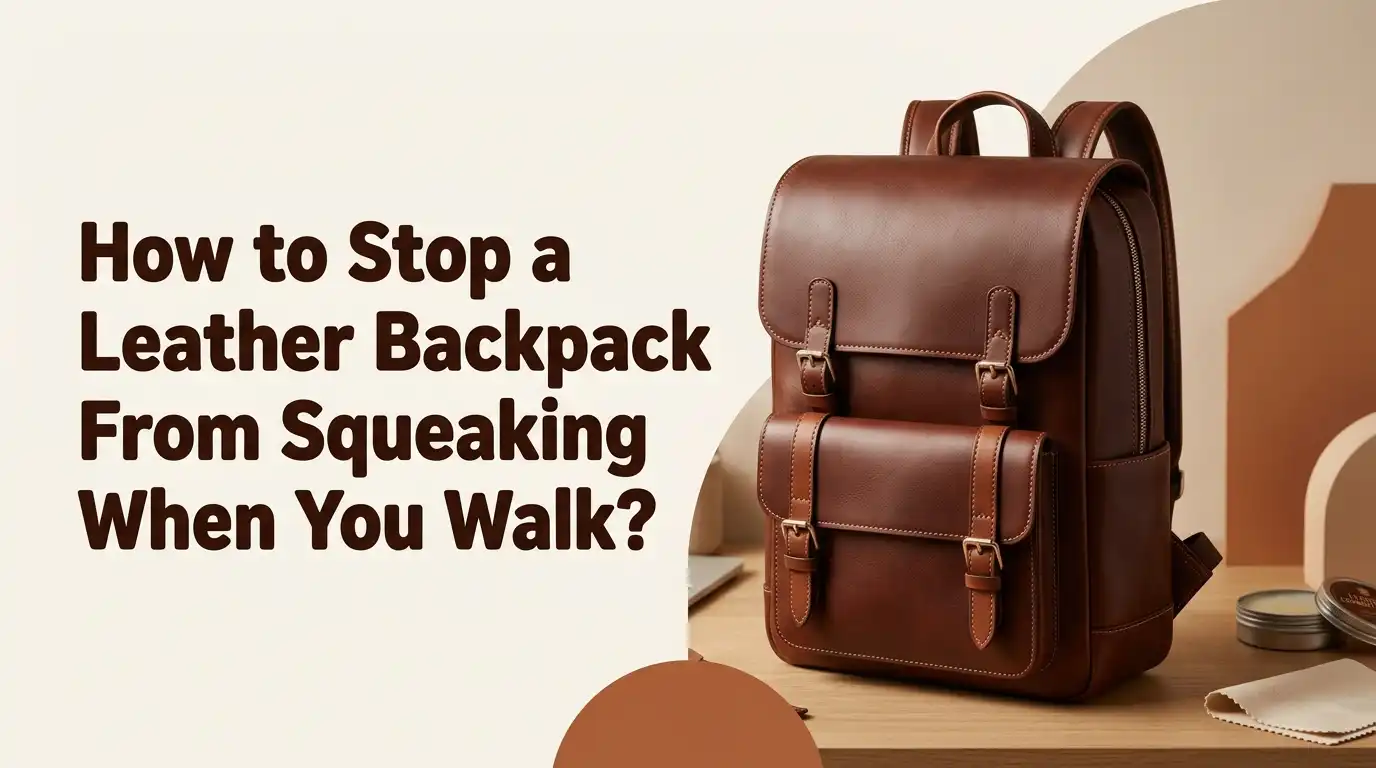
How to Stop a Leather Backpack From Squeaking When You Walk?
That annoying squeak from your leather backpack can turn a peaceful walk into a frustrating experience. You hear it with every step. The sound draws unwanted attention in quiet libraries, crowded trains, and silent offices.
You might even feel embarrassed as people glance your way. But here is the good news. A squeaky leather backpack is a common problem with simple solutions. You do not need to throw away your favorite bag or spend money on expensive repairs.
Most squeaks come from dry leather fibers rubbing together, metal hardware grinding against leather, or stiff new materials that have not broken in yet. This guide gives you practical, step-by-step methods to silence that noise for good.
Key Takeaways
- Identify the source first. Before you apply any product, locate where the squeak comes from. Walk slowly and listen carefully. Pinch and press different parts of your backpack.
- Leather squeaks because of friction and dryness. Leather is a natural material with fibers that need moisture to stay soft and flexible. When those fibers dry out, they become stiff and create friction when they rub together.
- Start with the gentlest methods first. Always begin with leather conditioner or natural break-in techniques before moving to lubricants or powders. Harsh chemicals can stain your backpack or damage the leather over time.
- Regular maintenance prevents squeaks from returning. Conditioning your leather backpack every three to six months keeps the material soft and noise-free. Store your backpack in a cool, dry place away from direct sunlight.
- Not all lubricants are safe for leather. Avoid petroleum-based products like regular WD-40 on leather surfaces. They can stain, degrade, or discolor the material.
Why Leather Backpacks Squeak in the First Place
Leather squeaks because of friction between two surfaces that rub against each other. Think of it like a door hinge that needs oil. The sound you hear comes from dry leather fibers, stiff new material, or metal hardware grinding against leather loops.
Most leather backpacks have multiple friction points. The shoulder straps connect to the bag body through metal rings or sewn loops. The top handle often uses leather folded through hardware. All these connection points can produce noise when you walk.
New leather backpacks squeak more often because the material is still stiff from the tanning process. Leather needs time and movement to soften up. This is called the break-in period.
Just like a new pair of leather boots, your backpack needs repeated use to settle into a quiet, comfortable state. The squeak is not a sign of poor quality. It simply means the material is dense and fresh.
Environmental factors also play a role. Dry climates pull moisture out of leather, making it stiffer and noisier. High humidity can temporarily soften leather and reduce squeaks.
Identify the Exact Source of the Squeak
Before you reach for any product, take a few minutes to find the exact spot that makes noise. Put on your backpack and walk around your home. Listen closely. Does the squeak come from your left shoulder or your right?
Is it near the top handle or down by the side buckles? Stop walking and press on different parts of the bag with your hand. Pinpointing the source is the most important step because it determines which fix you should use.
If the noise comes from a metal D ring rubbing against a leather loop, you need a lubricant for that specific spot. If the squeak comes from the strap itself where leather folds over and rubs against itself, you need to condition that area.
Some backpacks have internal frame sheets or plastic stiffeners that squeak against the leather lining. You might need to access these hidden areas with a small amount of tape or fabric to reduce friction.
Apply Leather Conditioner to Dry Friction Zones
Leather conditioner is your first and safest solution. Dry leather fibers create friction when they rub together. A quality conditioner adds moisture and oil back into the material, making it soft and supple again.
This is the most recommended fix by leather care experts because it treats the root cause instead of just masking the sound. You can find leather conditioners at most shoe repair shops or general stores. Look for products made specifically for smooth leather, not suede or nubuck.
To apply conditioner, use a clean, soft cloth. Put a small amount of conditioner on the cloth, not directly on the leather. Rub it gently into the squeaky area using circular motions. Focus on the spots where leather folds or rubs against itself.
The strap loops, buckle attachments, and handle bases often need the most attention. Let the conditioner soak in for about 20 minutes. Then buff away any excess with a dry cloth.
You should test the conditioner on a hidden spot first. The bottom of the bag or the inside of a strap works well. Wait a few hours to make sure the conditioner does not darken the leather too much or react poorly.
Pros: Treats the root cause of the squeak. Improves overall leather health. Safe for most leather types. Extends the life of your backpack. No risk of staining clothes.
Cons: Takes time to dry. May temporarily darken leather. Needs reapplication every few months. Some conditioners have a strong smell initially.
Use Candle Wax on Metal to Leather Contact Points
Candle wax is a simple and effective lubricant for squeaky hardware. Many backpacks have metal D rings, buckles, or snaps that rub against leather loops as you walk. The friction between metal and dry leather creates that high-pitched squeak you hear.
Candle wax works by creating a thin, dry lubricating layer between the two surfaces. It fills in microscopic rough spots and lets the metal glide smoothly without noise.
Grab a plain white candle from your home. Rub the candle directly onto the metal ring or buckle where it touches the leather. Twist the hardware back and forth as you apply the wax.
This helps the wax work its way into the tight space between the metal and the leather. If you cannot reach the contact point with the candle, scrape off a small amount of wax with a knife and push it into the gap using a toothpick.
Pros: Extremely cheap and available. No risk of staining leather or clothing. Long-lasting effect. Works instantly. Does not attract dirt or dust.
Cons: May need reapplication after heavy use. Hard to apply in very tight spaces. Does not condition the leather itself. Not effective for leather-on-leather squeaks.
Try a Silicone Based Dry Lubricant Spray
Dry silicone spray is a favorite among backpackers and outdoor enthusiasts. It lubricates moving parts without leaving an oily residue.
Unlike oil-based products, silicone spray dries quickly and does not attract dust or dirt. This makes it ideal for backpack hardware that rubs against your clothing. You can find dry silicone spray at hardware stores or online retailers in the lubricant aisle.
Shake the can well before use. Spray a tiny amount onto a cotton swab or a small brush. Never spray directly onto the backpack because the mist can spread to areas you do not want to treat.
Dab the silicone lubricant onto the exact squeaky spot, whether it is a metal buckle, a plastic clip, or a rivet. Let it dry for a few minutes before testing the backpack.
Silicone spray works well for persistent squeaks that candle wax cannot reach. The thin liquid penetrates deep into tight hinges and narrow gaps. It also works on plastic hardware, which some backpacks use alongside leather straps.
Pros: Penetrates tight spaces easily. Dries quickly and invisibly. Does not attract dust. Works on metal, plastic, and leather contact points. Long-lasting effect.
Cons: Contains chemicals that require ventilation. Can stain some fabrics if oversprayed. Slightly more expensive than household fixes. Not a leather conditioner.
Apply Talcum Powder or Cornstarch Between Rubbing Leather Surfaces
Talcum powder or cornstarch works wonders for leather-on-leather squeaks. The fine powder sits between the two rubbing surfaces and reduces friction.
Think of it like putting powder on your skin to prevent chafing. The same principle applies to your backpack straps. This method works best for areas where two leather pieces fold over each other and rub with every step you take.
Sprinkle a small amount of powder onto your fingers. Rub it gently into the gap between the two leather surfaces. Work the strap back and forth to distribute the powder evenly.
You can also use a small brush or a cotton swab to push the powder into tight spaces. Shake off any excess powder before wearing the backpack. You do not want white residue on your dark clothing.
Some people worry that powder will dry out the leather. This is a valid concern. Baby powder contains talc, which can absorb the natural oils in leather over time.
Pros: Instant results. Very cheap and readily available. Easy to apply. No smell. Works on tight leather folds.
Cons: Can dry out leather with repeated use. May leave white residue on dark bags. Temporary fix that needs reapplication. Not suitable for metal hardware squeaks.
Rub Hand Cream or Lip Balm Into Tight Leather Seams
Hand cream and lip balm are clever household fixes that many bag owners swear by. These products contain oils and waxes that lubricate leather while also adding a bit of moisture.
A thin wooden skewer or toothpick helps you reach the tightest spots. This method works especially well for squeaky leather handles and strap attachment loops where the gap is very narrow.
Dip the tip of a wooden skewer into a small amount of hand cream or scoop out a bit of lip balm. Slide the skewer into the tight space between the leather and the hardware.
Twist the handle or strap back and forth to spread the product inside the gap. Use very little product at first. You can always add more if the squeak continues. Wipe away any excess that squeezes out onto the visible leather surface.
Lip balm is slightly better than hand cream for this fix. It has a firmer texture and stays in place longer. Hand cream can soak into the leather quickly and may need reapplication sooner.
Pros: Uses items you already have at home. Very precise application. Conditions leather while lubricating. No strong chemical smells. Inexpensive.
Cons: Shorter lasting than wax or silicone. May need reapplication every few weeks. Can attract lint if overapplied. Not ideal for large surface areas.
Break In Your Backpack Naturally With Weight and Wear
Sometimes the best solution requires no product at all. New leather backpacks need a break-in period just like new leather shoes. The fibers in fresh leather are tightly packed and stiff.
As you use the backpack, those fibers loosen up and become more flexible. The squeak often disappears on its own after a few weeks of regular use. You can speed up this natural process with a simple trick.
Load your backpack with weight. Fill it with books, water bottles, or bags of rice. Wear it around your house for 15 to 20 minutes each day. The weight pulls on the straps and creates the same friction that causes the squeak.
But over time, that friction smooths the leather surfaces against each other. Move your arms and shoulders while wearing the loaded pack. Twist your torso gently to work the connection points.
Another natural break-in method is manual massage. Take the squeaky strap in your hands and bend it back and forth repeatedly. Roll the leather between your fingers. Fold it and unfold it. This mimics the movement of walking and accelerates the softening process.
Pros: No products or chemicals needed. Permanent fix once leather softens. Improves overall comfort of the backpack. Costs nothing. Safe for all leather types.
Cons: Takes time and patience. May not work for hardware-related squeaks. Requires consistent effort. Less effective on very thick or coated leather.
Replace Noisy Plastic Hardware With Metal Alternatives
Some leather backpacks use plastic buckles, clips, or D rings as cost-saving measures. Plastic against leather creates a different type of squeak that lubricants cannot always fix.
The plastic surface can develop tiny rough spots that dig into the leather and produce noise. Replacing plastic hardware with metal alternatives often solves this problem permanently. This is a slightly more advanced fix but well worth the effort.
Visit a local craft store, fabric shop, or outdoor gear repair center. Look for metal D rings, swivel clips, or buckles that match the size of your current hardware.
Many stores sell individual replacement pieces for just a few dollars. You can also find them online by searching for bag hardware or purse findings. Choose stainless steel or brass pieces for durability and rust resistance.
To replace the hardware, you may need basic sewing skills or a small screwdriver depending on how your backpack is constructed. Some straps are sewn around the D ring and require a needle and strong thread. Others use screws or rivets that you can remove with tools.
Pros: Permanent fix for plastic-related squeaks. Upgrades the quality of your backpack. Metal hardware lasts longer than plastic. Better aesthetic appearance.
Cons: Requires sewing or professional help. May cost more than other fixes. Finding exact size replacements can be tricky. Not necessary if hardware is already metal.
Apply Adhesive Felt Padding Between Noisy Contact Points
Felt padding is a clever solution for stubborn friction points that lubricants cannot reach. Some squeaks happen deep inside the bag where leather rubs against an internal frame sheet or a stiffener panel.
You cannot easily apply wax or oil to these hidden areas. A small piece of adhesive felt creates a barrier between the two surfaces and silences the noise permanently.
Buy a small sheet of adhesive felt from a craft store. These sheets have a peel-and-stick backing that makes application very easy. Cut a tiny piece of felt that matches the size of the rubbing area.
Peel off the backing and stick the felt onto one of the two surfaces. This prevents direct leather-on-leather or leather-on-plastic contact. The felt absorbs the friction and eliminates the squeak.
This method requires you to find the internal friction point first. You might need to look inside your backpack with a flashlight. Check the areas where the shoulder straps attach to the back panel.
Pros: Permanent fix for internal squeaks. Invisible from outside. No chemicals or odors. Very durable. Easy to apply.
Cons: Requires accessing hidden areas of the bag. Adhesive may fail in high heat. Felt can wear down over many years. Not suitable for visible exterior areas.
Adjust Your Packing Style to Reduce Strap Tension
The way you pack your backpack affects how the straps sit on your shoulders. An uneven load pulls one strap tighter than the other. This extra tension increases friction at the strap attachment points and can cause or worsen squeaking.
Changing how you distribute weight inside the bag can reduce the noise significantly. This simple adjustment costs nothing and takes only a moment.
Place heavier items close to your back and in the center of the backpack. This keeps the weight balanced and prevents the bag from pulling to one side. Use the compression straps on your backpack if it has them.
Tightening these straps pulls the load closer to your body and reduces movement. Less movement means less friction and fewer opportunities for squeaks.
Avoid overloading your backpack beyond its intended capacity. Too much weight strains the straps, buckles, and seams. The extra pressure can make even well-conditioned leather squeak as the fibers stretch and rub. A lighter load often means a quieter walk.
Pros: Completely free. No products or tools needed. Reduces wear on your backpack. Improves carrying comfort. Works immediately.
Cons: Does not fix leather conditioning issues. May not help with hardware squeaks. Limits how much you can carry. Requires adjustment each time you pack.
Clean Your Backpack to Remove Dirt and Grit
Dirt, dust, and grit trapped between leather surfaces act like sandpaper. These tiny particles increase friction and create noise with every movement.
A dirty backpack squeaks louder than a clean one. Regular cleaning removes these abrasive particles and keeps your leather smooth and quiet. This should be part of your routine maintenance, not just a fix for squeaks.
Use a soft, damp cloth to wipe down the leather surfaces of your backpack. Focus on the strap areas, handle loops, and any visible folds. Do not soak the leather. Just a slightly damp cloth is enough to pick up surface dirt.
For deeper cleaning, use a leather cleaner or saddle soap. Apply it with a soft brush in gentle circles. Wipe away the foam with a clean, damp cloth and let the backpack air dry away from direct heat.
Pay special attention to the hardware gaps. Dirt collects around D rings and buckles where leather wraps around metal. Use a dry toothbrush to scrub these tight areas gently.
Clean hardware moves more smoothly and quietly. After cleaning, always apply a light coat of leather conditioner. Cleaning removes some of the natural oils along with the dirt. Conditioning right after cleaning restores moisture and keeps the leather flexible and silent.
Pros: Improves overall leather health. Removes hidden dirt that causes friction. Extends the life of your backpack. Simple and cost-effective.
Cons: Takes time to dry fully. Requires leather cleaner or saddle soap. May need to be done regularly. Over-wetting can damage leather.
When to Seek Professional Leather Repair
Most squeaky backpack problems can be solved at home with the methods described above. But sometimes the issue is more serious. If you have tried multiple fixes and the squeak persists, your backpack may have a structural problem.
A professional leather worker or cobbler can diagnose and repair issues that home remedies cannot address. Do not hesitate to seek expert help for an expensive or sentimental backpack.
A loose rivet, a cracked leather loop, or a failing seam can all cause noises that lubricants will not fix. These problems need physical repair.
A cobbler can restitch a loose strap attachment, replace worn hardware, or reinforce a weak stress point. The cost is usually reasonable and far less than replacing the entire backpack. Many shoe repair shops also service bags, belts, and other leather goods.
Before taking your backpack in, make a note of exactly where the noise comes from and what you have already tried. This saves the repair person time and helps them address the problem faster. Some manufacturers also offer repair services or warranties for their products.
Pros: Fixes structural problems that home remedies cannot. Extends the life of your backpack significantly. Peace of mind from expert care. Often more affordable than replacement.
Cons: Costs money upfront. Takes time away from using your bag. May be hard to find a good leather repair shop. Not needed for simple conditioning issues.
Frequently Asked Questions
Will WD-40 stop my leather backpack from squeaking?
WD-40 can temporarily stop squeaks on metal hardware but it is not recommended for leather backpacks. The petroleum-based formula can stain leather, degrade stitching thread, and leave an oily residue that attracts dirt. It also evaporates quickly so the squeak returns within weeks. If you need a spray lubricant, choose a dry silicone spray instead. It works better and does not damage leather.
Does baby powder stop leather from squeaking?
Yes, baby powder can reduce leather squeaks by minimizing friction between rubbing surfaces. But you should use it carefully. Talcum powder absorbs the natural oils in leather and can dry out the material over time. This leads to cracking and premature aging. Use powder only as a short-term fix and always follow it with leather conditioner to restore lost moisture.
How long does it take for a new leather backpack to stop squeaking?
A new leather backpack typically stops squeaking within two to four weeks of regular use. The break-in period depends on how often you wear it and how much weight you carry. You can speed up the process by conditioning the leather, manually massaging the squeaky areas, and loading the bag with weight while walking around your home.
Can I use coconut oil or olive oil on squeaky leather?
You should avoid using cooking oils like coconut oil or olive oil on leather. These oils can go rancid over time and produce an unpleasant smell. They also clog leather pores and prevent proper conditioning in the future. Stick to products made specifically for leather care. If you need a household alternative, plain unscented lip balm or a quality hand cream is safer.
Why does my leather backpack squeak only on one shoulder?
A squeak on only one shoulder usually means an uneven load or a specific hardware issue on that side. Check how you pack your bag first. Heavy items on one side pull that strap tighter and increase friction. If the load is balanced, inspect the strap attachment point on the squeaky side. The metal D ring may need wax or the leather loop may need conditioning on that specific spot.
Can humidity make my leather backpack squeak more?
Humidity can actually reduce leather squeaks temporarily by adding moisture to the fibers. But this effect is short-lived and unreliable. Dry conditions cause more squeaking because the leather fibers become stiff and create more friction. The best solution is regular conditioning, which provides consistent moisture regardless of the weather. Do not count on humid days to fix your squeaky backpack.

Hi, I’m Luna Beck — the founder and voice behind Urban Pack Vault. I’m passionate about helping people find bags that perfectly match their lifestyle. From backpacks to travel luggage, I research, review, and recommend so you never have to second-guess your next purchase.