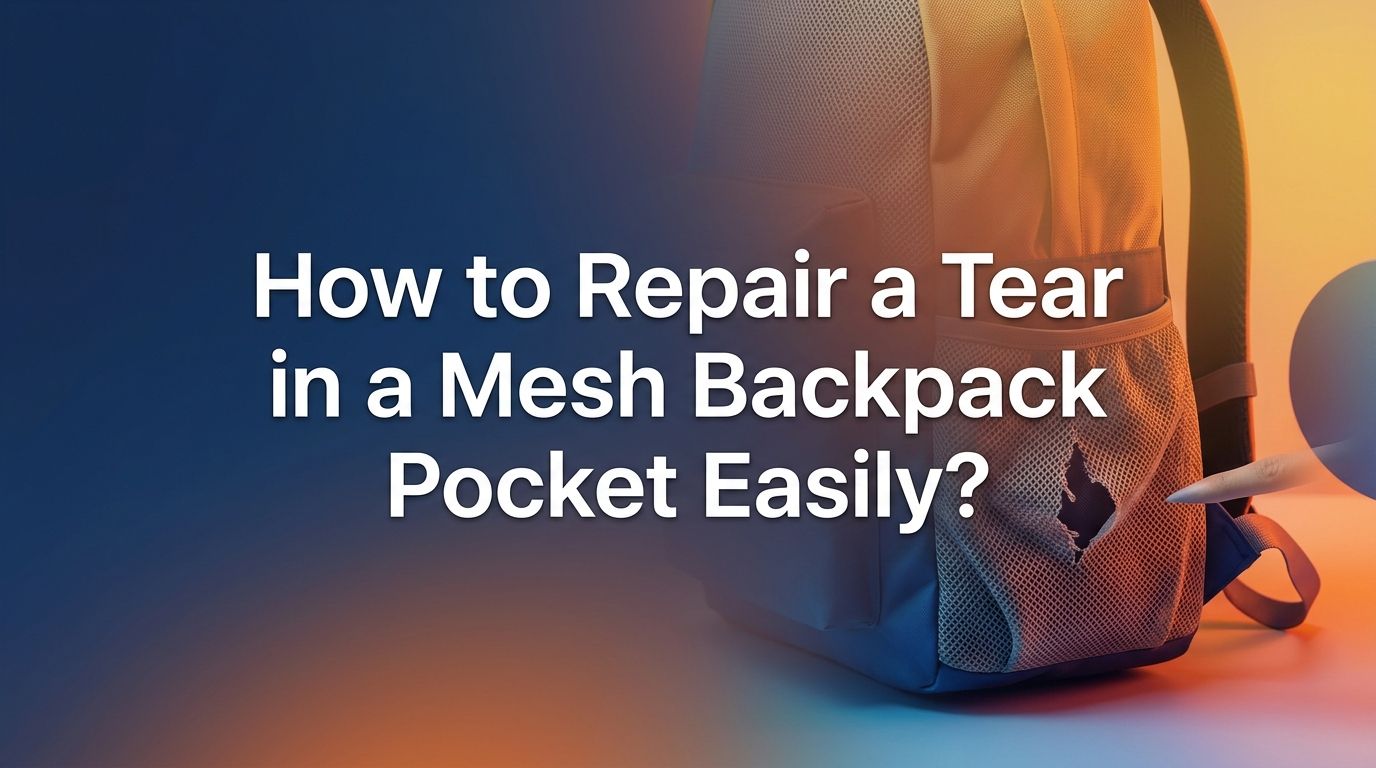
How to Repair a Tear in a Mesh Backpack Pocket Easily?
You stuffed your water bottle into the side pocket of your backpack one too many times. Now there is a growing tear in the mesh, and your items keep slipping out.
Sound familiar? A torn mesh pocket is one of the most common backpack problems, and it can turn a perfectly good bag into a frustrating daily annoyance.
The good news is that you do not need to replace your entire backpack. You also do not need professional repair skills. A mesh pocket tear is something you can fix at home in under 30 minutes with basic supplies.
In a Nutshell
- Assess the tear size first. Small holes under one inch can be fixed with repair tape or a few stitches. Larger rips may need a patch sewn over the damaged area. Knowing the size of the tear helps you pick the right method and avoid wasted effort.
- Clean the area before any repair. Dirt, dust, and oils will prevent tape from sticking and thread from holding properly. Use a damp cloth or rubbing alcohol to wipe the mesh around the tear on both sides. This single step dramatically improves the lifespan of your repair.
- Sewing gives the strongest and longest lasting result. A needle and thread repair can survive months of heavy use. It takes more time and basic sewing knowledge, but the results speak for themselves. Backpackers on the trail often use dental floss as emergency thread because of its strength.
- Repair tape is the fastest option for small tears. Products like gear repair tape can patch a hole in under five minutes. You apply it on both sides of the mesh so the adhesive bonds to itself through the hole. This creates a surprisingly strong seal with zero sewing required.
- Fabric glue works for quick, temporary fixes. If you need a fast solution and do not have tape or sewing supplies, fabric glue can hold a small tear together. However, it may not hold up well under repeated stretching or heavy loads.
- Act fast to stop the tear from spreading. Mesh material unravels quickly once a hole forms. The longer you wait, the bigger the tear gets, and the harder the repair becomes. Fix it as soon as you notice the damage.
How to Tell What Kind of Mesh Tear You Have
Before you grab any tools, take a close look at the damage. Mesh tears come in different shapes, and each type calls for a slightly different approach. A small round puncture is the easiest to fix. A long slice or rip needs more attention because the edges can fray.
Hold the pocket open and stretch it gently. Check if the mesh threads are broken cleanly or if they are frayed and unraveling. Clean cuts respond well to tape. Frayed or ragged edges work better with sewing because you can pull the loose threads together.
Also check where the tear is located. A rip near the seam line where the mesh connects to the backpack body may need reinforcement at the seam itself. A tear in the middle of the pocket is simpler to fix. Understanding your specific damage saves you time and helps you choose the right repair method from the start.
How to Gather the Right Supplies for a Mesh Pocket Repair
You do not need a long list of supplies. The tools depend on which method you choose. For a sewing repair, you need a needle, strong thread (nylon or polyester), scissors, and a thimble to protect your thumb. Measuring tape helps you cut the right thread length.
For a tape repair, you need gear repair tape and a pair of scissors. A damp cloth or rubbing alcohol wipe is useful for cleaning the area before application. For a glue repair, you need flexible fabric glue and a small clamp or clip to hold the edges together while the glue dries.
Having all your supplies ready before you start makes the process smooth and fast. You will not have to stop midway to search for a missing tool. Most of these items are already in a basic sewing kit or household toolbox, so you likely have what you need right now.
How to Fix a Small Mesh Tear with Repair Tape
Repair tape is the fastest and easiest method for small holes. Gear repair tape is specifically made for outdoor equipment. It sticks well to mesh, nylon, and other synthetic fabrics without leaving a messy residue.
Start by cleaning both sides of the mesh around the tear with a damp cloth. Let it dry completely. Cut two round or oval patches from the tape. Round edges are important because square corners tend to peel up over time.
Place a water bottle or solid object inside the pocket to create a firm surface. Peel the backing off one patch and press it firmly over the hole from the outside. Remove the water bottle. Now peel the second patch and apply it from the inside of the pocket, pressing it directly onto the first patch through the hole. The two sticky surfaces bond together through the mesh, creating a strong double sided seal.
Pros: Very fast, no sewing skills needed, works great for small tears, lightweight to carry on trips.
Cons: May peel off over time with heavy use, not ideal for tears longer than two inches, can look bulky on thin mesh.
How to Sew a Mesh Pocket Tear Shut Step by Step
Sewing is the most reliable repair method for mesh tears of any size. It creates a strong, flexible fix that moves with the fabric. You do not need advanced sewing skills. A basic whip stitch or overhand stitch works perfectly.
Cut about 12 inches of strong nylon or polyester thread for a small tear. Double that length for bigger rips. Thread the needle and leave about one inch of tail. Start by creating an anchor knot at one end of the tear. Push the needle through both sides of the torn mesh and tie two or three tight knots.
Now sew along the tear by looping the needle through each side of the rip and pulling the thread snug. You should see the two edges come together tightly with each stitch. Keep your stitches close together, about an eighth of an inch apart. When you reach the other end, create another anchor knot by looping the thread around your fingers and tying it two to three times.
Trim the excess thread close to the fabric. Your repair is done.
Pros: Strongest and longest lasting fix, works on all tear sizes, nearly invisible with matching thread color.
Cons: Takes more time, requires basic sewing knowledge, harder to do in the field without a sewing kit.
How to Use a Fabric Patch for Large Mesh Tears
If the tear is too large to simply stitch shut, you need a patch. Cut a piece of matching mesh fabric or lightweight nylon slightly larger than the damaged area. Place the patch over the tear on the inside of the pocket.
Pin the patch in place with a few straight pins. Then sew around the edges of the patch using a tight overhand stitch or a zigzag stitch. Make sure your stitches go through both the patch and the original mesh. This secures the patch firmly and prevents it from shifting.
For extra strength, fold the raw edges of the patch under before sewing. This stops the patch from fraying over time. If you cannot find matching mesh fabric, a piece of lightweight nylon or polyester works as a substitute. It will block the hole and provide a solid surface to hold items in the pocket.
Pros: Fixes large tears that cannot be stitched shut, very strong when sewn properly, extends the life of the pocket significantly.
Cons: Requires finding matching fabric, takes more time and effort, patch may be visible from the outside.
How to Use Fabric Glue for a Quick Mesh Repair
Fabric glue is the go to option when you need a fast fix and do not have sewing supplies. Choose a flexible fabric adhesive that works on synthetic materials. Stiff glues will crack when the mesh stretches.
Clean the torn area and let it dry. Apply a thin line of glue along both edges of the tear. Press the edges together firmly and hold them in place with a small clip or clothespin. Let the glue cure for the time listed on the product label, usually a few hours.
For a stronger bond, you can place a small piece of fabric behind the tear and glue it to both sides of the mesh. This reinforces the repair and gives the glue more surface area to grip.
Pros: No sewing required, very fast application, good for emergency or temporary fixes.
Cons: May not hold under heavy loads or repeated stretching, weaker than sewing, some glues can stiffen the mesh and reduce flexibility.
How to Stop a Mesh Tear from Getting Bigger
Speed matters with mesh repairs. Once a tear starts, the mesh fibers continue to pull apart with every use. If you cannot fix the tear right away, you need to stop it from spreading in the meantime.
Apply a small piece of tape over the hole as a temporary measure. Even regular clear tape can slow the spread for a day or two. A dab of clear nail polish on the edges of the tear also works well. It hardens the fibers and stops them from unraveling further.
Avoid putting heavy or bulky items in the damaged pocket until you complete the repair. The weight and pressure will stretch the tear wider each time. Empty the pocket completely if possible and use a different compartment in your backpack until you can sit down and do a proper fix.
How to Make Your Mesh Pocket Repair Last Longer
A good repair can last for months or even years with proper care. Reinforce your fix by applying a thin layer of seam sealer over stitched repairs. This adds waterproofing and extra hold to the thread.
Avoid overstuffing the repaired pocket. Mesh material has a stretch limit, and a repaired section is always slightly weaker than the original fabric. Place lighter items in the mesh pocket and save heavy gear for internal compartments.
Check your repair every few weeks for signs of wear. If you see thread loosening or tape peeling at the edges, reinforce it immediately before the tear reopens. A small touch up is always easier than starting the repair over from scratch. Treat your mesh pockets gently, and your repair will hold strong through many trips.
How to Prevent Mesh Backpack Pockets from Tearing
Prevention is always easier than repair. Avoid dragging your backpack against rough surfaces, tree branches, or rocky terrain. Side mesh pockets are especially vulnerable because they stick out from the backpack body.
Do not force oversized items into mesh pockets. If a water bottle fits too tightly, it will stress the mesh every time you insert or remove it. Choose bottles and items that slide in and out smoothly without stretching the fabric to its limit.
Keep sharp objects away from mesh pockets. Keys, carabiners, and other gear with pointed edges can puncture the mesh from inside the pocket. Use a small pouch or clip these items to a loop instead. A little awareness goes a long way in keeping your backpack intact.
How to Decide Between Replacing or Repairing a Mesh Pocket
Not every tear is worth repairing. If the mesh pocket has multiple large tears covering more than half the surface area, a repair may not restore enough function. At that point, replacement is the better choice.
Some backpack brands offer warranty repairs or pocket replacement services. Contact the manufacturer before you attempt a major fix. Companies like Osprey are known for their repair programs and may fix or replace the pocket for free or a small fee.
If the mesh is completely shredded, you can also remove the old pocket and sew on a new one. Buy a small piece of stretch mesh fabric from a craft store and attach it to the existing seam lines. This is a bigger project, but it gives you a brand new pocket at a fraction of the cost of a new backpack. Weigh the cost, time, and effort before choosing your path.
How to Do an Emergency Mesh Repair on the Trail
Sometimes a tear happens in the middle of a hike and you need a field repair right away. Dental floss is one of the best emergency sewing materials. It is strong, widely available, and handles the tension of mesh fabric well.
If you have no sewing supplies at all, use duct tape or medical tape from your first aid kit. Apply it on both sides of the tear just like you would with gear repair tape. It will not last forever, but it will keep items from falling out for the rest of your trip.
Safety pins can also temporarily close a tear by pinning the edges together. Carry a few safety pins and a small roll of tape in your backpack’s repair pouch at all times. These lightweight items take almost no space and can save your gear during an outing.
How to Choose the Best Repair Method for Your Situation
Your choice depends on three factors: tear size, available tools, and how long you need the fix to last. Small tears under one inch respond well to repair tape or a few quick stitches. Medium tears between one and three inches need a full sewing repair with strong thread.
Large tears over three inches or tears with significant fraying require a fabric patch sewn over the damage. If you need a fix in under five minutes, tape is your best friend. If you want a repair that lasts for the life of the backpack, sewing is the clear winner.
Consider the pocket’s purpose too. A pocket that holds a lightweight rain jacket does not need the same strength as one that carries a heavy water bottle every day. Match your repair effort to the demands the pocket will face going forward.
Frequently Asked Questions
How to Fix a Mesh Pocket Without Sewing?
You can fix a mesh pocket without sewing by using gear repair tape or fabric glue. Clean the area around the tear, apply tape on both sides of the mesh so the adhesive bonds through the hole, and press firmly. Fabric glue also works for small tears. Apply it along the edges, press them together, and let it dry completely before use.
How to Repair a Mesh Pocket That Has a Tear Near the Seam?
Tears near the seam need extra care. You should sew the tear shut and then reinforce the seam by stitching along the original seam line with strong thread. If the mesh has pulled away from the backpack body, reattach it by sewing through both the mesh edge and the backpack fabric. A seam sealer applied over the stitches adds extra strength.
How to Choose the Right Thread for Sewing Mesh Fabric?
Use nylon or polyester thread because these materials are strong, flexible, and resist moisture. Match the thread color to your mesh for a clean look. In an emergency, dental floss works surprisingly well as a substitute. Avoid cotton thread because it absorbs water and weakens over time.
How to Know If a Mesh Pocket Tear Is Too Big to Repair?
If the tear covers more than half the pocket surface or if the mesh has multiple overlapping rips, repair may not restore full function. A pocket with one or two tears up to three inches can almost always be fixed. Beyond that, replacement of the entire pocket panel is usually the smarter choice.
How to Keep Repair Tape from Peeling Off Mesh?
Clean the mesh thoroughly with rubbing alcohol before applying tape. Cut the tape with rounded edges so corners do not catch and peel. Apply tape on both sides of the mesh and press the two pieces firmly together. Avoid stretching the pocket while the tape sets. Heat from a hair dryer can also help activate the adhesive for a tighter bond.

Hi, I’m Luna Beck — the founder and voice behind Urban Pack Vault. I’m passionate about helping people find bags that perfectly match their lifestyle. From backpacks to travel luggage, I research, review, and recommend so you never have to second-guess your next purchase.