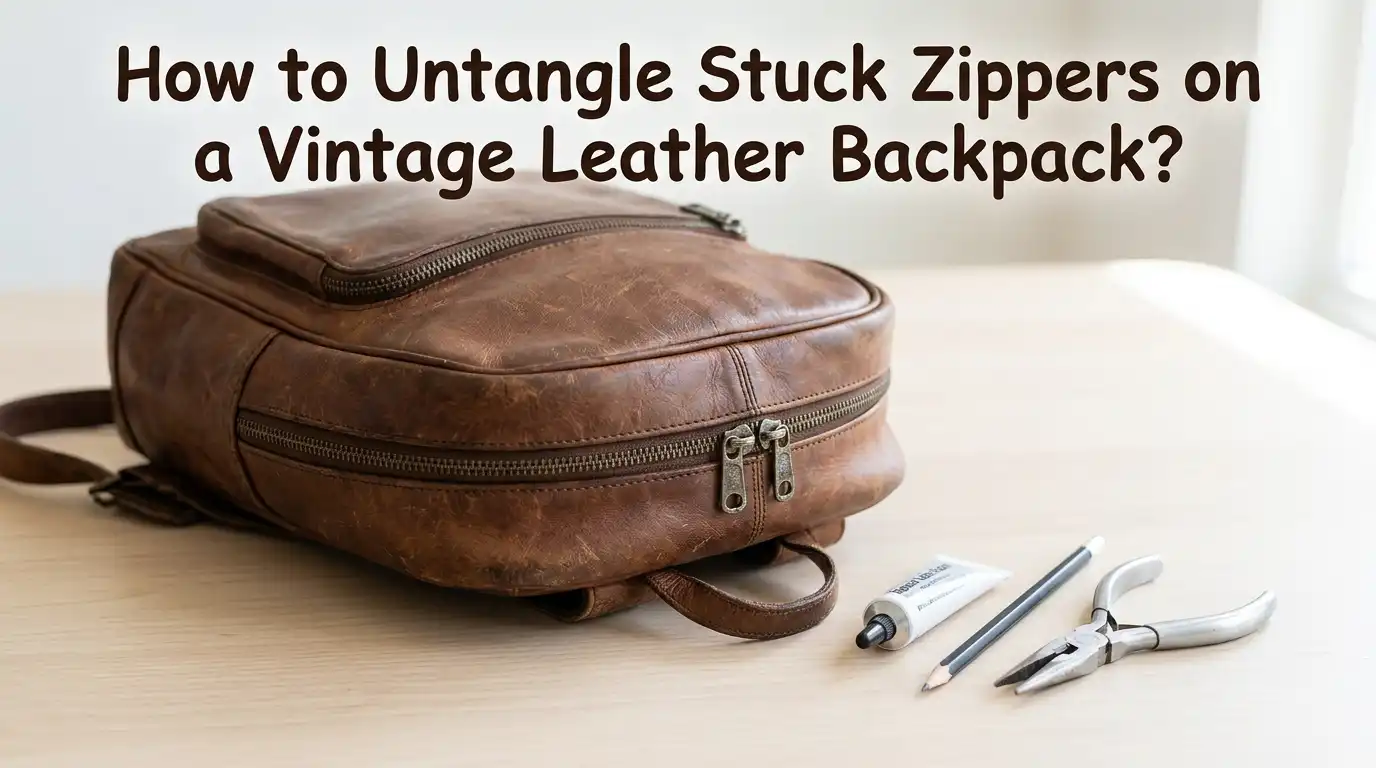
How to Untangle Stuck Zippers on a Vintage Leather Backpack?
A stuck zipper on a vintage leather backpack can feel like a small disaster. You pull once, then twice, and suddenly the zipper feels tighter than before.
The backpack may be old, soft, and full of character, but that same age can make the zipper more sensitive to dirt, dry metal, trapped lining, and worn parts.
The good news is simple. You can often fix the problem at home without harming the leather or making the zipper worse. The key is to move slowly, use the right method, and stop before force causes damage.
Key Takeaways
- Start with a close look before you pull harder. A stuck zipper usually has a clear cause. Dirt, trapped fabric, bent teeth, a dry zipper track, or a loose slider are common reasons. A careful first check often saves the zipper and the leather from extra damage.
- Clean first and lubricate second. Many people reach for oil right away, but that can create a mess on vintage leather. A soft brush and dry cloth should come first. After that, a simple dry option like graphite, soap, or wax often works well for mild sticking.
- Use only a small amount of any product. Vintage leather absorbs stains easily. Heavy products can darken the leather, leave marks on the zipper tape, and collect more dirt later. Less is better every time you work on an older bag.
- Do not fight trapped fabric. If lining or edge trim is caught inside the slider, pulling harder will tear the material. Hold the fabric steady, ease it backward, and work the slider in tiny movements. Patience fixes more zippers than force ever will.
- A loose slider can cause repeat problems. If the zipper moves but the teeth do not close well, the slider may be worn or spread apart. In some cases, gentle pressure with pliers can help. This works best with a slow hand and light testing after each tiny change.
- Know when to stop and choose repair. Missing teeth, torn zipper tape, broken stops, or a cracked slider usually mean home repair will not last. A vintage leather backpack is worth protecting. A timely repair can save the bag from a full zipper failure later.
Why Vintage Leather Backpack Zippers Get Stuck
Vintage leather backpacks age in a unique way. The leather softens, the shape shifts, and the zipper area takes years of stress from opening, closing, stuffing, and storage. A zipper can stick because dust and grit collect inside the teeth or slider. It can also stick because the lining bunches up near the track.
Moisture is another cause. Leather can swell a little after damp weather. That small change can pull the zipper tape out of line. Metal parts can also dry out or corrode with age.
Sometimes the zipper is not jammed at all. The slider may simply be worn and loose. That means it no longer guides the teeth together well.
The main lesson is simple. A stuck zipper usually has a physical cause. If you find that cause first, your fix becomes much safer and much faster.
Start with a Safe Inspection Before You Try Any Fix
Before you use soap, wax, or tools, inspect the zipper closely. Open the backpack enough to see both sides of the zipper. Check for trapped fabric, loose thread, bent teeth, dirt, green corrosion, or a slider that looks uneven.
Use good light. A phone flashlight helps. If the zipper pull is tiny, loop a paper clip or soft string through it for a better grip. This gives you control without hard pulling.
Move the slider only a few millimeters at a time. If it does not move, stop there. Do not test your strength on an old zipper. Vintage hardware can fail suddenly.
Pros: This step costs nothing and prevents careless damage.
Cons: It takes a little time and patience.
A careful inspection may feel slow, but it often shows the exact problem before you add any product or pressure.
Clean Dirt and Grit Out of the Zipper Track First
A dirty zipper is one of the most common causes of sticking. Dust, sand, lint, dried residue, and tiny leather fibers can sit between the teeth and inside the slider. That buildup increases friction and makes the zipper drag.
Use a soft toothbrush or a very small dry brush. Brush along both sides of the teeth. Then wipe the area with a clean dry cloth. If the grime is heavy, use a cloth that is only slightly damp with mild soap water. Keep the cloth away from the leather as much as possible, and dry the zipper right after.
Clean and dry is the goal here. Do not soak the area.
Pros: Cleaning is safe, cheap, and often solves the issue by itself.
Cons: Deep dirt near the slider can take a few rounds to remove.
If the zipper improves after cleaning, you may not need anything else.
Try a Graphite Pencil for a Dry and Gentle Fix
Graphite is a smart first lubricant for a vintage zipper. It is dry, easy to control, and less messy than oils or creams. Rub the tip of a soft pencil along the zipper teeth, especially a few inches above and below the stuck point. Then move the slider slowly back and forth.
Graphite reduces friction without leaving a thick coating. That makes it useful for older bags where you want a clean fix. It is also a good option if the zipper is sticking from dryness rather than dirt.
Use a light hand. You want a thin layer, not dark marks all over the tape.
Pros: Clean, simple, cheap, and low risk for most zipper types.
Cons: It can smudge light fabric, and it may not help if the problem is trapped cloth or a loose slider.
For mild sticking, graphite is often the easiest place to start.
Use Dry Soap or Candle Wax for Smooth Movement
If graphite does not solve the issue, dry soap or plain candle wax can help the zipper glide. Rub a little on the teeth, then work the slider gently. The key word is little. A thin coat is enough.
Dry soap is easy to find and often works fast. Candle wax can last longer and reduce friction well. Both methods are common home fixes for stiff zippers. On a vintage leather backpack, keep the product on the metal or coil area and away from the leather body.
Slow movement matters more than more product. If the zipper starts moving, keep going in short passes.
Pros: Easy, fast, and useful for dry or rough movement.
Cons: Too much can leave residue and attract dirt later.
Choose soap if you want a softer fix. Choose wax if the zipper feels rough and scratchy.
Use Liquid Lubricants with Care and Avoid Greasy Shortcuts
Liquid lubricants can help, but they need caution on vintage leather. If you use one, choose a zipper safe product and apply only a tiny amount with a cotton swab. Keep it off the leather and wipe away extra product right away.
Avoid kitchen oils, heavy grease, and thick petroleum products on or near vintage leather. These can stain the zipper tape, darken the leather, feel sticky, and collect dirt over time. Some quick fixes seem helpful in the moment but create a bigger cleanup later.
Small and precise is the right approach. Test on a hidden spot if any product may touch the leather.
Pros: Liquid products can help badly dragging zippers.
Cons: They are the messiest option and the riskiest for old leather.
Use this method only after cleaning and dry fixes have failed.
Free Fabric or Lining That Is Caught in the Slider
A trapped lining is a very common backpack problem. The zipper may look stuck, but the real issue is fabric folded into the slider. If you pull harder, the fabric tears or the teeth bend.
Hold the caught fabric steady with your fingers or tweezers. Pull the fabric gently backward, away from the slider path. At the same time, wiggle the slider in tiny movements. Go slowly. The fabric needs space to slip out.
If needed, add a little graphite or wax around the stuck point first. That can reduce friction while you free the fabric.
Pros: This method targets the real problem and often saves both zipper and lining.
Cons: It takes patience, and rough tweezers can mark delicate fabric.
Never yank trapped lining. A calm hand usually wins this fix in a minute or two.
Straighten Misaligned Teeth Without Forcing Them
Sometimes the zipper teeth sit out of line. This can happen after stuffing the backpack too full, pulling at an angle, or storing the bag under pressure. One bent section can stop the whole zipper.
Look closely to find the bad spot. If the teeth are metal and only slightly off, you may be able to nudge them back with your fingers or a very careful touch from small pliers. If the zipper is coil style, focus on straightening the tape and easing the slider back into a clean path.
Do not squeeze hard. A tiny correction is enough. Test the zipper after each small adjustment.
Pros: This can fix a local problem without replacing the zipper.
Cons: Too much force can crack, flatten, or worsen the damage.
If several teeth are bent or missing, skip home fixes and plan for repair.
Tighten a Loose Slider if the Teeth Will Not Stay Closed
If the slider moves but the zipper opens behind it, the slider may be worn out. Over time, the slider can spread slightly. Then it stops pressing the teeth together well.
Use needle nose pliers only if you can see that the slider looks loose. Squeeze the top and bottom plates very gently. Then test the zipper. If needed, repeat with tiny pressure. Do not crush the slider.
This method works best on metal sliders that have widened with age. It is not a cure for broken teeth or torn tape. It is also not a good idea if you feel unsure about tool control.
Pros: It can restore function fast and save an old zipper.
Cons: One hard squeeze can ruin the slider.
Gentle pressure and repeated testing make this method much safer.
Protect the Vintage Leather While You Work
The zipper is the problem, but the leather is the treasure. Vintage leather can scratch, stain, dry out, or darken if you use the wrong fix. Place a clean soft cloth under your hand while you work. That keeps nails, tools, and residue off the bag surface.
Keep water to a minimum. If the zipper area needs a damp cloth, dry it right away. Avoid harsh cleaners and avoid rubbing the leather while trying to fix the zipper. If the leather already feels dry, wait until the zipper issue is solved before using a leather conditioner.
Fix first, condition later. That order makes cleanup easier and prevents product buildup near the zipper.
Pros: Protecting the leather keeps the backpack looking good after the zipper works again.
Cons: It adds one more step, but it is worth it for an older bag.
Know When a Repair Is Better Than Another Home Fix
Some zipper problems are larger than home care. Missing teeth, torn zipper tape, a cracked slider, broken top stops, or repeated separation usually mean the zipper needs repair or replacement. On a vintage leather backpack, that choice can protect the bag from worse damage.
A repair shop can often replace only the slider if the chain is still sound. That is much simpler than replacing the full zipper. If the zipper tape is torn or several teeth are damaged, a full zipper job may be the better long term answer.
Pros: A proper repair lasts longer and protects the backpack.
Cons: It costs more than a home fix and may take time.
If your fix fails twice, stop there. Repeated force can turn a small repair into a major one.
Build a Simple Routine to Prevent Future Zipper Jams
Once the zipper moves again, keep it that way with light routine care. Brush the zipper teeth every few months. Check the lining near the opening and trim loose threads before they get caught. Do not overfill the backpack, because pressure twists the zipper track and strains the slider.
Store the backpack upright or loosely filled, so the zipper area keeps its shape. If the bag gets wet, let it dry naturally before zipping it closed for storage. Once or twice a year, use a light dry lubricant if the zipper feels rough.
Small care beats big repair. A thirty second check now can prevent a stuck zipper later.
Pros: Prevention is easy and saves money.
Cons: You need to remember to do it.
A vintage leather backpack ages better when the zipper gets regular attention.
FAQs
Can I use olive oil on a stuck zipper on a leather backpack
It is better to skip olive oil. It can feel greasy, darken leather unevenly, and leave residue that attracts dirt. A dry option like graphite or a tiny amount of zipper safe lubricant is a safer choice for an older leather bag.
What should I do if the zipper is stuck and the lining is caught badly
Stop pulling right away. Hold the lining steady and ease it backward in tiny movements. Use tweezers only if you can grip the fabric gently. If the cloth starts to tear, stop and get help before the damage spreads.
How do I know if the slider is the real problem
If the zipper moves but the teeth open behind it, the slider is often loose or worn. If the zipper does not move at all, dirt, trapped fabric, or bent teeth are more likely causes. A close inspection usually shows the answer.
Is it safe to use pliers on a vintage zipper
Yes, but only with great care. Use light pressure and test after each tiny squeeze. Pliers can help a loose metal slider, but too much force can crush the part. If you feel unsure, skip the tool and choose repair.
How often should I clean the zipper on a vintage leather backpack
A quick dry brush every few months is enough for most bags. Clean it sooner if you use the backpack often or carry it in dusty places. A little routine care keeps the zipper smooth and helps the leather bag age well.

Hi, I’m Luna Beck — the founder and voice behind Urban Pack Vault. I’m passionate about helping people find bags that perfectly match their lifestyle. From backpacks to travel luggage, I research, review, and recommend so you never have to second-guess your next purchase.