How To Organize A Backpack For Better Weight Distribution?
Do your shoulders ache after a short walk with your backpack? The problem might not be how much you carry. It could be how you pack it.
Most people stuff their bags without a plan. They toss heavy items on top and let straps dig into their shoulders. This leads to back pain and poor balance.
Good news: you can fix this with a few smart steps. Weight distribution is not about magic gear. It is about strategy.
This article shows you how to organize your backpack the right way. You will learn where heavy items belong and why your hips matter more than your shoulders.
In a Nutshell
- Heavy items go against your back. This keeps your center of gravity close to your spine. It stops you from tipping backward.
- Load your hip belt first. Aim for 70 to 80 percent of the weight on your hips. Your shoulders should only handle the rest.
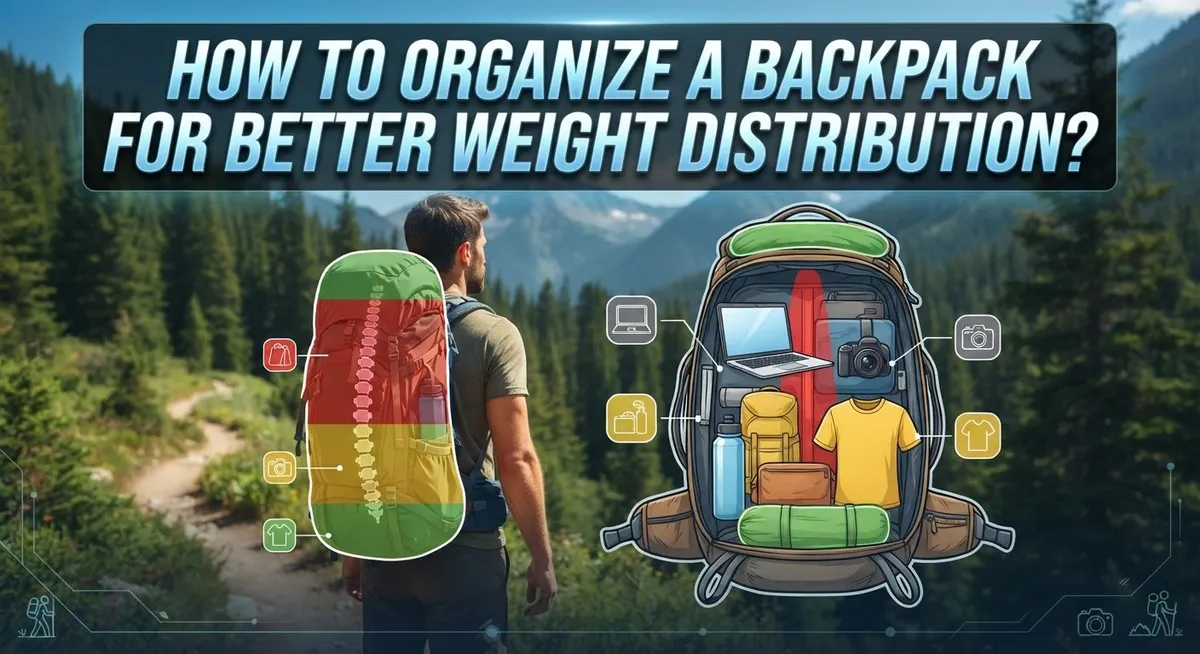
- Pack light gear on top and bottom. Save the middle section, close to your back, for dense items like food or tools. Keep fluffy items like a sleeping bag at the bottom.
- Center your weight vertically. Do not let gear sit too high or too low. A centered load helps you stand up straight without strain.
- Check your straps often. Your shoulder straps should press gently against your chest. This confirms the hip belt is doing most of the work.
- Avoid top heavy packing. Placing bulky gear at the very top makes your pack unstable. It also pulls you off balance on uneven trails.
Why Weight Distribution Matters
Your spine and shoulders take a beating when weight sits in the wrong spots. Proper weight distribution protects your body from pain and injury during long hikes or daily commutes.
When heavy items stay close to your back, your spine stays aligned. Your body doesn’t have to work extra hard to keep you upright. This means less strain on your lower back and neck over time.
Your hip belt does most of the work. It transfers 70 to 80 percent of the load from your shoulders to your hips and legs. Your hips are much stronger than your shoulders, so this matters a lot. When you skip this step, your shoulders bear too much weight and fatigue quickly.
Unbalanced packs pull you backward. Your core muscles tense up to compensate. After an hour or two, your entire body feels exhausted. With smart packing, you stay upright naturally and walk longer without pain.
Poor weight distribution also affects your posture. Top heavy packs force you to lean forward. This compresses your spine and creates tension in your neck. Over time, this leads to chronic pain and discomfort.
The right setup keeps your center of gravity directly over your hips. This is the most efficient way your body moves. You use less energy and feel less fatigue at the end of the day.
Think of it like carrying a suitcase. When the weight sits directly at your side, it feels manageable. When it swings away from your body, your arm gets tired fast. Your backpack works the same way.
Spending five minutes organizing your pack saves you hours of discomfort. Your shoulders, back, and hips will thank you. A balanced pack makes every journey easier and more enjoyable, whether you are hiking a mountain trail or walking to work.
Understanding Your Backpack’s Zones
Your backpack has different zones, and each one serves a specific purpose. Understanding these zones helps you place items where they belong.
The back panel zone sits closest to your spine. This is the premium real estate of your pack. Heavy, dense items go here because they stay near your body’s center line. Think of this zone as your load bearing wall. Tent bodies, cookware, and food supplies belong in this area.
The mid pack zone runs horizontally across the center of your pack. This zone works with your hip belt to transfer weight onto your hips. Your heaviest items should sit in this band, positioned against your back. This placement keeps your center of gravity stable and prevents backward pull.
The shoulder zone sits at the top of your pack, near your neck and shoulders. This area should hold your lightest items. Sleeping bags, pillows, and soft clothing work well here. Never place heavy gear at the top because it raises your center of gravity and strains your neck.
The outer edges and pockets form your perimeter zone. Lightweight, frequently accessed items belong here. Rain jackets, snacks, and water bottles fit perfectly in side pockets and outer compartments. These items stay accessible without affecting weight distribution.
The bottom zone deserves careful attention too. Lighter compressible gear goes here, like extra socks or a rain cover. This keeps the bottom section from adding unnecessary weight to your overall load.
Your hip belt connects directly to the lower pack body. This zone transfers 70 to 80 percent of your load to your hips, not your shoulders. Positioning heavy items near this belt zone ensures proper weight transfer.
Master these zones and your pack becomes an extension of your body. You will notice less strain on your shoulders and a more natural walking rhythm. The key is keeping heavy items close to your back and centered vertically along your spine.
Step-by-Step: Packing for Optimal Balance
Start by gathering all your gear on a flat surface. This lets you see everything before you pack. Weigh your items mentally or physically if possible. You want to know which pieces are heaviest.
Begin with your backpack empty and laying flat. Place your lightest, most compressible items at the bottom first. Think sleeping bags, extra clothes, or towels. These create a cushioned base and won’t strain your pack.
Next, identify your heaviest items. Food, tools, cooking gear, and water bottles are typically the densest pieces. Position these against your back panel, centered vertically along your spine. This placement keeps weight close to your body where it belongs.
Layer your mid weight items around the heavy core. Pants, shirts, and underwear fit well here. Keep them snug so nothing shifts during movement. Shifting weight throws off your balance and tires you faster.
Now focus on your hip belt. This strap does 70 to 80 percent of the work. Tighten it firmly around your hips, not your waist. The belt should sit on your hip bones, not your stomach. Proper positioning transfers weight away from your shoulders.
Place lighter items toward the outer edges and top of your pack. Socks, hats, and small accessories work here. These pieces won’t pull you backward or strain your spine. Keep them accessible if you need them during the day.
Check your shoulder straps last. They should press gently against your chest, not dig into your shoulders. Adjust them so they support without choking. Your straps are helpers, not load carriers.
Step into your pack and stand up. Does it feel balanced? Your weight should sit directly over your hips. If you lean forward, something is too high or too far back. Adjust until you feel stable and comfortable.
Adjusting Straps and Hip Belt for Load Transfer
Your hip belt and shoulder straps work as a team to move weight where it belongs. The hip belt carries most of the load, so getting it right makes a huge difference in comfort.
Start by loosening both your hip belt and shoulder straps completely. Put on your packed backpack and fasten the hip belt first. The belt should sit on your hip bones, not your waist. Your hip bones are lower than you might think. They stick out on both sides of your pelvis. Once the belt sits correctly, tighten it snugly around your hips.
A proper hip belt transfers about 70 to 80 percent of your pack’s weight away from your shoulders. This protects your neck, upper back, and arms from strain. Tighten the belt until it feels secure but not cutting off circulation. You should fit one finger between the belt and your body.
Now adjust your shoulder straps. They should be snug but not tight. The straps should press gently against your chest and upper back. Leave enough room to move your arms freely. Loose shoulder straps let your pack shift around and throw off your balance.
Check the load lifter straps if your pack has them. These small straps run from the top of your shoulder straps down to your pack. They angle the pack closer to your body and help with stability. Tighten them so they pull the top of your pack toward your shoulders at about a 45 degree angle.
Stand up and bounce gently. Your pack should move with your body, not lag behind or pull you backward. Adjust as needed. A well fitted hip belt and shoulder system means your legs do the work instead of your arms and back. This simple adjustment prevents injury and lets you hike longer distances comfortably.
Tips for Maintaining Balance on the Move
When you’re moving with a loaded backpack, balance matters more than you might think. Your body works harder when weight sits in the wrong spots, and that extra effort adds up fast during long walks or hikes.
The first rule is simple: keep heavy items close to your spine. This positioning maintains your natural center of gravity. When gear sits far from your back, your muscles strain to compensate, and fatigue sets in quickly.
Your hip belt does the heavy lifting. Make sure it sits snugly on your hip bones, not your waist. A properly fitted hip belt should carry about 70 to 80 percent of your pack’s weight, leaving your shoulders to handle just 20 to 30 percent. This split prevents shoulder soreness and keeps your posture upright.
Check your shoulder straps next. They should feel snug but not tight. Press them gently against your chest to confirm they’re positioned correctly. If straps sit too loose, weight shifts onto your shoulders instead of your hips.
Load lifter straps (if your pack has them) angle downward from the top of your pack to the frame. These straps pull the pack closer to your body and help transfer more weight to your hips. Adjust them so they sit at about a 45 degree angle.
Test your setup by standing and bouncing gently. You should feel the pack move as one unit with your body, not shift or sway independently. If it bounces awkwardly, loosen your straps and reposition your gear.
Take a few practice steps around flat ground before hitting trails or long routes. Small adjustments now prevent big problems later. Your body will thank you when you reach your destination feeling strong instead of exhausted.
Common Mistakes That Throw Off Your Balance
Many people make the same packing mistakes that ruin their balance and comfort. Understanding these errors helps you avoid them.
Placing heavy items at the top is the biggest problem. When your heaviest gear sits near your shoulders, it raises your center of gravity. This forces your body to lean forward and strains your neck and upper back. Your pack pulls you backward instead of sitting stable against your body.
Overloading your shoulders instead of your hips comes next. Your shoulders are not designed to carry most of your weight. When you skip proper hip belt adjustment, all the load transfers to your shoulder straps. This causes shoulder pain and fatigue quickly. Your hips are much stronger and built for this job.
Poor vertical centering throws off your entire balance. If your weight sits too far to one side or scattered unevenly, you’ll feel unstable on uneven ground. Your body works harder to stay upright. Even small shifts in weight distribution cause noticeable discomfort during long trips.
Neglecting your hip belt is another common mistake. Many people tighten their shoulder straps instead, which is backwards. Your hip belt should feel snug and sit on your hip bones, not your stomach. This positioning moves weight down to your legs where your body handles it best.
Ignoring the outer edges and pockets leads to imbalance too. Stuffing heavy items into side pockets or the pack’s perimeter makes your pack feel lopsided. Your body compensates by leaning, which causes back and shoulder strain.
Loose or poorly adjusted straps prevent proper weight transfer. Even if you pack everything correctly, bad strap adjustment ruins the setup. Your shoulder straps should sit snug but not tight, and your load lifter straps should pull the pack close to your back.
These mistakes compound each other. Fix them one at a time for better balance and comfort on every trip.
Troubleshooting Discomfort and Imbalance
When your backpack feels uncomfortable or sits unevenly, the problem usually comes from how weight sits inside. Start by checking your pack’s vertical alignment. Heavy items should stay centered along your spine, not drifting toward one side or the other.
Feel where pressure builds on your back and shoulders. Uneven pressure means weight has shifted. Remove your pack and lay it flat. Redistribute items so the heaviest gear presses directly against your back panel, not toward the sides.
Shoulder pain signals a common issue: too much weight rides on your shoulders. Your hip belt should carry most of the load. If you feel strain, loosen your shoulder straps slightly and tighten your hip belt. The belt should sit on your hip bones, not your waist. A snug hip belt transfers weight downward to your legs instead of up to your neck.
Bouncing discomfort while walking means internal items are shifting. Tighten compression straps on the pack’s sides and front. These straps keep gear locked in place so nothing moves when you step. Repack using layers: heavy items first against your back, then lighter gear around them.
Check if one shoulder feels more strained than the other. This suggests items have packed toward that side. Open your pack and manually shift weight toward the center. Reposition smaller items into pockets on the opposite side to balance things out.
Test your setup by wearing the pack for five minutes on flat ground. Walk around slowly. Notice where you feel pressure. Adjust straps or redistribute items before hitting longer routes. Small fixes now prevent major discomfort later.
If discomfort persists after adjustments, remove items one by one to identify what causes the problem. Sometimes a single heavy object creates imbalance that affects your entire experience.
Final Thoughts
Packing your backpack the right way changes how your whole trip feels. Good weight distribution protects your back and keeps you steady on your feet.
Heavy items belong close to your spine. This simple rule keeps your center of gravity stable. It stops you from feeling pulled backward or sideways.
Your hip belt does most of the work. Aim for 70 to 80 percent of the weight on your hips. Your shoulders should only handle the rest.
Think about how you layer your gear too. Light items go at the bottom or edges. Heavy tools, food, or tech stay centered and low against your back.
Skipping these steps often leads to shoulder pain or a wobbly walk. Small adjustments now save you from big discomfort later.
Every hiker or traveler packs differently. Your ideal setup depends on your gear, your trip length, and your own body.
Still, the core idea stays the same. Keep weight centered, low, and close to your back. This single habit fixes most balance problems before they start.
Take a few minutes before every trip to check your pack. Adjust straps, test the fit, and walk around a bit. This quick habit builds smarter over time.
Good organization is not about perfection. It is about comfort, safety, and ease of movement.
When you pack with intention, your backpack starts to feel like part of you. You move naturally. You feel less tired. You enjoy the walk more.
Balance is not just about gear placement. It is about how your whole body works with the load you carry.
Master this skill once, and every future trip feels lighter, easier, and far more enjoyable.
Frequently Asked Questions
What is the ideal weight distribution ratio for my backpack?
Your hips should carry 70 to 80 percent of the total load. Your shoulders handle the remaining 20 to 30 percent. This ratio keeps strain off your neck and upper back.
The hip belt is your main load carrier. It transfers weight directly to your legs and core. Your shoulders just help guide the pack and keep it stable.
Why should heavy items sit close to my spine?
Placing heavy gear near your spine keeps your center of gravity balanced. This position feels natural to your body. Your spine becomes the anchor point for the load.
When weight stays centered, you walk upright. Your body doesn’t lean forward or backward to compensate. This reduces fatigue and prevents lower back pain.
Items far from your spine create a pulling sensation. They force your muscles to work harder. Keeping gear close to your back is the simplest way to stay comfortable.
How do I arrange items vertically in my pack?
Start with compressible items like sleeping bags at the bottom. Layer your heaviest gear (tent, cookware, food) directly against your back in the middle section. Add your core clothes around these heavy items.
Place lighter items toward the outer edges and top. This arrangement keeps weight centered and low. Your pack sits stable on your hips.
Can I store items in side pockets without affecting balance?
Side pockets work well for light items only. Think water bottles, snacks, or maps. Heavy items in side pockets shift your weight sideways.
This creates uneven pressure on one shoulder. Your pack tilts to one side. Keep pockets balanced on both sides, or use them for truly light gear.
What happens if my hip belt doesn’t fit properly?
A loose hip belt transfers weight to your shoulders instead. Your shoulders bear the full load. This causes pain and fatigue quickly.
Tighten your hip belt so it sits on your hip bones. The belt should feel snug but not painful. Proper positioning makes all the difference in how your pack feels.

Hi, I’m Luna Beck — the founder and voice behind Urban Pack Vault. I’m passionate about helping people find bags that perfectly match their lifestyle. From backpacks to travel luggage, I research, review, and recommend so you never have to second-guess your next purchase.