How Do Anti-Theft Backpacks Actually Work?
Have you ever felt a quick tug on your bag in a crowded train station? That small moment of panic is something millions of travelers know well. Thieves love distracted people, and a regular backpack offers them an easy target.
This is where anti-theft backpacks step in. They use clever design tricks to slow down, confuse, and discourage pickpockets. But how do these bags actually do their job? Do hidden zippers and special fabrics really stop a thief, or is it all clever marketing?
This guide breaks down the real mechanics behind these bags. You will learn how each feature works, where it helps, and where it falls short. By the end, you will know exactly what makes a backpack hard to rob and how to use one the smart way.
Key Takeaways
- Anti-theft backpacks work by friction, not magic. They make your bag harder to open, cut, or grab than the bag next to you. A thief almost always picks the easiest target.
- Lockable zippers and hidden compartments slow down quick hands. A pickpocket needs speed, and even a few extra seconds often makes them give up and move on.
- Slash resistant fabric stops fast knife attacks, not endless cutting. The material adds a tough hidden layer that defeats the common slash and grab trick.
- RFID blocking pockets protect passports and older cards from wireless skimming. Modern payment cards already carry strong protection, so this feature matters most for travel documents.
- No backpack is fully theft proof. These bags fail against unattended theft, distraction scams, and forced robbery. Your awareness still matters most.
- The best results come from combining the bag with smart habits. Wear it correctly, lock it to chairs, and stay alert in crowds for full protection.
What Is an Anti-Theft Backpack?
An anti-theft backpack is a bag built to make stealing harder. It looks almost like a normal backpack from the outside. The difference lives in the details.
These bags include features like locking zippers, hidden pockets, cut resistant material, and reinforced straps. Each feature targets a specific theft method that pickpockets use every day.
It helps to be honest about the name. No bag is truly theft proof. A determined thief with enough time can break into almost anything. What these bags really do is reduce opportunity.
They make your valuables slower to reach and harder to grab without you noticing. In busy cities where quick theft is common, that small delay often makes the difference between keeping your phone and losing it.
Why Thieves Pick the Easy Target First
Most bag theft is not planned around you specifically. A pickpocket in a packed metro scans the crowd for the fastest, easiest access point. They want speed and silence. They do not want a struggle or attention. This simple truth explains why anti-theft backpacks work at all.
When your bag takes longer to open, cannot be slashed quietly, or keeps valuables out of reach, the thief does a quick math problem in their head. The risk now feels too high for the reward.
So they move to the next person. That is the whole point. You do not need a bag that stops every thief on earth. You only need a bag that is harder than the bags around you.
Think of it like a bike lock. A cheap lock does not make theft impossible. It makes your bike less convenient to steal than the unlocked one parked beside it. Anti-theft backpacks use the same logic. They shift the thief’s attention toward an easier victim and away from you.
How Lockable Zippers Stop Quick Hands
Lockable zippers are the heart of most anti-theft backpacks. A normal zipper opens in one fast motion. A skilled pickpocket can slide it open in under two seconds.
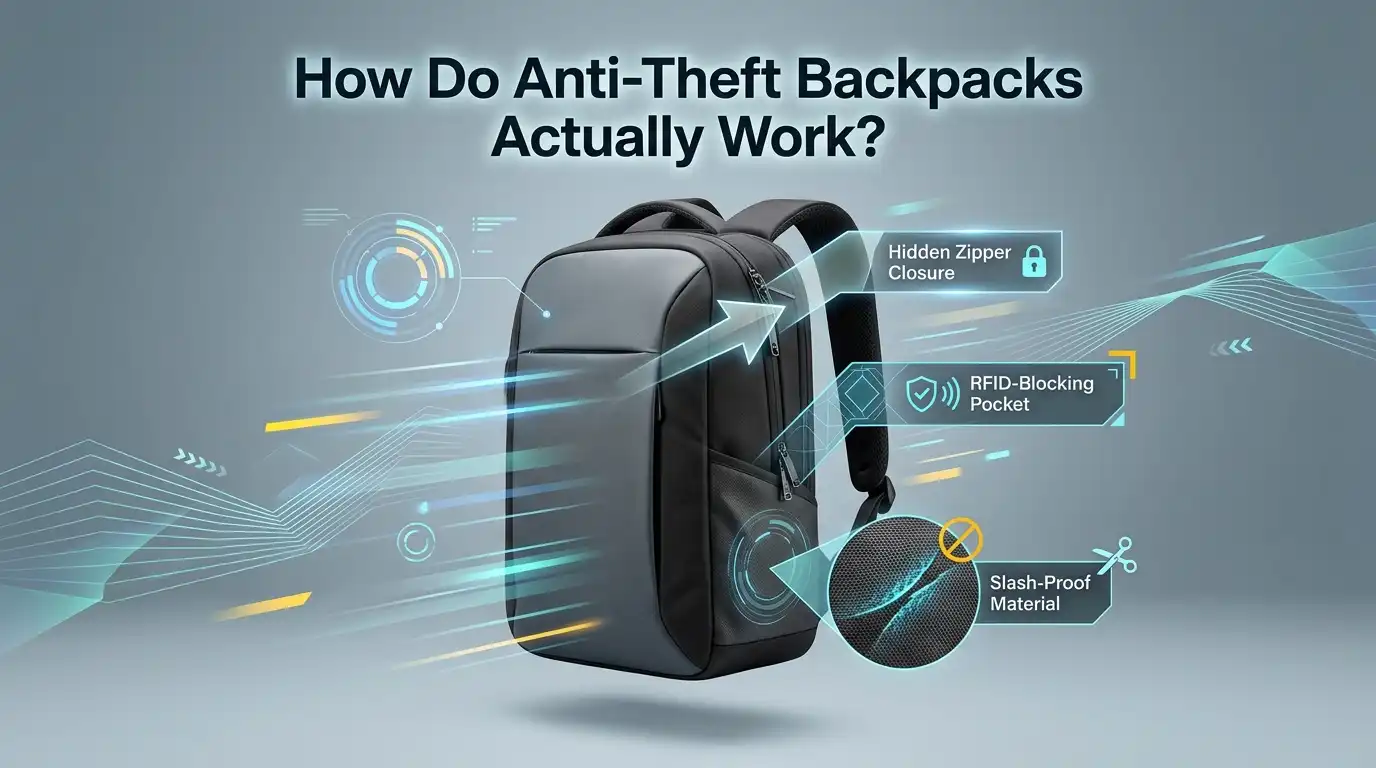
Lockable zippers add an extra step. The zipper pulls must first clip into a hidden anchor or buckle before the bag will open. That tiny lock breaks the thief’s speed.
Here is how it works in practice. You clip the two zipper pulls into a small buckle, often disguised as a decorative clasp on the top of the bag. To a thief, the zipper looks stuck. They tug, it does not move, and they hesitate. That hesitation is exactly what gives you time to notice.
Pros: They are simple, silent, and very effective against quick grabs. They add no weight and look normal. Cons: They can feel mildly annoying when you want fast access to your own gear. You must remember to lock them every time, or the feature does nothing at all.
The Power of Hidden and Body Facing Pockets
Some of the safest spots in a backpack are the spots no one else can reach. Many anti-theft bags place key pockets against your back or inside concealed flaps.
When you wear the bag, these pockets press against your body. A thief cannot open them without touching you first. You would almost certainly feel that contact.
This design is perfect for items that hurt to lose, like passports, backup cash, and spare cards. You store these things in the hidden pocket and zip your daily items in the front.
The valuables stay sealed against your spine the whole day. Even if someone reaches the outer pockets, your most important things stay safe.
Pros: Hidden pockets give strong protection with zero effort once packed. They cost you nothing in comfort. Cons: They are slow to reach, so they suit storage and not items you grab often. You also need to plan your packing, since digging through a body facing pocket in public defeats the purpose.
How Slash Resistant Fabric Defends Your Bag
A common worry is the slash and grab. A thief slides a blade along the bottom of your bag, and your phone drops into their hand.
Standard nylon, canvas, and polyester cut open in one quick motion. Slash resistant fabric stops this trick. It adds a tough hidden layer that a fast blade cannot tear through.
Brands use two main methods. Some weave a thin steel wire mesh into the panels. This gives very high cut resistance but adds weight and stiffness.
Others use advanced fibers like ultra high molecular weight polyethylene, often rated Level 5 on the cut resistance scale. This fiber is lighter than steel and stays soft and flexible. It is the same class of material used in protective gloves.
Pros: Slash resistant material defeats the fast knife attack and stays invisible from outside. Cons: It is built for quick slashes, not slow deliberate cutting with heavy tools. Steel mesh versions also add real weight, which you feel on long days.
Reinforced Straps That Cannot Be Cut
Sometimes a thief does not bother opening your bag at all. They simply cut the strap and run with the whole thing. A regular fabric strap slices through in seconds.
Reinforced straps fight this directly. Makers run a steel cable or cut resistant fiber through the strap webbing. A blade hits the hidden core and stops.
This matters most in crowded markets and on busy public transport. A thief brushes past, makes one quick cut, and vanishes into the crowd. With a reinforced strap, that cut fails, and the bag stays on your shoulder. The thief gets nothing and risks getting noticed.
Some bags also include a detachable strap with a locking clasp. When you sit at a café, you wrap the strap around a chair or table leg and clip it shut.
Now no one can snatch the bag while you look at the menu. Pros: strong protection against grab and run theft. Cons: reinforcement sometimes covers only part of the strap, so check the full length before you trust it.
How RFID Blocking Pockets Protect Your Data
RFID blocking pockets guard against a different kind of theft. Some passports and older contactless cards send a wireless signal that a hidden reader can scan from a short distance.
This trick is called skimming. An RFID blocking pocket works like a small shield. It blocks the radio waves so no reader can reach the chip inside.
The pocket uses a special metallic lining that acts like a tiny cage. When you slip your passport inside, the signal cannot escape or be read. Your document data stays private. This feature gives real peace of mind for travelers who carry sensitive identity papers across borders.
It helps to keep this in balance though. Modern payment cards already include strong built in protection, and real world card skimming is rare. So RFID blocking matters most for passports and older ID cards.
Pros: easy privacy for travel documents with no effort. Cons: the benefit for everyday payment cards is small, so do not choose a bag for this feature alone.
What Anti-Theft Backpacks Cannot Protect Against
Honesty matters here, because some scenarios beat every feature on the bag. The first is the unattended bag. Every anti-theft trick works only while the bag sits on your body.
The moment you set it on a chair or the floor, the protection disappears. Theft from cafés and tourist sites is extremely common, and the bag does nothing to help.
The second is distraction theft. Someone asks for directions or spills something, and an accomplice reaches in while your attention is gone. Locking zippers slow this down, but they do not stop it if you are fully distracted.
The third is confrontational robbery. If a person demands your bag directly, the features become irrelevant. That is a different and far rarer threat.
So treat the backpack as one layer, not the whole shield. Your awareness remains your strongest defense. Keep the bag in front of you in crowds, never leave it alone, and stay alert when strangers approach. The bag handles the silent quick theft, and you handle the rest.
How to Wear and Use Your Bag the Right Way
Owning the bag is only half the job. Using it well unlocks its real value. Start by always locking the zippers in crowds. An unlocked anti-theft zipper is just a normal zipper. Make the clip a habit every time you step into a busy place.
Next, wear the bag the smart way. In packed trains and markets, swing it around to your chest or front. A bag you can see is a bag a thief avoids. Keep your passport and cash in the hidden body facing pocket, and keep only low value items in the easy outer pockets.
When you sit down to eat or work, use the locking strap. Wrap it around a fixed leg of a heavy table or chair and clip it shut. Now you can relax without watching the bag every second.
Follow these three habits, locking, front carry, and anchoring, and your backpack performs the way it was built to. The bag gives you the tools, and these steps put them to work.
Comparing Anti-Theft Backpacks With Regular Backpacks
The two bags can look almost identical on a shelf. The real difference hides in the build. A regular backpack focuses on storage and comfort. An anti-theft backpack adds security to that same base. It thinks about how someone might rob you, not just how much you can pack.
A regular bag uses standard zippers, exposed pockets, plain fabric, and basic straps. An anti-theft bag swaps in locking zippers, hidden pockets, cut resistant material, reinforced straps, and RFID lined sleeves.
Each swap targets one common theft method. Together they form layers that a thief must beat one by one.
This does not mean regular bags are unsafe. Millions of people travel happily with normal backpacks every year. The difference is the margin of safety in risky places.
In quiet towns or small group trips, a good regular bag is fine. In crowded tourist cities and packed metros, the extra layers earn their keep. Choose based on where you go and what you carry, not on fear alone.
Are Anti-Theft Backpacks Worth the Money?
The honest answer depends on your trips. For travel through high theft cities like Paris, Rome, Barcelona, and Bangkok, the bag earns its price fast.
These places see heavy tourist pickpocketing in crowded spots. If you ride unfamiliar public transport, travel solo, or carry a passport and foreign cash, the protection feels well worth it.
The case gets weaker for quiet trips. A beach resort holiday or a small group road trip carries far less risk. A well made regular bag often does the job there. You do not need to pay extra for features you will rarely use.
One surprise is daily use. Many owners reach for these bags long after their trip ends. A crowded commuter train is lower risk than a tourist metro, but the same friction idea still helps.
Once you carry a bag where the zippers lock and the main pocket faces your back, a normal bag feels exposed. Think of it like travel insurance. You hope you never need it, but you feel glad it was there when a simple feature stops a real problem.
How to Spot a Truly Good Anti-Theft Backpack
The term anti-theft is not regulated. Any brand can stamp it on a bag with one weak feature. So you need to look past the label. Ask one clear question: what actually makes this bag harder to rob than a normal one? A strong bag gives you several real answers.
Look for genuine locking zippers, not just a flap that hides the pull. Look for a hidden pocket that sits against your body.
Check that slash resistance covers the whole bag, not only a small front panel. Make sure reinforced straps run the full length, and confirm the RFID pocket fits a passport with shielding on every side.
Now watch for red flags. A bag that claims to be fully theft proof or cut proof is overstating it. No bag is. Be cautious of vague claims with no mention of materials or ratings. Be careful when slash protection covers only one panel while the sides stay plain.
A brand that explains exactly how each feature works is far more trustworthy than one that just repeats the word security.
Frequently Asked Questions
Do anti-theft backpacks really stop pickpockets?
They make pickpocketing much harder, but they do not stop it completely. Locking zippers and hidden pockets slow a thief down and often push them toward an easier target. You still need to stay aware of your surroundings. The bag and your attention work best together as a team.
Can a thief still cut through a slash resistant backpack?
A fast slash with a knife will fail against good cut resistant fabric. The hidden layer stops the blade in a quick attack. However, slow and deliberate cutting with heavy tools over time can still get through. That scenario is rare in real theft, which usually relies on speed and silence.
Are anti-theft backpacks heavy and uncomfortable?
It depends on the build. Bags with steel wire mesh add noticeable weight and feel stiff. Bags that use modern cut resistant fibers stay light and flexible. Many users say a well made one feels almost identical to a normal backpack. Try one on if comfort is a top concern for you.
Do I need RFID protection in my backpack?
It is useful but not essential. RFID blocking gives real value for passports and older ID cards that broadcast a signal. Modern payment cards already carry strong protection, and real card skimming is rare. So enjoy the feature for documents, but do not choose a bag for this reason alone.
Can I use an anti-theft backpack as a flight personal item?
Yes, most fit easily under an airplane seat. Bags under about 30 liters usually count as a personal item with no trouble. Smaller city styles around 15 to 17 liters fit perfectly under the seat in front of you. Always check your airline size limits before you fly to be sure.
Are anti-theft backpacks worth it for everyday city use?
For busy city life and crowded commutes, yes, many people find them worth it. The same friction that beats tourist pickpockets also helps on a packed train. The bag keeps your laptop and wallet harder to reach. If you live somewhere quiet with low theft, a normal bag may serve you just as well.

Hi, I’m Luna Beck — the founder and voice behind Urban Pack Vault. I’m passionate about helping people find bags that perfectly match their lifestyle. From backpacks to travel luggage, I research, review, and recommend so you never have to second-guess your next purchase.