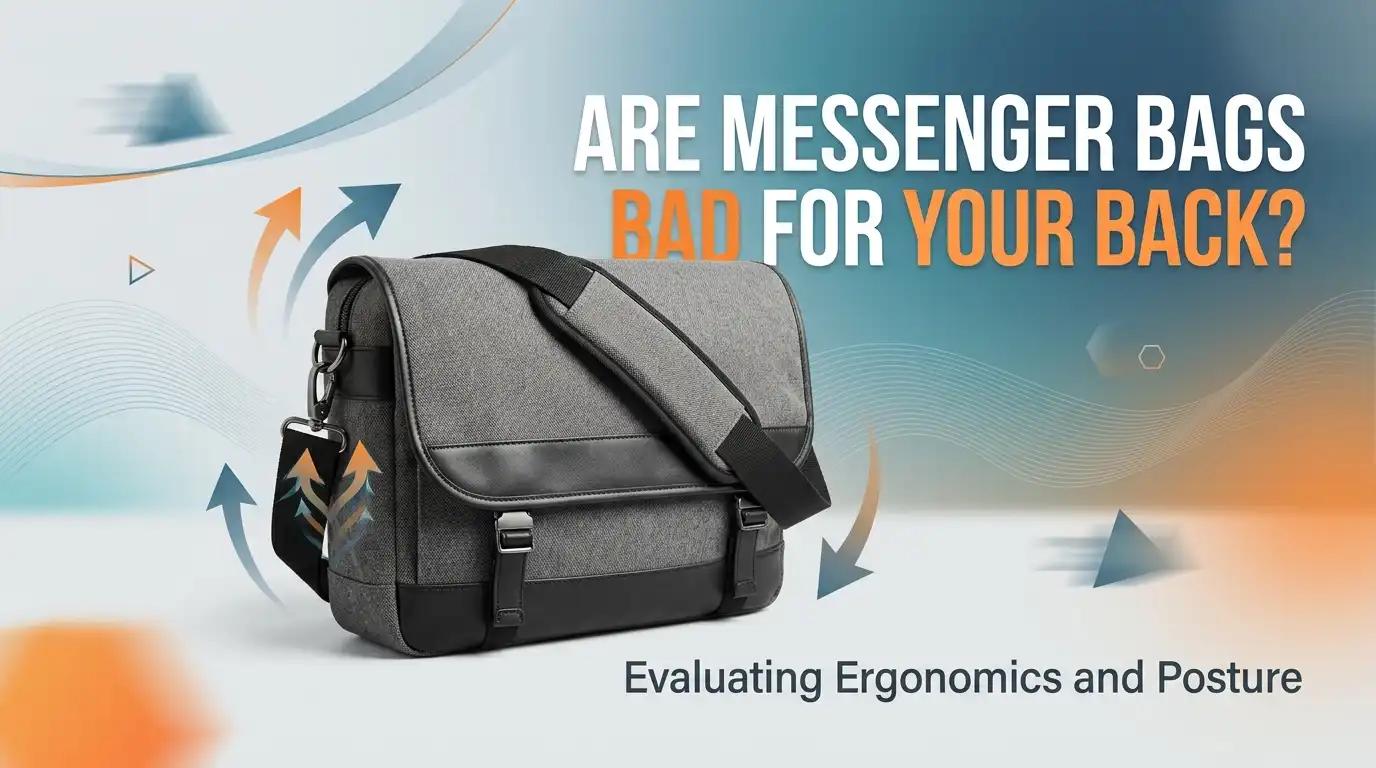
Are Messenger Bags Bad For Your Back?
Messenger bags look great. They feel easy to grab. You sling one over your shoulder and walk out the door in seconds. But a small worry sits in the back of your mind.
Is this stylish bag slowly hurting my back? You are not the only one asking this. Many people feel neck tension, shoulder aches, or lower back pain after months of daily carry.
The good news is simple. You can keep your messenger bag and still protect your spine. This post breaks down the real science, the warning signs, and the exact steps to fix the problem.
Key Takeaways
- Messenger bags can strain your back, but only when used wrong. The single strap puts all the weight on one shoulder. This creates uneven pressure on your spine over time.
- Weight is the biggest factor. Health studies suggest you keep a shoulder bag under 10 percent of your body weight. For women, some research points to staying under 4 percent to avoid shoulder pain.
- Switching shoulders matters a lot. Carrying the bag on one side every day builds muscle imbalance. Alternate sides often to spread the load.
- A cross body wear style beats the single shoulder sling. Wearing the strap across your chest holds the bag close and steadies your balance.
- Strap width and padding change your comfort fast. A wide, padded strap spreads pressure and reduces the dig into one muscle.
- Good posture and a few daily stretches undo most of the damage. You do not need a new bag to feel better. You need smarter habits.
How A Messenger Bag Affects Your Back
A messenger bag hangs from one shoulder. That single point holds the full load. Your body reacts to keep you upright. You lean to one side without noticing it. Over hours and days, this lean becomes a habit. Your spine bends to balance the weight on the opposite side.
Research on shoulder bags shows clear postural shifts in all directions. The load pulls one shoulder down and lifts the other. Your neck tilts. Your hips adjust. These small changes add stress to muscles and discs.
The problem is not the bag itself. The problem is the uneven pull on one side of your body. Your back was built to carry balanced loads. A messenger bag breaks that balance every time you wear it the same way.
Common Back And Shoulder Problems From Messenger Bags
People who carry heavy shoulder bags often report the same complaints. The first is shoulder pain on the carry side. The strap digs in and presses on muscles and nerves. This pressure builds slowly, so you may not link it to the bag at first.
Neck stiffness comes next. Your neck muscles work harder to hold your head steady against the side pull. Many users also feel upper back tightness between the shoulder blades.
Lower back pain can appear too. When you lean to one side, your lower spine takes extra strain. Some long term users even report sciatica style pain down one leg.
Headaches from tight neck muscles are also common. None of these problems start overnight. They grow from months of one sided carry with too much weight.
Messenger Bag Versus Backpack For Spine Health
A backpack spreads weight across two shoulders. This even split is gentler on your spine. Most chiropractors and physical therapists rate backpacks as the safer choice for heavy loads. The weight sits closer to your center, so your posture stays more natural.
A messenger bag puts all the load on one side. That is its main weakness for back health. But it has real strengths too. You grab items fast without taking it off. It looks sharp in an office setting.
Pros of a backpack: even weight, better balance, less muscle imbalance, good for heavy loads.
Cons of a backpack: slower access, can look too casual, may cause sweating on the back.
Pros of a messenger bag: quick access, stylish, easy on and off, great for light loads.
Cons of a messenger bag: one sided strain, harder on the spine when heavy, needs side switching.
The Right Way To Wear A Messenger Bag
How you wear the bag changes everything. The best method is the cross body style. You pull the strap over your head so it rests across your chest. This holds the bag against your back instead of letting it swing. A bag that swings pulls your posture out of line with every step.
Adjust the strap so the bag rides higher on your back, not low near your hip. A low bag drags your shoulder down more. Keep the bag flush against your body.
Avoid the single shoulder sling for anything heavy. That style lets the strap slide and forces you to shrug to hold it. The shrug strains your neck and trapezius muscle. Cross body wear keeps both hands free and your spine straighter. This one change helps most people right away.
How Much Weight Is Safe To Carry
Weight is the number one cause of bag related back pain. The rule most experts follow is simple. Keep your loaded bag under 10 percent of your body weight. If you weigh 160 pounds, that means around 16 pounds at most.
For shoulder bags worn on one side, the safe number drops lower. One study on young women found that bags over 4 percent of body weight raised the risk of shoulder pain. Since a messenger bag loads one side, lighter is always better.
Weigh your bag at home with everything inside. You may be shocked at the total. A laptop, charger, water bottle, and books add up fast. Pull out items you do not need each day. The lighter your bag, the less your spine has to fight for balance.
Smart Packing Tips To Reduce Strain
How you pack matters as much as how much you pack. Place the heaviest items closest to your back. This keeps the weight near your center and reduces the pull on your shoulder. A heavy laptop should sit against the panel nearest your body, not at the outer edge.
Spread items evenly inside the bag. A lopsided load makes the bag tilt and dig into one spot. Use the inner pockets to hold things in place so they do not shift while you walk.
Do a weekly cleanout. Old receipts, extra cables, and forgotten snacks pile up. Each small item adds weight you carry for no reason. Keep only what you need that day. Smart packing turns a painful bag into a manageable one without spending a single dollar.
Choosing An Ergonomic Messenger Bag
If you want a new bag, certain features protect your back. The strap is the most important part. Look for a wide, padded strap that spreads pressure across more of your shoulder. A thin strap cuts into one narrow line of muscle and causes faster pain.
A stabilizer strap is a big help. This is a second smaller strap that clips across your chest. It stops the bag from sliding and keeps the load steady.
Pros of an ergonomic bag: less pressure points, better balance, padded comfort, steadier load.
Cons of an ergonomic bag: costs more, can look bulkier, extra straps take time to adjust.
Also pick a bag that fits your real needs in size. A bag too large tempts you to overfill it. Choose one just big enough for your daily items and no more.
Daily Habits That Protect Your Back
Small daily habits add up to big results. The most powerful one is switching shoulders. Do not carry the bag on the same side every day. Alternate sides so each shoulder shares the work. This stops one sided muscle imbalance.
Stand tall when you wear the bag. Pull your shoulders back and down, and keep your head over your spine. Catch yourself when you start to lean. A quick posture reset many times a day trains your body to stay aligned.
Take the bag off when you sit or stand still for a while. There is no reason to hold the load when you do not need to. Set it down at your desk, on a chair, or on the floor. Every minute the weight is off your shoulder is a minute your back recovers.
Stretches And Exercises For Relief
A few simple moves ease the tension a messenger bag creates. Shoulder rolls are the easiest start. Roll your shoulders backward in slow circles ten times. This loosens tight muscles fast.
Try the scapular squeeze next. Pull your shoulder blades together and hold for five seconds. Repeat ten times. This strengthens the muscles that hold good posture.
A chest stretch helps undo the rounded shoulder slump. Stand in a doorway, place your forearm on the frame, and lean forward gently. The cat cow pose stretches your whole spine and feels great after a long day.
Do these daily, even for five minutes. Strengthening your back and stretching your chest balance out the strain. Strong, flexible muscles handle a bag far better than tight, weak ones.
When To See A Doctor About Bag Pain
Most bag pain fades with better habits. But some signs mean you should get help. See a doctor if pain lasts more than two weeks despite lighter loads and better posture. Pain that does not improve points to a deeper issue.
Get checked right away if you feel numbness, tingling, or weakness in your arm or hand. These signs can mean a nerve is under pressure. Sharp pain shooting down your leg also deserves attention.
A physical therapist can spot muscle imbalances and give you a custom plan. A chiropractor can assess your spine alignment. Do not wait until the pain controls your day. Early care is faster and easier than fixing years of damage. Your body sends warnings for a reason, so listen to them.
Alternatives To Messenger Bags Worth Considering
If your back keeps hurting, other bag styles may suit you better. A backpack is the top pick for even weight. It splits the load across both shoulders and supports heavy daily carry.
A sling bag worn cross body works for light loads. It is smaller than a messenger bag and forces you into the safer cross body position. A rolling bag removes shoulder strain completely for very heavy gear.
Pros of switching styles: better weight balance, less one sided strain, more options for heavy loads.
Cons of switching styles: less style for some looks, backpacks feel bulky, rolling bags are awkward on stairs.
You do not have to give up your messenger bag forever. Many people keep one for light days and use a backpack for heavy ones. Match the bag to the load.
Building A Long Term Healthy Carry Routine
Lasting comfort comes from a routine, not a one time fix. Start each week by weighing your bag and removing extra items. Make light packing a habit you repeat without thinking.
Set a reminder to switch shoulders, or simply alternate by day. Pair this with a short stretch routine in the morning or evening. Two minutes of shoulder rolls and chest stretches keep your muscles loose.
Check your posture in a mirror now and then. Notice if one shoulder sits lower than the other. That tells you which side needs more rest. Strengthen your core and upper back twice a week with simple moves.
The goal is balance, not perfection. A messenger bag fits a healthy life when you respect weight limits, switch sides, and care for your muscles. Small steps, done often, protect your back for years.
Frequently Asked Questions
Are messenger bags worse for your back than backpacks?
Yes, in most cases. A messenger bag loads one shoulder, while a backpack spreads weight across two. The even split of a backpack is gentler on your spine. But a light messenger bag worn cross body can still be safe for daily use.
How heavy should my messenger bag be?
Keep it under 10 percent of your body weight as a general rule. For one sided shoulder carry, lighter is even better. Weigh your packed bag at home and remove items you do not need that day.
Does wearing a messenger bag cross body help my back?
Yes, it helps a lot. Cross body wear holds the bag close and steadies your balance. It stops the bag from swinging and keeps your posture straighter than the single shoulder sling style.
Can a messenger bag cause neck pain?
Yes. The side pull forces your neck muscles to work harder to hold your head level. This builds tension over time. Switching shoulders, lightening the load, and doing neck stretches all reduce the strain.
How often should I switch shoulders with my bag?
Switch as often as you can, ideally many times a day or by alternating days. This stops muscle imbalance from forming on one side. Regular switching is one of the easiest ways to protect your spine.
What stretches help with messenger bag back pain?
Shoulder rolls, scapular squeezes, chest stretches, and the cat cow pose all help. Do them daily for a few minutes. They loosen tight muscles and strengthen the ones that support good posture.

Hi, I’m Luna Beck — the founder and voice behind Urban Pack Vault. I’m passionate about helping people find bags that perfectly match their lifestyle. From backpacks to travel luggage, I research, review, and recommend so you never have to second-guess your next purchase.