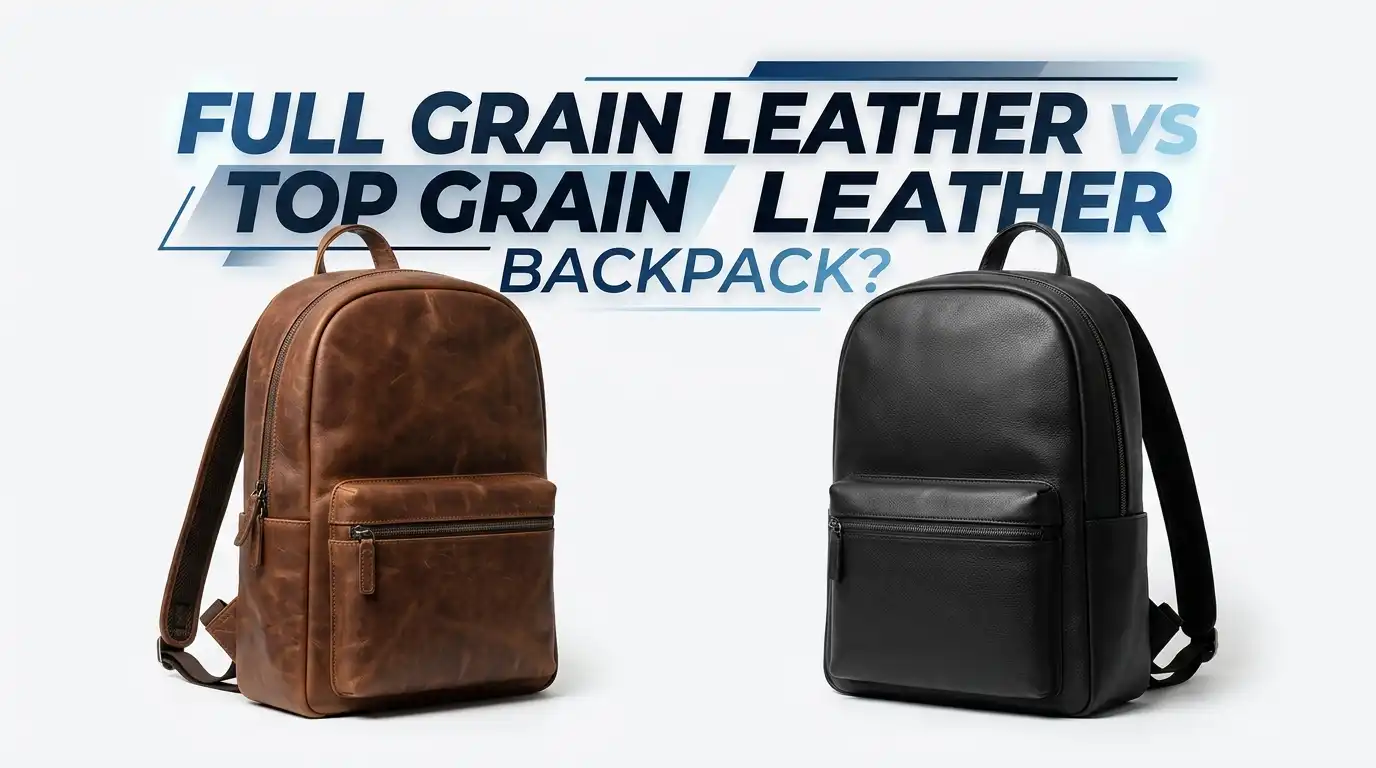
Full Grain Leather vs Top Grain Leather Backpack?
A leather backpack can look great on day one. The real question starts later. Will it still look good after daily commutes, travel days, rain, friction, and years of use? That is where the choice between full grain leather and top grain leather matters.
Many buyers see both terms and assume one is always right and the other is always wrong. The truth is more practical. Each leather type solves a different problem. One gives you natural character and long life.
The other gives you a smoother look and easier upkeep for some users. If you want a backpack that fits your routine, budget, and care habits, this guide will help you make a clear choice with simple steps and real world logic.
In a Nutshell
- Full grain leather keeps the natural surface of the hide. It shows pores, marks, grain, and small scars. That is why many people love it. It feels more natural and usually lasts longer. The big plus is strength and character over time. The main tradeoff is a higher price and a surface that can show marks early.
- Top grain leather usually has a corrected surface. Makers sand or buff the outer layer to remove marks and create a cleaner look. That makes it smoother and more even. The plus is a polished appearance and, in many cases, easier stain control because of the finish. The tradeoff is less natural character and, often, a shorter aging story than full grain.
- In strict leather language, full grain also comes from the top layer. That confuses many buyers. In daily shopping, people use top grain to mean leather that has been corrected or refined on the surface. That simple idea can save you from buying the wrong backpack.
- Your best choice depends on use. If you carry heavy gear every day and want a backpack that gains charm with age, full grain often wins. If you want a sleek office look, a more even finish, and lower cost, top grain can be the smarter pick.
- Do not buy by label alone. Touch the leather. Press it. Smell it. Check the edges, stitching, lining, and straps. A poor bag made from good leather can still fail. A well made top grain backpack can serve many people very well.
- The smartest solution is simple. Match the leather to your routine, then protect it with basic care. A good leather backpack is not just about the hide. It is about choosing the right leather for your life and caring for it the right way.
What Full Grain Leather Means
Full grain leather is leather that keeps the outer surface of the hide intact. The grain stays in place. The maker does not sand away the natural marks. That means you may see pores, wrinkles, grain lines, and small scars. That is not a flaw. It is part of the material.
This type of leather keeps the strongest fibers near the outer layer. That is why many buyers see it as the best choice for long use. It feels honest and natural. Over time, it often develops a rich patina that many people enjoy.
Pros: strong fibers, natural look, ages with character, can last for many years.
Cons: higher price, surface marks show more easily at first, may need more patient care.
If you want a backpack that tells a story as it ages, full grain leather is a strong answer. If you want every panel to look perfectly even, it may feel too raw for your taste.
What Top Grain Leather Means
Top grain leather can confuse buyers because the term sounds like it means the best. In strict leather talk, it comes from the top part of the hide.
In everyday shopping, though, top grain usually means the surface has been corrected. The maker sands or buffs away some natural marks. Then the leather may get a finish or coating.
That process creates a cleaner and more uniform look. Many office style backpacks use this leather because it looks neat and polished. It can feel softer and more refined right away.
Pros: smooth appearance, more even color, often easier for buyers who want a clean style, usually lower cost than full grain.
Cons: loses some natural character, often less breathable, may not build the same patina as full grain.
Top grain leather is a good solution if you want a backpack that looks sharp from the start and fits a more formal style.
The Real Difference in a Backpack
The biggest difference is simple. A backpack is a working item. It bends, rubs against clothes, carries weight, sits on floors, and faces weather. So the full grain versus top grain question is not just about beauty. It is about how the leather behaves under real use.
Full grain leather keeps more of the original surface and strength. That often means better long life and richer aging. Top grain leather gives you a smoother and more controlled look because the surface has been refined. One feels more natural. The other feels more finished.
There is also an accuracy point that helps. Full grain is still from the top layer. So in one sense, it belongs inside the top layer family. But in buyer language, people use these terms to compare natural surface leather with corrected surface leather.
Practical fix: buy based on use, not on label pride. If your backpack will work hard, full grain often makes more sense. If it needs to look sleek every day, top grain may solve the problem better.
Which One Feels Better in Daily Use
Daily use changes how a backpack feels in your hands and on your back. Full grain leather usually feels firmer at first. Some bags need a break in period. After regular use, the leather often softens in a natural way. Many people love that shift because the bag starts to feel personal. It becomes yours over time.
Top grain leather often feels smoother and more ready to use from day one. The finish can make it feel softer or more polished. That is helpful if you want comfort and a clean look without waiting for the leather to settle.
Pros of full grain for daily use: strong body, natural feel, develops character, often handles wear with grace.
Cons of full grain for daily use: can feel stiff early, marks can show fast, may ask for more patience.
Pros of top grain for daily use: smooth touch, neat look, less visual variation, easier for formal settings.
Cons of top grain for daily use: can feel less alive, may not age as richly, finish may hide the natural feel.
If you want fast polish, choose top grain. If you want deep character, choose full grain.
Which One Lasts Longer Under Weight and Friction
A backpack carries strain in key spots. Look at the shoulder strap base, top handle, corners, zipper area, and bottom panel. These zones face constant pull and friction. Full grain leather often performs better here because it keeps the strongest fibers of the hide. That gives it a real edge for long term use.
Top grain leather can still be durable. A well made top grain backpack is far from weak. But when the outer layer has been corrected, some strength is lost. In hard use, that difference can show over time, especially if the straps or panels are thin.
Pros of full grain for durability: strong fiber structure, better long use, handles stress well, often lasts for decades with care.
Cons of full grain for durability: costs more, heavier in some builds.
Pros of top grain for durability: still solid in many backpacks, easier to shape, often lighter in feel.
Cons of top grain for durability: corrected surface can reduce strength, long use may reveal wear sooner.
If your bag will hold books, a laptop, and daily gear, full grain gives you more peace of mind.
How Scratches, Stains, and Rain Affect Each Type
Many buyers ask the same thing. Which leather is easier when life gets messy? The answer is mixed.
Full grain leather is strong, but its natural surface can show scratches, water spots, and stains more clearly. That sounds bad, but some of those marks blend into the patina over time. The bag can look better, not worse, after honest use.
Top grain leather often has a finish that adds some stain resistance. Light spills may sit on the surface longer before soaking in. That makes it easier for some users. Still, the finish is not magic. Deep scratches or broken coating can stand out in a different way.
Pros of full grain: scratches can become part of the look, natural aging can soften small marks.
Cons of full grain: early stains can worry owners, water spots may show if ignored.
Pros of top grain: smoother finish can resist light stains better, easier for neat appearance.
Cons of top grain: finish damage can look obvious, may not blend scratches as naturally.
Best solution: wipe moisture fast, condition on schedule, and never let either leather stay wet.
Which One Ages Better Over Time
A leather backpack changes with use. The best aging depends on what you enjoy. Full grain leather usually wins if you want depth, warmth, and patina. Sun, touch, movement, and oils from your hands slowly shift the color and tone. That living change is the main reason many people choose it.
Top grain leather ages in a calmer way. Its finish can slow down dramatic change. That helps if you want the backpack to stay close to its original look. Some buyers see that as a plus because it stays cleaner and more controlled.
Pros of full grain aging: rich patina, unique look, tells a real use story, often becomes more attractive with time.
Cons of full grain aging: color and marks may change in ways some buyers do not like.
Pros of top grain aging: more stable look, cleaner surface, less visual surprise.
Cons of top grain aging: less patina, less character, can look flatter with age.
Choose full grain if you want personality. Choose top grain if you want predictability.
Price, Value, and Cost Over Time
Price often pushes buyers toward top grain, and that can be a smart move. Full grain leather backpacks usually cost more because the leather is less corrected and often harder to source and work with. The maker must accept natural marks, cut panels with care, and use more skill in matching pieces. That raises the cost.
Top grain leather is usually more affordable. It gives many buyers a real leather backpack without the highest price level. For some people, that is the perfect balance. The key is to think beyond the price tag. Ask how many years you expect to use the bag.
Pros of full grain value: long life, strong resale appeal in some cases, may cost less per year if used for many years.
Cons of full grain value: high entry price, harder to justify for occasional users.
Pros of top grain value: lower upfront cost, polished look, strong value for moderate use.
Cons of top grain value: may need replacement sooner in hard use, less aging appeal.
Buy for your use span. Ten years and daily use can favor full grain. Three years and office use can favor top grain.
Step by Step Checklist Before You Buy
A smart buyer follows a simple checklist. First, press the leather with your thumb. Good leather should crease naturally, then relax.
Second, feel the surface. Full grain often feels more natural and varied. Top grain often feels smoother and more even. Third, smell the bag. Real leather should smell rich and natural, not like plastic.
Fourth, inspect the edges and seams. Good stitching matters as much as good leather. Fifth, check the strap anchors and handle base.
These parts fail first. Sixth, ask about lining and hardware. A leather shell means little if the zipper is poor. Seventh, look at the bag shape under load. A backpack should hold structure without looking stiff like cardboard.
Pros of this method: reduces impulse buying, helps you judge real quality, works online and in store.
Cons of this method: needs patience, and online shopping limits touch and smell.
If shopping online, zoom in on grain, corners, and strap attachments before you decide.
Best Choice for Work, Travel, School, and Daily Carry
The best leather depends on your routine. For office work, top grain leather often fits well. It looks clean, smooth, and polished. If your goal is a neat and formal style, it solves that problem fast.
For daily commuting with a laptop and chargers, full grain can be better if you want strength and long use.
For travel, full grain leather is strong, but it can be heavier depending on the bag build. Top grain may feel easier if you want a lighter and sleeker carry.
For school or heavy daily loads, durability should lead the choice. That usually points toward full grain, especially if the bag has strong strap construction.
Pros of full grain by use: best for heavy carry, long ownership, and casual luxury with character.
Cons of full grain by use: higher cost, more visible marks, can feel heavier.
Pros of top grain by use: best for office style, smooth look, and budget control.
Cons of top grain by use: less story with age, may not satisfy buyers who want a raw leather feel.
How to Care for Either Leather Backpack
Good care is simple. Wipe dust with a soft dry cloth every week or two. If the bag gets dirty, use a slightly damp cloth and dry it right away.
Apply a leather cream or wax every few months if the leather looks dry. Keep the bag away from strong sun for long periods. Store it in a dust bag or clean pillowcase. Fill it with soft paper to help hold shape.
If the backpack gets wet, let it dry naturally at room temperature. Do not use direct heat. That quick mistake can damage leather fast. Keep pens, cosmetics, and liquids in separate pouches inside the bag.
Pros of regular care: longer life, better appearance, fewer cracks, better shape retention.
Cons of regular care: takes time, wrong products can hurt the finish.
The method is easy. Clean lightly, condition lightly, store well, and react fast to moisture.
Common Buying Mistakes to Avoid
The first mistake is trusting a label without checking the build. A weak backpack made from full grain leather is still a weak backpack.
The second mistake is buying a leather type that does not match your life. Some people love the idea of full grain, then hate every scratch. Others buy top grain, then wish the bag had more depth and aging charm.
The third mistake is ignoring weight. Thick leather plus metal hardware can make a backpack heavy before you even pack it. The fourth mistake is forgetting care.
Leather needs simple attention. The fifth mistake is assuming genuine leather tells you enough. It does not. That term is often too broad to help.
Pros of avoiding these mistakes: better value, better fit, fewer regrets, longer use.
Cons of ignoring them: wasted money, poor comfort, and frustration after a short time.
Buy with clear eyes. Leather quality matters, but design, build, and your habits matter just as much.
Final Verdict: Which One Should You Choose
If you want the short answer, here it is. Choose full grain leather if you want maximum character, strong long term durability, and a backpack that looks better as it ages.
It is the better answer for buyers who plan to use one bag for many years and enjoy a natural surface that changes over time.
Choose top grain leather if you want a smoother look, a more even finish, and a friendlier price. It is a strong solution for office use, moderate daily carry, and buyers who want leather without the raw and changing look of full grain.
Neither choice is wrong. The wrong choice is buying without matching the leather to your real routine.
Full grain pros: strength, patina, long life, natural beauty.
Full grain cons: higher cost, early marks, more raw appearance.
Top grain pros: smooth finish, polished style, lower price, easier visual upkeep.
Top grain cons: less character, less rich aging, often lower long term strength.
Pick the one that solves your daily problem, not the one with the louder label.
FAQs
Is full grain leather always better than top grain leather?
No. Full grain leather is often better for long life, strength, and aging. Top grain leather can be better for a smooth office look, lower cost, and a more even finish. Better depends on your use. If you want a backpack for heavy daily carry and years of wear, full grain is often the stronger choice. If you want a sleek and polished bag for light to medium use, top grain can fit better.
Does top grain leather mean low quality?
No. Top grain leather is still real leather and can be very good quality. The key issue is how the bag is made. A well built top grain leather backpack with strong straps, quality stitching, and solid hardware can serve very well for years. Do not judge by one term alone. Check the whole bag, including construction, thickness, lining, and comfort.
Which leather backpack is easier to maintain?
Top grain leather is often easier for buyers who want a clean and even look because the finish can help with light stains. Full grain leather can show marks sooner, but many owners enjoy that natural change. Both need care. Wipe dirt early, keep the bag dry, and condition it lightly from time to time. The best maintenance plan is simple and steady, not heavy.
How can I tell if a leather backpack is worth the price?
Check the leather, then check the build. Press the leather, inspect the stitching, study the strap anchors, and test the zippers. Look at the corners and edges because those parts reveal weak work fast. A good backpack should feel solid from every angle. Price makes sense when the leather quality, design, comfort, and hardware all support long use.

Hi, I’m Luna Beck — the founder and voice behind Urban Pack Vault. I’m passionate about helping people find bags that perfectly match their lifestyle. From backpacks to travel luggage, I research, review, and recommend so you never have to second-guess your next purchase.