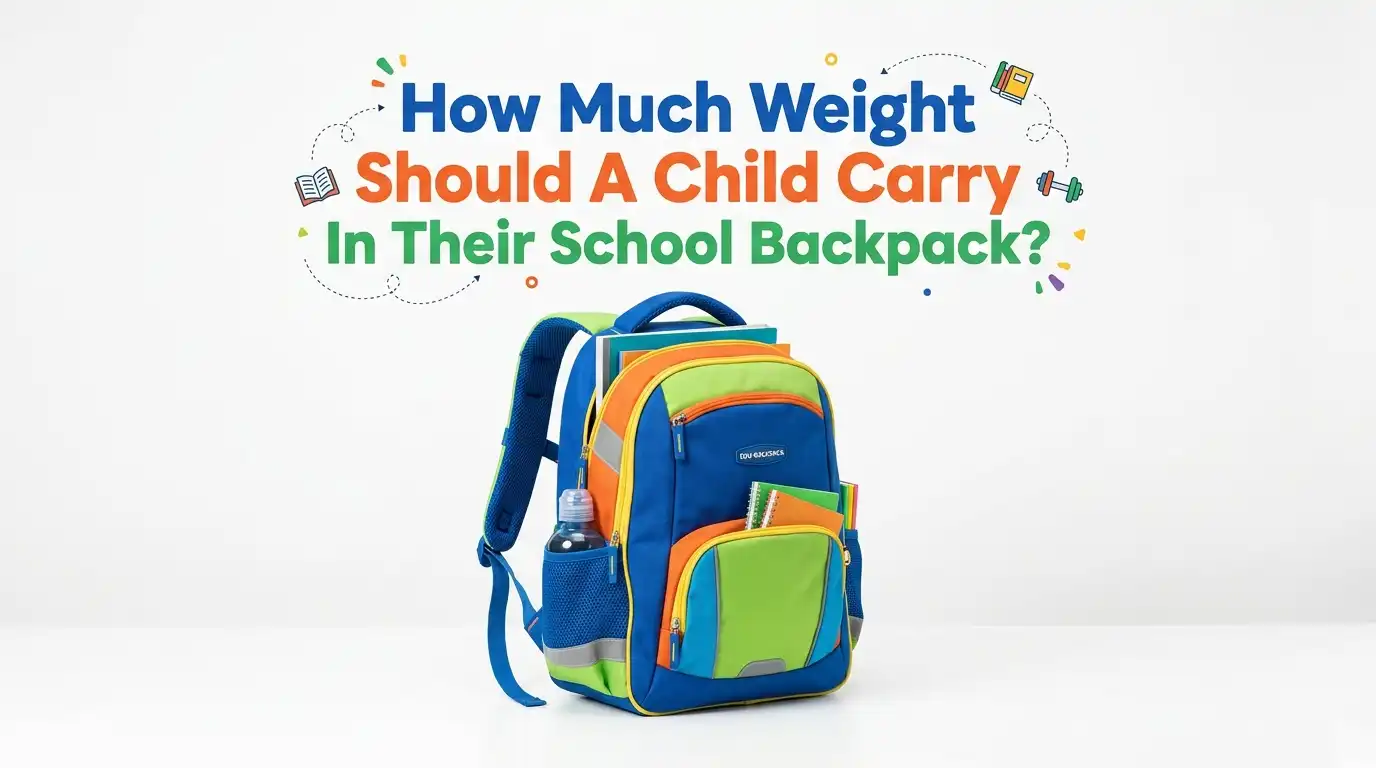
How Much Weight Should A Child Carry In Their School Backpack?
Every school year, many parents ask the same question. How heavy is too heavy for a child’s backpack? It is a smart question because a heavy bag can cause daily pain, poor posture, and a lot of stress before the school day even starts.
The good news is simple. You do not need to guess. Pediatric and orthopedic guidance gives a clear range, and there are easy ways to cut the load fast.
In this guide, you will learn the safest weight range, the warning signs to watch for, and the exact steps that help your child carry less and feel better. Small changes can protect your child’s back every single day.
In a Nutshell
- Most experts place the safe backpack range at about 10 to 15 percent of a child’s body weight. A very practical target is closer to 10 percent, especially for younger children, smaller children, or kids who walk far, climb stairs, or carry the bag for a long time.
- A backpack that is too heavy can lead to back pain, neck pain, shoulder strain, and poor posture. A child may lean forward, arch the back, or complain that the straps hurt. These signs matter. Pain is useful information, not drama.
- You can check the load at home in less than two minutes. Weigh your child. Then weigh the packed backpack. Compare the numbers. This quick habit gives you a clear answer instead of a rough guess. Simple measuring beats guessing every time.
- Packing style matters almost as much as total weight. Heavy books should sit close to the back. Extra items should come out. The bag should stay snug against the body. A messy bag often feels heavier than a well packed one.
- The best backpack has two wide straps, a good fit, light material, and useful compartments. A waist strap or chest strap can help some children. If the load is still too much, a rolling backpack may be a smart fix if the school allows it.
- Parents and schools can solve this together. Locker use, digital materials, a second set of books at home, and a weekly clean out can make a huge difference. The goal is not a perfect bag. The goal is a lighter, safer school day.
Why backpack weight matters more than many parents think
A school backpack looks harmless, but daily strain adds up. If the bag is too heavy, the child often changes posture to cope with the load. The child may lean forward, pull the neck out, or arch the lower back. That can lead to muscle strain and tired shoulders by the end of the day.
Research and medical guidance point in the same direction. Many children carry more than the recommended limit, and one recent study found the average school bag was about 13.5 percent of body weight. That is above the safer target many experts use.
A heavy backpack does not mean your child will develop every back problem. It also does not mean the bag causes scoliosis. Still, repeated strain can cause real pain, poor comfort, and bad habits. That is why early action matters. A lighter bag can improve the school day right away.
What is the safest backpack weight for a child
A useful rule is simple. Keep the backpack at 10 to 15 percent of your child’s body weight. Many parents use 10 percent as the safest goal because it gives extra room for comfort. This is especially helpful for younger kids and children with smaller frames.
Here is the easy math. A child who weighs 50 pounds should carry about 5 pounds if you use the 10 percent rule. A child who weighs 80 pounds should carry about 8 pounds. If you use the upper end, that same 80 pound child should stay around 12 pounds or less.
Pros of the 10 percent rule: It is easy to remember, safer for most children, and better for long walks.
Cons of the 10 percent rule: It can feel strict on days with extra books or sports gear.
Pros of the 15 percent rule: It offers more flexibility.
Cons of the 15 percent rule: It may still feel heavy for smaller kids or long school days.
How to measure your child’s backpack the easy way at home
You do not need special tools. You only need a home scale and one minute of focus. First, weigh your child without the backpack. Then weigh the packed backpack by itself. After that, compare the backpack number with your child’s body weight.
If your child weighs 70 pounds, 10 percent is 7 pounds. If the bag weighs 9 pounds, the bag is already above the safer target. That is your sign to remove items before the next school day.
This step solves guesswork. Many parents think the bag feels “about right,” but the scale often tells a different story. A bag can look small and still be too heavy.
Pros of a daily weight check: Fast, accurate, and easy to repeat.
Cons: It may feel annoying at first.
Pros of a weekly check: Easier to keep as a habit.
Cons: The bag may get too heavy on random days. A great middle ground is a weekly check plus a quick check on heavy homework days.
Clear signs your child’s backpack is too heavy
Children often show the problem before they explain it. Watch how your child walks with the backpack on. If the child leans forward, hikes one shoulder up, struggles to stand straight, or has trouble putting the bag on, the load is likely too much.
Pain signs matter too. Look for shoulder marks, red skin, neck pain, back pain, arm tingling, numbness, or complaints that the bag feels “pulling” or “dragging.” Some children do not say much. Instead, they avoid carrying the bag, drop it fast, or ask for help every day.
A child should not need to fight the backpack. The bag should fit close and feel manageable. If pain continues even after the bag comes off, take that seriously.
Do not ignore pain that happens often or pain that shows up even when the child is not wearing the backpack. That is a good time to call your pediatrician and ask for guidance.
How to choose the right backpack for your child
The best backpack is not always the biggest one. In fact, a very large bag often creates a new problem. More space invites more stuff. More stuff creates more weight. A smart backpack fits the child’s body and the child’s real school needs.
Look for two wide shoulder straps, a padded back, light material, and compartments that help spread items out. A waist strap or chest strap can help keep the load closer to the body. The bottom of the bag should sit around the lower back area, not far below the waist.
Pros of a smaller backpack: It limits overpacking and fits smaller children better.
Cons: It may feel tight on days with sports clothes or art supplies.
Pros of compartments: Better weight balance and easier organization.
Cons: Some children fill every pocket and add extra weight.
Fit matters more than style. A fashionable bag that pulls on one shoulder can create daily strain. Comfort should win.
How to pack the backpack so it feels lighter right away
Packing order changes how the weight feels. Put the heaviest items, like textbooks or a laptop, closest to the child’s back. This keeps the center of weight near the body and reduces pulling. Put medium items around them. Keep small loose items in front pockets only if they are truly needed.
Remove anything that does not serve that day. Old papers, full metal water bottles, toys, extra notebooks, and random supplies build hidden weight fast. A child can carry several pounds of things that never get used.
A neat bag usually feels lighter because the weight stays balanced. A messy bag shifts around and creates more strain on the shoulders.
Pros of careful packing: Better balance, less strain, and faster access to school items.
Cons: It takes a few minutes each evening.
Start with one simple rule. If the item is not needed tomorrow, it stays home. That one habit can cut a surprising amount of weight by the end of the week.
How your child should wear and lift the backpack
Even a good backpack can hurt if a child wears it the wrong way. The first rule is simple. Use both shoulder straps. One shoulder carrying may look casual, but it puts uneven stress on the body. That can make one side of the neck and back work much harder than the other.
The backpack should sit close to the back, not hang low. Tighten the straps enough so the bag stays secure in the middle of the back. If the backpack has a waist strap or chest strap, use it. Those straps can improve stability and reduce swinging.
Lifting matters too. Teach your child to bend the knees and lift with care instead of yanking the bag up with a twisted back.
Pros of both straps: Better balance and less shoulder strain.
Cons: Some children say it feels less cool.
Pros of a snug fit: Better comfort and less pulling.
Cons: If the straps are too tight, the bag can feel stiff. The goal is snug, not squeezed.
A daily routine that keeps backpack weight under control
Most backpack problems come from small habits, not one big mistake. The fix is a short evening routine. Ask your child to empty loose papers, check the class plan for the next day, and pack only what tomorrow requires. This takes about five minutes.
Add one weekly clean out. Remove old worksheets, extra stationery, snack wrappers, and items that have no school purpose. Children often carry hidden clutter for weeks. A Friday clean out or Sunday reset works well.
You can also create a simple checklist near the study area. Include books needed, homework folder, lunch, and one water bottle. Keep it short so the child can actually use it.
Pros of a daily routine: Prevents overload before it starts.
Cons: It needs adult support at first.
Pros of a weekly clean out: Catches slow weight build up.
Cons: It does not fix sudden heavy days by itself.
Routine beats rescue. It is much easier to prevent a heavy bag than to fix one after pain begins.
Smart school solutions that reduce the load fast
Parents do not have to solve this alone. Schools can help in practical ways. Locker access is one of the easiest solutions. If children can switch books during the day, they do not need to carry every subject at once.
A second set of books at home can help too. This works well for children who carry large textbooks daily. Digital materials can also cut weight if the school uses them well. A single device may replace several heavy books.
Some schools also allow classroom storage, cubbies, or subject based planning that spreads materials across the week. These ideas reduce daily strain without reducing learning.
Pros of lockers: Quick and effective.
Cons: Not every school gives enough locker time.
Pros of second book sets: Excellent for homework heavy subjects.
Cons: It can depend on school policy and cost.
Pros of digital materials: Very light and efficient.
Cons: Screen time, charging, and device rules may create new issues.
A lighter school system creates a lighter backpack.
Which solution works best for your child
There is no single fix for every family. The best solution depends on age, school rules, travel distance, and the type of load your child carries. A standard two strap backpack works well for many children if the load stays within range and the fit is right.
A rolling backpack can be a strong option for children who carry heavy books, long projects, or sports items. It reduces stress on the back, but it may be awkward on stairs or crowded hallways. Some schools also limit them.
A one shoulder bag or purse style bag is usually the weakest choice for daily school use. It puts the load on one side and often causes uneven strain.
Standard backpack pros: Easy to carry and simple to store.
Standard backpack cons: Can strain the body if overloaded.
Rolling backpack pros: Great for reducing back load.
Rolling backpack cons: Harder on stairs and uneven ground.
Choose the method that reduces strain the most in your child’s real school day.
What to do if your child already has back or shoulder pain
If your child already feels pain, start with the basics that day. Lighten the bag. Repack it. Check the fit. Make sure your child uses both straps and carries only the needed items. Sometimes a few quick changes improve pain within days.
Still, pain should never become “normal.” If your child has pain often, has numbness or tingling, avoids carrying the bag, or has marks and soreness that keep coming back, call your pediatrician. Pain that continues after the backpack comes off deserves extra attention.
You can also watch for movement changes. If your child bends strangely, walks unevenly, or complains every school morning, the bag may be part of the problem, but there may also be another issue that needs care.
The best rule is simple. If pain repeats, do not wait too long. Early help is easier than long weeks of discomfort.
Common backpack mistakes parents can fix today
Many parents make the same mistakes because they seem harmless. One common mistake is buying a bag that is too large. A larger bag looks practical, but it often invites children to carry everything. Another mistake is allowing a full size metal water bottle, extra toys, or several unnecessary notebooks to stay inside all week.
Some parents also assume the child will “adjust” to the weight. That is risky. Children may stay quiet even when the bag hurts. Fashion can also mislead choices. One shoulder carrying and oversized bags may look good, but they rarely help the body.
Here is a quick fix list. Choose a properly sized bag. Weigh it once a week. Pack only the next day’s items. Use both straps. Ask your child about pain.
Small corrections create fast wins. You do not need a perfect system. You need a lighter bag and a child who feels heard.
A simple family action plan for the next seven days
If you want results fast, follow a short one week plan. On day one, weigh your child and the backpack. On day two, remove all items and repack only what is needed. On day three, adjust the straps so the bag sits close to the back. On day four, teach your child to use both straps and lift with bent knees.
On day five, talk with your child about pain, shoulder marks, or hard school days. On day six, ask the school about lockers, digital work, or a second set of books. On day seven, do a full bag clean out and decide what changes helped the most.
Pros of a one week reset: Fast feedback and clear progress.
Cons: It still needs follow through after the first week.
Action beats worry. Most families can improve backpack safety in a few days with simple steps. The goal is steady comfort, better posture, and less strain all year.
FAQ
What percentage of body weight should a child carry in a backpack?
A practical answer is 10 to 15 percent of body weight, with 10 percent as the safer target for many children. This lower target makes sense for younger kids, smaller children, and kids who walk far or carry the bag for a long time. If your child is often uncomfortable, use the lower end of the range.
Can a heavy backpack cause back pain in children?
Yes, it can. A heavy backpack can cause back pain, neck pain, shoulder strain, and tired muscles. It can also make a child lean forward or stand in a poor position to balance the load. The bag may not cause every spine problem, but it can still create real daily pain that should not be ignored.
Is a rolling backpack better than a regular backpack?
For some children, yes. A rolling backpack can reduce strain on the back because the child pulls the load instead of carrying it. That said, it can be hard to manage on stairs, in crowded halls, or on rough paths. It is a good option if the school allows it and the child’s school day suits that style.
How can I make my child’s backpack lighter without buying anything new?
Start by removing everything and repacking only what is needed for the next day. Put heavy books close to the back. Take out old papers, extra stationery, toys, and unused items. Use a smaller water bottle if needed. Ask your child to use a locker or classroom storage if available. Most bags get lighter through better habits first.
When should I call a doctor about backpack pain?
Call your pediatrician if pain happens often, if pain continues after the backpack is off, or if your child has numbness, tingling, weakness, or a strong change in posture. You should also call if your child avoids school carrying, struggles to put the bag on, or complains every week. Repeating pain deserves attention.
Do both shoulder straps really matter?
Yes, they do. Both straps help spread weight across both sides of the body. One shoulder carrying places uneven stress on the neck, shoulder, and back. Over time, that can increase strain and make the bag feel heavier than it really is. Two straps are one of the easiest safety fixes you can make today.

Hi, I’m Luna Beck — the founder and voice behind Urban Pack Vault. I’m passionate about helping people find bags that perfectly match their lifestyle. From backpacks to travel luggage, I research, review, and recommend so you never have to second-guess your next purchase.