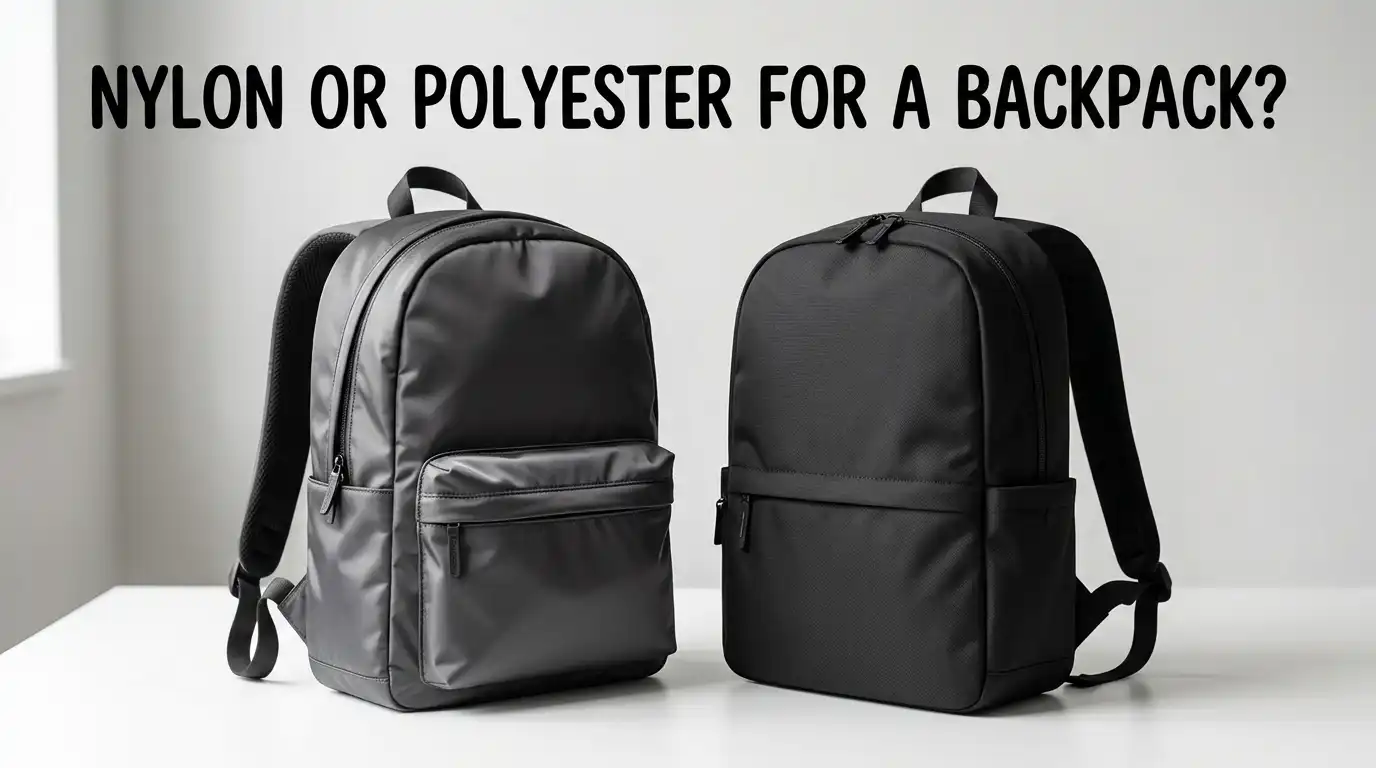
Nylon Or Polyester For A Backpack?
Choosing a backpack feels simple until you flip the tag and read the material. Then the questions start. Is nylon stronger? Does polyester keep water out better?
Which one lasts longer and which one saves you money? You want a bag that survives daily use, looks good for years, and fits your budget. Picking the wrong fabric means a worn out bag in months.
This guide answers the big question clearly. We compare nylon and polyester across strength, water resistance, weight, cost, and more.
Key Takeaways
- Nylon is stronger and tougher. It handles rough use, sharp edges, and heavy loads better than polyester. Choose nylon for hiking, travel, and tactical bags.
- Polyester wins on price and color. It costs less, holds dye well, and resists sun fading. Choose polyester for school bags, daily commuters, and budget buys.
- Both fabrics need a coating to be truly water resistant. Neither is fully waterproof on its own. Look for PU, TPU, or DWR treatments on the tag.
- Denier numbers matter more than the fabric name. A high denier polyester can beat a low denier nylon. Always check the 600D, 1000D, or similar rating.
- Polyester resists UV better, so it fades slower. Nylon can weaken faster in constant sunlight unless it gets a UV treatment.
- Care and cleaning extend the life of both. Gentle washing, air drying, and reapplying water repellent keep either fabric working for years.
What Nylon Actually Is And Why It Matters
Nylon is a synthetic fiber first made in the 1930s. Manufacturers spin it into strong threads and weave those threads into bag fabric. The result is a material known for high tensile strength and excellent abrasion resistance. This means nylon resists tearing, stretching, and rubbing damage.
You will see nylon in hiking packs, travel bags, and military gear. The fabric flexes well, so it bends without cracking. Ballistic nylon and ripstop nylon are two popular versions.
Ripstop uses a grid pattern that stops small tears from spreading. Ballistic nylon uses a thick basketweave for heavy duty protection. Nylon feels slightly softer and stretchier than polyester.
That stretch helps it absorb shocks and knocks. For people who carry heavy loads or use a bag in rough places, nylon delivers reliable toughness over many years.
What Polyester Actually Is And Why It Matters
Polyester is also a synthetic fiber, made from petroleum based materials. Makers weave it into a stable, color rich fabric. The big strength of polyester is its resistance to fading and shrinking. It holds dye deeply, so bright colors and patterns stay vivid for a long time.
You will find polyester in school backpacks, commuter bags, and budget packs. It costs less to produce, which keeps prices low. Polyester dries faster than nylon and resists wrinkles well. It also pills less, so the surface looks newer for longer.
Polyester handles sun exposure better because UV rays break it down more slowly than nylon. The fabric feels a bit stiffer and crisper to the touch. For everyday carry, school use, or anyone who wants color and value, polyester is a smart and practical pick.
Strength And Durability Compared Head To Head
This is the category where the two fabrics split clearly. Nylon is the stronger fiber. Lab tests consistently show nylon has higher tensile strength and better abrasion resistance than polyester at the same thickness. A nylon bag handles drops, scrapes, and heavy weight with less risk of tearing.
Polyester is still durable, just a step behind. It resists pilling and surface wear well, but it gives up some raw toughness. Here is a quick breakdown.
Nylon pros: stronger threads, better tear resistance, flexes without cracking, ideal for heavy loads.
Nylon cons: can weaken in long sun exposure, costs more.
Polyester pros: good everyday durability, resists pilling, stable shape, cheaper.
Polyester cons: less tear resistant, lower strength under heavy strain.
For demanding use, nylon wins durability. For normal daily life, polyester holds up just fine.
Water Resistance And Waterproofing Truth
Many people believe one fabric is naturally waterproof. The truth is neither one fully blocks water on its own. Both nylon and polyester are water resistant, not waterproof, in their raw woven form.
There is a key difference, though. Nylon absorbs more water than polyester and can sag a little when soaked. Polyester repels water slightly better and dries faster. This makes polyester a small natural winner for wet weather. But the real waterproofing comes from coatings.
Look for these treatments on the tag.
PU coating: a polyurethane layer that blocks water from the inside.
TPU coating: a tougher, more flexible waterproof layer.
DWR finish: a spray that makes water bead off the surface.
A coated polyester bag and a coated nylon bag both keep your gear dry. Always check for a coating if rain matters to you.
Weight Differences You Should Know
Backpack weight affects comfort, especially on long days. Both fabrics are light, but small differences add up. At the same thickness, nylon is usually slightly lighter than polyester. This is because nylon fibers offer more strength per gram.
That means a nylon bag can use thinner threads to reach the same toughness. The result is a lighter pack that still resists tears. Hikers and travelers value this strength to weight advantage. They want maximum durability without carrying extra grams.
Polyester is not heavy, but it needs a bit more material to match nylon strength. Here is the simple takeaway.
Nylon pros: better strength to weight ratio, lighter for the same toughness.
Nylon cons: thinner versions cost more.
Polyester pros: still lightweight, fine for daily use.
Polyester cons: slightly heavier when matched for strength.
For ultralight goals, nylon is the smarter choice.
Cost And Value For Your Money
Budget shapes most buying decisions. Here polyester takes a clear lead. Polyester is cheaper to produce than nylon, often by a wide margin. One industry note points out that 600D polyester can cost about half the price of 500D nylon.
This price gap explains why most school bags and budget packs use polyester. You get a usable, durable bag without spending a lot. Nylon costs more because the fiber is stronger and harder to make. You pay extra for that added toughness.
Think about value this way.
Polyester pros: lower price, great value for everyday needs, good color choices.
Polyester cons: less raw strength for the money.
Nylon pros: longer lifespan under hard use, fewer replacements over time.
Nylon cons: higher upfront price.
If you want low cost now, pick polyester. If you want long term value through durability, nylon may save money later.
UV Resistance And Color Fading
Sunlight slowly damages fabric. If your bag spends time outdoors, this matters a lot. Here polyester clearly beats nylon. Polyester resists UV rays better, so it holds its color and strength longer in the sun.
Nylon weakens faster under constant sunlight and can lose color over time. Some tests note that nylon still keeps better raw strength overall, but its sun resistance is its weak spot. Makers sometimes add a UV treatment to nylon to fix this.
Polyester also holds dye deeply, so bright bags stay bright. Here is the summary.
Polyester pros: strong UV resistance, slow fading, vivid lasting color.
Polyester cons: none major in this category.
Nylon pros: can be UV treated for protection.
Nylon cons: fades and weakens faster in raw form under sun.
For a bag used outdoors daily, polyester keeps its looks longer.
Understanding Denier And Why The Number Counts
Denier confuses many shoppers, but it is simple. Denier measures the thickness and weight of the fabric threads. You see it written as a number with a D, like 600D or 1000D. A higher number means thicker, heavier threads.
In general, higher denier means a stronger fabric, but only within the same material. A 1000D nylon beats a 600D nylon. Yet you cannot compare denier across fabrics directly. A 600D nylon and a 600D polyester are not equal because the fibers differ.
Common backpack ranges help here. School and daily bags often use 400D to 600D. Heavy duty and tactical bags use 1000D and above. The classic tough 1990s packs used 1000D fabric. So check the denier number along with the fabric type. Both details together tell you the real strength of the bag.
Texture, Look, And Feel Differences
How a bag feels and looks affects daily enjoyment. The two fabrics give different experiences. Nylon feels softer and smoother to the touch. It has a slight sheen and a flexible hand. This softness comes from the stretchy nature of the fiber.
Polyester feels crisper and stiffer. It often shows color more brightly and takes prints well. Polyester also resists wrinkles, so it keeps a neat shape. Many patterned and colorful bags use polyester for this reason.
Here is a simple comparison.
Nylon pros: smooth feel, subtle sheen, flexible and soft.
Nylon cons: plain colors fade in sun, fewer bright print options.
Polyester pros: vivid colors, crisp look, holds prints and patterns well.
Polyester cons: stiffer feel, less soft.
If you love bold colors and patterns, polyester offers more style options. If you prefer a soft, premium hand, nylon feels nicer.
How To Choose Based On Your Real Needs
Now you can match the fabric to your life. Follow these simple steps to decide fast. First, name your main use. Hiking, travel, and heavy loads point to nylon. School, commuting, and daily carry point to polyester.
Second, set your budget. Tight budget favors polyester. Room to spend favors nylon for longer life. Third, check the conditions. Lots of sun favors polyester. Rough terrain and sharp gear favor nylon.
Fourth, read the full tag. Look at both the fabric name and the denier number together. Then check for a water resistant coating like PU or TPU.
Use this quick rule. Want maximum toughness and light weight? Choose nylon. Want value, color, and sun resistance? Choose polyester. Both fabrics work well for most people. The best choice simply matches your activity, your wallet, and your weather. There is no single winner, only the right fit for you.
Care And Maintenance To Make Either Fabric Last
A good bag lasts longer with simple care. Both nylon and polyester respond well to gentle cleaning. Follow these steps to protect your investment. First, empty all pockets and shake out crumbs. Wipe the inside with a damp sponge.
Second, spot clean stains with mild detergent and cool water using a soft brush. Avoid harsh chemicals that strip coatings. For a deeper clean, hand wash in cool water with a small amount of gentle soap. Many polyester bags also handle a gentle machine cycle in cold water.
Third, never use hot water or a dryer. Heat can damage coatings and shape. Air dry the bag fully, away from direct sun, hanging it upside down.
Care pros for both: simple routine, low cost, extends life for years.
Care cons: coatings wear over time and need a fresh DWR spray now and then.
Regular care keeps either fabric performing like new.
Eco Friendly And Recycled Options
Many shoppers now care about the planet. Good news exists for both fabrics. Makers produce recycled nylon and recycled polyester that match the quality of new material. These options reduce waste and cut pollution.
Recycled polyester often comes from plastic bottles. Recycled nylon, like fabrics made from old fishing nets, turns ocean and industrial waste into strong bag material. Some recycled polyester processes use far less energy and water than standard methods. This makes a greener bag without losing durability.
Here is what to weigh.
Recycled polyester pros: widely available, lower production impact, keeps color well.
Recycled polyester cons: still sheds microplastics when washed.
Recycled nylon pros: strong, tear resistant, reuses harmful waste.
Recycled nylon cons: often costs more than recycled polyester.
If sustainability matters to you, look for tags marked recycled. Both fabrics now offer earth friendly versions that perform well.
Common Mistakes People Make When Choosing
People often pick the wrong bag for avoidable reasons. Learn these mistakes so you skip them. First, they trust the fabric name alone. They ignore the denier number, which matters just as much for strength.
Second, they assume the bag is waterproof. Raw nylon and polyester are only water resistant. Without a coating, your gear can get wet. Always check for PU, TPU, or DWR on the tag.
Third, they overpay for toughness they do not need. A heavy ballistic nylon pack is overkill for a light office commute. Fourth, they ignore sun exposure. A nylon bag left in constant sun fades and weakens faster than expected.
Fifth, they skip care steps. They machine wash in hot water and ruin the coating. Avoid these errors. Match the fabric, denier, coating, and use to your real needs. This single habit saves money and frustration.
Final Verdict On Nylon Versus Polyester
So which fabric wins? The honest answer is that it depends on your needs, but the pattern is clear. Nylon is the toughness champion. It offers higher strength, better abrasion resistance, and a lighter weight for the same durability. Pick nylon for hiking, travel, tactical use, and heavy loads.
Polyester is the value and color champion. It costs less, resists UV fading, and holds vivid colors for years. Pick polyester for school, commuting, daily carry, and budget buys. Neither fabric is waterproof alone, so always look for a coating.
Remember the deciding factors. Check the denier number, the coating, your budget, and your weather. A high denier polyester can outperform a thin nylon, and vice versa.
Both materials serve millions of happy users. Choose the one that fits your activity, your wallet, and your style. Then care for it well, and it will serve you for years.
Frequently Asked Questions
Is nylon or polyester more waterproof for a backpack?
Neither fabric is fully waterproof on its own. Both are water resistant in raw form. Polyester repels water slightly better and dries faster, but true waterproofing comes from coatings like PU, TPU, or a DWR finish.
Which fabric lasts longer, nylon or polyester?
Nylon usually lasts longer under hard use because it has higher strength and better abrasion resistance. Polyester lasts well for everyday use and resists sun fading better. The right choice depends on how rough your daily activity is.
Does polyester fade faster than nylon in the sun?
No. Polyester resists UV rays better and fades slower than nylon. Raw nylon weakens and loses color faster in constant sunlight. Some nylon bags get a UV treatment to improve their sun resistance.
Why is nylon more expensive than polyester?
Nylon costs more because the fiber is stronger and harder to produce. You pay extra for higher tensile strength and abrasion resistance. Polyester is cheaper, which is why most school and budget backpacks use it.
What does the denier number mean on a backpack?
Denier measures the thickness and weight of the fabric threads. A higher number means thicker, stronger threads within the same material. You cannot compare denier directly across nylon and polyester because the fibers differ.
Can I machine wash a nylon or polyester backpack?
Many polyester bags handle a gentle, cold water machine cycle. Nylon is safer with hand washing. Never use hot water or a dryer, since heat damages coatings and shape. Always air dry the bag away from direct sun.

Hi, I’m Luna Beck — the founder and voice behind Urban Pack Vault. I’m passionate about helping people find bags that perfectly match their lifestyle. From backpacks to travel luggage, I research, review, and recommend so you never have to second-guess your next purchase.