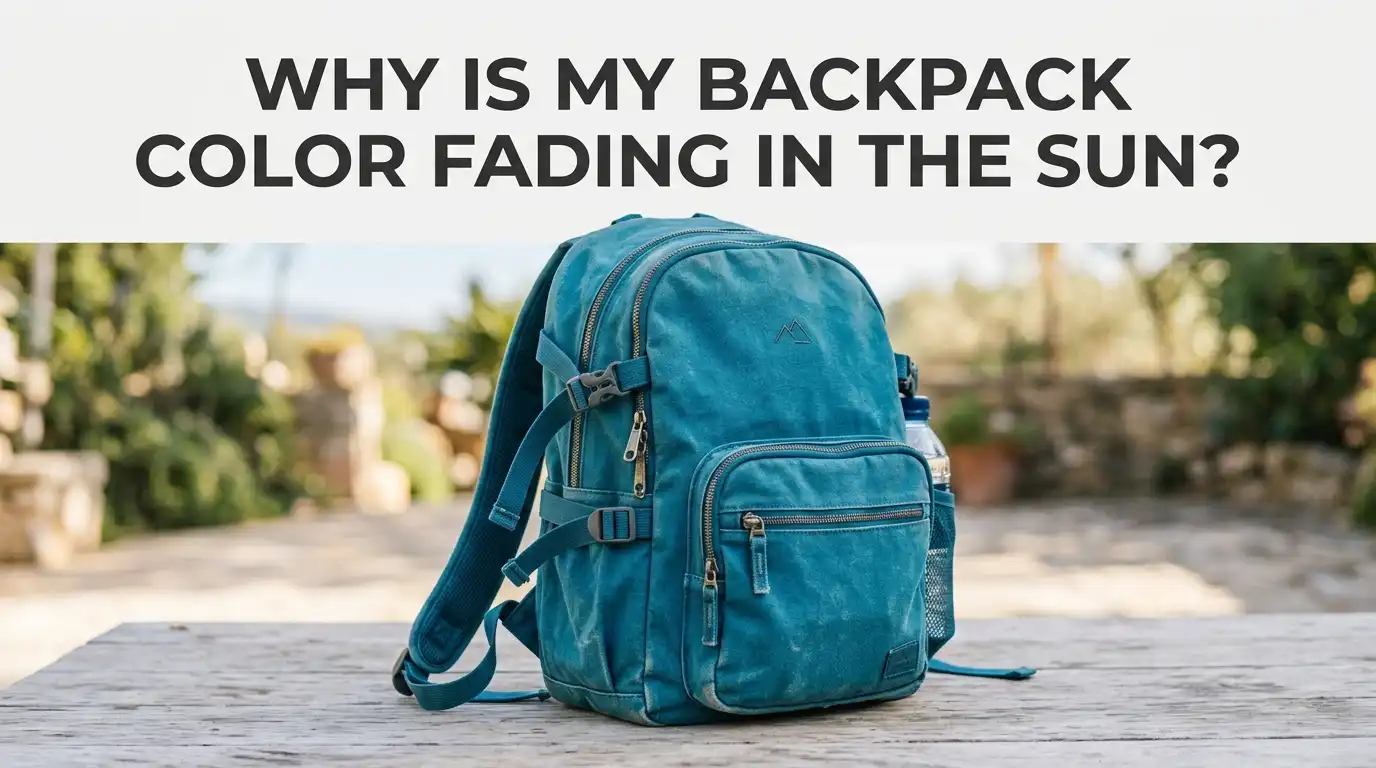
Why Is My Backpack Color Fading In The Sun?
Your favorite backpack used to look bright and bold. Now it looks dull, washed out, and tired. You hang it on the hook, and you notice the bright blue has turned soft gray.
The black straps look brownish. The red panels look pink. You wonder what is happening and whether you can stop it.
The sun is the main reason your backpack color is fading. UV rays break the dye bonds in the fabric. Heat, moisture, and friction also speed up the damage. The good news is that you can slow this process.
Key Takeaways
- UV rays break dye molecules. When sunlight hits your backpack, the ultraviolet light snaps the chemical bonds inside the color pigments. This is the number one reason your bag looks faded.
- Fabric type matters a lot. Nylon fades faster than polyester. Cotton canvas fades quickly too. Polyester and solution dyed fabrics hold color the longest.
- Heat and moisture make fading worse. A hot car, a humid locker, or a sweaty back can speed up the damage. Always store your bag in a cool, dry, shaded spot.
- UV protection sprays help. Products like Scotchgard Water and Sun Shield add a clear layer that blocks UVA and UVB rays. Reapply every few months for best results.
- You can restore faded color. Fabric dye, fabric paint, and color refresh sprays can bring back life to dull spots. Test a small area first.
- Daily habits protect your bag. Carrying it on the shaded side, using a rain cover, and rotating between two bags can double the lifespan of the color.
How UV Rays Actually Cause Color Fading
Sunlight contains ultraviolet rays. These rays carry energy that human eyes cannot see. When UV light hits your backpack, it goes straight into the dye molecules in the fabric. The energy then breaks the chemical bonds that give the dye its color.
Once those bonds break, the dye stops reflecting the same light. Your eyes then see a lighter or duller shade. This is why dark colors like black, navy, and red fade the fastest. They absorb more sunlight, so they take more damage.
The longer your bag sits in direct sun, the more bonds break. A backpack left on a sunny windowsill for one summer can lose 30 to 50 percent of its color depth. Shade and cover are your best friends here.
Why Some Backpack Fabrics Fade Faster Than Others
Not all bags fade at the same speed. The fabric type plays a huge role. Nylon is light and strong, but it has weak UV resistance. It can lose color in only a few months of daily sun exposure. Cotton canvas also fades fast because natural fibers absorb dye on the surface only.
Polyester holds color much better. The dye sits deep inside the fibers, so UV rays have a harder time reaching it. Solution dyed polyester is the gold standard. The color is added while the fiber is still liquid, so it goes all the way through.
Leather and suede have their own problems. UV rays dry out the oils and bleach the surface. If you own a leather backpack, you need a different care plan, which we will cover later.
How Heat And Humidity Speed Up The Damage
UV light is the main villain, but heat is the sidekick. Hot temperatures make dye molecules move faster. Faster movement means more chemical reactions and quicker fading. A backpack left in a parked car can reach 140°F inside. That heat alone weakens dye, even without direct sun.
Humidity adds another layer of harm. Water molecules in the air react with broken dye bonds. This creates yellow or brown patches, especially on white or cream bags. Sweat from your back is a mix of heat, salt, and moisture, which is why the back panel often fades first.
The fix is simple. Store your bag in a cool, dry place. Avoid hot cars, damp basements, and steamy bathrooms. If you sweat a lot, wipe the back panel with a dry cloth after each use.
Step By Step: How To Apply A UV Protection Spray
A UV protection spray is one of the best defenses you can buy. Brands like Scotchgard Water and Sun Shield add a clear coat that blocks both UVA and UVB rays. The spray also repels water, which helps with the humidity problem.
Here is how to apply it the right way. First, clean your bag with a damp cloth and let it dry fully. Second, take the bag outside or to a well ventilated room. Third, shake the can for one full minute. Fourth, hold the can about six inches from the fabric. Fifth, spray in slow, even strokes. Sixth, let the bag dry for at least six hours.
Pros: Easy to use, affordable, blocks UV and water, works on most fabrics.
Cons: Strong smell during use, needs reapplication every three to six months, may darken light fabrics slightly. Always test a hidden spot first.
Smart Storage Habits That Stop Fading At Home
Where you keep your bag matters as much as how you treat it. Many people hang their backpack on a hook near a window. That window lets in UV light all day, even when the curtains are partly closed. Move your bag away from windows. A closet, a drawer, or a shaded shelf works best.
If you commute by car, do not leave the bag on the dashboard or back seat. Put it in the trunk or on the floor where the sun cannot reach. For outdoor workers, hang the bag inside a locker or under a tarp during breaks.
A simple cotton dust bag adds another shield. Slip your backpack inside when you store it for the season. This blocks light, dust, and bugs. A small habit like this can add years to the life of your bag’s color.
Using Daily Routines To Reduce Sun Exposure
Your daily routine creates many chances for sun damage. You can change small things to cut total UV time. When you walk on a sunny sidewalk, carry the bag on your shaded side or switch shoulders often. When you sit at a café patio, place the bag under the table, not on a sunny chair.
If you ride a bike or motorcycle, use a waterproof cover during long rides. The cover blocks rain and UV at the same time. Hikers and campers should hang bags inside tents during rest stops, not on a sunny rock.
Rotating between two bags is another smart move. Each bag gets half the sun exposure. This doubles the color life of both bags without any extra cost beyond the second bag.
How To Wash A Backpack Without Causing More Fading
Washing your bag the wrong way can fade the color faster than the sun. Hot water opens fabric fibers and lets dye escape. Harsh detergents bleach the surface. Tumble drying with high heat shrinks the fibers and dulls the finish.
The safe method is hand washing. Fill a tub with cool water. Add a small amount of mild detergent. Use a soft brush to scrub stained spots. Rinse with clean cool water. Squeeze out the water gently. Never wring or twist the fabric.
Air dry your backpack in the shade, not in direct sun. Sun drying causes the same damage as sun storage. Hang the bag upside down so water drips out of the bottom seams.
Pros of hand washing: Gentle on color, removes dirt, no machine damage.
Cons: Takes longer, harder for big bags, needs full air dry time of 24 to 48 hours.
Restoring Faded Color With Fabric Dye
If your bag is already faded, you have options. Fabric dye can bring back deep, even color. Brands like Rit and Dylon work on cotton, nylon, and many blends. Pick a dye that matches your bag’s material. Read the label twice before you start.
Here are the steps. First, empty and clean the bag. Second, remove metal parts if possible. Third, mix the dye in hot water as the package says. Fourth, soak the bag for 30 to 60 minutes, stirring often. Fifth, rinse with cool water until it runs clear. Sixth, air dry in the shade.
Pros: Strong color recovery, low cost, works on full bag or single panels.
Cons: Messy, may stain hands or sinks, hard to match original shade exactly, may not work on coated or waterproof fabrics.
Restoring Color With Fabric Paint Or Markers
If only small spots are faded, fabric paint is a better choice than full dyeing. You can target the worn corners, strap edges, or sun bleached panels. Fabric markers also work for fine details and logos.
Start with a clean, dry bag. Place a piece of cardboard inside to keep the paint from soaking through. Dilute the paint with a little water so it spreads in thin, even layers. Use a soft brush or sponge. Build up the color in two or three light coats.
Heat set the paint with an iron on low, with a thin cloth between the iron and the bag. This locks the color in place. Let the bag rest for 24 hours before use.
Pros: Precise control, easy for small areas, many color options.
Cons: Can crack over time, may feel stiff on soft fabric, needs careful blending to match the rest of the bag.
Special Care For Leather And Suede Backpacks
Leather and suede need a different plan. UV rays dry the oils in leather and bleach the surface. Cracks and stiffness follow soon after. A good leather conditioner replaces lost oils and adds a small UV shield.
Apply conditioner every two to three months. Use a soft cloth. Rub in small circles. Let it soak for one hour. Wipe off the extra. For suede, use a suede brush and a suede protector spray. Never put leather in direct sun to dry. Always use shade and room temperature air.
If your leather bag is already faded, leather dye can restore the color. Test a hidden spot first. Apply thin coats and buff between each one. Pros: Deep color recovery, long lasting. Cons: Messy, can stain clothes if not sealed, hard to match exact shade.
Choosing A New Backpack That Resists Fading
If your current bag is too far gone, your next one can last much longer. Look for solution dyed polyester on the tag. This fabric holds color through years of sun. Ripstop polyester and Cordura are also strong choices.
Check the label for UV resistance ratings or UPF numbers. A UPF 50 fabric blocks 98 percent of UV rays, which protects both the bag and your skin. Darker, deeper colors made with solution dyed fibers tend to last longer than light pastels in regular dye.
Avoid cheap nylon bags with surface printing. The bright pattern looks great in the store, but it can fade in one summer. Spend a little more upfront and save on replacements later. A quality bag with good fabric can stay bright for five years or more.
Common Mistakes That Make Backpack Fading Worse
Many people make the same mistakes without knowing it. The first is leaving the bag in a hot car. The mix of heat and trapped UV through the windows is brutal. The second is using bleach based cleaners to remove stains. Bleach strips dye in minutes.
The third mistake is drying the bag in the sun after a wash. You just cleaned it, and now you are damaging it again. Always dry in the shade. The fourth is ignoring small fade spots. Once a spot starts fading, the damage spreads if you do nothing.
The fifth is skipping the UV spray because the bag looks fine. Prevention is cheaper and easier than restoration. Treat your new bag within the first month of use, and you will save hours of work later.
Frequently Asked Questions
How long does it take for a backpack to fade in the sun?
A nylon backpack in daily direct sun can show visible fading in two to three months. A polyester bag may take one to two years. Solution dyed polyester can hold color for five years or more. The exact time depends on the local UV index, color depth, and storage habits.
Can I use sunscreen on my backpack?
No, sunscreen is made for skin, not fabric. It can stain the bag, leave greasy spots, and attract dirt. Use a fabric UV protection spray instead. These sprays are made to bond with fibers and block UV without leaving residue.
Does washing a faded backpack bring back the color?
Washing alone will not restore lost color. The dye molecules are already broken. Washing only removes dirt that makes the bag look duller than it really is. To bring color back, you need fabric dye, fabric paint, or a color refresh spray.
Are black backpacks better at hiding fading?
Black bags hide dirt well, but they fade just as fast, sometimes faster. Faded black turns brownish or gray, which is very visible. Mid tone colors like navy or forest green often hide fade marks better than pure black or bright red.
How often should I reapply UV protection spray?
Most UV sprays last three to six months with normal use. If your bag gets daily sun or frequent rain, reapply every three months. Always clean the bag before each new coat. A fresh layer of spray on a dirty bag will trap grime and look worse.
Can window UV film protect my backpack at home?
Yes, UV blocking window film can cut indoor fading by up to 99 percent. This protects not only your bag but also your furniture, floors, and curtains. It is a one time cost that pays off across many items in your home.

Hi, I’m Luna Beck — the founder and voice behind Urban Pack Vault. I’m passionate about helping people find bags that perfectly match their lifestyle. From backpacks to travel luggage, I research, review, and recommend so you never have to second-guess your next purchase.