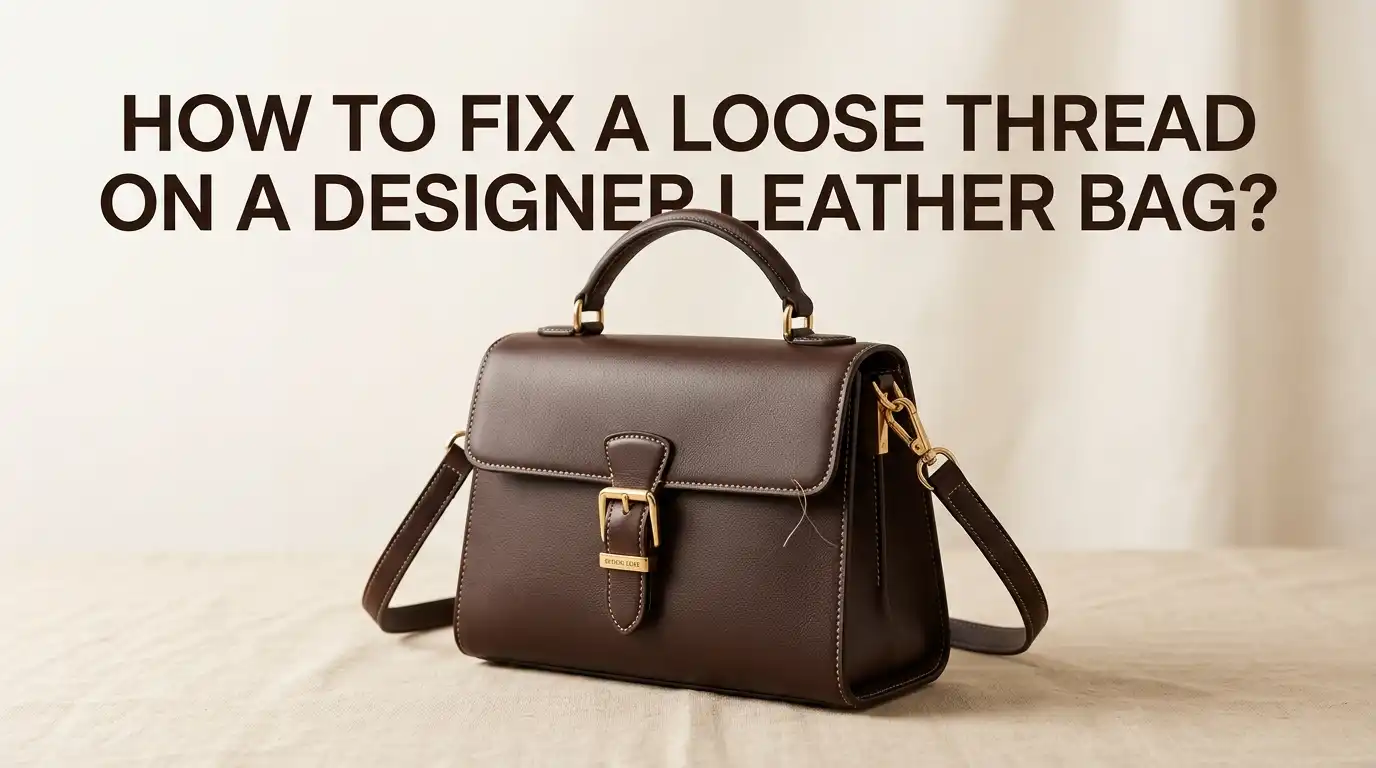
How To Fix A Loose Thread On A Designer Leather Bag?
Your favorite designer leather bag just developed a tiny loose thread, and now you cannot stop staring at it. That small flaw feels like a giant problem on a bag you spent good money on.
The good news is that a loose thread is one of the easiest issues to fix at home. You do not need fancy tools or expert skills to handle it.
With a little patience and the right method, you can save your bag and keep it looking sharp. This guide walks you through every safe fix, from quick burns to full restitching, so your bag stays beautiful for years.
Key Takeaways
- Act fast on small threads. A single loose thread can pull more stitches loose if you ignore it. Catch it early and the fix takes only minutes.
- Never pull a loose thread. Pulling unravels the seam and creates a much bigger repair job. Always snip or push instead of yanking.
- Match your method to the damage. A tiny fuzz needs only a lighter touch, while a broken seam may need a full saddle stitch repair with waxed thread.
- Use the right thread. Waxed polyester or nylon thread holds best on leather. Regular cotton sewing thread will snap under daily use.
- Color match matters. Bring your bag to the store when buying thread. A slightly darker shade hides better than a lighter one on most leather.
- Know your limits. Hand the bag to a pro if the leather around the hole is torn, if the bag is a rare luxury piece, or if the stitch pattern looks complex.
Why Loose Threads Appear On Designer Leather Bags
Even high end bags develop loose threads over time. The reason is simple stress. Every time you open a zipper, drop the bag on a chair, or pack it full, the seams stretch a little. Friction wears the thread down until one fiber pops out.
Moisture also weakens stitches fast. Wet thread swells, dries stiff, and then snaps under tension. Humidity changes speed up this process, especially on cotton based threads found in older bags.
Poor storage adds to the damage. Hanging a heavy bag by its straps for months pulls the seams apart slowly. Overloading the bag with books or a laptop does the same. Once you spot the cause, prevention becomes easy.
How To Inspect Your Bag Before Starting Any Repair
A quick inspection saves you from missing hidden damage. Place your bag under bright light and run your fingers along every seam. Feel for soft spots, bumps, or gaps between leather panels.
Look closely at high stress areas first. The handle joints, base corners, and zipper edges fail more often than flat panels. Press each seam gently to see if any stitch moves more than its neighbors.
Note every loose thread with a small piece of masking tape near it. This trick keeps you from losing track once you start working. If you find tears in the leather itself, stop and call a pro. DIY fixes only work when the leather around the stitch holes stays strong and intact.
Tools And Materials You Will Need
Gather your supplies before you start so you do not stop mid repair. Most items cost very little and last for many future fixes. A small kit pays for itself after one repair.
You will need a sharp pair of small scissors, a seam ripper, and a pack of leather needles with strong shafts. Add a spool of waxed polyester or nylon thread in a color that matches your bag. A toothpick, a lighter, and a magnifying glass round out the basics.
For bigger fixes, grab an awl to reopen old stitch holes and a stitching pony or clamp to hold the leather steady. A small bottle of fabric fray sealant works as a backup glue when you cannot stitch. Keep everything on a clean cloth so nothing scratches the leather.
Method 1: The Lighter Burn Technique For Tiny Loose Threads
This is the fastest fix for a single short thread sticking out of a seam. It works best when the stitch itself is still tight and only the tail end has come free. The flame seals the thread fiber so it stops fraying.
Hold the loose thread away from the leather using tweezers or your fingertip. Turn your lighter fuel down low so the flame stays small. Move the flame slowly toward the thread and burn it down to about one millimeter from the seam.
Press the burned tip against the lighter side to flatten it. The melted end fuses and will not unravel again. Pros: takes under a minute, no sewing skill needed, and works on most synthetic threads. Cons: only works on synthetic thread, not cotton, and a careless move can scorch the leather.
Method 2: The Tuck And Glue Method For Slightly Longer Threads
When a thread is too long to burn safely but the stitch holes still look healthy, this method works well. You hide the loose end back inside the seam instead of cutting it off. The leather itself acts as the anchor.
Start by snipping the thread to a length of about one centimeter using sharp scissors. Use a toothpick to gently push the frayed end back into the nearest stitch hole. Work slowly so you do not widen the hole.
Once tucked in, place a tiny drop of fabric fray sealant or clear leather glue on the hole. Press with a clean fingertip and let it dry fully for at least an hour. Pros: invisible finish, beginner friendly, no needle work. Cons: the glue may darken light leather slightly, and the fix is not as strong as restitching.
Method 3: Reinforcing A Single Loose Stitch With A Needle
If one stitch has slipped but the thread is still attached, you can pull it back into place. This method keeps the original thread, so the color match stays perfect. It is the cleanest repair for a small slip.
Thread a leather needle with a short piece of matching waxed thread. Slide the needle through the same hole the loose stitch came from. Pull the loose thread back to its proper tension using your fingers as a guide.
Lock the stitch by passing your new thread through the next two holes in a small back stitch pattern. Trim and burn the ends. Pros: keeps the factory look, very strong, uses minimal supplies. Cons: needs steady hands and patience, and the original hole must still be open.
Method 4: Full Saddle Stitch Repair For Broken Seams
When several stitches have failed, a saddle stitch gives you near factory strength. This is the gold standard for leather repair because each stitch stands on its own. If one breaks later, the rest hold firm.
Cut a length of waxed thread about four times the seam length. Thread a needle on each end. Start two or three holes before the break and pass one needle through from each side of the leather, crossing in the middle of each hole.
Pull both threads tight after every stitch and keep the tension even. Continue past the broken section by two or three holes, then backstitch and trim. Pros: extremely durable, blends with original work, lasts years. Cons: takes practice, slower than other methods, and uneven tension can warp the leather.
How To Match Thread Color And Thickness To Your Bag
A great repair disappears into the original stitching. The wrong thread, even with perfect technique, screams “fixed” from across the room. Color and thickness matter as much as method.
Take your bag in natural daylight and compare thread samples directly against the seam. Pick a shade slightly darker if you cannot find an exact match, since lighter thread shows up more on leather. Cream colored bags often hide repairs well with light tan thread.
For thickness, most designer bags use thread in the 0.6 to 0.8 millimeter range. Hold a strand next to the existing stitch to compare. Too thick a thread will not fit the old holes, while too thin a thread looks weak and frayed against the bold factory stitch.
Fixing Loose Threads On Handles And Straps
Handle seams take the hardest beating on any bag. They carry all the weight and bend hundreds of times a year. A loose thread here needs urgent attention because failure can dump your bag on the floor.
Start by emptying the bag and laying it flat. Inspect both ends of each handle where the leather meets the body. Look for thread that has stretched, fluffed, or pulled away from the base attachment.
Use the saddle stitch method for any broken stitch on a handle. Add a second parallel line of stitching for extra strength if the bag is heavy use. Pros of double stitching handles: nearly twice the load capacity and longer life. Cons: visible extra line, so match the thread very carefully to keep the look clean.
Common Mistakes To Avoid During The Repair
Small errors during a repair often cause bigger damage than the original loose thread. Knowing the traps ahead of time keeps your bag safe. Most mistakes come from rushing.
Never pull a loose thread, no matter how tempting it looks. Pulling unravels several stitches at once. Always snip first, then handle the tail. Avoid using super glue on visible leather since it darkens the surface and never washes off.
Do not use a regular sewing needle on leather. The thin shaft bends and the wrong tip tears the leather fibers. Skip white school glue, which dries flaky and lifts off in days. Keep flames far from the leather face, since even a quick brush can leave a dark scorch mark you cannot remove.
How To Prevent Loose Threads From Coming Back
Prevention beats repair every single time. A few small habits keep your bag stitching tight for many years. Treat your bag like a tool, not a trash bag.
Empty your bag at the end of each day and check the seams once a month. Condition the leather every three to six months with a quality leather cream. Soft leather flexes naturally and puts less stress on the thread inside.
Store the bag upright with light stuffing inside, like clean tissue paper, to hold its shape. Avoid hanging it on a hook for long periods. Keep it away from radiators, direct sun, and damp closets. Carry only what the bag was built for and skip the heavy laptop loads when you can.
When To Take Your Bag To A Professional Repair Shop
Some repairs need expert hands and special tools. Knowing when to stop and call for help saves your bag from worse damage. A pro repair often costs less than replacing a designer bag.
Take the bag in if the leather around the stitch holes has torn, stretched, or cracked. Hand it over for bags with rare stitch patterns, decorative lacing, or hidden seams. Luxury bags with high resale value also deserve professional care to protect their worth.
A trained leather repair shop can replace whole panels, color match rare threads, and restore the original look. Pros: invisible repairs, factory grade strength, and peace of mind. Cons: cost ranges from forty to several hundred dollars depending on the bag and the brand.
Final Care Tips After Your Repair
A fresh repair needs a little extra love during its first weeks. The new thread and old leather take time to settle together. Treat the repair area gently for the first month.
Avoid overloading the bag for two or three weeks after stitching. Let the thread settle into its new tension. Apply a thin coat of leather conditioner around the repaired seam to keep the leather soft and the thread protected from moisture.
Check the repair every week for the first month. Look for any thread that has shifted or fluffed. A quick touch up at this stage prevents a full redo later. Store the bag flat or upright in a dust bag, and your repair should hold strong for many years to come.
FAQs
How long does a DIY thread repair on a leather bag last?
A well done saddle stitch repair lasts several years, often longer than the original factory stitching. The tuck and glue method holds for about one to two years with normal use. The lighter burn fix lasts as long as the surrounding stitches stay intact.
Can I use regular sewing thread to fix my designer bag?
No, regular cotton or polyester sewing thread is too weak for leather seams. Always pick waxed polyester or waxed nylon thread made for leather work. These threads resist fraying, handle weight, and glide smoothly through stitch holes.
Will burning a loose thread damage my leather bag?
Burning is safe when you keep the flame small and the thread far from the leather face. Use a lighter with low fuel and steady hands. Press the melted tip flat with the side of the lighter, never the flame, to avoid any scorch marks.
Is it safe to fix a loose thread on a vintage or rare designer bag?
Small fixes like the lighter burn or tuck method are usually safe on vintage bags. For broken seams on rare or expensive pieces, take the bag to a professional. DIY mistakes on a collector item can lower its resale value by a large amount.
Why does my new designer bag already have loose threads?
Even premium bags ship with small trim threads that the factory missed. These are usually harmless and only need a quick burn or trim. If you see actual stitches pulling out of a brand new bag, return it under warranty rather than fixing it yourself.
Can I sew leather without an awl?
Yes, if the original stitch holes are still open and clear. Use a leather needle to pass thread through the existing holes. An awl only becomes necessary when the holes have closed up over time or when you add new stitches in fresh leather.

Hi, I’m Luna Beck — the founder and voice behind Urban Pack Vault. I’m passionate about helping people find bags that perfectly match their lifestyle. From backpacks to travel luggage, I research, review, and recommend so you never have to second-guess your next purchase.