What Is the Difference Between Water Resistant vs Waterproof?
A lot of people think water resistant and waterproof mean the same thing. They do not. That small wording change can decide whether your phone survives rain, whether your jacket keeps you dry, or whether your watch can handle a swim. This is where many buying mistakes start.
The good news is that the difference is easy to understand once you know what to look for. In this guide, you will learn what each term means, how to read labels like IP and ATM, how to choose the right option for your daily life, and what to do if your item gets wet.
You will leave with clear answers and practical steps, not vague marketing talk.
In a Nutshell
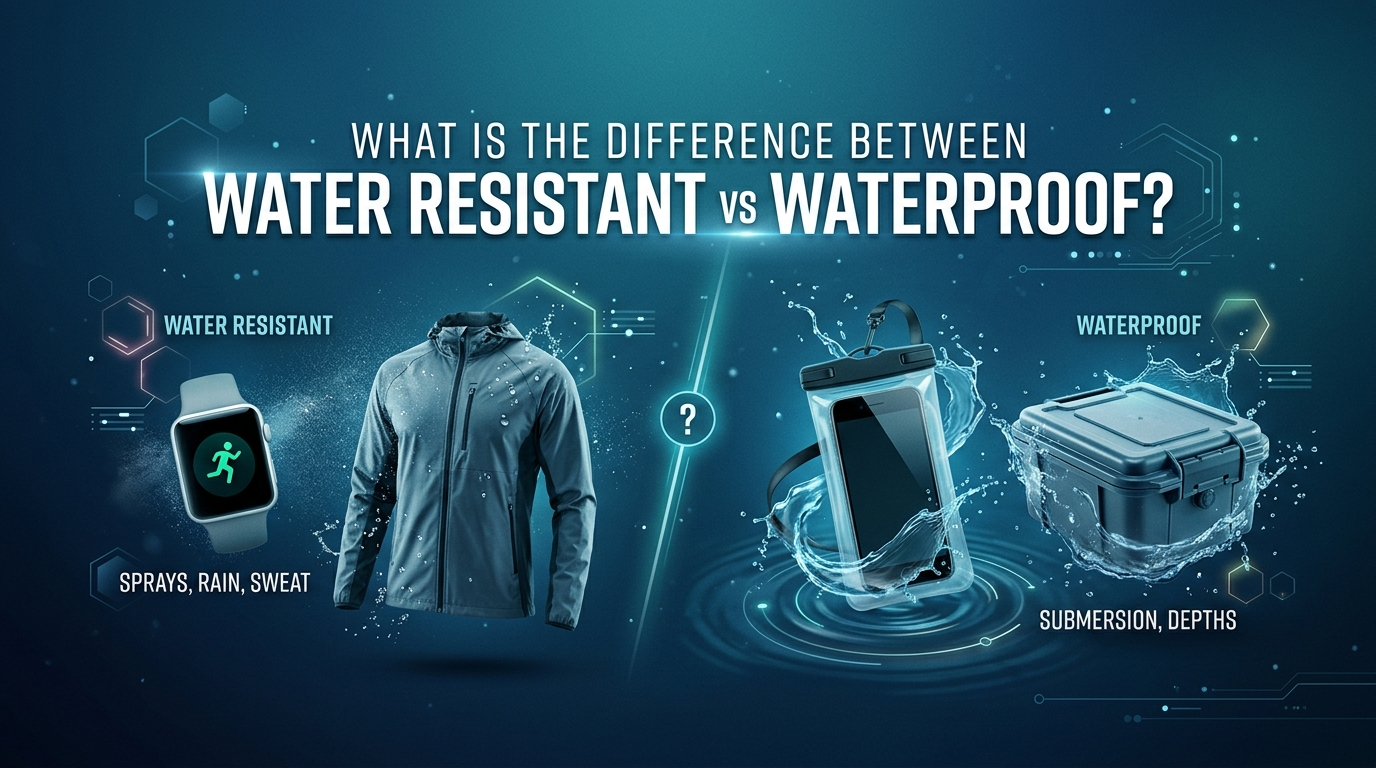
- Water resistant means an item can handle some water, but not all water. It usually protects against light rain, sweat, quick splashes, or short exposure. It buys time, but it does not promise full safety. A water resistant jacket may work well in drizzle. A water resistant phone may survive a splash. A water resistant shoe may keep your foot dry on a wet street for a while. Still, heavy rain, deep water, pressure, soap, salt, and long exposure can beat it.
- Waterproof means stronger protection, but it still has limits. Many people hear waterproof and think no water can ever get in. That is not how real products work. A waterproof item is made to block water much better than a water resistant one, but the label still depends on test conditions. Depth, time, pressure, wear, heat, and damage matter. A waterproof jacket may keep rain out for hours. A device with a high water rating may survive temporary immersion. That does not mean it is safe in every setting.
- Ratings matter more than the word on the box. If you buy electronics, look for IP ratings. If you buy watches, look for ATM, bar, or meter ratings. If you buy jackets or bags, look for details about seams, coatings, membranes, and fabric care. The label gives the clue. The rating gives the proof. A product with no rating may still work fine for light use, but you should not guess.
- Your activity should decide your choice. For a short walk in light rain, water resistant is often enough. For heavy rain, hiking, cycling, or travel, waterproof is the safer pick. For beach trips, pool use, and shower use, you must be very careful with electronics and watches because salt, soap, heat, and pressure can change the risk fast. Buying more protection than you need can waste money. Buying less can ruin the item.
- Care is part of performance. Water protection can weaken with age, dirt, cracked seals, worn coatings, drops, and repairs. A good product can fail if you treat it badly. Clean jackets the right way. Reapply water repellent treatment when needed. Dry wet devices correctly. Check watch seals over time. The best solution is not just buying the right item. It is using and caring for it the right way.
What Water Resistant Really Means
Water resistant means the item can slow water down or keep some water out for a limited time. It does not mean full protection. This term fits products that face light rain, sweat, mist, or small splashes during normal use.
A water resistant phone case, jacket, bag, or shoe usually has a surface, coating, or material that helps water roll off. That works well in mild conditions. It does not promise safety in deep water, strong pressure, or long soaking.
This is the simple rule. If water touches the item briefly, water resistant may be enough. If water keeps hitting it, it may fail. That is why people often stay dry in drizzle but get wet in a storm.
The main benefit is comfort, lower cost, and better airflow. The main risk is false confidence. Water resistant protects against some water, not every water problem.
What Waterproof Really Means
Waterproof means the item is built to stop water from getting through much more effectively than a water resistant item. That sounds simple, but the details matter. Waterproof does not mean magic. It means the product should block water under its tested and intended use.
For clothing, waterproof usually means the fabric has a barrier such as a membrane or coating. It may also have sealed seams so water cannot slip in through stitching. For electronics, waterproof style claims make more sense when backed by a tested rating.
A waterproof item is the better choice for heavy rain, long outdoor use, or places where water contact is likely. It gives stronger protection, but it still has boundaries. Pressure, cracks, age, poor care, heat, soap, and salt can weaken performance.
So here is the smart view. Waterproof is stronger than water resistant, but you still need to read the fine details before you trust it.
Why These Labels Confuse So Many Buyers
Brands use these words because they sound easy, but real water protection is not simple. The same word can mean different things in different product types. A waterproof jacket, a waterproof watch, and a waterproof bag do not go through the same tests.
This is why buyers get mixed signals. A jacket may be called waterproof because it blocks rain. A phone may be called water resistant even with a strong IP rating. A watch may say 50 meters, yet that does not mean you should dive 50 meters with it.
Marketing also adds to the confusion. The front of the box often uses the easy word. The real limit sits in the rating or care note. That is where many people miss the key detail.
The fix is simple. Ignore the big promise first. Look for the test standard, the rating, the care rules, and the exact use case. That tells you what the item can really do.
How To Read IP Ratings On Electronics
If you buy a phone, speaker, earbuds, or smart watch, IP ratings matter more than the words water resistant or waterproof. IP stands for ingress protection. The first number shows protection against solid objects like dust. The second number shows protection against liquids.
For example, IP68 tells you the item has strong dust protection and strong liquid protection. If you see IPX7, the X means the dust part was not rated, but the water part was tested. This is why IP labels are far more useful than simple marketing words.
Here is the practical method. First, find the IP rating. Second, read what the brand says that rating covers. Third, check limits for time, depth, and water type. Fresh water, pool water, salt water, soap, steam, and hot water are not the same thing.
Pros are clear labels and easier comparison. Cons are that many buyers read the code but skip the conditions. That is where problems begin.
How To Read Watch Water Ratings
Watches often use ATM, bar, or meter ratings instead of IP ratings. This is where many people get tricked by the numbers. A watch marked 30 meters does not mean it is made for a 30 meter dive. It refers to pressure tests, not simple real life depth use.
In daily life, lower ratings often suit splashes or rain. Mid level ratings may suit shower risk or surface swimming, though many experts still suggest care around soap and hot water. Higher ratings are better for swimming or water sports. Diving needs much stronger watch design and proper testing.
The safe move is simple. Match the watch to the activity, not to the printed number alone. If you plan to swim often, buy a watch clearly meant for swimming. If you only need hand washing and rain protection, a basic rating may be enough.
Pros are clear activity guidance when brands explain it well. Cons are buyer confusion and overconfidence. A watch is only as safe as its rating, condition, and seals.
How To Judge Jackets, Shoes, Bags, And Fabrics
For clothing and gear, the best answer is not always a single word. Construction matters. A jacket can resist water with a surface treatment, or it can block water with a membrane or coating. Shoes may use treated fabric, sealed panels, or waterproof liners. Bags may rely on coated fabric, sealed zippers, or roll top closure.
A simple test helps. Think about how long the item must stay dry and how hard the water will hit it. A quick walk from car to store needs less protection than a long commute in rain. Use time and pressure as your guide.
Water resistant fabric is often lighter, softer, and more breathable. Waterproof fabric is better in serious rain but may feel warmer or stiffer. Seams matter too. If the fabric is strong but the seams leak, you still get wet.
Pros of water resistant gear are comfort and airflow. Pros of waterproof gear are stronger rain defense. The con on both sides is that poor care can ruin performance fast.
Water Resistant Or Waterproof For Daily Situations
You do not need the strongest option for every task. You need the right option for your real day. That saves money and avoids disappointment.
For light rain, gym use, errands, school runs, and office travel, water resistant often works well. It feels lighter and easier to wear. For hiking, cycling, camping, long commutes, and stormy weather, waterproof is the better call. The longer you stay out, the more valuable stronger protection becomes.
For electronics, choose high rated protection only if your habits justify it. If you use your phone near sinks, rain, or workouts, good water resistance helps. If you plan poolside use or boating, you need much more caution, even with a high rating.
For beach use, be extra careful. Salt water and sand create more trouble than plain rain. For showers, steam and soap can also be a risk. The best solution is matching the product to the exact place you will use it.
Pros And Cons Of Water Resistant Solutions
Water resistant products work well for many people because they are light, easy to wear, and often cheaper. Jackets breathe better. Shoes feel less heavy. Bags stay flexible. Electronics may still survive common splashes. This makes water resistant a smart choice for daily life.
Another plus is comfort. Many waterproof items trap more heat. Water resistant gear often feels better during normal movement. If your weather is mild, this can be the better everyday option.
Still, the limits are real. Heavy rain, soaking, long exposure, and strong water pressure can beat water resistant gear fast. That can leave your clothes damp, your bag wet inside, or your device damaged.
So the pros are lower cost, better comfort, and good daily use. The cons are weaker protection and a higher chance of failure in hard conditions. Water resistant is a practical middle ground, but it is never a full shield.
Pros And Cons Of Waterproof Solutions
Waterproof products shine in hard weather. They are better for storms, long hikes, long bike rides, travel, snow, and repeated wet conditions. A good waterproof jacket can keep you dry for hours. A well made waterproof bag can protect gear during heavy rain. This is the main reason many people gladly pay more.
Another big plus is peace of mind. You can move with more confidence because the product is built for stronger water defense. That matters during trips, outdoor work, and sports.
But waterproof gear also has trade offs. It can cost more, feel warmer, weigh more, or breathe less. Some waterproof shoes trap heat. Some jackets feel clammy if airflow is poor. Some bags become bulky.
So the pros are better protection and better reliability in bad weather. The cons are price, comfort trade offs, and the risk that people trust the label too much. Even waterproof gear still needs proper care and realistic use.
A Simple Buying Checklist Before You Pay
Before you buy, stop and ask five simple questions. What kind of water will touch this item? How long will exposure last? How much movement will I do? How important is breathability? What proof supports the claim? These questions solve most buying mistakes.
Next, read the details. For electronics, check IP ratings. For watches, check ATM or meter guidance. For clothing, look for seam sealing, fabric type, and care notes. Do not stop at the word waterproof or water resistant alone.
Then think about your climate and routine. If you face quick showers and city use, water resistant may be enough. If you spend long hours outside, waterproof is safer. If you run hot, breathability matters more.
The pros of this checklist are clear choices and less regret. The only con is that it takes a few extra minutes. Those few minutes can save your money and your gear.
What To Do If Your Phone Or Device Gets Wet
If your device gets wet, act fast and stay calm. First, remove it from water right away. Dry the outside with a soft cloth. If the item has ports or openings, hold it so water can drain out. Do not shake it hard. Do not press random buttons.
Next, turn it off if it is still on and if you can do so safely. Do not charge it while wet. This step matters a lot. Water and power are a bad mix. If the battery or device looks damaged, swollen, hot, or cracked, keep it away from heat and follow safe disposal or repair advice.
Skip bad home fixes. Do not trust rice as your main solution. Let the device air dry in a dry place. If it was exposed to salt water, soap, or dirty water, the risk is higher. In that case, professional help is the safest move.
Pros of fast action are better survival odds. Cons of delay are corrosion, short circuits, and battery danger.
How To Make Water Protection Last Longer
Water protection is not a forever feature. It weakens with wear, dirt, impact, and age. That is true for phones, watches, jackets, shoes, and bags. Good care keeps the protection working longer.
For jackets, wash them the right way and restore the outer water repellent finish when water stops beading on the surface. Clean dirt and body oils off technical fabric because buildup hurts performance. Follow the care label, then use the right treatment if needed.
For electronics, avoid drops, cracks, and cheap repairs that may weaken seals. Dry the device well after exposure. Be extra careful around salt water, soap, steam, and hot water. For watches, have seals checked if the watch is older or heavily used.
The pros of good care are longer life and better performance. The cons are time and small maintenance cost. Still, care is cheaper than replacement. That is the easiest win in this whole topic.
FAQs
Can a water resistant phone go in a pool?
Usually, that is a bad idea. A water resistant phone is safer around splashes than around pool use. Pool water can include chemicals, and pressure changes during movement add risk. Even a high rating does not mean every pool session is safe. If the maker gives limits, follow them closely.
Is waterproof always better than water resistant?
Not always. Waterproof is better for stronger water exposure. Water resistant is often lighter, cooler, and cheaper. If you only deal with light rain or brief splashes, water resistant may be the smarter buy. Better protection only helps if you actually need it.
Can I shower with a water resistant watch?
You should be careful. Shower water adds heat, steam, soap, and pressure changes. Those factors are not the same as a simple splash test. Some watches may survive, but regular shower use can still create trouble over time. It is safer to remove the watch unless the maker clearly says it is fine.
Why did my waterproof jacket start feeling wet?
Often, the outer finish has worn down. That does not always mean the jacket itself has failed. Dirt, oil, and abrasion can stop water from beading up. The fabric surface gets wet and feels cold or clammy. Cleaning and restoring the water repellent finish often solves the problem.
Does waterproof mean liquid damage is covered?
No. A water claim and a warranty are not the same thing. Many makers still exclude liquid damage from standard coverage. Always read the warranty details before you trust the label. This is one of the most important details buyers miss.

Hi, I’m Luna Beck — the founder and voice behind Urban Pack Vault. I’m passionate about helping people find bags that perfectly match their lifestyle. From backpacks to travel luggage, I research, review, and recommend so you never have to second-guess your next purchase.