Why Does My Backpack Strap Keep Slipping Down?
Your backpack strap keeps sliding off your shoulder, and it’s driving you crazy. You tighten it, take a few steps, and it slips right back down. Sound familiar?
This is one of the most common frustrations backpack users face. It happens with all kinds of packs, from everyday school bags to hiking backpacks and even purse-style bags worn on the back.
In this article, we’ll break down exactly why your backpack strap keeps slipping. We’ll cover the most common causes, including poor strap tension, uneven weight distribution, and friction loss between the strap and your shoulder.
In a Nutshell
- Backpack straps slip because of low strap tension, poor weight distribution, and friction loss between the strap and your shoulder.
- The most common mistake is not tightening the straps enough before you start moving.
- Pulling the loose adjustment ends while wearing your pack is the primary fix for straps that keep sliding down.
- Weight shifting inside your bag over time can cause straps to loosen, so re-tightening during extended wear is important.
- Proper weight distribution across both shoulders reduces the chance of one strap slipping to the side.
- This problem affects all types of packs, including hiking bags, duffel-style backpacks, and everyday bags used as backpacks.
The key takeaway is that active strap management matters more than the design of the pack itself.
What Causes Backpack Straps to Slip Down?
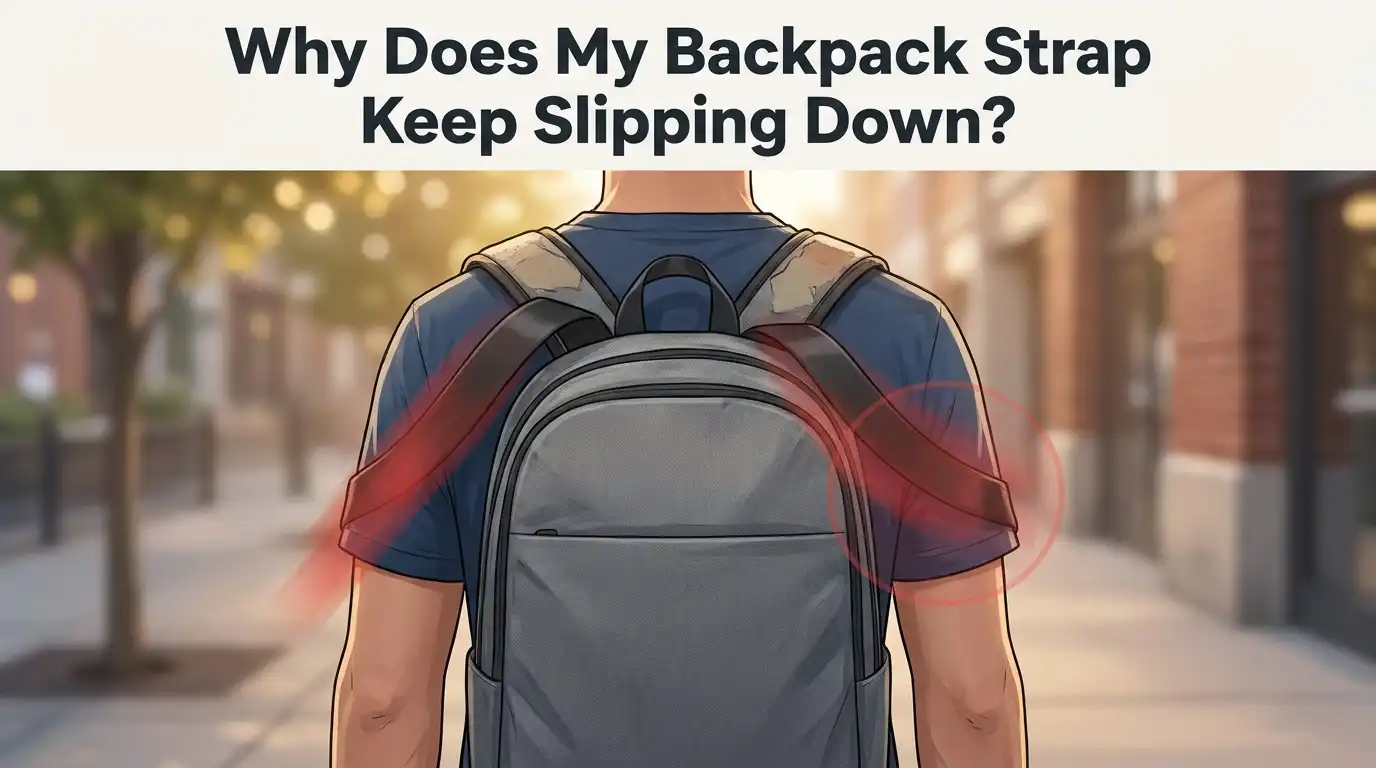
Backpack straps slip down for three main reasons: insufficient strap tension, uneven weight distribution, and reduced friction between the strap and your shoulder.
Insufficient strap tension is the biggest culprit. Many people adjust their straps loosely to make the pack easier to put on. Once you start moving, gravity and motion pull the straps downward. The loose fabric slides off your shoulder because there’s nothing holding it in place.
Uneven weight distribution causes straps to slip to one side. If your pack is heavier on the left, that strap will shift left. Your shoulder slopes downward naturally, so straps need equal tension on both sides to stay put. When one side carries more load, the strap on that side tends to migrate toward your arm.
Friction loss happens when your strap material doesn’t grip your shoulder well. Cotton and nylon straps slide more easily than textured materials. Smooth shoulder skin also reduces friction. Sweat makes this worse because it creates a slippery surface.
Movement during activity accelerates all three problems. Walking, hiking, or running creates motion that pulls straps downward. Your body heat and perspiration increase slipperiness. The load inside your pack shifts with each step, changing weight distribution and loosening straps.
The key takeaway? Your straps are slipping because they’re not tight enough, your load isn’t balanced, or both. The solution involves actively managing your straps rather than expecting the pack design to hold them in place automatically. Understanding these causes helps you fix the problem quickly and keep your pack comfortable throughout the day.
How Strap Design and Material Affect Slipping
The material your straps are made from plays a huge role in whether they stay put or slide around. Smooth synthetic materials like nylon or polyester tend to slip more easily than rougher fabrics because they create less friction against your shoulder and clothing.
Textured or padded straps grip better. They have more surface area and catch on your shirt or jacket, which keeps them from sliding. If your pack has smooth straps, you’re fighting an uphill battle with physics.
Strap width matters too. Narrow straps concentrate pressure on a small area, making them easier to slip off. Wider straps distribute weight across a larger surface and create more contact points. This extra contact naturally increases friction and reduces slipping.
The angle and curve of your straps affect how they sit on your shoulders. Straps that curve inward toward your neck tend to stay put better than perfectly straight ones. A slight curve helps the strap nestle into the natural hollow of your shoulder instead of sliding off the rounded edge.
Strap attachment points also influence slipping. Straps attached closer together at the top of the pack are more likely to slip inward and collide at your neck. Straps that attach farther apart keep tension on both shoulders and resist sliding.
Padding thickness makes a difference too. Thicker padding reduces the chance of the strap rolling or twisting, which happens right before it slides off. Thin or no padding allows the strap to move around more freely on your shoulder.
The bottom line? Better materials, wider widths, and proper attachment design all reduce slipping. But even with perfect design, you still need to tighten your straps properly to get the friction needed to keep them in place.
The Role of Weight Distribution in Strap Stability
Weight distribution is the foundation of strap stability. When your load sits unevenly in your backpack, one shoulder bears more pressure than the other. This imbalance causes straps to slip sideways or off your shoulders entirely.
Here’s how it works: your straps need equal downward force on both sides to stay in place. Uneven weight shifts this force to one side, and friction breaks down quickly. The strap on the lighter side loses contact with your shoulder and slides inward or outward.
Heavy items belong in the center of your pack, close to your back. This positioning keeps weight directly over your shoulders instead of pulling to one side. Place dense objects like water bottles or textbooks in the middle compartments. Avoid stuffing one side of your pack more than the other.
Movement makes weight distribution problems worse. As you walk or hike, items shift inside your bag. A book slides to the left. Your water bottle moves to the right. These small shifts compound over time, and your straps respond by slipping.
Redistribute your load every 30 minutes during long activities. Rearrange items so weight stays centered. This simple habit prevents gradual strap slippage that builds throughout the day.
Your shoulder width also matters. Narrower shoulders provide less surface area for straps to grip. If you have a smaller frame, pay extra attention to weight balance. Even slight imbalances affect you more than someone with broader shoulders.
The connection between weight and strap stability is direct and predictable. Better weight distribution means better strap grip. Worse distribution means more slipping. Control what you can control by packing smart and checking your load regularly.
How to Properly Adjust Your Backpack Straps
Start by wearing your backpack with the load you’ll carry. This step matters because adjustment without weight gives false results. Your straps will feel tight when empty but slip once you add items.
Locate the adjustment points on your shoulder straps. Most backpacks have loose ends or buckles near your shoulders. Pull these ends firmly while the pack sits on your back. Tighten until the straps feel snug against your shoulders without cutting off circulation.
Check that both straps are equally tight. Uneven tension causes one strap to slip while the other stays secure. Stand in front of a mirror to verify symmetry. Your straps should sit parallel on both sides.
Position the straps so they sit on the thick part of your shoulders, not near your neck or upper arm. The correct placement prevents the strap from sliding off the bone. This positioning works with your shoulder structure rather than against it.
Test your adjustment by moving around. Walk, bend, and rotate your torso. The straps should stay in place during normal movement. If they slip, tighten them more.
Make micro adjustments as needed. Backpacks settle differently on each person’s body. What feels right initially might need tweaking after five minutes of wear.
Readjust during extended activities. Weight shifts over time, and straps loosen gradually. Check your strap tension every 30 minutes during long hikes or trips. This habit prevents the frustration of constant slipping.
Remember that proper adjustment is an active process, not a one time fix. Your body, load, and activity level all affect how tight your straps need to be.
How to Re-Tighten Straps During Extended Wear
Your straps slip during extended wear because friction decreases as your shoulders move and sweat builds up. The good news? You can fix this quickly while wearing your pack.
Start by locating your adjustment points. Most backpacks have webbing tabs or buckles on the shoulder straps themselves. Pull these tabs downward and outward to tighten. You want the straps snug against your shoulders, not loose.
The key is tightening while you’re wearing the pack with its full load. This matters because the weight distribution changes how the straps sit. An empty pack adjusts differently than a loaded one. Pull each strap evenly so both sides stay balanced.
Tighten in small increments. Pull a little, then move your shoulders around to test the fit. You’re looking for straps that stay centered on the thick part of your shoulder muscle. They shouldn’t ride up toward your neck or slip down toward your arms.
During long hikes or activities, re-tighten every 30 to 45 minutes. Your shoulders shift position naturally as you move. Sweat also reduces friction between the strap material and your skin. A quick adjustment prevents the annoying slide.
Check both straps together. Uneven tightness causes one side to slip more than the other. If the left strap keeps sliding but the right one stays put, that’s your sign to tighten the left side more.
Remember that re-tightening is normal maintenance, not a sign of a broken pack. Your straps need active management during extended wear. This simple habit keeps them in place for the entire activity.
Common Mistakes That Make Straps Slip More
Most people make simple mistakes that cause their straps to slip more than necessary. Understanding these errors helps you keep your pack stable throughout the day.
Under-tightening is the biggest culprit. Many people adjust their straps loosely, thinking comfort matters more than security. Loose straps slide because they lack friction against your shoulders. Your straps need to be snug enough to grip your shoulder, not just rest on top of it.
Another common mistake is adjusting your straps before you put on your pack. You need to wear the backpack with its full load when you tighten the straps. The weight changes how the pack sits on your body, so adjusting an empty pack leads to slipping once you add items.
People also forget that straps need regular attention during activities. You might tighten your straps perfectly before leaving, but after 20 minutes of hiking or movement, they loosen naturally. Sweat reduces friction between the strap and your shoulder. Your body position shifts as you move. These changes happen gradually, so you don’t notice until the slipping becomes annoying.
Neglecting to re-tighten is a critical oversight. Many people adjust their straps once and expect them to stay tight for hours. This doesn’t work. Active re-tightening every 30 to 45 minutes during extended wear keeps your pack stable.
Finally, people often ignore uneven tightness. If one strap is tighter than the other, your pack tilts to one side, and both straps slip more easily. Always check that both straps have equal tension.
These mistakes are easy to fix once you know about them. Simple awareness and active maintenance solve most strap slipping problems.
Tips to Keep Your Backpack Straps in Place All Day
Backpack straps slip for one simple reason: friction decreases over time. Your shoulders move, sweat builds up, and the strap loses its grip. The good news is you can prevent this with a few practical strategies.
Increase friction between strap and shoulder by making your straps genuinely tight. Most people adjust straps too loosely because they worry about comfort. Tight straps actually feel better than loose ones that constantly slip down. Pull the adjustment webbing firmly while wearing your pack with its full load.
Distribute weight evenly across both shoulders. An unbalanced load causes straps to slide toward the heavier side. Check that both straps sit at the same height on your shoulders. Uneven weight makes one strap work harder than the other, speeding up slippage.
Position straps on the thick part of your shoulders. Avoid placing them near your neck or upper arm where they slide easily. The muscular shoulder area provides better grip and prevents straps from moving around.
Re-tighten regularly during extended activities. On long hikes or full days of wear, adjust your straps every 30 to 45 minutes. This is normal maintenance, not a sign your pack is broken. Your shoulders naturally shift position as you move, which loosens straps gradually.
Check for uneven tightness before you start any activity. Both straps should feel equally snug. Tighten in small increments rather than one big pull.
These strategies work because they address the core issue: maintaining consistent friction and pressure. Your straps stay in place when you actively manage them throughout the day, not when you adjust them once and forget about them.
When Slipping Persists Despite Adjustment
When your backpack straps keep slipping despite your best adjustment efforts, the problem usually runs deeper than simple tightening. Your pack may have structural issues that prevent straps from staying secure no matter what you do.
Check your strap attachment points first. Look where the straps connect to the pack body. If these connection points are loose, damaged, or poorly constructed, straps will slide regardless of how tight you make them. Gently tug on the straps to see if they move independently from the pack itself.
Worn webbing is another culprit. Over time, the material on your shoulder straps becomes smooth and slippery. This reduces friction between the strap and your shoulder, making slipping inevitable. The smoother the surface gets, the harder it becomes to maintain grip.
Assess your pack’s overall design. Some backpacks simply have poorly angled straps that naturally slide inward. Straps that angle too far forward or backward won’t sit properly on your shoulders. This is a design flaw you cannot fix through adjustment alone.
Check if your pack’s frame or structure has bent or warped. A compromised frame changes how straps sit on your body. This misalignment causes persistent slipping that tightening won’t solve.
Consider whether your pack is simply too large or too small for your frame. An oversized pack will slip no matter how tight you make the straps. Similarly, a pack that’s too small won’t distribute weight properly across your shoulders.
If you’ve tried all adjustment techniques and straps still slip constantly, your pack may need professional repair or replacement. Some structural problems cannot be solved through user adjustments alone.
Final Thoughts
Backpack strap slipping is one of the most common and frustrating carrying problems people face. The good news is that most cases have a simple fix.
The core issue almost always comes down to insufficient strap tension and poor friction management. When straps are too loose, gravity and movement do the rest.
Start by making sure you tighten your straps while wearing your pack with weight inside. This single habit solves the problem for most people right away.
Distribute weight evenly across both shoulders so neither strap carries more load than the other. Uneven weight is a silent cause of slipping that many people overlook.
Re-tighten your straps regularly during long activities. Load shifts naturally over time, and what felt snug at the start of a hike may feel loose an hour later.
Check your adjustment habits too. Many people set their straps once and never touch them again. Active strap management beats passive hoping every time.
If consistent tightening still does not solve the problem, look deeper. Worn attachment points, warped frames, or a pack that does not fit your body shape can all contribute to ongoing slipping.
Fixing the root cause matters more than fighting symptoms daily.
A well-fitted pack with properly tensioned straps should stay in place throughout your activity without constant fussing. That is the standard you should expect.
The solution is never complicated. It requires awareness, a few seconds of adjustment before you head out, and occasional re-tightening along the way.
Keep these principles in mind, and slipping straps will become a rare problem rather than a daily annoyance.
Frequently Asked Questions
Why do my straps slip even when I tighten them?
Straps slip because friction decreases as you move. Your shoulder is smooth, and the strap material gradually loses grip. The key is tightening while wearing your pack with weight inside. This creates pressure that holds the strap in place. Many people tighten straps without the pack on, which feels snug but fails during activity.
Should I adjust my straps differently for different activities?
Yes. Light errands need basic tightening. Extended hiking or long commutes require re-adjustment every hour or so. Your pack shifts and settles as you move, which loosens straps over time.
Check your strap tension before starting any activity. Then re-tighten periodically. This simple habit prevents constant slipping throughout your day.
Can shoulder width affect strap slipping?
Absolutely. Narrow shoulders mean straps have less surface area to grip. If you have a smaller frame, position straps on the thickest part of your shoulders, not near your neck or collarbone.
Distribute weight evenly across both shoulders so one strap doesn’t carry more load. Uneven loading causes one strap to slip faster than the other.
What if my pack straps are permanently loose?
Check the attachment points where straps connect to your pack. Look for worn webbing or torn stitching. If the straps themselves are stretched out or damaged, they may not tighten properly anymore.
Also assess your pack’s design. Some packs have straps angled inward naturally, which causes slipping regardless of adjustment. If nothing improves, your pack may need professional repair services.

Hi, I’m Luna Beck — the founder and voice behind Urban Pack Vault. I’m passionate about helping people find bags that perfectly match their lifestyle. From backpacks to travel luggage, I research, review, and recommend so you never have to second-guess your next purchase.