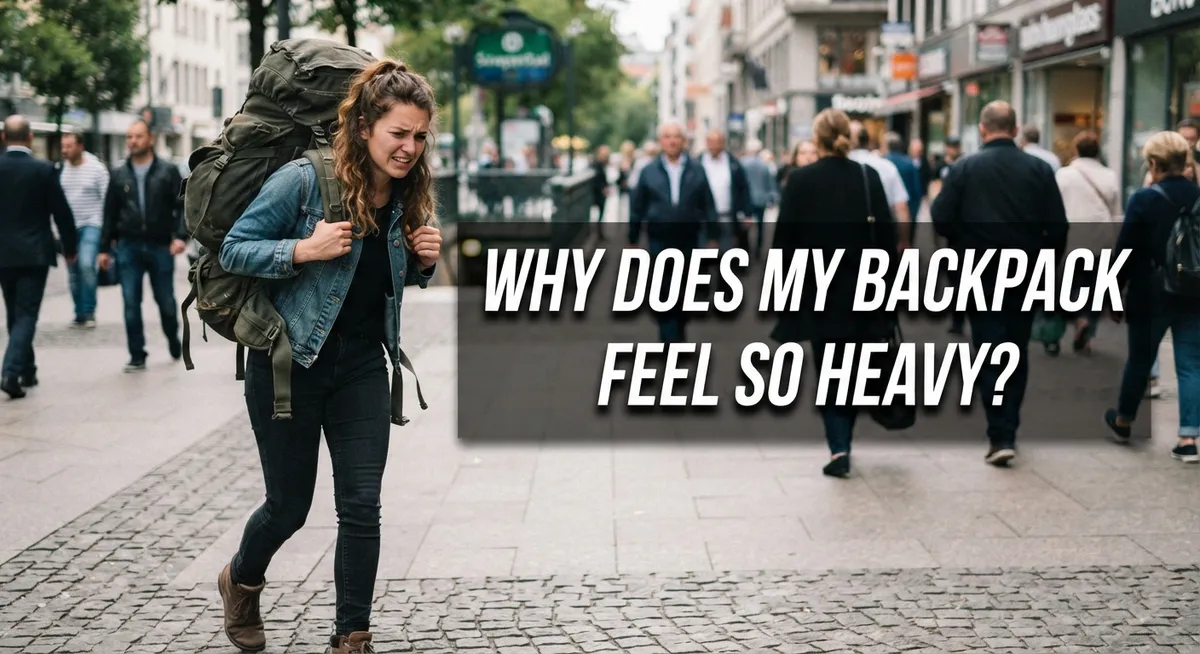
Why Does My Backpack Feel So Heavy?
You strap on your backpack and feel your shoulders sink. It feels like you are carrying rocks, not gear.
Here’s the surprising truth. Your backpack’s actual weight often isn’t the real problem.
Many hikers blame their gear first. They think they need a lighter tent or a smaller pack. But the real issue usually hides somewhere else.
Overpacking is the biggest culprit. Most people carry items they never use on the trail. Extra clothes, spare gadgets, and “just in case” gear add up fast.
In a Nutshell
- Overpacking is the main issue. Most hikers carry more than they need. Extra items add up fast and create that heavy feeling.
- Weight placement matters a lot. A backpack can feel much heavier if items sit in the wrong spots. Heavy gear belongs close to your back and centered.
- Your brain plays tricks on you. Sometimes a pack feels heavier than it actually is. This happens due to poor balance, not just total weight.
- Fatigue builds throughout the day. A pack that felt fine in the morning can feel brutal by afternoon. Tired muscles struggle more with any load.
- New gear isn’t always the answer. Many people rush to buy lighter equipment. But fixing your packing habits often solves the problem first.
- Small changes bring big relief. Adjusting straps, removing unused items, and repositioning weight can transform your hiking experience.
The Science Behind Perceived vs. Actual Weight
Your backpack might feel heavier than the scale says because of how your body perceives weight. This happens for several reasons that have nothing to do with your gear quality.
Muscle fatigue plays a major role in perceived heaviness. When you first put on your pack, your muscles feel fresh. After walking for an hour or two, those same muscles tire out. Tired muscles send signals to your brain that make the load feel much heavier than it actually is.
Weight distribution affects how heavy your pack feels too. When heavy items sit high on your shoulders or far from your back, your muscles work harder to keep you balanced. Your body compensates by tensing up, which makes everything feel more uncomfortable and heavier.
Your posture changes how weight feels. If you lean forward while walking, your back muscles strain more. This strain creates the sensation of extra weight even though nothing changed. Poor posture forces your body to work against the pack instead of with it.
Psychological factors matter as well. If you think your pack is heavy, your brain often makes it feel heavier. This isn’t imaginary. Your mind influences how your body processes physical sensations.
The straps on your backpack also impact perceived weight. Loose or poorly adjusted straps cause the pack to shift around. This constant shifting makes your stabilizer muscles work overtime, creating that heavy feeling.
The good news is simple. You can feel the difference immediately by adjusting weight placement and tightening straps properly. Small changes in how you pack and wear your backpack often eliminate that heavy sensation without buying new gear or removing items you actually need.
Common Reasons Your Backpack Feels Heavier Than It Should
Your backpack feels heavy for several practical reasons that have nothing to do with your gear quality.
Overpacking is the number one culprit. Most people carry items they never use. You might pack “just in case” supplies that stay untouched. Empty water bottles, extra snacks, and duplicate tools add up fast. The solution is simple: audit everything before you leave.
Weight sits in the wrong spot. Heavy items belong close to your back and centered between your shoulders. If you place them at the bottom or sides, your back muscles work overtime. This makes even a light pack feel exhausting. Reposition your gear and notice the immediate difference.
Your body gets tired throughout the day. A pack feels manageable at 8 AM but brutal by 4 PM. This isn’t the backpack getting heavier. Your muscles fatigue and your posture shifts forward. Both factors make weight feel magnified as hours pass.
Straps that don’t fit properly transfer weight to your shoulders instead of your hips. Loose or twisted straps create uneven pressure points. Tighten them properly and the load distributes more evenly across your body.
Your posture affects everything. Leaning forward while walking forces your back muscles to fight gravity constantly. Standing upright transfers weight to your core and legs instead. This small posture change creates massive comfort improvements.
Psychological factors matter too. Sometimes a pack feels heavier because you’re anxious about the hike ahead. Stress and worry amplify physical sensations. Knowing this helps you separate real discomfort from mental pressure.
Start by removing unnecessary items and repositioning heavy gear. These changes cost nothing and work immediately.
How to Audit Your Pack and Cut Unnecessary Weight
Start by removing everything from your backpack and laying items on a flat surface. This simple step reveals what you actually carry versus what you think you carry. Most people discover they pack items they never touch.
Go through each item and ask yourself: “Did I use this on my last trip?” If the answer is no, leave it behind. Be honest about what you truly need. Water bottles, extra snacks, and duplicate tools are common culprits.
Weigh your pack on a bathroom scale to get a real number. Write down the total weight and compare it to your body weight. A good rule is carrying no more than 20 percent of your body weight for day hikes. This baseline helps you identify if your pack is actually heavy or just feels that way.
Check your gear for multitasking items. One lightweight tool that serves multiple purposes beats carrying several single-use items. For example, a bandana works as a headband, towel, and emergency cloth.
Next, examine your pack’s internal organization. Heavy items should sit close to your back and centered between your shoulders. Move weight away from the bottom of your pack. When heavy objects sit low, they pull your shoulders down and make everything feel heavier.
Look for duplicate items too. Two flashlights, multiple first aid kits, or extra layers add up fast. Keep one of each essential item.
Finally, test your changes on a short walk before committing to a full trip. You’ll feel the difference immediately. Small removals create noticeable relief.
The Right Way to Distribute Weight Inside Your Pack
Your backpack’s weight distribution makes a huge difference in how heavy it feels on your shoulders and back. The placement of items matters far more than most people realize.
Heavy items should sit close to your spine and centered between your shoulder blades. This position keeps the load directly over your body’s center of gravity. When weight sits too far from your back, your muscles work overtime to compensate. Your arms and shoulders tire quickly, and the pack feels much heavier than it actually is.
Place your heaviest gear in the middle section of your pack, not at the bottom or top. Think of your spine as the anchor point. Everything should balance around this central line. Items like water bottles, cooking gear, and extra clothing work well in this zone.
Lighter items belong on the outer edges and bottom of your pack. Sleeping bags, tents, and clothing can safely go lower because they don’t strain your back muscles. Keep frequently used items accessible without disrupting your weight balance.
Ensure both sides of your pack carry equal weight. An unbalanced load forces one shoulder to work harder than the other. This creates muscle strain and makes your pack feel lopsided and uncomfortable. Check your pack’s weight distribution by holding it at the top and feeling if one side pulls harder.
Adjust your pack’s internal dividers or compartments to maintain this balance. Some packs have multiple sections that help organize weight naturally. Use these features to your advantage.
Test your weight distribution on a short walk around your home. You’ll feel the difference immediately when items sit in the right spots. Proper placement transforms your entire carrying experience.
Adjusting Straps and Fit for Better Load Comfort
Your backpack straps do more work than you might realize. They directly control how your pack sits on your body and where the weight actually lands. Poor strap adjustment is one of the biggest reasons your pack feels unnecessarily heavy.
Start by loosening all straps completely before putting on your pack. Slip your arms through and position the pack so it sits high on your back. The bottom of your pack should rest at your lower back, not your tailbone.
Now tighten the shoulder straps first. They should feel snug but not tight enough to cut off circulation. Your shoulders should carry about 20 to 30 percent of the load. The straps should follow the natural slope of your shoulders without digging in.
Next, adjust the hip belt. This is crucial. The hip belt should carry 50 to 80 percent of your pack’s weight. Fasten it around your hips, not your waist. Tighten it until the belt feels secure and the pack pulls close to your body.
Finally, use the load lifter straps. These run from the top of your shoulder straps down toward your pack. They should angle upward at about 45 degrees. Tighten them to pull the pack’s weight closer to your spine.
Check your fit by walking around. Your pack should feel stable and centered. If one shoulder feels heavier than the other, loosen everything and start again. Take time to get this right. A properly fitted pack with correctly adjusted straps feels dramatically lighter than the same pack worn poorly. Many people discover their “heavy” pack was actually just sitting wrong the entire time.
Mistakes That Make a Backpack Feel Heavier
Your backpack probably feels heavier than it actually is. This happens because of specific mistakes people make when packing and wearing their bags.
Overpacking is the biggest culprit. Most people bring items they never use. You throw in “just in case” gear that sits unused the entire trip. This adds real weight without any real benefit. The solution is simple: remove items you didn’t use last time.
Another major mistake is placing heavy items in the wrong spots. When you put your heaviest gear at the bottom or top of your pack, it shifts around as you walk. This creates an unstable load that your muscles must constantly adjust to. Your body works overtime to keep balance, making everything feel heavier.
Uneven weight distribution causes serious problems too. If one side carries more weight than the other, one shoulder bears extra strain. Your muscles fatigue faster on that side. By midday, the discomfort becomes intense even though the actual weight hasn’t changed.
Poor strap adjustment is another common error. Loose shoulder straps force your upper back to support the load. Tight hip belts that don’t sit properly transfer weight to your shoulders instead of your hips, where they belong.
Many people also assume their backpack design is the problem. They think they need a lighter or fancier pack. In reality, their current pack works fine. The issue is how they pack it and wear it.
Start by auditing what’s inside. Remove duplicates and unnecessary items. Then redistribute your gear so heavy objects sit centered against your spine. Finally, adjust all straps properly. These changes make a dramatic difference in how your pack feels.
Why the Weight Feels Worse as the Day Goes On
Your backpack feels heavier as the day goes on for a simple reason: your body gets tired. Muscles that support the weight become fatigued, and this fatigue makes even the same load feel significantly heavier by afternoon or evening.
Fatigue compounds discomfort quickly. When your muscles tire, they work less efficiently. Your shoulders and back have to recruit more muscle fibers to maintain the same posture. This extra effort creates a sensation of increased weight, even though your pack weighs exactly the same as it did that morning.
Poor weight distribution makes this problem worse. If your heavy items sit in the wrong spots, your muscles work overtime from the start. By midday, this accumulated strain becomes unbearable. Your body sends pain signals that make the pack feel impossibly heavy.
Dehydration also plays a role. As you move throughout the day, you lose fluids. Dehydrated muscles fatigue faster and recover slower. This means your pack feels progressively heavier as you lose hydration.
Posture breakdown happens gradually too. Many people start with good posture but slouch as fatigue sets in. Slouching shifts the pack’s weight away from your hips and onto your shoulders. Your shoulders then bear more load, making everything feel heavier.
Your mental state matters as well. As you tire mentally, you become more aware of physical discomfort. Morning enthusiasm masks the pack’s weight. By afternoon, when energy dips, you notice every ounce.
The solution involves multiple strategies. Start with proper weight distribution from the beginning. Take regular breaks to let muscles recover. Stay hydrated throughout your journey. Maintain good posture even when tired. These steps prevent the progressive heaviness that ruins your day.
Troubleshooting Persistent Heaviness and Discomfort
Your backpack might feel heavy even when it’s not, and that’s completely normal. Perceived heaviness differs from actual weight because your body responds to multiple factors beyond the scale.
First, check if you’re carrying unnecessary items. Go through your pack and remove anything you haven’t used in the past week. Be honest about what you actually need. Most people discover they’re carrying 20 to 30 percent more than required.
Next, examine your pack’s placement on your body. If your backpack sits too low or too high, it forces your muscles to work harder. Your pack should rest comfortably on your hips, with the top of the pack at shoulder height.
Poor posture compounds the problem significantly. When you slouch or lean forward, your back muscles strain to support the load. Stand tall and keep your shoulders relaxed. This simple adjustment makes an enormous difference in how heavy your pack feels.
Dehydration sneaks up on you throughout the day. When you’re thirsty, your muscles fatigue faster and your pack suddenly feels unbearable. Drink water consistently, even if you don’t feel thirsty.
Your mental state plays a role too. If you’re anxious about your hike or worried about the distance, your mind amplifies the sensation of weight. Stay positive and take regular breaks to rest.
Finally, consider the terrain. Uphill sections make any pack feel heavier because your legs work harder. This is normal and expected.
Start with these troubleshooting steps before assuming your gear is the problem. Most heaviness issues stem from packing habits and body mechanics, not equipment quality.
Final Thoughts
Your backpack does not have to feel like a burden. Most heaviness comes from habits, not from bad gear.
Overpacking is often the real problem. You carry items you never touch during the day.
Weight placement matters just as much. Heavy items belong close to your back and centered in the pack.
Strap adjustment changes everything too. A loose hip belt or wrong strap length shifts weight to your shoulders.
Fatigue and posture also play a big role. As your body tires, even a light pack feels heavier.
Before you blame your gear, check your habits first. Look inside your pack and ask if each item is truly needed.
Think about how you load your pack each morning. Small changes here prevent big discomfort later.
Remember that your perception of weight can be misleading. A pack that felt fine at home might feel awful after hours of walking.
This does not always mean something is wrong with your equipment. It usually means your body needs support through better distribution and adjustment.
Try one change at a time. Remove a few unnecessary items first.
Then adjust your straps properly. Check how the weight sits on your hips and shoulders.
Finally, pay attention to your posture throughout the day. Stand tall and keep your core engaged.
These small steps add up fast. You will notice a lighter, more comfortable carry almost immediately.
A heavy feeling backpack is usually a fixable problem, not a permanent one. With mindful packing and proper adjustments, you can carry your load with ease and confidence every time you head out.
Frequently Asked Questions
Is my backpack actually heavy or does it just feel that way?
Your backpack might weigh less than you think. Perceived heaviness often differs from actual weight. Factors like poor weight distribution, fatigue, and posture all make your pack feel heavier than it really is. Before you assume your gear is the problem, check how you’re carrying it.
Why does strategic weight placement matter so much?
Heavy items positioned far from your back force your muscles to work harder. Place dense objects centrally and close to your spine instead. This simple shift reduces strain on your shoulders and lower back significantly. Even weight distribution prevents your body from compensating with poor posture.
Can I fix heaviness without buying new gear?
Yes. Most heaviness issues stem from how you pack, not what you pack. Start by removing unnecessary items you don’t actually use. Next, reorganize your load so weight sits properly against your back. Adjust your straps so the pack sits snugly at your shoulders. These changes often solve the problem completely.
What role does my body position play?
Your posture directly affects how heavy your pack feels. When you slouch, your muscles work less efficiently and tire faster. Stand tall and keep your shoulders back. This simple adjustment makes your pack feel noticeably lighter throughout the day.
Should I upgrade my backpack if it feels heavy?
Not necessarily. Upgrading makes sense only after you’ve optimized how you use your current pack. Audit your gear first. Redistribute weight properly. Adjust your straps. Monitor your posture. If heaviness persists after these steps, then consider a different pack design suited to your specific needs.

Hi, I’m Luna Beck — the founder and voice behind Urban Pack Vault. I’m passionate about helping people find bags that perfectly match their lifestyle. From backpacks to travel luggage, I research, review, and recommend so you never have to second-guess your next purchase.