How to Wash a Polyester Backpack in a Washing Machine Without Damaging It?
A polyester backpack can pick up sweat, crumbs, dirt, and odor fast. The good news is that many simple polyester bags can go in the washing machine.
The bad news is that some bags should never go in. A rushed wash can twist straps, weaken coatings, or damage trim. That is why the safest method starts before you even touch the washer.
This guide shows you exactly what to do. You will learn how to check if your bag is machine safe, how to prep it, how to wash it, and how to dry it without causing shrinkage or shape loss.
In a Nutshell
- Check the care label first. This is your best shortcut to the right method. Some polyester backpacks can handle a gentle machine cycle, but others have coatings, frames, leather trim, or structure that can break down in the washer. A two minute check can save the whole bag.
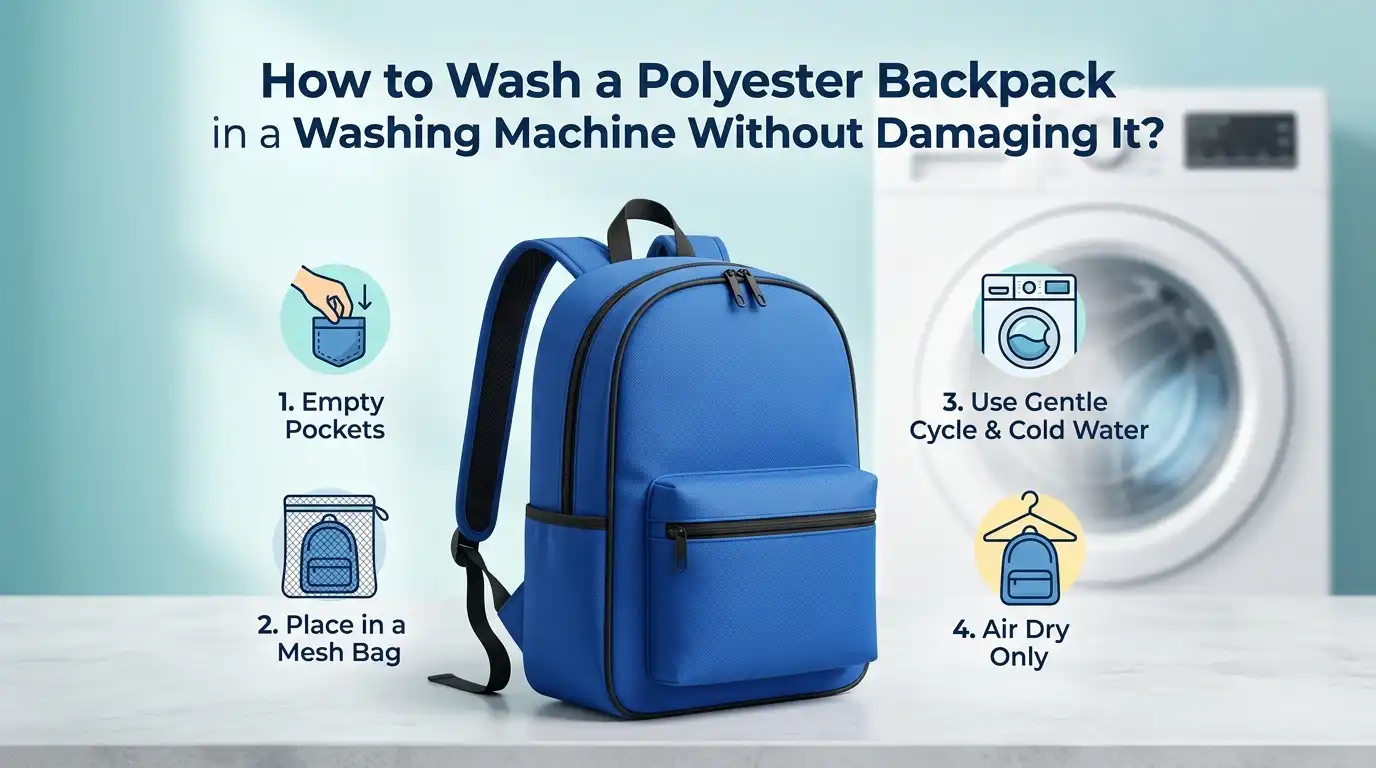
- Prep matters more than people think. Empty every pocket, shake out crumbs, brush off dirt, and remove detachable parts. Pretreat visible stains before the wash. This helps the machine clean the fabric instead of grinding dirt deeper into it. A little prep gives better results with less wear.
- Use a gentle setup. Mild detergent, cool to warm water, and a delicate cycle are the safest choices for most machine washable polyester backpacks. Put the bag inside a mesh laundry bag or pillowcase and wash it by itself. This protects zippers, straps, and the washer drum.
- Never use high heat to dry it. Polyester dries fairly fast on its own. Hang the backpack upside down or open in a shaded, airy spot. Heat from a dryer can damage fabric, zipper pulls, straps, and shape. Air drying is slower, but it is far safer.
- Pick the right method for the bag and the mess. Machine washing is quick and easy for many basic school or casual polyester backpacks. Hand washing is safer for bags with trim, coatings, embroidery, or stiff parts. The best wash is the one that cleans the bag without shortening its life.
Know If Your Backpack Should Go in the Washer
Before you wash anything, decide if your backpack is a good machine wash candidate. Many plain polyester school backpacks are. Bags with a soft body and simple stitching usually do fine on a gentle cycle. Thule says polyester can often be machine washed if you avoid heat and harsh cleaners.
But some backpacks should stay out of the machine. REI warns against machine washing technical packs, and JanSport tells users to hand clean many 600D polyester bags to protect shape and finish.
Bags with leather trim, suede panels, frames, thick padding, waterproof coatings, or decorative patches need more care.
Pro: machine washing saves time.
Con: it can stress seams and coatings. If the bag is structured or special, hand washing is safer.
Read the Care Label Before You Begin
The care label gives the clearest answer. Look inside the main compartment or an inner seam. If the label says machine wash, you can move ahead with more confidence. If it says hand wash only, wipe clean only, or do not wash, follow that. Whirlpool also suggests testing detergent on a hidden spot if the bag has no label.
This step matters because polyester is only one part of the story. A bag may be polyester outside but still have foam, trim, print, or coating that reacts badly to washer movement.
The main pro of reading the label is simple. You lower risk fast.
The con is only that it adds one extra minute. That minute is worth it. If there is no label and the bag feels delicate, choose hand washing.
Empty Every Pocket and Remove Loose Dirt
Start with a fully empty bag. Open every zipper and check every pocket. Remove pens, paper, snacks, coins, tissues, and anything small that can hide in a corner. Then turn the bag upside down and shake it hard over a trash can. Whirlpool and Clorox both recommend this step before any wash.
Next, brush off visible dirt and use a vacuum attachment if the seams hold grit or crumbs. REI suggests getting debris out of seams and deep corners before deep cleaning. This is a smart move because dirt can act like sandpaper during the wash.
Pro: better cleaning and less rubbing damage.
Con: it takes a few extra minutes. Still, this is one of the easiest ways to protect the fabric and make the wash more effective.
Pretreat Stains the Right Way
Do not expect one gentle cycle to erase food marks, ink spots, or grime around the bottom panel. Spot treatment gives you a much better result. Whirlpool suggests using a small amount of detergent mixed with lukewarm water, then cleaning the stain with a soft brush or sponge. A soft toothbrush works well around seams and zipper edges.
Be gentle. Scrubbing too hard can rough up the fabric or lighten the color. JanSport also advises avoiding bleach and harsh detergents on many polyester backpacks. If the stain is old, work in small circles and let the cleaner sit for a short time before rinsing lightly.
Pro: stain treatment targets the dirty area without over washing the whole bag.
Con: aggressive brushing can damage the surface. Gentle pressure usually wins here.
Protect Zippers Straps and Shape Before Washing
A backpack needs a little armor before it goes into the washer. Cut any loose threads near the zippers so they do not snag. Remove detachable straps, belts, and frames if the bag has them. Whirlpool recommends taking off metal frames and detachable parts first.
Then place the backpack inside a mesh laundry bag or a pillowcase. Clorox and Whirlpool both recommend this because it keeps straps and hardware from whipping around inside the drum. Leave zippers open so water can move through the pockets, but make sure the outer bag is closed.
Pro: this reduces tangling and protects the washer.
Con: a laundry bag can slightly reduce wash force. That trade off is usually worth it because backpacks need gentle movement, not heavy agitation.
Pick the Safest Detergent and Water Temperature
Use a mild detergent with no strong additives. REI recommends mild soap without fragrance or extra additives, and Thule says average or mild detergent is fine while strong detergent should be avoided. Harsh cleaners can wear down coatings, fade color, or leave residue in padded areas.
For water temperature, stay cool to warm. Thule suggests around 40 C or 100 F for polyester, while REI says use lukewarm and never hot water. Hot water can weaken fabric, affect coatings, and stress zipper pulls or straps.
Pro: mild detergent and moderate water clean well without extra risk.
Con: they may not blast out every stain in one round. That is why pretreating stains first matters so much.
Use the Right Washer Cycle for Polyester
The safest choice is a delicate or gentle cycle. Whirlpool and Clorox both recommend this setting for washable backpacks. Wash the bag by itself so straps and buckles do not catch on other clothes. Add only a small amount of detergent. Too much soap can stay trapped in seams and padding, which can leave the bag stiff or smelly later.
Keep the cycle simple. Do not use heavy duty settings. Do not use bleach unless the label clearly says the fabric is bleach safe. Do not add fabric softener.
The pro of a gentle cycle is that it gives a full clean with less pulling on seams.
The con is that very dirty bags may need a second light clean or spot treatment after the wash. That is still better than one harsh cycle that shortens the bag’s life.
Machine Wash Versus Hand Wash Pros and Cons
Machine washing is best for simple polyester backpacks that need an overall refresh. It is quick, easy, and good for dirt, sweat, and mild odor across the whole bag. Pros: it saves time, gives even cleaning, and works well if the care label allows it. Cons: it adds more stress to seams, shape, trim, and coatings.
Hand washing is best for delicate bags, branded bags with shape you want to keep, or packs with leather, suede, embroidery, or a rigid frame. JanSport recommends hand cleaning many polyester models, and REI prefers hand cleaning for packs in general.
Pros: more control and lower risk.
Cons: it takes longer and needs more effort. If you feel unsure, hand washing is the safer answer.
Dry the Backpack Without Heat Damage
Once the cycle ends, do not toss the backpack into the dryer. REI, Whirlpool, and Thule all warn against dryer heat. Heat can warp parts, weaken straps, damage zipper pulls, and affect the fabric finish. Polyester dries fairly fast, so you do not need machine heat anyway.
Pat the bag with an old towel to remove extra moisture. Then hang it upside down or fully open in a shaded place with good air flow. REI also says to avoid direct sun because UV light can degrade fabric over time.
Pro: air drying protects the bag.
Con: it takes longer than a dryer. Still, slow drying is the price of keeping the backpack looking normal and feeling strong. Wait until every pocket is dry before using it again.
Remove Odors Mold and Stubborn Grime
A bad smell usually means trapped sweat, food, dampness, or soap residue. Clorox notes that regular cleaning helps prevent mildew smells and mold stains, and suggests cleaning a backpack about once a month for maintenance. If your bag smells but is not deeply stained, start with a normal wash using mild detergent and make sure it dries fully.
If odor stays, clean the inside again by hand and pay close attention to the bottom corners and padded straps. For visible mold or mildew, check the care label before using any stronger treatment. REI and JanSport both push gentle care, so do not jump straight to harsh chemicals.
Pro: targeted odor cleaning solves the real cause.
Con: strong cleaners can discolor fabric if used carelessly. The safest fix is often better cleaning plus complete drying, not stronger chemistry.
Common Mistakes That Damage Backpacks
The biggest mistake is skipping the label and assuming all polyester bags wash the same. Another common mistake is using hot water or a dryer. Thule says heat can damage the fabric and hardware, and REI says direct sun and dryer heat are both bad choices for packs.
Other mistakes include overloading detergent, scrubbing stains too hard, washing the bag with heavy clothes, or leaving wet crumbs and dirt in hidden pockets. JanSport also warns against bleach and harsh detergents for many polyester bags.
Pro: avoiding these mistakes costs nothing.
Con: you may need a little more patience and prep time. That extra care is what keeps a backpack clean without making it look older after one wash.
A Simple Cleaning Routine That Keeps the Bag Fresh Longer
You do not need to deep clean your backpack every week. A small routine works better. Empty crumbs out often, wipe the inside with a damp cloth, and spot clean marks before they set. Clorox suggests monthly cleaning for regular maintenance, and JanSport recommends an ongoing wipe down or brushing routine.
This habit keeps dirt from building up into a bigger problem. It also means you can machine wash less often, which helps the bag last longer.
Pro: light care saves time later and reduces deep wash risk.
Con: you need to remember to do it. A quick five minute clean once in a while is much easier than rescuing a grimy bag with heavy odor and stains. If your backpack carries gym gear or lunch often, check it more often.
FAQs
Can I wash any polyester backpack in a washing machine?
No. Many plain polyester backpacks can handle a gentle cycle, but some should be hand washed only. If the bag has a frame, coating, leather trim, suede, embroidery, or rigid panels, hand cleaning is safer. Always check the care label first.
Should I use warm water or cold water?
Cool to warm water is the safest range. REI recommends lukewarm water, and Thule suggests about 40 C or 100 F for polyester. Avoid hot water because heat can damage fabric, color, and hardware.
How often should I wash my backpack?
That depends on use. A bag used for school or daily errands may only need light care plus an occasional full wash. Clorox suggests cleaning about once a month for regular maintenance. If you carry food, gym clothes, or damp gear, check it more often.
Can I put my backpack in the dryer?
No. Air drying is the better choice. REI, Whirlpool, and Thule all warn that dryer heat can damage fabric, straps, zipper pulls, and shape. Hang the bag open in a shaded place until every pocket feels fully dry.
What is the safest detergent for a polyester backpack?
Use a mild detergent or mild soap with no strong additives. REI recommends mild soap, and Thule says strong detergent should be avoided. A small amount is enough. Too much soap can stay trapped in seams and padding.

Hi, I’m Luna Beck — the founder and voice behind Urban Pack Vault. I’m passionate about helping people find bags that perfectly match their lifestyle. From backpacks to travel luggage, I research, review, and recommend so you never have to second-guess your next purchase.