How to Securely Lock a Backpack Without Built In Combination Zippers?
You just bought a great backpack. It fits perfectly. It holds everything you need. But there is one problem. It does not have built in combination zippers. Now you are wondering how to keep your belongings safe from pickpockets, sneaky hands, and opportunistic thieves.
You are not alone. Most backpacks on the market today ship without any locking mechanism. The zippers slide freely, and anyone standing behind you in a crowded subway or a busy airport terminal can open your bag in seconds. This leaves your wallet, phone, passport, and other valuables exposed.
The good news? You do not need a fancy backpack with built in locks to keep your stuff secure. There are several affordable, simple, and effective methods you can use right now.
Key Takeaways
- You can lock almost any backpack with a small combination padlock, a carabiner clip, cable ties, or a simple zipper interlock trick. Each method has different strengths depending on your situation.
- Small TSA approved combination locks are the most popular and effective solution. You thread the lock through both zipper pulls to hold them together. This stops casual thieves and pickpockets from quickly accessing your main compartment.
- Carabiner clips offer a fast and reusable option. Clip one through both zipper pulls and you create a barrier that requires deliberate effort to remove. Locking carabiners provide even more security than standard ones.
- Cable ties (zip ties) work as a cheap, disposable deterrent. They are great for checked luggage or situations where you need tamper evident security. If someone cuts the tie, you will know your bag was opened.
- The zipper interlock trick costs nothing at all. You loop one zipper pull through the other and back again. This creates friction that makes it very difficult for a pickpocket to slide your zippers open from behind.
- No single method makes your bag theft proof. A determined thief with a knife can slash fabric. The goal is to slow down opportunistic thieves and create enough resistance that you notice any attempt before it succeeds. Layering multiple methods gives you the strongest protection.
Why Most Backpacks Lack Built In Locks
Most backpack manufacturers skip built in locking zippers for a few practical reasons. Lockable zipper hardware adds weight, increases production costs, and limits design flexibility. Many brands use lightweight paracord pulls or simple nylon tabs to keep their packs light and affordable.
Travel focused brands do offer anti theft bags with built in locking systems. But these bags often cost significantly more. Budget and mid range backpacks almost never include this feature. That means the majority of backpack owners need an aftermarket solution.
The reality is that a standard zipper can be opened by anyone in seconds. A quick tug from behind is all it takes. Understanding this vulnerability is the first step in choosing the right locking method for your needs. The methods below range from free tricks to low cost accessories that solve this problem effectively.
Using a Small Combination Padlock on Zipper Pulls
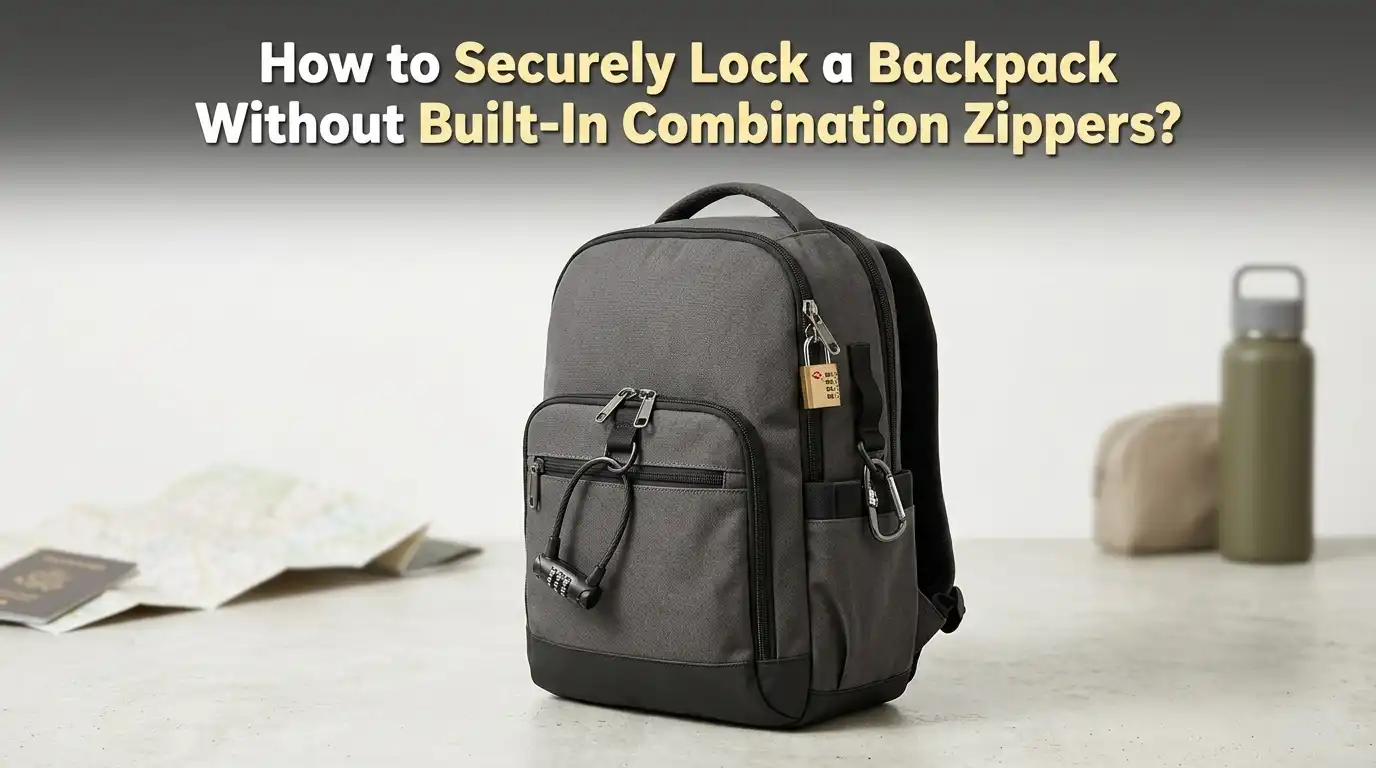
A small combination padlock is one of the most common and effective ways to lock a backpack. The concept is simple. You pull both zipper sliders together, thread the padlock shackle through both zipper pull holes, and snap it shut.
Choose a lock that is small and lightweight. A heavy padlock will bounce around, wear down your zippers, and add unnecessary weight. TSA approved combination locks work well because they are compact and easy to reset. You also avoid the hassle of carrying a tiny key that is easy to lose.
Pros: Strong visual deterrent. Holds both zippers firmly together. Reusable and inexpensive. Available at almost any store. Cons: Adds a small amount of weight. Can be cut with bolt cutters. Requires you to remember a combination.
This method works best on backpacks with dual zipper pulls on the main compartment. Make sure your zipper pulls have holes large enough to fit the lock shackle through them. If the holes are too small, you may need to replace the pulls or use a different method.
The Zipper Interlock Twist Trick
This is a completely free method that requires nothing except two zipper pulls on the same compartment. You take the tab of the first zipper pull and thread it through the hole of the second zipper pull. Then you take the second tab and thread it back through the first hole.
The result is two interlocked zipper pulls that resist sliding. A pickpocket standing behind you cannot simply grab and pull the zipper open. They would first need to separate the interlocked tabs, which takes time and deliberate effort.
Pros: Completely free. No tools or accessories needed. Works on any dual zipper compartment. Quick to do and undo. Cons: Not a true lock. A patient thief can still figure it out. Does not anchor to anything fixed.
This trick was popularized by travel bloggers and photographers who needed a quick way to secure camera bags. It is ideal for crowded places like markets, festivals, and public transit where the main threat is a quick, opportunistic hand reaching for your zipper.
Locking Carabiner Clips for Quick Security
A carabiner clip is a small, spring loaded gate clip shaped like a D or oval. You clip it through both zipper pulls. This holds them together and creates an obstacle that a casual thief cannot overcome in a split second.
Standard carabiners are easy to find and cost very little. However, they can be unclipped just as easily by anyone who grabs them. Locking carabiners solve this problem. They have a twist or screw mechanism on the gate that prevents the clip from opening unless you deliberately unlock it.
Pros: Fast to clip and unclip. Very lightweight. Doubles as a gear attachment point. Locking versions offer stronger deterrence. Cons: Standard versions are easy for thieves to open. Can snag on clothing or seats. Does not anchor the bag to anything.
Some travelers use S shaped carabiner clips that connect both zipper pulls with a sliding lock in the center. These are compact and sit flat against the bag, which reduces the chance of snagging. They are a popular choice among frequent travelers in Europe and Southeast Asia.
Cable Ties as a Cheap Tamper Evident Solution
Cable ties, also called zip ties, are one of the cheapest security options you can find. A pack of 100 costs almost nothing. You thread a cable tie through both zipper pulls and cinch it tight. The tie holds the zippers closed and cannot be removed without cutting it.
This makes cable ties an excellent tamper evident solution. If you return to your bag and the cable tie has been cut or is missing, you know someone opened your backpack. This is especially useful for checked luggage and hostel storage situations.
Pros: Extremely cheap. Lightweight and compact. Tamper evident. Easy to carry spares. Cons: Single use only. Requires scissors or a small cutter to remove. Slows down your own access to the bag.
Color coded cable ties add another layer of awareness. Use a specific color so you can quickly verify that your original tie is still in place. Some travelers carry a small nail clipper to cut the tie open and a fresh handful of ties for reapplication.
Replacing Zipper Pulls with Steel Cable Loops
This is a permanent modification that gives your backpack lockable zipper pulls even if it was not built with them. You remove the existing zipper pulls and replace them with short loops of stainless steel cable secured with aluminum cable fasteners.
The process is straightforward. Cut 5 inch pieces of 3/32 inch stainless steel cable. Thread each piece through the zipper slider hole. Slide an aluminum cable fastener over both ends and crimp it flat with a hammer. The result is a metal loop that accepts a padlock.
Pros: Permanent upgrade. Very strong and hard to cut. Works with any padlock. Costs under $2 in materials. Cons: Requires a trip to a hardware store. Needs wire cutters and a hammer. Slightly changes the look and feel of the backpack.
This method is popular among travel bloggers who want the security of a lockable bag without buying a new backpack. The steel cable resists cutting with household scissors, unlike the paracord or fabric pulls that come standard on most bags.
Using Retractable Cable Locks to Anchor Your Bag
A retractable cable lock is a small device with a thin steel cable that pulls out from a spool and locks with a combination mechanism. You loop the cable through your backpack straps or zipper pulls and wrap it around a fixed object like a chair leg, table, or railing.
This method does more than lock your zippers. It physically anchors your bag to something immovable. A thief cannot simply pick up your bag and walk away. This is extremely useful in airports, cafes, libraries, and hostel common rooms.
Pros: Prevents grab and go theft. Locks zippers and anchors the bag. Compact and retractable. Cons: Adds weight. Cable can be cut with heavy duty tools. Requires a fixed object nearby.
Choose a cable lock with a combination rather than a key. Keys are small and easy to lose while traveling. A three or four digit combination is simpler to manage. Wrap the cable through the shoulder strap webbing for the strongest anchor point.
Safety Pins as a Low Tech Backup
A simple safety pin can secure a single zipper closure or hold two zipper pulls together in a pinch. You push the pin through the fabric at the end of the closed zipper, which blocks the slider from moving past that point.
This method is best for outer pockets with single zipper closures that cannot accept a padlock or carabiner. A large safety pin through the fabric next to the zipper stop creates a physical block that keeps the zipper shut.
Pros: Extremely cheap. Tiny and lightweight. Easy to carry several as backups. Works on single zipper closures. Cons: Weak security. Easy to remove. Can poke holes in the fabric over time.
Safety pins are not a primary locking method. Think of them as an extra layer of protection for your less critical pockets. Combine them with a stronger method on your main compartment for a layered security approach.
Anti Theft Zipper Clips and Accessories
Several companies make small plastic or metal clips that snap onto zipper pulls and hold them together. These clips are purpose built for bag security. They often feature a small latch or sliding lock that requires a deliberate two step motion to open.
The advantage of these clips is their simplicity. You snap them on and forget about them. They sit flush against the bag and do not swing or bounce. Most weigh just a few grams and fit any standard zipper pull.
Pros: Purpose built for the task. Lightweight and low profile. Reusable. Easy to operate once you know the trick. Cons: Not as strong as a metal lock. Can break under force. May not fit oversized or non standard zipper pulls.
Some versions use a keyring style mechanism where you squeeze to open. Others use a twist lock. Test the clip on your specific bag before traveling to make sure it fits your zipper pulls correctly and operates smoothly.
Best Practices for Backpack Security in Crowded Places
Locking your zippers is only one part of keeping your backpack safe. How you wear and position your bag matters just as much. Thieves target bags that are easy to reach and out of the owner’s line of sight.
Wear your backpack on your front in extremely crowded situations. This puts your zippers within your field of vision. If front wearing feels awkward, position the zipper openings against your back so they face your body rather than outward.
Avoid putting high value items in small outer pockets. These pockets usually have single zippers that are hard to lock. Keep your phone, wallet, and passport inside the main locked compartment. Fill the outer pockets with items you can afford to lose, like tissues, snack wrappers, or a cheap pen.
Stay aware of your surroundings. A lock buys you time, but awareness is your strongest defense. If someone bumps into you from behind, check your zippers immediately. Pickpockets often work in teams where one person distracts you while another opens your bag.
What to Avoid When Locking Your Backpack
Some popular locking methods actually create more problems than they solve. Avoid using heavy duty padlocks on a lightweight backpack. The weight puts stress on the zipper hardware and can damage the sliders over time. Match the size and weight of your lock to the construction of your bag.
Do not rely on a single security measure. A padlock on your zipper means nothing if a thief can slash the fabric with a blade. Layer your defenses. Use a lock on the zippers, keep valuables in an interior pocket, and stay aware of your environment.
Skip the expensive high security locks unless you are in an extremely high risk area. A simple combination lock provides enough deterrence for most everyday situations. Spending more does not always mean better protection for a fabric bag.
Avoid locking your bag so tightly that you cannot access it quickly in an emergency. You need to be able to open your bag for security screenings at airports and public venues. TSA approved locks solve this by allowing security officers to open and relock the bag with a universal key.
Choosing the Right Method for Your Situation
The best locking method depends on where you are and what threats you face. A commuter on a crowded train needs different protection than a backpacker staying in a hostel dorm.
For daily commuting, the zipper interlock trick combined with a small carabiner clip is fast, free, and effective. You can lock and unlock your bag dozens of times a day without slowing down.
For travel, a combination padlock on steel cable zipper pulls gives you strong, reliable security. Add a retractable cable lock for situations where you need to leave your bag unattended at a cafe table or airport gate.
For checked luggage, cable ties provide tamper evident protection at minimal cost. Pack a small cutter and a handful of spare ties so you can reseal your bag at each stop.
Think about your daily routine and pick the method that fits. The best lock is the one you will actually use every day. If a method is too slow or annoying, you will stop using it, and an unlocked bag is the most vulnerable bag of all.
How to Layer Multiple Security Methods Together
Layering means using two or more methods at the same time. This is the most effective way to protect a backpack without built in locks. Each layer adds time and difficulty for a thief, which increases your chance of catching them in the act.
Start with the zipper interlock twist as your base layer. This is always on and costs nothing. Add a small locking carabiner or combination padlock as your second layer. For high risk situations, loop a retractable cable lock through your shoulder straps and around a fixed object.
Keep a few cable ties in a side pocket as your emergency backup. If your lock fails or you lose your combination, a cable tie gets your zippers secured in seconds.
The goal is not to make your bag impossible to open. The goal is to make your bag significantly harder to open than the bag next to it. Thieves look for easy targets. A backpack with visible locks and interlocked zippers sends a clear message that the owner is prepared and paying attention.
Frequently Asked Questions
Can a thief open a locked backpack zipper with a pen?
Yes. A ballpoint pen can separate the teeth of a coil zipper without touching the lock. This is a known weakness of zipper based security. You can reduce this risk by choosing a backpack with toothed (not coil) zippers. Locking the zippers still deters the majority of thieves who do not know this trick or do not want to risk the extra time.
Are TSA approved locks safe for everyday backpack use?
TSA approved locks are good for general deterrence. They are small, lightweight, and convenient. However, TSA master keys have been leaked online, so these locks are not fully secure against someone with the right key. For everyday use against pickpockets and casual thieves, they work well.
What is the cheapest way to lock a backpack?
The cheapest method is the zipper interlock twist trick, which costs nothing. The next cheapest option is a cable tie, which costs a fraction of a cent per tie. A basic combination padlock costs a few dollars and lasts for years. All three methods provide meaningful security on a tight budget.
Will locking my zippers damage my backpack?
A lightweight lock will not damage your zippers under normal use. Heavy padlocks can stress the zipper sliders and cause them to crack or bend over time. Use a lock that matches the weight and build quality of your bag. If the lock feels too heavy when you lift it, it is too heavy for your zipper.
Should I lock my backpack at school or work?
Locking your main compartment at school or work is a smart habit, especially if you leave your bag unattended in a locker room, break room, or open classroom. A small combination lock or carabiner clip takes seconds to apply and gives you reliable protection against opportunistic theft.
Is it worth buying an anti theft backpack instead?
Anti theft backpacks come with built in locks, slash resistant fabric, and hidden compartments. They are worth the investment if you travel frequently to high risk areas. For everyday use, a regular backpack with an aftermarket lock provides similar zipper security at a much lower cost.

Hi, I’m Luna Beck — the founder and voice behind Urban Pack Vault. I’m passionate about helping people find bags that perfectly match their lifestyle. From backpacks to travel luggage, I research, review, and recommend so you never have to second-guess your next purchase.