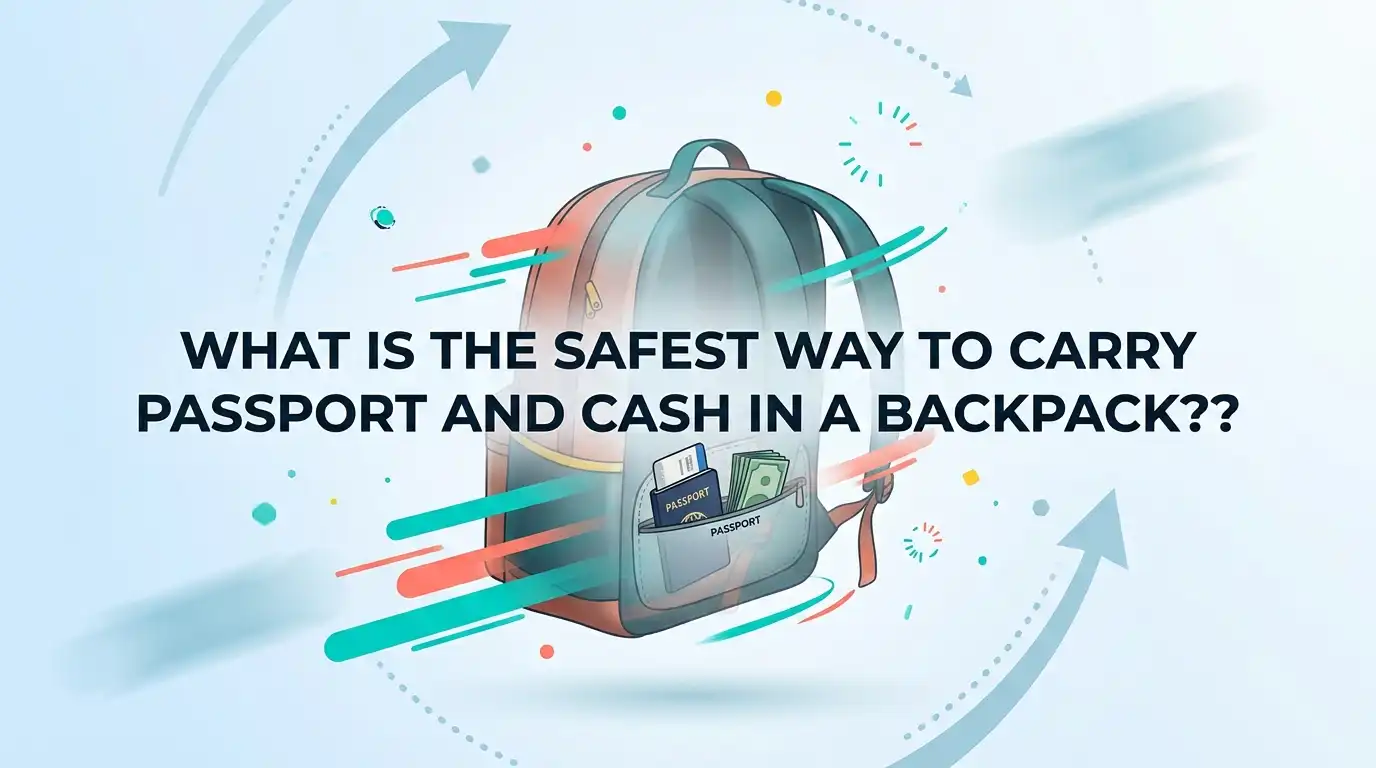
What Is The Safest Way To Carry Passport And Cash In A Backpack?
Your passport and cash are the two things you cannot afford to lose on a trip. Losing them can turn a dream vacation into a stressful mess of embassy visits and frozen plans.
Yet most travelers still toss these items into the front pocket of a backpack and hope for the best. That habit is exactly what pickpockets and thieves count on.
This guide gives you clear, tested ways to carry your passport and cash safely inside a backpack. You will learn where to place them, how to split them up, and which tools actually help.
Key Takeaways
- Never carry everything in one place. Split your cash and documents across several spots in your backpack and on your body. If one stash is stolen, you still have backups.
- Keep your passport against your body when possible. A money belt or neck pouch worn under your clothes is the single safest option for your passport and main cash, even when you have a backpack.
- Use the hardest to reach pocket for any valuables stored inside the backpack. The pocket touching your back is far safer than the outer front pocket.
- Carry a decoy wallet. A cheap wallet with a small amount of cash and an old card gives a thief something to grab while your real money stays hidden.
- Make digital and physical copies of your passport. Store one copy in a separate bag and email one to yourself. Copies speed up replacement if the original is lost.
- Stay alert in crowds. Most theft happens in busy places like train stations, markets, and tourist spots. Awareness beats any gadget you can buy.
Why You Should Never Keep Passport And Cash In One Spot
Putting your passport and all your cash in the same pocket is the biggest mistake travelers make. If a thief grabs that one pocket, you lose everything at once. You are then stranded with no money and no ID in a foreign place.
The smart fix is splitting your valuables. Spread your cash across three or four locations. Keep some in a money belt, some in your daypack, and a small amount in your pocket for quick spending.
Think of it like a backup plan for your money. When one stash disappears, the others keep you going. This single habit reduces your risk more than any expensive gadget. It costs nothing and works in every country you visit.
Carry Your Passport Against Your Body First
The safest place for your passport is not inside the backpack at all. It is against your body, under your clothes. A backpack sits behind you where you cannot see it, which makes it an easy target in crowds.
A money belt or neck pouch worn under a shirt keeps your passport close and hidden. Thieves cannot reach it without you noticing. This method protects your most valuable document from both pickpockets and bag snatchers.
Use the backpack only as a secondary storage spot, not the main one for your passport. Pros: maximum security and peace of mind. Cons: it can feel sweaty in hot weather and is slightly slower to access at airport checks. Still, the safety payoff is worth the small hassle.
Use The Hidden Back Panel Pocket Of Your Backpack
Many modern backpacks have a slim pocket that sits flat against your back when worn. This is the safest internal spot for valuables. A thief cannot open it without removing the bag from your shoulders, which is nearly impossible without you feeling it.
Place your passport copy, a backup card, or emergency cash here. The pocket stays pressed against your body, so the zipper is blocked from access while you walk.
This spot beats the front pocket every single time. Pros: hard to reach, blends in, and needs no extra gear. Cons: it can be awkward to open when you need something, since you must take the bag off first. That inconvenience is actually a security feature, not a flaw.
Add A Money Belt Or Neck Pouch For Backup
A money belt is a thin zippered pouch worn around your waist under your pants. A neck pouch hangs from a cord around your neck and tucks under your shirt. Both keep cash and cards out of sight.
These tools shine because thieves simply cannot see them. You can wear one and still use your backpack for everyday items like snacks, water, and a guidebook.
Wear the belt under your clothes, not over them, or it loses the point. Pros: hidden, affordable, and great for splitting valuables. Cons: reaching your cash in public looks obvious, so load your daily spending money somewhere easier first. Visit a restroom if you need to restock cash from the belt.
Carry A Decoy Wallet To Fool Thieves
A decoy wallet is a cheap wallet you are willing to lose. You fill it with a small amount of local cash, an expired card, and maybe an old loyalty card. It looks real but holds nothing valuable.
If a thief demands your wallet or grabs one, you hand over the decoy. Your real cash and cards stay safe in your hidden pouch or back panel pocket.
This trick works best in places known for muggings or aggressive begging. Pros: protects your real money during a confrontation and gives you something to surrender calmly. Cons: you must remember which wallet is which, and carrying two wallets adds bulk. Keep the decoy in an easy front pocket where a thief would look first.
Split Your Cash Into Multiple Stashes
Carrying all your cash in one wallet is risky. Spread it out instead. Put your main supply in a money belt, some in a hidden backpack pocket, and a small daily amount in your pocket.
A good rule is to never carry more than you can afford to lose in any single spot. This way, one theft never wipes you out completely.
Hide a small emergency stash somewhere odd, like inside a sock, a tampon wrapper, or an empty lip balm tube. Thieves rarely check these. Pros: huge protection against total loss and great peace of mind. Cons: you must track where everything is, and it takes a few minutes to organize each morning. The habit quickly becomes second nature.
Choose A Backpack With Anti Theft Features
Some backpacks are built for security. They include slash resistant fabric, lockable zippers, and hidden pockets. These features stop common attacks like bag slashing and zipper diving.
Slash proof panels mean a thief cannot cut your bag open with a knife. Lockable zippers clip together so they cannot be opened quietly while you wear the bag.
These bags work well in crowded cities and on packed public transport. Pros: strong protection and clever hidden compartments built right in. Cons: they cost more than regular bags and can be a little heavier. They also will not help if you leave the bag unattended. Treat the features as a helpful layer, not a replacement for staying alert.
Use RFID Blocking Protection The Right Way
RFID blocking sleeves and holders claim to stop digital thieves from scanning your cards and passport chip. The truth is more balanced. Most modern passports already have a metal lining in the cover that blocks scanning when closed.
RFID theft is actually rare, but blocking gear adds a small extra layer for newer contactless cards. A simple sleeve costs little and does no harm.
Do not rely on RFID gear as your main defense, since physical pickpocketing is far more common. Pros: cheap, lightweight, and offers peace of mind for nervous travelers. Cons: the real world risk is low, so it can be a waste of money if you expect it to solve everything. Focus your effort on physical security first.
Keep Copies Of Your Passport In Separate Places
Copies save you when the worst happens. If your passport is lost or stolen, copies make the embassy replacement process much faster. They also help you prove your identity in a pinch.
Make both physical and digital copies before your trip. Print two paper copies and store them apart from your real passport. Take a clear photo and email it to yourself too.
Save a copy in a secure cloud account you can open from any device. Pros: speeds up replacement, costs nothing, and works even if everything is stolen. Cons: a paper copy can be lost too, and digital copies need internet access. Use both methods together so one always backs up the other.
Stay Alert In Crowds And High Risk Areas
No gadget beats your own awareness. Most theft happens in predictable places. Train stations, busy markets, tourist landmarks, and packed buses are prime hunting grounds for pickpockets.
Keep your hand on your bag in crowds and wear your backpack on your front in tight spaces. A bag you can see is a bag thieves avoid.
Watch for common distraction tricks, like someone bumping you, spilling something, or asking for directions while a partner reaches for your stuff. Pros: this costs nothing and stops most theft before it starts. Cons: it takes constant attention, which can feel tiring on long days. Build the habit early and it becomes automatic without draining your energy.
Wear Your Backpack Properly In Risky Situations
How you wear your backpack changes how safe it is. On your back in a crowd, you cannot see the zippers, and thieves know this. Simple changes make a big difference.
In busy or sketchy areas, swing your backpack around to your chest. Now you can see and control every pocket. Thieves move on to easier targets.
On public transport, keep the bag between your feet or on your lap. Pros: full control of your valuables and a clear signal that you are paying attention. Cons: wearing a bag on your front feels odd and can be uncomfortable for long stretches. Save this move for the riskiest moments, like crowded metros and street markets, rather than wearing it that way all day.
Secure Your Backpack When You Are Not Watching It
There are times you must set your bag down, like at a hostel, a cafe, or on a long train ride. These moments are when grab and run theft happens. A few simple steps keep your bag in place.
Loop a small lock or cable through the zippers and around a fixed object. Attach it to a chair leg, a bed frame, or a luggage rack. This stops anyone from walking off with it quickly.
Never leave your bag alone, even for a minute, to use a restroom or order food. Pros: locks deter casual thieves and buy you time. Cons: a determined thief can still cut a strap, so locks are not foolproof. Keep your passport and main cash on your body so a stolen bag never takes your most important items.
Plan What To Do If Your Passport Or Cash Is Stolen
Even careful travelers get unlucky. Having a plan means a theft becomes a problem you can fix, not a disaster. Knowing your steps in advance keeps you calm under pressure.
First, report the theft to local police and get a written report. You will need this for insurance and for your embassy. Next, contact your country’s nearest embassy to start a replacement passport.
Call your bank right away to freeze stolen cards and use your backup card from a separate stash. Pros: quick action limits the damage and speeds recovery. Cons: the process still takes time and patience, especially in a foreign country. Save your embassy contact, bank hotline, and a copy of your travel insurance details on your phone before you leave home.
Frequently Asked Questions
Is it safe to keep my passport in a backpack at all?
It is safe only if you use the right pocket. Store your passport in the hidden back panel pocket that presses against your body, never the outer front pocket. For the best safety, keep your passport in a money belt or neck pouch under your clothes and use the backpack only as a backup spot.
How much cash should I carry in my backpack?
Carry only a small amount in your backpack, just enough for a few hours of spending. Keep your main cash supply in a money belt or hidden pouch on your body. Splitting your cash means one theft never leaves you with nothing. Always keep an emergency stash hidden in a separate spot too.
Do anti theft backpacks really work?
Yes, they help against common attacks like slashing and zipper theft. Slash proof fabric and locking zippers make a thief’s job much harder. They are not magic, though. They will not protect a bag you leave unattended. Treat anti theft features as one layer of protection alongside staying alert and splitting your valuables.
Are RFID blocking holders worth buying?
They offer a small benefit but are not essential. Most passports already block scanning when closed thanks to a metal lining in the cover. RFID theft is rare compared to physical pickpocketing. A cheap sleeve does no harm, but do not let it replace real habits like keeping your valuables hidden and watching your bag.
What should I do first if my passport is stolen abroad?
Report the theft to local police and get a written report. Then contact your nearest embassy to begin replacing your passport. Having copies ready makes this much faster. Call your bank to freeze any stolen cards and switch to your backup card. Keep all these contacts saved on your phone before your trip.
Should I use a decoy wallet?
A decoy wallet is a smart move in areas known for muggings. Fill a cheap wallet with a little cash and an old card, then keep it in an easy to reach pocket. If confronted, you hand it over while your real money stays hidden. It gives you a safe way to satisfy a thief and walk away unharmed.

Hi, I’m Luna Beck — the founder and voice behind Urban Pack Vault. I’m passionate about helping people find bags that perfectly match their lifestyle. From backpacks to travel luggage, I research, review, and recommend so you never have to second-guess your next purchase.