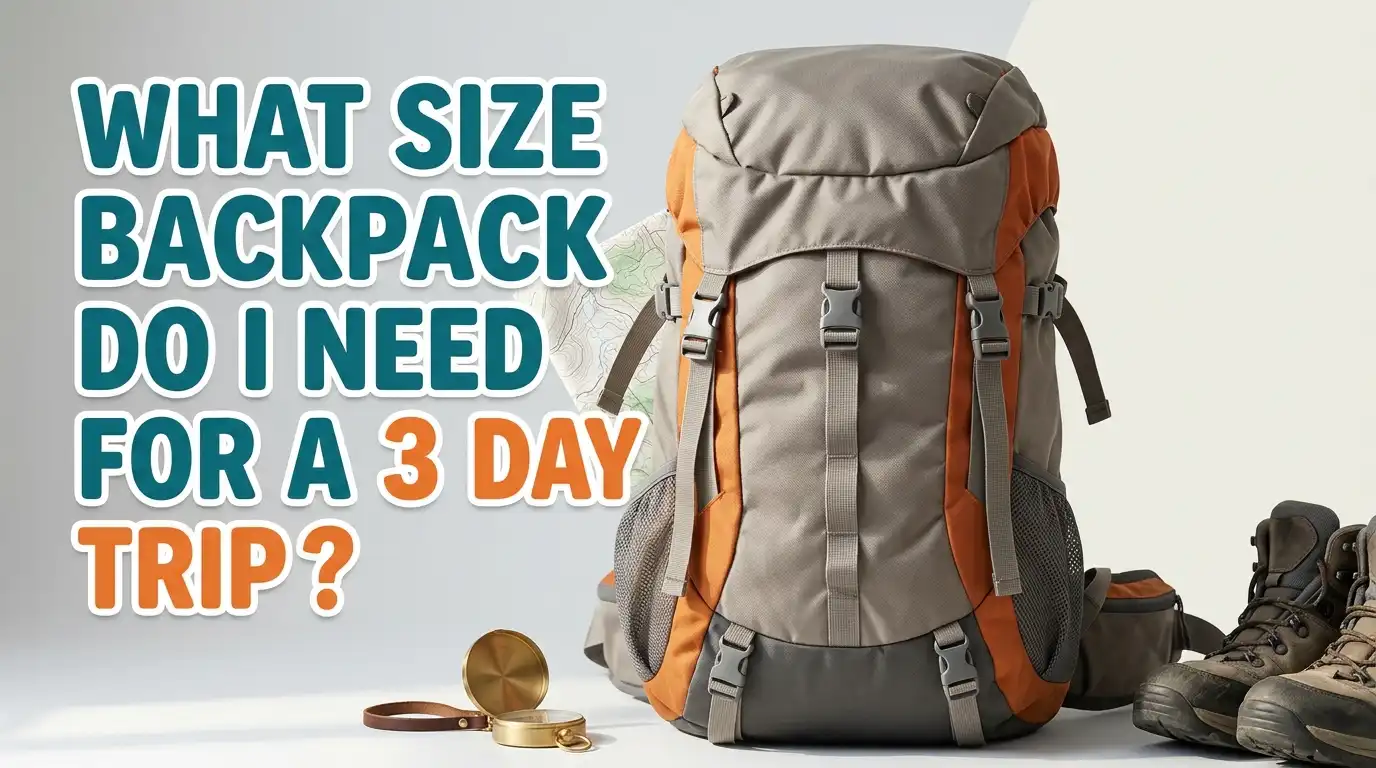
What Size Backpack Do I Need For A 3 Day Trip?
Packing for a 3 day trip feels exciting until you stand in front of your closet holding three different bags. One looks too small. One looks too big. The other one just looks confusing.
You want a backpack that fits everything without weighing you down like a sack of bricks. The good news is that picking the right size is easier than most people think.
This guide breaks down exactly what size backpack you need for a 3 day trip. It covers travel trips, hiking trips, and everything in between. You will learn how liters work, how to match a pack to your gear, and how to avoid the most common packing mistakes.
Key Takeaways
- For city or travel trips, a 25 to 35 liter backpack works best. This size holds clothes, toiletries, and a few extras while staying small enough to carry on most flights.
- For hiking or backpacking trips, a 40 to 50 liter pack is the sweet spot. You need extra room for a tent, sleeping bag, food, and water.
- Cold weather always needs more space. Bulky jackets and thicker layers can add 10 liters or more to your packing needs.
- A bigger bag is not always better. Extra space tempts you to overpack, and a heavy bag ruins your back and your trip.
- Frame type matters more than you expect. Framed packs carry heavy loads better, while frameless packs feel light and simple for short trips.
- Your body size affects fit, not just liters. A well fitted pack feels lighter even when it holds the same gear.
Understanding Backpack Liters In Plain English
Backpack size is measured in liters. One liter equals the space of a small water bottle. So a 30 liter backpack holds about thirty of those bottles worth of stuff.
This simple math helps you picture how much you can actually fit inside. Most people get confused because they think in pounds, not volume.
Liters measure space, not weight. A bag can be huge but still feel light if you pack soft items like clothes. The number on the tag tells you the total room inside the main compartment and pockets.
For a 3 day trip, you rarely need a giant pack. Knowing what liters mean stops you from buying a bag that swallows your gear in empty space.
The Quick Answer For A 3 Day Trip
Let me give you the fast version. For a 3 day travel trip, choose a 25 to 35 liter backpack. For a 3 day hiking or camping trip, choose a 40 to 50 liter backpack. These two ranges cover almost every situation a normal traveler faces.
The difference comes down to your gear. Travelers stay in hotels, so they skip the tent and sleeping bag. Hikers carry their entire home on their back. That gear takes up a lot of room.
A weekend in a city needs far less space than a weekend in the woods. Match the bag to the trip, not the trip to the bag. Once you know your trip type, the right number becomes obvious and your choice gets simple.
Best Backpack Size For A 3 Day City Or Travel Trip
City trips are the easiest to pack for. You sleep in a bed, shower with hotel towels, and walk on flat streets. A 25 to 35 liter backpack gives you plenty of room for clothes, shoes, toiletries, and a laptop. This size also fits under most airplane seats or in the overhead bin.
A 30 liter bag is the favorite among one bag travelers for good reason. It forces you to pack smart without leaving you short on space. You can fit three outfits, a pair of sleep clothes, and a small toiletry kit with ease.
Pros: It stays light, skips checked bag fees, and moves through airports fast.
Cons: It limits souvenirs and bulky items. You must pack with intention and avoid stuffing in extras you will not use.
Best Backpack Size For A 3 Day Hiking Or Camping Trip
Hiking changes everything. You carry your shelter, your bed, your food, and your water. A 40 to 50 liter pack handles a 3 day backpacking trip for most people. This range fits the big three items, which are your tent, sleeping bag, and sleeping pad, plus food and clothes.
Experienced hikers with lightweight gear sometimes drop to 35 liters. New hikers often feel safer with 50 liters because bulky gear eats space fast. A 45 liter pack sits right in the middle and works for almost anyone.
Pros: It carries heavy loads, spreads weight evenly, and holds all your camp gear.
Cons: It weighs more empty and costs more than a simple travel bag. A larger pack also tempts you to bring things you do not need.
How Weather Changes Your Backpack Size
Weather is the silent space stealer. Cold weather trips need more room because winter gear is bulky. A puffy jacket, thermal layers, gloves, and a warm hat take up far more space than a t shirt and shorts. You might need to jump up a full size to fit it all.
A summer trip might fit in a 30 liter bag, while the same trip in winter needs 45 liters. Rain gear adds bulk too, since jackets and pack covers fill pockets quickly.
Pros of sizing up for weather: You stay warm, dry, and comfortable.
Cons of sizing up: You carry a bigger, heavier bag even on mild days. Always check the forecast before you pick your pack, because guessing wrong leaves you cold or overloaded.
Framed Versus Frameless Backpacks
The frame inside your pack shapes how it carries weight. Framed packs use an internal support that transfers weight to your hips. This makes heavy loads feel lighter and keeps your shoulders happy. Frameless packs skip the frame and rely on how you pack them.
For a 3 day hiking trip with a heavy load, a framed pack wins on comfort. For a light travel trip, a frameless pack feels simple and weighs less.
Framed pros: Better weight support, more comfort under load, and a stable feel.
Framed cons: Heavier and bulkier on their own.
Frameless pros: Lighter, simpler, and easier to stuff.
Frameless cons: They get uncomfortable when overpacked. Choose based on how much weight you plan to carry, not just the price tag.
How To Match Your Gear To The Right Size
Before you buy a pack, lay out all your gear on the floor. This single step tells you more than any size chart ever could. Spread out your clothes, toiletries, electronics, and any camp gear. Look at the pile and judge how much space it really needs.
Soft items like clothes squish down, but hard items like shoes and stoves hold their shape. Group your gear into piles so you can see the bulk clearly.
Pros of this method: It gives you a real answer based on your actual stuff.
Cons: It takes a few minutes and requires you to gather everything first. Do this once and you will never guess your backpack size again, because your eyes will show you exactly what fits.
Smart Packing Tips To Use Less Space
Good packing tricks let you choose a smaller bag. Rolling your clothes instead of folding them saves space and reduces wrinkles. Packing cubes keep items tight and organized so nothing floats around loosely. These small habits add up fast.
Wear your bulkiest items on travel day, like your jacket and heaviest shoes. This frees up serious room inside your pack. Stuff socks and small items inside your shoes to use every gap.
Pros of smart packing: You fit more in less space and stay organized.
Cons: It takes practice and a little planning before you leave. Master these tricks and a 30 liter bag suddenly feels like it holds twice as much, which saves your back and your wallet.
Carry On Rules You Need To Know
If you fly, airline rules decide your maximum size. Most airlines allow carry on bags around 22 by 14 by 9 inches. A 35 liter backpack usually fits these limits, while a 45 liter pack often does not. This matters because checking a bag costs money and time.
A 3 day trip rarely needs a checked bag, so staying carry on size saves you both. Always check your airline rules before you pack, since limits vary.
Pros of carry on size: No bag fees, no waiting at baggage claim, and no lost luggage.
Cons: Less space for souvenirs and bulky gear. Pick a pack that fits the rules and your trip gets smoother from the moment you reach the airport.
Common Mistakes People Make With Backpack Size
Many travelers pick the wrong size and learn the hard way. The biggest mistake is buying a bag that is too big. Extra space feels safe, but it tempts you to fill it with things you never use. A heavy, overstuffed pack hurts your shoulders and slows you down.
The second mistake is buying a bag that is too small and forcing your gear in. This breaks zippers and crushes your belongings.
The fix is simple. Match the size to your real packing needs, not your fears. A bag that is slightly snug forces smart choices, while a bag that is way too big invites lazy overpacking. Aim for a size that holds your gear with just a little room to spare.
How Body Size And Fit Affect Your Choice
Two people can carry the same gear in very different ways. Backpack fit depends on your torso length, not your height. A pack that fits your back feels lighter even when it holds heavy gear. A poorly fitted pack feels miserable no matter how little you carry.
Most quality packs come in different torso sizes or offer adjustable straps. The hip belt should sit on your hips, and the shoulder straps should hug your shoulders without gaps.
Pros of a good fit: Less pain, better balance, and a lighter feel.
Cons: It takes time to adjust and test. Always try a loaded pack before a long trip, because the right fit turns a chore into a comfortable walk.
Choosing Between One Bag And Multiple Bags
Some travelers prefer one backpack, while others split their load. A single backpack keeps your hands free and your gear in one place. This works great for active trips and busy airports. You never lose track of your stuff.
A second small bag, like a packable daypack, helps on day trips once you arrive. You leave the big pack at the hotel and carry only what you need.
One bag pros: Simple, easy to track, and quick to move.
One bag cons: Everything sits in one spot, so digging gets annoying.
Two bag pros: Better organization and a light option for day trips.
Two bag cons: More to carry and watch. Choose based on how much you move around during your 3 day trip.
Final Size Recommendations By Trip Type
Let me bring it all together with clear picks. For a city or beach getaway, grab a 25 to 35 liter backpack. This size carries your clothes and essentials while staying carry on friendly. It keeps you light and quick on your feet.
For a hiking or camping weekend, choose a 40 to 50 liter pack to fit your tent, sleeping gear, and food. Bump it up if you travel in cold weather.
The simple rule: Travel light needs less, camping needs more, and winter needs the most. When in doubt, pick the smaller of two options, because a slightly snug bag beats a heavy, half empty one every single time. Match the size to your trip and you will pack with confidence.
Frequently Asked Questions
Is a 40 liter backpack too big for a 3 day trip?
A 40 liter backpack is not too big for a 3 day hiking or camping trip, since you carry a tent and sleeping gear. For a city or travel trip, 40 liters feels a bit large and may tempt you to overpack. Match the size to your gear needs.
Can I use a 20 liter backpack for a 3 day trip?
You can use a 20 liter backpack for a 3 day city trip if you pack very light. It works best for warm weather and minimal gear. You must roll your clothes and skip extras. For hiking, 20 liters is far too small to fit camp gear.
What is the best backpack size for carry on travel?
The best carry on backpack size is between 30 and 40 liters. This range fits most airline limits while holding enough for a 3 day trip. A 35 liter pack hits the sweet spot. Always check your specific airline rules, since size limits change between carriers.
Does a heavier backpack mean I packed too much?
A heavy backpack often means you packed too much, but not always. Heavy gear like water and food adds real weight you cannot avoid. Review your pile and remove items you will not use. Aim to keep your loaded pack comfortable for your body and trip.
How do I know if my backpack fits correctly?
Your backpack fits correctly when the hip belt rests on your hips and the shoulder straps hug without gaps. The weight should sit on your hips, not your shoulders. Load it up and walk around before your trip. A good fit feels balanced and never digs into your skin.

Hi, I’m Luna Beck — the founder and voice behind Urban Pack Vault. I’m passionate about helping people find bags that perfectly match their lifestyle. From backpacks to travel luggage, I research, review, and recommend so you never have to second-guess your next purchase.