Can You Put a Backpack in the Dryer on Low Heat?
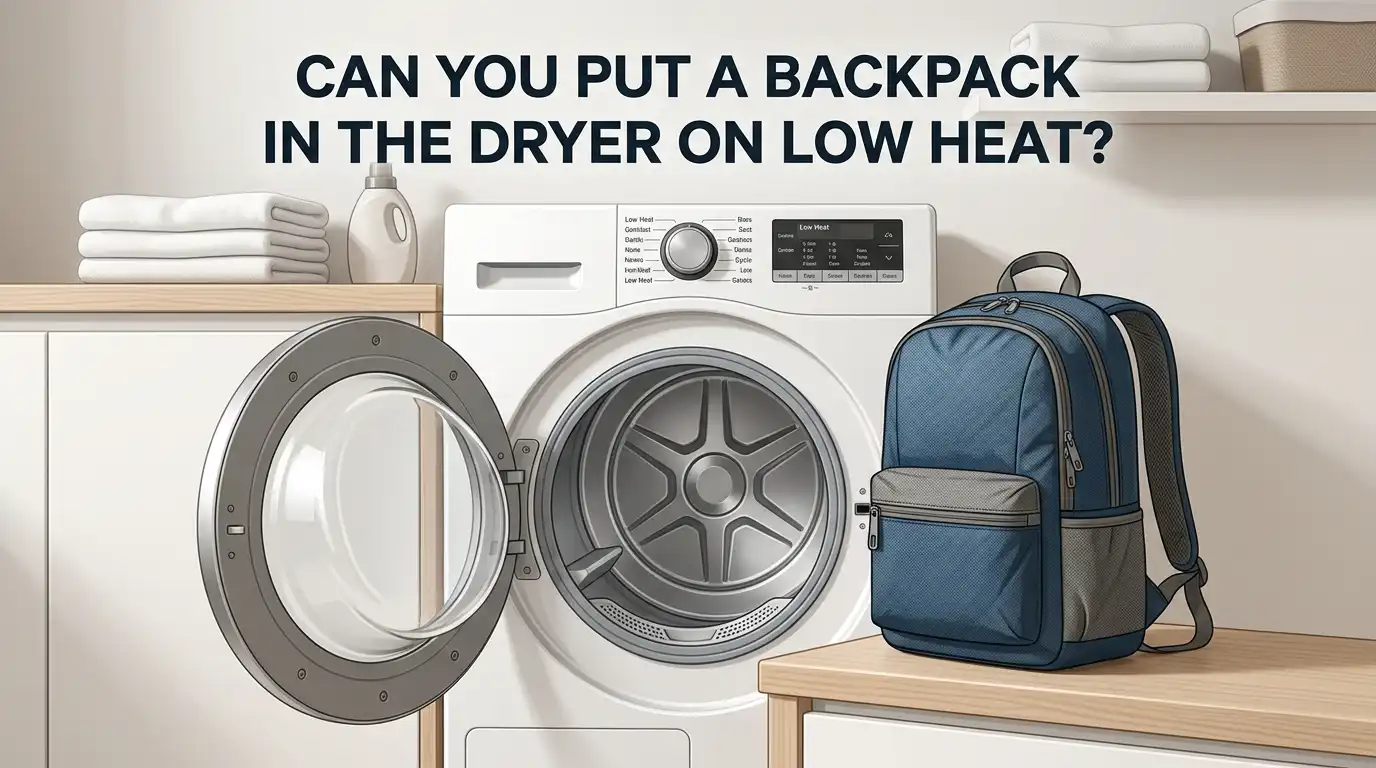
You just washed your backpack and now you are staring at it, soaking wet. The question pops into your head: can you put a backpack in the dryer on low heat?
It seems like the fastest solution, but you are not sure if it will destroy your bag. You are not alone. Thousands of people search for this exact answer every month.
The truth is, tossing a backpack into the dryer can go very wrong if you do not know what you are doing. Melted zippers, warped frames, peeling coatings, and shrunken fabric are all real risks. But in some cases, a low heat tumble dry can work if you follow the right steps.
In a Nutshell
- Always check the care label first. The manufacturer’s tag on your backpack will tell you if machine drying is safe. Most backpacks made from nylon or polyester carry a “do not tumble dry” warning because heat can damage waterproof coatings and weaken the fabric over time.
- Low heat does not mean no risk. Even on a low or delicate setting, dryers generate enough heat to melt plastic buckles, warp internal frames, and cause glue bonds to fail. The tumbling action itself can also bend zippers and snap clips.
- Cotton and canvas backpacks tolerate low heat better than synthetic ones. If your bag is made from natural fibers with no plastic hardware, a short low heat cycle may be acceptable. Always use a laundry bag or pillowcase for protection.
- Air drying is the safest method for almost every backpack. Hanging your bag upside down in a well ventilated area preserves fabric integrity, coatings, and hardware. It takes longer, but it eliminates the risk of heat damage entirely.
- Speed up air drying with towels and fans. You can stuff your backpack with dry towels to absorb internal moisture, then place it near a fan or open window. This cuts drying time significantly without any heat exposure.
- Some high end backpacks have specific drying instructions. Brands like Osprey, Deuter, and The North Face often publish care guides on their websites. Checking these resources can save you from an expensive mistake.
Why People Want to Use the Dryer for Backpacks
The main reason people reach for the dryer is simple: air drying takes a long time. A freshly washed backpack can take anywhere from 12 to 48 hours to dry completely depending on the material. Nylon and polyester bags dry faster at around 6 to 12 hours, while canvas bags can take a full day or more.
Nobody wants to wait that long, especially if you need your backpack for school or work the next morning. The dryer feels like an obvious shortcut. You toss it in, set it to low, and hope for the best.
The problem is that most backpack manufacturers specifically warn against tumble drying. Brands like Adidas, Whirlpool, and Maytag all state that the dryer can damage fabric and accessories. Understanding why is the first step to making a smart decision.
What Happens to a Backpack in the Dryer
The inside of a dryer is a harsh environment for a backpack. Even on a low heat setting, the temperature can reach 125°F to 135°F. That might sound mild, but it is enough to cause several types of damage over a full drying cycle.
Plastic buckles and clips can warp or melt. Many backpacks use polycarbonate or ABS plastic for their hardware, and these materials soften at relatively low temperatures. Zippers can also jam or bend from the tumbling action inside the drum.
Waterproof coatings are another major concern. Most modern backpacks use a DWR (Durable Water Repellent) coating or a polyurethane lining. Heat causes these coatings to peel, crack, or delaminate. Once the coating is gone, your backpack loses its ability to resist rain and moisture.
The fabric itself can also shrink or become stiff. Nylon begins to lose integrity around 175°F, and while low heat stays below that, repeated dryer cycles weaken the fibers over time.
How to Check if Your Backpack Is Dryer Safe
Before you make any decision, look at the care label inside your backpack. It is usually sewn into one of the interior pockets or along the back panel. The label uses standard laundry symbols to tell you what is safe.
A square with a circle inside means tumble drying is allowed. If that symbol has a single dot in the center, low heat is acceptable. Two dots mean medium heat, and three dots mean high heat. If the symbol has an X through it, do not use the dryer at all.
If your backpack has no care label, visit the manufacturer’s website. Many brands publish detailed care instructions for each product line. You can also contact their customer service team directly.
If you cannot find any care information, the safest choice is to avoid the dryer entirely. The risk of damage is simply not worth the time you save. Choose air drying instead.
Backpack Materials That Handle Low Heat
Not all backpack fabrics react the same way to heat. Understanding your bag’s material helps you make a safer decision.
Cotton and canvas are natural fibers that tolerate low heat reasonably well. A canvas tote bag or casual cotton backpack can usually survive a short, gentle dryer cycle. However, cotton does shrink, so keep the cycle brief.
Polyester is a synthetic fabric that resists heat better than nylon. It can withstand temperatures up to 300°F before melting, so low heat in a dryer is unlikely to destroy the fabric alone. The issue is more about the coatings and hardware attached to the bag.
Nylon is more sensitive to heat than polyester. It starts to degrade around 175°F, and the fabric can become brittle or discolored with repeated heat exposure.
Pros of using low heat for tolerant materials: faster drying, reduced mold risk, convenient for simple bags. Cons: still risks hardware damage, can void warranty, may weaken coatings.
Backpack Materials You Should Never Put in the Dryer
Some backpack materials and features make the dryer a guaranteed bad idea. Leather and faux leather will crack, peel, and dry out in a heated dryer. The natural oils in leather evaporate under heat, leaving the material stiff and brittle.
Backpacks with internal frames made of aluminum or plastic should stay out of the dryer. The tumbling can bend the frame, and the heat can warp plastic frame sheets. This ruins the structural support of the bag.
Bags with foam padding are also poor candidates. The closed cell foam used in shoulder straps and back panels can compress permanently or break down under heat. Once the padding loses its shape, it does not bounce back.
If your backpack has electronic components like a built in USB charging port or integrated LED lights, the dryer will almost certainly damage those parts. Keep these bags far away from any heat source.
Step by Step Guide to Drying a Backpack in the Dryer on Low Heat
If you have checked the care label and confirmed that your backpack can handle tumble drying, follow these steps carefully.
Step 1: Empty the backpack completely. Remove all items, detachable straps, key rings, and removable frames. Check every pocket and compartment.
Step 2: Close all zippers and fasten all buckles. This prevents them from snagging on the dryer drum or getting bent during the tumbling cycle.
Step 3: Place the backpack inside a large pillowcase or mesh laundry bag. This adds a protective layer that reduces direct contact with the hot drum.
Step 4: Set the dryer to the lowest heat setting available. Some dryers have a “delicate” or “air fluff” option that uses minimal heat. Choose that if possible.
Step 5: Run the dryer for 10 to 15 minutes only. Do not walk away. Check the backpack at the halfway point. Feel the hardware for excessive heat.
Step 6: Remove the backpack and let it finish drying in open air. This combination approach reduces heat exposure while still speeding up the process.
Pros: significantly faster than air drying alone, removes excess moisture quickly. Cons: still carries some risk, requires constant monitoring, not suitable for all bags.
The Best Way to Air Dry a Backpack
Air drying is the safest and most recommended method for drying any backpack. It requires more patience, but it preserves your bag’s materials, coatings, and structure.
Start by turning the backpack upside down and opening all pockets and compartments. This lets water drain out and allows air to circulate through every section. Hang it from its base or use a clothesline through the handle.
Choose a well ventilated spot with good airflow. An outdoor area with shade works best. Avoid direct sunlight for extended periods because UV rays can fade colors and weaken synthetic fabrics over time.
Flip and rotate the backpack every few hours to ensure all surfaces dry evenly. The back panel and bottom tend to hold the most moisture, so give these areas extra attention. Most backpacks will be fully dry within 12 to 24 hours using this method.
How to Speed Up Air Drying Without the Dryer
If you need your backpack dry quickly but want to skip the dryer, several tricks can help reduce drying time by half or more.
Stuff the backpack with dry towels or clean rags. The absorbent material pulls moisture from the inside of the bag. Replace the towels every 30 to 60 minutes until they come out mostly dry.
Point a fan directly at the backpack. A desk fan or box fan creates constant airflow that evaporates moisture much faster than still air. Position the fan about two feet away for the best effect.
Place the backpack near a dehumidifier if you have one. Dehumidifiers pull moisture from the air, which speeds up evaporation from wet surfaces in the room.
You can also hang the backpack in front of an open window on a breezy day. Natural wind does an excellent job of drying fabric quickly without any heat damage. Combining two or three of these methods together can get your backpack dry in as little as 4 to 6 hours.
Using a No Heat or Air Fluff Dryer Setting
Many modern dryers have a “no heat” or “air fluff” setting that tumbles clothes without adding any heat. This option is much safer for backpacks than even the lowest heat setting.
The air fluff cycle uses room temperature air to circulate around the items inside the drum. It removes moisture through airflow and tumbling action alone. This eliminates the risk of heat damage to coatings, plastic hardware, and foam padding.
The downside is that it takes longer than a heated cycle. You may need 30 to 45 minutes of air fluff to achieve the same results as 15 minutes on low heat. But the tradeoff is worth it for the added safety.
Pros: no heat damage risk, safe for most materials, still faster than air drying alone. Cons: takes longer, the tumbling action can still stress zippers and buckles, not all dryers have this option.
Common Mistakes People Make When Drying Backpacks
Many people damage their backpacks during the drying process because of a few common errors. Leaving the backpack in the dryer for a full cycle is the biggest mistake. Even on low heat, a 45 to 60 minute cycle is too long for most bags.
Another frequent error is forgetting to remove detachable parts. Metal clips, carabiner hooks, and removable hip belts can scratch the dryer drum and get caught on other components. Always strip the bag down before drying.
Drying a backpack that is still very wet puts extra strain on both the bag and the dryer. The weight of the water causes the bag to thump around heavily. Wring out or towel dry the backpack first to remove as much water as possible before any machine drying.
People also forget to leave zippers partially open during air drying. Closed compartments trap moisture inside and create a perfect environment for mold and mildew growth. Open everything up.
How to Handle Mold or Mildew After Improper Drying
If your backpack did not dry fast enough or was stored while still damp, mold and mildew can develop. You will notice a musty smell and may see dark spots on the fabric. Act quickly to prevent permanent staining.
Mix a solution of one part white vinegar to four parts water. Dip a clean cloth into the mixture and gently scrub the affected areas. Vinegar kills mold spores and neutralizes odors without damaging most fabrics.
For stubborn mold, make a paste with baking soda and a small amount of water. Apply it to the spots, let it sit for 15 minutes, then scrub with a soft brush. Rinse thoroughly with clean water afterward.
After cleaning, dry the backpack immediately and completely using the air drying methods described above. Do not store the bag until it is 100% dry. Adding a small sachet of silica gel inside the backpack during storage helps absorb any residual moisture.
When You Should Replace Instead of Dry
Sometimes a backpack has been through too much, and trying to salvage it causes more problems than it solves. If the fabric smells permanently musty even after thorough cleaning and drying, the mold may have penetrated deep into the fibers.
Backpacks with delaminating waterproof coatings that flake off in sticky sheets are past the point of repair. The coating cannot be reapplied at home in a way that restores original performance. A bag in this condition will soak through in any rain.
Broken zippers, cracked buckles, and torn seams from dryer damage often cost more to repair than the backpack is worth. If multiple components failed at once, a replacement is the smarter financial choice.
A good quality backpack should last 3 to 10 years with proper care. If yours has reached the end of its life, recycle it through a textile recycling program rather than sending it to a landfill.
Final Thoughts on Drying Your Backpack Safely
The answer to whether you can put a backpack in the dryer on low heat is: it depends on your specific backpack. Some simple bags with no plastic hardware and heat tolerant fabrics can handle a short, low heat cycle. Most backpacks, however, are better off air dried.
Your safest approach is always to check the care label, remove all detachable parts, and use the gentlest drying method available. If you must use a dryer, keep the cycle under 15 minutes, use a protective laundry bag, and monitor the process closely.
Air drying with towels and a fan gives you the best balance of speed and safety. It protects your investment and keeps your backpack performing well for years to come. A little extra patience during drying saves you from spending money on a replacement.
Frequently Asked Questions
Can I put a JanSport backpack in the dryer on low heat?
JanSport recommends spot cleaning and air drying their backpacks. They do not endorse machine drying. Most JanSport bags use polyester fabric with plastic zippers and buckles that can warp under heat. Stick to hanging it upside down in a ventilated area for the best results. If you are in a rush, use the towel stuffing and fan method described above.
How long does it take for a backpack to air dry completely?
Drying time depends on the material and environment. Nylon and polyester bags dry in about 6 to 12 hours with good airflow. Canvas and cotton bags can take 24 to 48 hours. Using fans, dry towels, and a dehumidifier can cut these times significantly. Always confirm the bag is fully dry before storing or using it.
Will putting a backpack in the dryer kill bed bugs?
Bed bugs die at temperatures above 120°F sustained for at least 30 minutes. A dryer on medium to high heat can achieve this. However, low heat may not be hot enough to reliably kill all bed bugs and their eggs. If bed bug removal is your goal, you may need a higher heat setting, which increases the risk of damaging the backpack. Consider professional pest treatment as an alternative.
Can I use a hair dryer to dry my backpack faster?
Yes, a hair dryer on a cool or low heat setting can help speed up drying for specific wet spots. Hold it at least 6 inches away from the fabric and keep it moving to avoid concentrating heat in one area. Do not use the high heat setting, as this can damage coatings and fabric just like a clothes dryer would.
What is the best way to dry a backpack overnight?
The fastest overnight method is a combination approach. Towel dry the exterior, stuff the inside with dry towels, and place the backpack in front of a fan with all pockets open. Replace the towels once after about an hour. This method can get most backpacks dry or nearly dry within 6 to 8 hours, which is enough for an overnight drying session.

Hi, I’m Luna Beck — the founder and voice behind Urban Pack Vault. I’m passionate about helping people find bags that perfectly match their lifestyle. From backpacks to travel luggage, I research, review, and recommend so you never have to second-guess your next purchase.