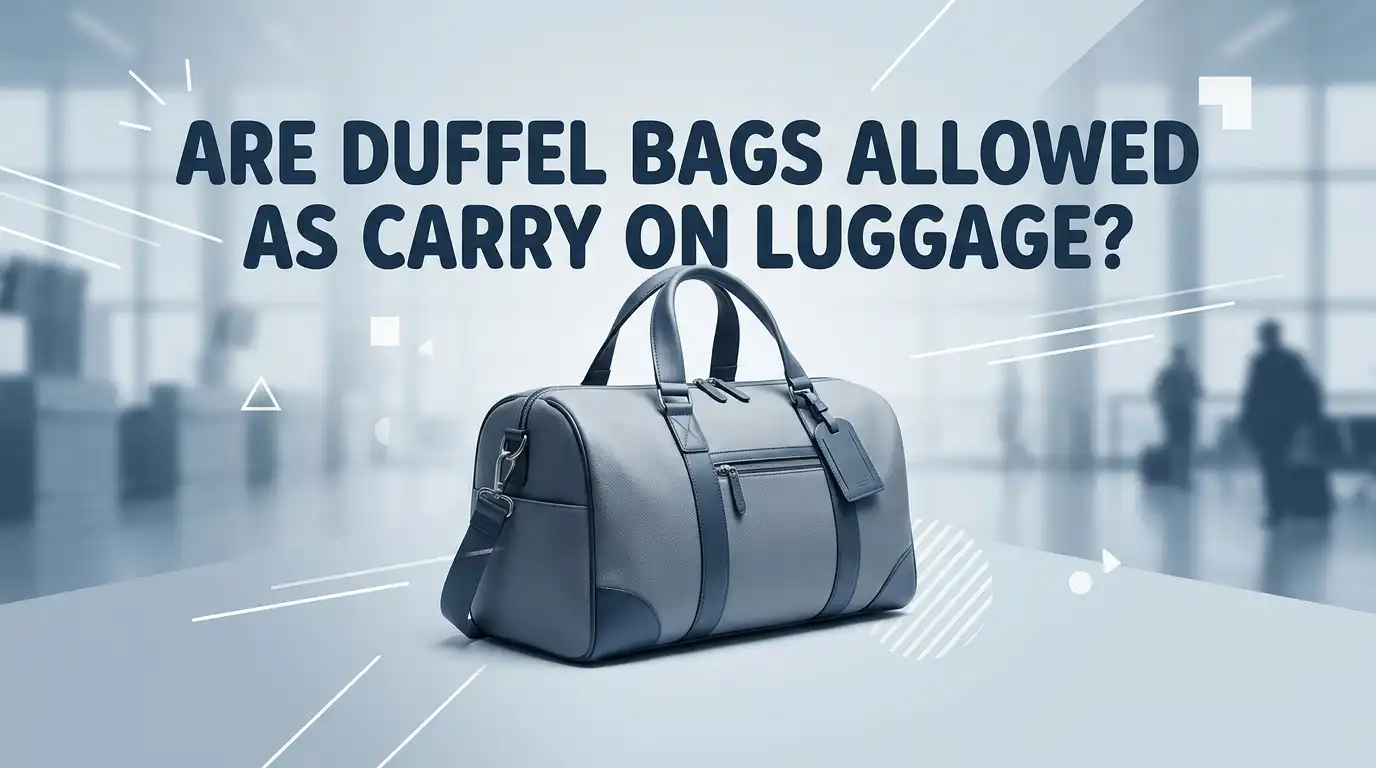
Are Duffel Bags Allowed as Carry On Luggage?
Most travelers ask this question right before a trip, and that makes sense. A duffel bag feels easy, light, and flexible. You can throw in clothes fast and head out the door.
But the airport is where the stress starts. Will the bag fit in the sizer? Will the airline count it as a carry on or a personal item? Will a gate agent stop you if it looks too full?
The good news is simple. In most cases, yes, a duffel bag is allowed as carry on luggage. The bag type is usually not the problem. The real issue is size, shape, and how full you pack it. Most airlines care less about whether your bag is a duffel and more about whether it fits under the seat or in the overhead bin.
Key Takeaways
- A duffel bag is usually allowed as carry on luggage if it fits your airline’s size limit. Most major airlines in the United States use a common carry on size close to 22 x 14 x 9 inches. Some airlines allow a bit more room, while some budget airlines are stricter. The bag shape matters less than the final packed size.
- Airlines make the final decision, not the bag label. A bag sold as a travel duffel or cabin bag can still fail at the airport if you overpack it. A soft bag can help because it can flex a little. Still, if it bulges too much, the agent may ask you to check it.
- A duffel can work as either a carry on or a personal item depending on its size. A small duffel may slide under the seat and count as a personal item. A larger duffel usually goes in the overhead bin and counts as your main cabin bag. This is where many travelers save money.
- Packing style changes everything. If you use packing cubes, roll your clothes, and leave some empty space, your duffel will hold its shape better. If you stuff shoes, jackets, and heavy extras into every corner, the bag may fail the sizer test even if the brand says it is carry on size.
- Security rules still apply inside a duffel bag. Liquids must follow airport liquid limits, and spare lithium batteries should stay in your cabin bag, not in checked luggage. The duffel itself is fine, but the items inside it can still cause delays.
- The safest plan is simple. Check your airline rules, measure your packed bag, keep heavy items low, and be ready with a backup plan. A good duffel works well for short trips, but only if you pack with the airline rules in mind.
The Short Answer to the Big Question
Yes, duffel bags are usually allowed as carry on luggage. Most airlines do not ban duffel bags as a bag type. They care about whether the bag fits the cabin size rule and whether it can go under the seat or in the overhead bin.
That means a small or medium duffel often works very well for flights. A soft duffel can even give you an advantage because it can flex into a bin more easily than a hard case. That flexibility helps, but it is not a free pass.
The problem starts when travelers overfill the bag. A duffel that looked fine at home can become too wide or too tall once packed. Then it may fail the airport sizer.
Pros: light weight, flexible shape, easy to carry, fast to pack.
Cons: easy to overstuff, less structure, can look bigger than it is.
So the real answer is this. A duffel is allowed if your packed duffel fits the airline rule.
Why Airlines Care About Size More Than Bag Style
Airlines want bags to fit in limited cabin space. That is why they focus on dimensions, not on brand names or bag labels. A duffel, backpack, tote, or small suitcase can all count as carry on luggage if each one fits the same size rule.
On many major airlines, the common carry on limit is about 22 x 14 x 9 inches. Some airlines also mention a total of 45 linear inches. Other carriers allow a larger bag, while some low cost airlines give you only a small under seat item unless you pay more.
This is why “duffel bag” tells you almost nothing by itself. A slim duffel may pass with ease. A round, bulky gym duffel may fail.
Pros of airline size rules: easy to understand, same rule for many bag types, less guesswork if you measure.
Cons: soft bags change shape, sizer checks can feel strict, regional planes may have less room.
Your best move is simple. Measure the bag after you pack it, not before.
How to Tell if Your Duffel Counts as a Carry On
Start with a tape measure. Measure length, width, and height at the fullest points of the packed bag. Do not press the bag flat to get a smaller number. The airport agent will judge the real shape, not the empty shape.
Next, compare your result with your airline’s carry on rule. If your bag is close to the limit, test it in a box shaped space at home. You can use books, a laundry basket, or a marked wall area to mimic the sizer.
Then lift the bag. If it is hard to carry, it may be packed too full. A heavy, swollen duffel often becomes a problem at boarding.
A smart check is to leave a little “give” in the fabric. If the sides still flex, you have a better chance.
Pros of measuring at home: less stress, fewer surprises, better packing choices.
Cons: you need accurate airline rules, and soft bags can shift shape during travel.
If the bag barely makes the cut, remove one layer of bulky items.
Carry On or Personal Item? Know the Difference
A duffel can be a carry on bag or a personal item. The answer depends on size. A personal item must fit under the seat in front of you. A carry on bag usually goes in the overhead bin.
This matters because many travelers pay for the wrong bag type. If your duffel is small enough to slide under the seat, it may count as a personal item on some airlines. That can save money, especially on budget carriers.
A larger duffel usually counts as your main cabin bag. On many full service airlines, that is fine because one carry on and one personal item are included. On stricter fares, you may get only a personal item unless you pay.
The under seat option works best for short trips. It also gives you faster access to your items during the flight.
Pros of using a duffel as a personal item: lower cost, faster boarding, easy access.
Cons: less packing space, tighter fit, more careful planning.
If you want to save money, choose a smaller duffel first, then pack for the seat space, not the overhead bin.
Common Airline Rules You Should Check Before You Fly
Many big airlines in the United States use a carry on size close to 22 x 14 x 9 inches. That includes several major carriers. Some airlines, like Southwest and Frontier, allow larger carry on dimensions, around 24 x 16 x 10 inches. Frontier also sets a personal item size around 14 x 18 x 8 inches.
International airlines can be different. British Airways uses cabin bag and small item rules in centimeters. easyJet gives every traveler one small under seat bag for free, and a larger cabin bag usually needs a paid add on or a higher fare.
Your fare type matters as much as the airline name. One ticket may include a carry on, while another may include only a personal item.
Pros of checking the rule first: no surprise fees, better bag choice, easier boarding.
Cons: every airline is different, and partner flights can change the rule.
Always check the exact rule for your route, fare, and airline before you pack.
Soft Duffel or Structured Duffel? Choose the Right One
A soft duffel is the most forgiving option for air travel. It bends, squeezes, and adapts to tight spaces. That makes it useful for overhead bins and under seat storage. If your bag is slightly under the limit, a soft shell can help.
A structured duffel keeps its shape better. That makes packing easier and keeps clothes neater. It can also look smaller and more organized. But if the shape is stiff, you lose some flexibility at the airport.
Think about your travel style. If you pack light and want a simple weekend bag, a soft duffel is often the best answer. If you want cleaner organization and less slouch, a structured duffel may suit you better.
Soft duffel pros: flexible, light, easier to compress.
Soft duffel cons: easy to overpack, can sag, less support.
Structured duffel pros: neater shape, easier packing, more support.
Structured duffel cons: less flexible, may not squeeze into tight spots.
For most flyers, a medium soft duffel is the safest carry on choice.
How to Pack a Duffel So It Still Fits the Size Rule
The biggest mistake is filling every inch of the bag. A duffel works best when it has shape control. Start with the heaviest items at the bottom. Then roll soft clothes and stack them in rows. Use packing cubes if you have them. They help the bag stay flat and balanced.
Put shoes along the sides or at the ends. Fill gaps with socks or small items. Keep the top layer soft, like shirts or a sweater, so the bag can compress if needed. Avoid stuffing a thick jacket into the main compartment at the last minute.
Leave some space near the zipper. That small gap can save you if the bag needs to flex in the sizer.
Pros of this method: better shape, faster unpacking, easier fit.
Cons: takes a few extra minutes, less room for impulse packing.
If you want a duffel to pass as carry on, pack for shape first and volume second.
What to Do if Your Duffel Looks Slightly Too Big
Do not panic. A soft duffel gives you options. First, remove bulky items that can be worn instead of packed. Put on your jacket, hoodie, or heavier shoes. That can reduce the bag size fast.
Next, move small essentials into your personal item if your airline allows one. A charger, book, snack, and toiletries can free up surprising space. If the bag still looks swollen, repack the middle area and flatten the ends. Duffels often bulge from poor item placement, not from true overload.
The key is to reduce bulk, not just weight. A lighter bag can still be too big if it is round and puffy.
Pros of fixing it at the gate: you may avoid checked bag fees, and you keep your bag with you.
Cons: it feels rushed, and you may need to reorganize in public.
A small reset often solves the problem in five minutes.
What You Can and Cannot Pack Inside a Carry On Duffel
A duffel bag follows the same security rules as any other cabin bag. The bag itself is fine. The issue is what you place inside it. Liquids, gels, and creams must usually stay in travel size containers of 3.4 ounces or less and fit in one clear quart size bag. Larger liquid items should go in checked luggage.
Spare lithium batteries and power banks should stay in your cabin bag, not in checked baggage. That is a smart safety rule and a common checkpoint issue. Sharp items, large tools, and other restricted items can also cause delays.
Pack your security items near the top so you can remove them fast if needed. That keeps the line moving and saves stress.
Pros of a well planned security setup: faster screening, less mess, easier access.
Cons: you need to think ahead, and small containers take planning.
A tidy duffel is not just easier to carry. It is easier to clear through security.
Overhead Bin or Under Seat? Pick the Better Spot
A larger duffel usually goes in the overhead bin. A small duffel may fit under the seat. Each option has a clear use case, and the right one depends on your bag size and trip length.
The overhead bin gives you more room. That makes it better for a fuller bag, longer trip, or extra layers. The under seat option gives you easy access to your items, which helps on short flights and busy boarding days. It can also reduce the risk of having your bag taken away at the gate on crowded flights.
Under seat travel works best if you pack with discipline. You need a flatter bag and fewer bulky items.
Overhead pros: more space, easier for larger duffels, better for several days of clothing.
Overhead cons: slower access, possible gate check on full flights.
Under seat pros: quick access, less risk of separation, easier exit.
Under seat cons: smaller packing limit, less leg room.
Choose the spot before you pack, not after.
When a Duffel Bag Is Better Than a Rolling Carry On
A duffel bag shines on short trips, flexible travel plans, and light packing. It is easy to carry in a car, on stairs, on trains, and through tight spaces. It also weighs less than many wheeled bags, which gives you more room for your actual items.
A duffel can also work better on regional flights where space is limited. Soft sides can fit where a hard case may not. If you pack only a few outfits and keep your load simple, a duffel often feels faster and less clunky.
Still, wheels have value. If you carry heavy gear, electronics, or work items, pulling a rolling bag may save your shoulders.
The best bag is the one that matches the trip.
Duffel pros: lighter, flexible, simple, easy in tight spaces.
Duffel cons: harder on shoulders, less structure, easier to overpack.
For weekend travel, a duffel often wins with ease.
When a Duffel Bag Is a Bad Carry On Choice
A duffel is not always the best answer. If you pack heavy items, carry formal clothing, or need strong organization, a rolling carry on may work better. Duffels can slump, wrinkle clothes, and hide items at the bottom. That creates frustration during security checks and on the plane.
A duffel is also a weak choice if you have back or shoulder pain. Even a well packed bag feels heavy after a long walk through a large airport. If your trip includes long layovers, public transit, or work gear, comfort matters.
Another bad fit is a round gym duffel with no shape control. Those bags often look small empty but become huge once filled.
A duffel is great for the right trip, but wrong for the wrong load.
Pros of skipping the duffel: better support, cleaner organization, less body strain.
Cons: more weight from the bag itself, less flexibility, more rigid fit.
Choose function over habit.
A Smart Pre Flight Checklist That Prevents Problems
The easiest fix is a short routine before travel. First, check your airline and fare rules. Second, measure your packed duffel. Third, test whether it fits your planned storage spot, either overhead or under seat. Fourth, remove bulky extras you do not truly need.
Fifth, place liquids in a clear bag and keep electronics easy to reach. Sixth, keep chargers and spare batteries in your cabin bag. Seventh, leave a little empty space so the bag can flex if needed. Last, have a backup plan. That might mean a foldable tote inside your duffel or one easy outfit worn on the plane.
This routine takes ten minutes and can save a lot of airport stress.
Pros of a checklist: fewer mistakes, faster packing, more confidence.
Cons: you need a little discipline before travel.
Good travel is rarely about luck. It is about a few small checks done at the right time.
Final Verdict
So, are duffel bags allowed as carry on luggage? Yes, in most cases they are. The bag itself is usually fine. The real test is whether your packed duffel fits the size rules of your airline and your fare.
That is why the smartest travelers do three simple things. They check the airline policy, measure the packed bag, and avoid overstuffing. If the duffel stays within the limit, it can be one of the easiest and most useful cabin bags you can bring.
A small duffel can even work as a personal item on some flights. A medium duffel can work well in the overhead bin for short trips. The trick is simple. Pack with shape control, not just with extra space in mind.
If you want fewer gate surprises and smoother boarding, a well packed duffel can be a very smart travel choice.
FAQs
Can a duffel bag count as a personal item?
Yes, it can if it is small enough to fit under the seat in front of you. The key is the airline’s personal item size limit. A compact duffel often works well for this. A full size travel duffel usually does not.
Are soft duffel bags better for flights than hard luggage?
For many short trips, yes. Soft duffels are lighter and can flex into small spaces. That helps in overhead bins and under seats. Still, they are easier to overpack, so careful packing matters more than with hard luggage.
Will airport staff measure my duffel bag?
They might, especially on full flights or stricter airlines. If your bag looks oversized, a gate agent may ask you to place it in a sizer. That is why it is smart to measure your bag at home after packing, not while it is empty.
Can I bring liquids in a carry on duffel bag?
Yes, but regular airport liquid rules still apply. Keep liquids in small travel size containers and place them in a clear quart size bag. If the containers are larger than the limit, move them to checked luggage to avoid trouble at security.
What is the best duffel size for carry on travel?
A medium duffel that stays near common cabin limits is the safest choice. Many travelers do well with a bag that fits around 22 x 14 x 9 inches when packed. A smaller bag is even safer if you want to use it as a personal item on some flights.

Hi, I’m Luna Beck — the founder and voice behind Urban Pack Vault. I’m passionate about helping people find bags that perfectly match their lifestyle. From backpacks to travel luggage, I research, review, and recommend so you never have to second-guess your next purchase.