How to Keep Backpack Straps from Slipping Off Shoulders?
You are walking to class, heading to work, or hiking your favorite trail. Every few minutes, you feel that familiar slide. One or both backpack straps slowly creep off your shoulders. You shrug, adjust, and repeat. It is frustrating, uncomfortable, and can even cause back and neck pain over time.
You are not alone. Millions of people deal with slipping backpack straps every single day. The problem might seem small, but it affects your posture, your energy, and your overall comfort.
The good news? This problem has real, practical solutions. Some take less than a minute to apply. Others require a small investment in accessories or a change in how you wear your pack.
In a Nutshell
- Proper strap adjustment is the number one fix. Most slipping happens because the shoulder straps are too loose or unevenly tightened. A quick pull on the strap ends can solve the issue in seconds.
- Your backpack might be the wrong size for your body. A pack that is too large will sag no matter how tight you pull the straps. Choosing a pack based on your torso length or frame size makes a big difference.
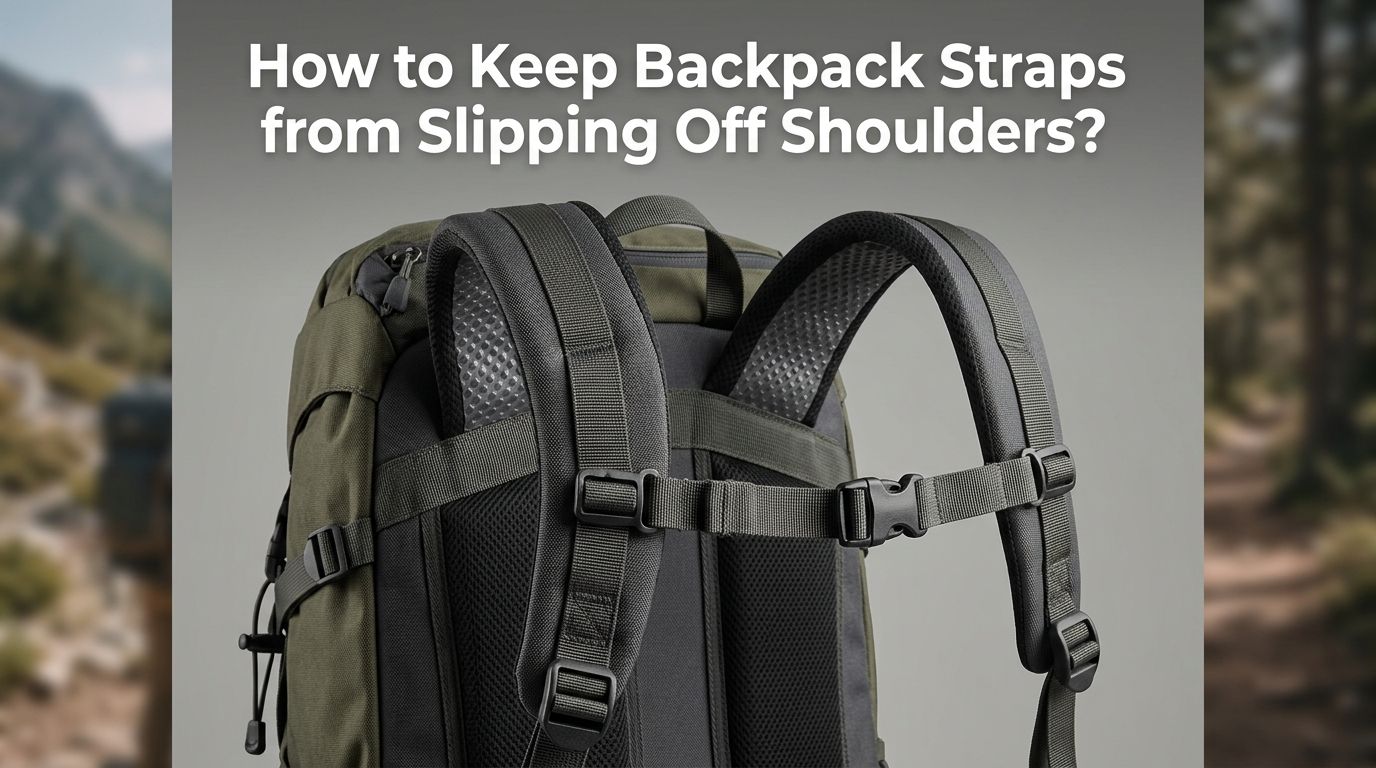
- A sternum strap can eliminate slipping almost completely. This small chest strap connects both shoulder straps and holds them firmly in place. Many outdoor packs include one, but you can add one to any backpack.
- Strap material and buckle quality play a big role. Smooth nylon straps and cheap plastic buckles lose grip over time. Adding rubber grip pads, replacing buckles, or using elastic strap keepers are all effective fixes.
- Overloading your pack causes strap slippage. A heavy backpack pulls the straps apart and down. Keep your loaded pack under 10 to 15 percent of your body weight for the best fit and comfort.
- Body shape and posture matter more than most people realize. Sloped or narrow shoulders cause straps to slide off more easily. Simple fixes like padded strap covers and postural awareness can help a lot.
How to Tell Why Your Backpack Straps Keep Slipping Off
The first step is to figure out what is causing the problem. Several common factors lead to strap slippage, and you may be dealing with more than one at a time.
Loose straps are the most obvious cause. If you have not pulled the adjustment buckles tight enough, the pack will hang low and the straps will slide outward. An oversized pack is another frequent culprit. A backpack that is too big for your torso creates gaps between the straps and your shoulders.
Worn out buckles also fail to grip the strap material. Over time, plastic buckles become smooth and lose their hold. Finally, your body shape plays a role. People with sloped, narrow, or uneven shoulders experience more slippage than others.
Check each of these factors before you try a fix. This way, you address the root cause instead of applying a temporary patch.
How to Tighten Backpack Shoulder Straps the Right Way
This sounds simple, but many people do it wrong. Proper tightening is the fastest fix for slipping straps.
Put the loaded backpack on your back. Grab the loose ends of the shoulder straps that hang below the adjustment buckles near your armpits. Pull both straps firmly and evenly until the pack sits snug against your back.
The bottom of the backpack should rest between your shoulder blades and the top of your hips. You should be able to slide one hand between each strap and your armpit. If you cannot, the straps are too tight. If there is a large gap, they are too loose.
Pros: Free, instant, and requires no extra gear. Cons: Does not work if the buckles are worn or the pack is the wrong size.
How to Use a Sternum Strap to Prevent Shoulder Strap Slippage
A sternum strap is a small horizontal strap that connects the two shoulder straps across your chest. It is one of the most effective tools for stopping slippage.
Most hiking and outdoor backpacks come with a built in sternum strap. Many school and commuter backpacks do not. If your pack lacks one, you can buy a clip on sternum strap that attaches to both shoulder straps with simple buckle clips.
Position the sternum strap about 1 inch below your collarbone. Clip it together and tighten until it feels snug but does not restrict your breathing. This holds the shoulder straps inward and prevents them from sliding off.
Pros: Very effective, affordable, and easy to add to most backpacks. Cons: Some people find a chest strap uncomfortable or restrictive during heavy breathing or exercise.
How to Fix Buckles That Will Not Hold Your Backpack Straps
Sometimes the problem is not the strap itself but the plastic buckle that adjusts the strap length. Cheap or worn buckles lose their grip and allow the strap to slowly loosen as you walk.
One quick fix is to tie a simple knot with the free end of the strap right below the buckle. This creates a physical block that prevents the strap from sliding through. Another option is to wrap duct tape or electrical tape several times around both sides of the strap just below the buckle.
You can also place a small rubber band or hair tie around the buckle. This adds friction and stops the strap from creeping through. For a more permanent fix, replace the buckles entirely with higher quality versions from an outdoor gear store.
Pros: Quick fixes are free and take seconds. Buckle replacement solves the problem long term. Cons: Tape and rubber bands need regular replacement. New buckles require finding the right size and style.
How to Choose the Right Backpack Size to Stop Strap Slipping
A backpack that does not fit your body will always cause strap problems. Size matters more than most people think.
For outdoor and hiking packs, measure your torso length from the base of your neck (the C7 vertebra) to the point on your spine that is level with the top of your hip bones. A torso shorter than 16 inches usually needs an extra small pack. A torso longer than 20 inches usually needs a large pack.
For school and everyday backpacks, hold the pack against your chest. The bag should fit between your collarbone and the top of your hips. If the pack hangs below your hips, it is too big.
Pros: The right size pack distributes weight correctly and keeps straps in place naturally. Cons: You may need to buy a new backpack, which costs money.
How to Reduce Backpack Weight to Keep Straps in Place
An overloaded backpack pulls straps off your shoulders. The heavier the pack, the more downward force acts on the straps, causing them to spread apart and slide.
Children should carry no more than 10 percent of their body weight. A 75 pound child should carry a pack under 7.5 pounds. Adults should aim for 10 percent and treat 15 percent as the maximum safe weight.
Go through your pack and remove anything you do not truly need for that day. Distribute the remaining weight wisely. Place heavier items at the bottom and closest to your back. This keeps the center of gravity stable and reduces the outward pull on the straps.
Pros: Lighter packs are more comfortable and reduce injury risk. Cons: Sometimes you genuinely need to carry a lot of gear, making weight reduction difficult.
How to Add Grip Pads to Backpack Straps for Better Traction
Smooth nylon straps slide easily on most clothing. Adding grip material to the underside of your straps creates friction that holds them in place.
Silicone grip strips are a popular option. These are thin, flexible strips that stick to the inside of your strap and grip your clothing or skin. They are affordable, lightweight, and easy to apply.
You can also use non slip shelf liner cut to fit your strap width. Attach it with fabric glue or double sided tape. Another option is to sew a strip of rubber or textured fabric directly onto the strap.
Pros: Simple to apply, inexpensive, and does not change the look of your backpack. Cons: Adhesive strips may peel off over time and need replacement. Some options may feel slightly rough on bare skin.
How to Use Elastic Strap Keepers to Lock Straps in Position
Elastic strap keepers are small loops of elastic that wrap around your backpack strap and the adjustment buckle. They hold the strap at the exact length you set it to.
These keepers prevent the strap from loosening during movement. You pull the strap to the desired length, then slide the elastic keeper over the buckle area to lock it in place.
You can buy pre made elastic strap keepers online. You can also make your own from a piece of 1 inch elastic band and a few stitches on a sewing machine. DIY versions work just as well as store bought ones.
Pros: Lightweight, reusable, and very effective at preventing buckle slippage. Cons: They make quick strap adjustment harder since you must remove the keeper first.
How to Adjust Load Lifter Straps and Hip Belts for a Secure Fit
If you use a hiking or travel backpack, you probably have load lifter straps and a hip belt in addition to shoulder straps. Using all of these together prevents slippage far better than shoulder straps alone.
Start with the hip belt. Buckle it so it sits right on top of your hip bones (the iliac crest). Tighten it until it is snug. The hip belt should carry the majority of the pack’s weight.
Next, adjust the load lifter straps. These small straps sit above your collarbone and connect the top of the shoulder straps to the top of the pack. Pull them until they form a 30 to 45 degree angle. This brings the top of the pack closer to your upper back and takes pressure off your shoulders.
Pros: Creates the most secure and comfortable fit possible. Cons: Only works on packs with these features. School backpacks rarely include load lifters or hip belts.
How to Fix Slipping Straps If You Have Sloped or Narrow Shoulders
Some people deal with chronic strap slippage because of their shoulder shape. Sloped shoulders angle downward more steeply than average. Narrow shoulders bring the strap attachment points closer together. Both make it easier for straps to slide off.
A sternum strap is the single best fix for this body type. It physically prevents the straps from moving apart. Padded strap covers also help because they add bulk and friction to the strap where it sits on your shoulder.
You can also look for backpacks with curved or S shaped shoulder straps. These follow the natural contour of the body more closely and stay in place better on sloped shoulders. Some packs offer women specific strap designs that are narrower and more curved for smaller frames.
Pros: Targeted solutions that address the root cause. Cons: You may need to try multiple fixes to find what works for your specific body shape.
How to Maintain Your Backpack Straps So They Stay Grippy Over Time
Even the best straps lose their grip if you do not take care of them. Regular maintenance keeps the strap material and buckles working properly for years.
Clean your straps with mild soap and water every few weeks. Dirt and body oils build up on the strap surface and make it slippery. Let the straps air dry completely before using the pack again.
Inspect the buckles every month for signs of wear. Smooth, cracked, or broken buckles should be replaced right away. Check the stitching where the straps attach to the pack body. Loose threads or fraying can cause the strap to shift position and slip.
Pros: Extends the life of your backpack and prevents problems before they start. Cons: Requires a few minutes of effort on a regular basis.
How to Wear Your Backpack Correctly to Prevent Strap Problems
The way you put on and carry your backpack affects strap stability more than you might expect.
Always use both shoulder straps. Wearing your pack on one shoulder doubles the weight on that side and guarantees the strap will slip. Swing the pack onto both shoulders every time you put it on.
Keep the backpack high on your back. The bottom of the pack should never touch your backside. If it does, your straps are too loose or the pack is too big. Stand up straight and avoid hunching forward. Good posture keeps the straps seated on the top of your shoulders where they belong.
Walk with a natural stride. Exaggerated arm swings or leaning to one side can shift the pack and cause strap movement.
Pros: Costs nothing and improves comfort immediately. Cons: Requires conscious effort until proper wearing habits become automatic.
How to Pick the Best Backpack Strap Features Before You Buy
If you are shopping for a new backpack, pay close attention to strap design and features. The right strap setup can prevent slipping from day one.
Look for padded, contoured shoulder straps that follow the curve of your body. Wide straps distribute pressure better and stay in place more easily than thin ones. Check that the buckles feel strong and textured rather than smooth and flimsy.
A built in sternum strap is a must have feature. An adjustable hip belt is a bonus, especially for heavier loads. Some packs also include load lifter straps at the top, which give you extra control over fit and weight distribution.
Test the pack in the store with weight inside it. Walk around for a few minutes. If the straps slip during your test, move on to a different pack.
Pros: Prevents strap issues before they ever start. Cons: Packs with premium strap features sometimes cost more.
Frequently Asked Questions
How do I stop my backpack straps from loosening while I walk?
Tighten the shoulder straps so the pack sits snug against your back. If the buckles keep letting the straps slide through, add a rubber band or hair tie around each buckle for extra friction. Elastic strap keepers also work well. A sternum strap across your chest will hold both shoulder straps firmly in position during movement.
Why does only one backpack strap keep sliding off my shoulder?
This usually happens because of uneven weight distribution inside the pack or a slight difference in shoulder height or slope. Pack heavier items in the center of the bag. Tighten the slipping strap slightly more than the other. A sternum strap will keep both straps from moving independently.
Can I add a sternum strap to any backpack?
Yes. Clip on sternum straps are available that attach to almost any pair of shoulder straps. They use small plastic clips or buckles that slide onto the strap webbing. No sewing or permanent modification is needed.
What is the best DIY fix for backpack straps that keep slipping?
Wrapping a rubber band or hair tie around the buckle adds instant friction and stops strap creep. You can also tie a small knot in the free end of the strap right below each buckle. For a longer lasting fix, make elastic strap keepers from a short piece of elastic band and a few stitches.
How tight should backpack shoulder straps be?
The pack should sit snug against your back with very little gap. You should be able to fit one flat hand between each strap and your armpit. If the straps dig into your shoulders or restrict arm movement, they are too tight. If the pack sags below your hips, they are too loose.
Does backpack weight affect strap slippage?
Yes. A heavy pack creates more downward force on the straps, pulling them apart and off your shoulders. Keep your loaded pack under 10 percent of your body weight whenever possible. The maximum safe limit for adults is 15 percent of body weight.

Hi, I’m Luna Beck — the founder and voice behind Urban Pack Vault. I’m passionate about helping people find bags that perfectly match their lifestyle. From backpacks to travel luggage, I research, review, and recommend so you never have to second-guess your next purchase.