How To Lock A Backpack Without A Built-In TSA Lock?
Your backpack carries your laptop, passport, cash, and gear. But it did not come with a built-in TSA lock. So now you worry. Can someone slip a hand inside while you ride a train?
Can a thief unzip it in a crowded market? The good news is simple. You do not need a fancy backpack to stay safe. You can lock almost any bag with cheap tools and a few smart tricks.
This guide shows you many ways to lock a backpack without a built-in TSA lock. Each method is easy. Each one uses items you can find anywhere.
Key Takeaways
- A small padlock through the zipper pulls is the fastest fix. You loop the lock through both zipper holes and lock them together. This stops casual theft right away.
- TSA approved padlocks let airport staff inspect your bag without cutting your lock. You can buy these as separate locks. Your backpack does not need a built-in version.
- Cable locks add huge value. They lock your zippers and also tie your bag to a fixed object like a chair, bed frame, or luggage rack.
- Carabiners and zip ties work as low cost backups. They will not stop a pro, but they slow down pickpockets and act as a strong visual deterrent.
- Wire mesh protectors offer the highest security. They wrap the whole bag in steel and lock it to a fixed point, which is great for hostels and shared spaces.
- Layering two methods beats using just one. A lock plus a cable, or a lock plus a mesh cover, gives you real peace of mind on any trip.
Why You May Want To Lock A Backpack Without A Built-In Lock
Many backpacks skip the built-in lock to save weight and cost. That is normal. But you still face real risks. Pickpockets target open zippers in busy places. Train stations, buses, festivals, and tourist spots are hot zones. A thief needs only a few seconds to open an unlocked bag.
You also leave your bag alone sometimes. You drop it at a hostel. You store it on a bus rack. You stash it under a café table.
An unlocked bag is an easy target in all these moments. Adding your own lock fixes this gap. It gives you control. It also gives you calm. You stop checking your bag every minute and start enjoying your trip instead.
Use A Small Padlock Through The Zipper Pulls
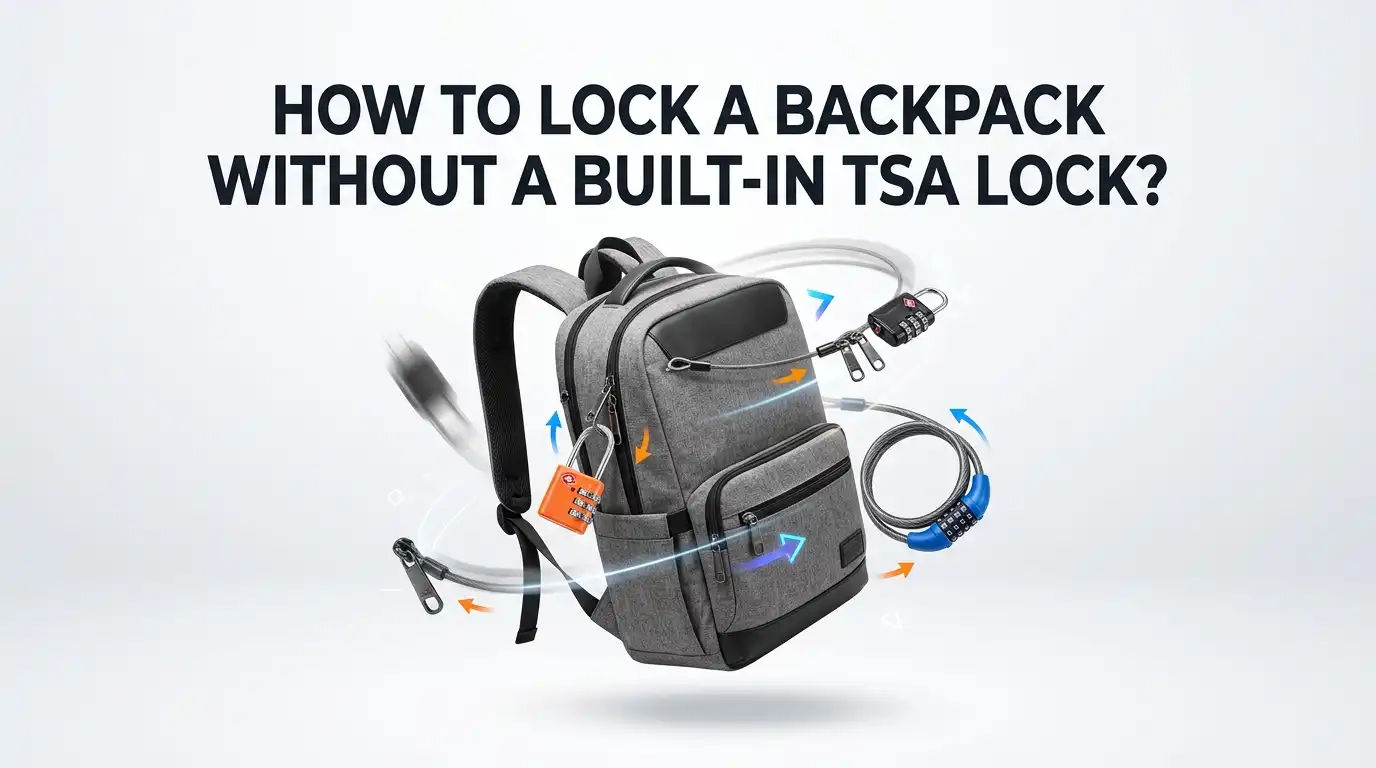
This is the simplest method of all. Most backpacks have two zipper pulls on each main compartment. You bring the two pulls together. Then you push a small padlock through both holes. You snap it shut. Now both zippers are joined and cannot slide apart.
Pick a small lock with a thin shackle. Many zipper holes are tiny, so a fat shackle will not fit. Test the fit before your trip, not at the airport. A combination padlock saves you from carrying a key. A keyed lock is a bit stronger but you must guard the key.
Pros: It is cheap, light, and very fast to use. It works on almost any dual zipper bag.
Cons: It only locks zippers that have pull holes. A thief with a pen can still force cheap zippers open. It does not stop someone from walking off with the whole bag.
Choose A TSA Approved Padlock For Air Travel
If you fly, this method matters a lot. TSA officers can open and inspect any checked bag in the United States. If your lock is not TSA approved, they may cut it off. A TSA approved padlock has a special keyhole that airport staff open with a master key.
You buy these locks on their own. Your backpack does not need a built-in TSA lock for this to work. Look for the small red Travel Sentry diamond logo on the lock. That logo means TSA can open it without damage. Then they relock it and move on.
Use it just like a normal padlock. Loop it through your zipper pulls and lock it.
Pros: It protects your bag and survives airport checks intact. You keep your lock instead of losing it to scissors.
Cons: The master key system means it is not truly thief proof. It costs a bit more than a basic padlock.
Secure Your Bag With A Cable Lock
A cable lock is one of the best tools you can carry. It does two jobs at once. First, you thread the cable through your zipper pulls to lock them. Second, you wrap the cable around a fixed object and lock the ends together. This stops grab and run theft.
Picture a long train ride. You loop the cable through your bag and around your seat leg. Now nobody can lift your bag while you sleep. Many cable locks retract into a small case, so they stay light and tidy in your pocket.
Choose a cable that is long enough to reach a chair or bed frame. A steel cable resists quick cuts better than a thin wire.
Pros: It locks zippers and tethers your bag to a fixed point. It is flexible and works in many spots.
Cons: A determined thief with cutters can slice a thin cable. It adds a little weight and bulk to your kit.
Lock Zippers Together With Carabiners
A carabiner is a small metal clip. Travelers love it because it is cheap and quick. You clip it through both zipper pulls to hold them shut. The best type is a screw gate carabiner. You twist the gate closed so it does not pop open by accident.
This method is more of a deterrent than a true lock. A pickpocket sees the clip, gets annoyed, and moves to an easier target. That delay alone protects you in a crowd. A thief wants speed, and a carabiner slows them down.
Keep a few small ones in your bag. They double as gear clips for water bottles or keys.
Pros: It is very cheap, light, and reusable. It works on any zipper with a pull hole.
Cons: It offers low security against a focused thief. It will not pass as a real lock at the airport, and it does not tie your bag down.
Try Zip Ties For A One Time Tamper Seal
Zip ties are plastic strips that lock when you pull them tight. They cost almost nothing and weigh nothing. You thread one through both zipper pulls and pull it snug. Now the zippers cannot open unless someone cuts the tie.
The smart part is the tamper signal. If you find a cut zip tie, you know someone tried to get into your bag. That warning is useful for checked luggage or stored gear. Pack a small pair of nail clippers or scissors to cut the tie when you need access.
Use colored ties so a swap is easy to spot.
Pros: It is super cheap and shows clear signs of tampering. It is great for one time long trips.
Cons: You destroy it each time you open the bag. It gives no protection against a thief who carries a blade or clippers.
Wrap Your Bag In A Wire Mesh Protector
This is the heavy duty option. A wire mesh protector is a net made of stainless steel. You slide your whole backpack inside the mesh. Then you pull the wire drawstring tight and lock it to a fixed object with the built-in cable.
The mesh covers the entire bag. A thief cannot cut the fabric, open the zippers, or carry the bag away. This is perfect for hostels, dorms, and shared rooms where you leave your bag for hours. It is also great for storing gear on a motorbike or in a campsite.
Match the mesh size to your bag volume so it fits well.
Pros: It gives the highest level of security for a parked bag. It blocks slash, unzip, and grab attacks all at once.
Cons: It is the bulkiest and heaviest option. It is slow to put on and take off, so it suits storage more than active use.
Add Lockable Zipper Pulls To Your Backpack
Some zipper pulls have no hole big enough for a lock. You can fix this with replacement zipper pulls. These small clips snap onto your zipper sliders and give you a proper hole for a padlock or carabiner. You remove the old cord pull and add the new one.
This upgrade turns a basic bag into a lockable one. You do this once at home, and your bag stays ready for every trip after. Some pulls even lock together on their own with a sliding tab, so you may not need a separate lock at all.
Pick pulls that match your zipper size for a snug fit.
Pros: It makes any stubborn zipper lockable. It is a permanent and low cost upgrade.
Cons: It takes a little setup time. Cheap clips may break under heavy daily use.
Use A Combination Lock To Skip Carrying Keys
Keys are easy to lose on the road. A combination lock solves that problem. You set a three or four digit code, and you open the lock with that code every time. No key means nothing to drop in a hostel or leave in a hotel.
Set a code you can recall but others cannot guess. Avoid simple codes like 0000 or 1234. Use the small dial to spin in your numbers, then pull the lock open. You can reset the code on most models whenever you wish.
Many TSA approved locks are also combination locks, so you get both perks together.
Pros: You never carry or lose a key. It works well for shared or family bags since you can give the code to a trusted person.
Cons: If you forget the code, you may need to cut the lock. A patient thief can sometimes guess weak codes.
Tether Your Backpack To A Fixed Object
Locking the zippers is only half the job. A thief can still grab the whole bag and run. Tethering stops this. You attach your bag to something solid that nobody can move. A bed frame, a heavy chair, a luggage rack, or a pipe all work well.
Use a cable lock or a chain for this task. Loop it through a strong strap on your bag, not a thin loop that snaps. In a café, wrap the cable around your leg or chair. On a bus, link it to the seat frame above you.
This method shines when you must leave your bag near you but cannot watch it.
Pros: It blocks grab and run theft, which is the most common kind. It buys you time and peace of mind.
Cons: You need a fixed anchor point nearby. Cutters can defeat a thin cable, so use a strong one.
Lock The Inside Pockets, Not Just The Main Zipper
Many people lock the main compartment and forget the rest. Thieves know this and go for side pockets. Front pockets often hold your phone, wallet, or passport. So you must lock those too.
Use a small carabiner or a mini padlock on each outer zipper. Move your most valuable items into the deepest, hardest to reach pocket. Then lock the layers in front of it. A thief now faces two or three locks instead of one, which is enough to make them quit.
Keep cheap items in the easy pockets as a decoy.
Pros: It closes the gaps most people miss. It protects small high value items like cards and keys.
Cons: It means carrying more small locks or clips. More locks mean more time to open your own bag.
Combine Methods For Maximum Protection
No single method is perfect. The smart move is to layer two or three together. A padlock locks your zippers. A cable ties your bag to a chair. A mesh cover guards it overnight. Each layer fixes the weak spot of the others.
Think about your trip and stack the right tools. For a day in a busy city, use carabiners plus a cable lock. For a hostel stay, use a padlock plus a wire mesh protector. For a flight, use a TSA approved combination lock.
Layering raises the effort a thief must spend. Most thieves want easy targets, so they skip well guarded bags.
Pros: It gives the strongest, most flexible defense. You adapt your setup to each place you visit.
Cons: It costs more and adds weight. It takes longer to lock and unlock your bag each time.
Smart Habits That Make Any Lock Work Better
A lock only helps if you use it well. Good habits double the value of any method. Always lock your bag before you set it down, not after. A thief strikes in the seconds you look away.
Wear your backpack on your front in dense crowds. A bag on your back is out of sight and easy to open. Keep your passport and main cash in a hidden pouch under your clothes, not in the bag at all.
Check your locks each morning so you spot any tampering early. Stay alert near tourist spots, where thieves work in teams. Your awareness is the best lock you own.
Frequently Asked Questions
Can I lock any backpack even if it has no TSA lock built in?
Yes, you can. Most backpacks have dual zipper pulls, and that is all you need. You add a small padlock, a cable lock, or a carabiner through the pull holes. If your bag has no pull holes, you can fit replacement zipper pulls at home. This makes almost any bag lockable without a built-in feature.
Will airport security cut off my lock if it is not built in?
They might, if the lock is not TSA approved. TSA staff can open any checked bag for inspection. A separate TSA approved padlock has a master keyhole they can open without damage. So buy a standalone TSA approved lock. It does the same job as a built-in one and survives airport checks.
Are carabiners or zip ties strong enough to stop a thief?
They stop casual and quick theft, not a determined pro. Both act mainly as deterrents and delays. A pickpocket wants a fast target, so a clipped or tied zipper makes them move on. For higher security, pair these with a cable lock or a wire mesh protector. Layering gives you far better protection than one tool alone.
What is the best method for a hostel or shared room?
A wire mesh protector plus a padlock is the top choice. The mesh wraps your whole bag in steel and locks it to a fixed point. This blocks cutting, unzipping, and grabbing all at once. It suits long stays where you leave your bag for hours. For short stops, a cable lock tied to a bed frame works well too.
How do I lock my bag on a train or bus?
Use a cable lock for this. Thread it through your zipper pulls first. Then loop the cable around the seat leg, the luggage rack, or your own leg. Lock the ends together. Now nobody can open your zippers or lift your bag while you rest. This is the safest setup for long rides where you may fall asleep.
Should I use a key lock or a combination lock?
A combination lock is easier for most travelers. You never carry or lose a key on the road. Just set a code you can recall but others cannot guess. A key lock is slightly stronger but you must guard the key well. Many TSA approved locks come as combination models, so you get convenience and airport access together.

Hi, I’m Luna Beck — the founder and voice behind Urban Pack Vault. I’m passionate about helping people find bags that perfectly match their lifestyle. From backpacks to travel luggage, I research, review, and recommend so you never have to second-guess your next purchase.