How to Store a Backpack to Prevent Mold and Mildew Growth?
A backpack can last for years if you store it the right way. A backpack can also turn musty, stained, and weak if you put it away with hidden moisture inside.
That is why storage matters so much. Mold and mildew grow fast in dark, damp, and closed spaces. A little sweat on the straps, a few wet crumbs in a pocket, or one rainy trip can start the problem.
The good news is that prevention is simple. You do not need fancy gear or hard steps. You need a clean backpack, a dry interior, and a smart storage spot. In this guide, you will learn easy, practical steps that help stop mold before it starts and keep your backpack fresh, dry, and ready to use.
Key Takeaways
- Clean before storage. Dirt, food bits, body oils, and damp fabric give mold a place to grow. A quick wipe is better than nothing, but a full clean works best before long term storage.
- Drying is the most important step. A backpack can feel dry on the outside and still hold moisture in the padding, seams, and back panel. Always dry the whole bag fully before you store it.
- Pick a dry storage area. A cool indoor shelf or closet usually works better than a garage, basement, car trunk, or shed. These spaces often trap humidity and heat, which raises mold risk.
- Use airflow, not tight sealing. Many people think sealing a backpack in plastic keeps it safe. That can trap leftover moisture. A breathable storage bag or an open shelf often works better for regular home storage.
- Control moisture around the bag. You can use silica gel packs, room ventilation, or a dehumidifier if your home feels damp. Lower moisture in the room means lower risk for the backpack.
- Check the backpack now and then. Long storage needs short checkups. Open the bag, smell it, and feel the fabric every few weeks. Small problems are easy to fix early.
Why Backpacks Grow Mold and Mildew in Storage
Mold and mildew need three things. They need moisture, still air, and something to feed on. A backpack gives them all three if you store it dirty or damp.
Sweat on shoulder straps, dirt in seams, snack crumbs in pockets, and damp padding create a perfect home for growth. A closed closet, basement corner, or plastic box can make the problem worse if air does not move.
Mildew often starts as a smell. Later, you may see white, gray, green, or black spots. At that stage, the fabric may already be stressed.
Pros: Knowing the cause helps you stop the problem early. It also helps you choose the right fix instead of guessing.
Cons: Mold can hide in foam padding, mesh, and inner seams, so you may miss it if you only check the outside.
The main lesson is simple. Store a backpack only after it is clean, dry, and placed in a low moisture space.
Empty Every Pocket and Open Every Part
Start with a full reset. Empty every main compartment, side pocket, hidden sleeve, and zip area. Open the laptop section, bottle pockets, and any wet item pouch.
Turn the bag upside down and shake out dust, crumbs, paper bits, and trail dirt. These small leftovers hold moisture and feed mold over time. Check corners, seam lines, and the bottom panel.
Open every zipper and loosen every strap. That lets you see trapped grime and helps the bag breathe during cleaning and drying.
If your backpack has a removable frame sheet, rain cover, or hip belt, take those out too. Dry and store each part the same way.
Pros: This step is fast and prevents hidden buildup. It also helps you spot stains, wear, or damp spots before storage.
Cons: It feels easy to skip because the bag may look clean from the outside.
A backpack that looks empty is not always clean. A careful check now saves a harder cleanup later.
Clean Off Dirt, Sweat, and Food Residue
A dirty backpack is more likely to smell bad and grow mildew. Sweat, skin oils, spilled drinks, and soil stay in the fabric even after the bag looks fine.
Use a soft cloth or sponge with mild soap and lukewarm water. Wipe the inside first, then the outside, then straps and back padding. Use a soft brush on seams and zipper lines if needed.
Do not use harsh cleaners unless you are treating active mold. Strong chemicals can weaken coatings, fade color, or damage fabric. For most storage prep, gentle cleaning works best.
Spot cleaning is good for light dirt. Hand washing is better if the bag has heavy sweat or grime.
Pros of spot cleaning: Fast, simple, and low risk for most bags.
Cons of spot cleaning: It may miss sweat and dirt deep in padded areas.
Pros of hand washing: More complete and better before long storage.
Cons of hand washing: Drying takes longer and must be done carefully.
A clean backpack gives mold less to feed on.
Dry the Backpack All the Way Through
This is the step that matters most. If even a little moisture stays inside, mold can grow during storage. The outer fabric can feel dry while foam, mesh, and seams still hold water.
Hang the backpack open in a shaded area with moving air. Open all compartments. Spread out the straps. If possible, place a fan nearby to keep air moving through the bag.
Let the backpack dry longer than you think it needs. Touch the back panel, shoulder straps, bottom corners, and inner seams. These areas dry slowly.
Do not rush this step. A backpack stored one hour too early can smell musty for months.
Pros of indoor drying with a fan: Better control, less weather risk, and steady airflow.
Cons: It can take longer in a humid room.
Pros of outdoor shade drying: Fresh air and faster drying in good weather.
Cons: Direct sun can fade fabric, and damp weather can slow the process.
Dry, then check again. That extra check is worth it.
Choose the Best Place to Store the Backpack
The best storage spot is cool, dry, and inside your home. A closet shelf, bedroom cabinet, or clean hall cupboard often works well. These spaces usually have more stable air than garages or basements.
Avoid places that get damp, hot, or sealed for long periods. Basements often hold moisture. Garages face big temperature changes. Car trunks trap heat. Sheds can collect damp air and dust.
Stable indoor air helps more than people think. Even a very clean backpack can grow mildew if the room stays humid.
Pros of indoor closet storage: Cleaner air, lower humidity swings, and less risk from dust and pests.
Cons: Space can be limited.
Pros of basement or garage storage: More room and easy access for outdoor gear.
Cons: Higher mold risk, more moisture, and more odor problems.
If you have only one good habit, make it this one. Store the backpack in the driest room you can use.
Control Humidity Around the Bag
A dry backpack still needs a dry room. If your home feels muggy, the storage area may need extra help. Mold grows faster when air stays damp for days or weeks.
Use a simple humidity meter if you want a clearer picture. If the room often feels sticky, humid, or stale, act early. Open the closet now and then. Improve airflow in the room. Run a fan if needed.
Silica gel packs can help inside or near the bag. A room dehumidifier helps more if the whole space is damp. Both methods have value, but they work in different ways.
Pros of silica gel packs: Cheap, easy, and useful for small spaces or inside pockets.
Cons: They have limited power and need replacement or drying out.
Pros of a dehumidifier: Stronger moisture control for a whole room.
Cons: It costs more and needs power and maintenance.
Lower room moisture means less risk for every item in storage. That includes your backpack.
Pick the Right Storage Method
How you store the bag matters almost as much as where you store it. The goal is simple. Protect the backpack from dust while still letting air move.
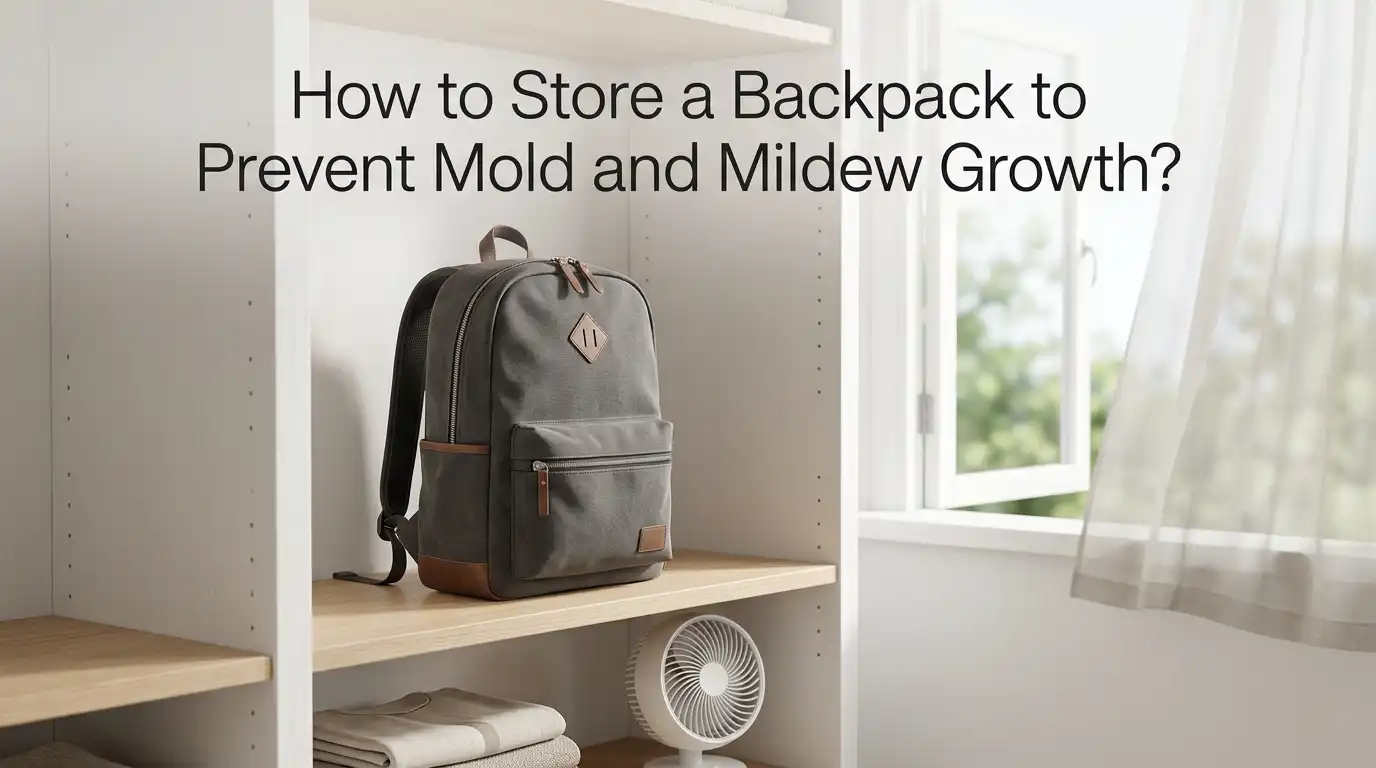
An open shelf is often the easiest method. A cotton bag or pillowcase also works well because it covers the backpack without trapping much moisture. A plastic bin can work only if the backpack is fully dry and the room itself is dry.
Many people use sealed plastic bags. That choice can backfire if even a little moisture stays inside. Trapped air becomes trapped humidity.
Pros of open shelf storage: Best airflow and easy checks.
Cons: More dust exposure.
Pros of a breathable cloth bag: Good dust control and decent airflow.
Cons: Less protection from pests or heavy room dust.
Pros of a plastic bin: Protects from dust and crushing.
Cons: Can trap moisture and smells if the backpack is not fully dry.
Breathable storage is usually the safest choice for mold prevention in a normal home.
Keep the Backpack in Shape Without Trapping Moisture
A backpack stores better when it keeps a natural shape. Sharp folds can stress fabric and trap airless pockets where dampness lingers. You do not need to stuff the bag hard. You just need light support.
Use clean, dry paper or a clean cotton towel inside the main compartment. This helps the bag hold its shape and lets you spot moisture later. If the paper feels damp, you know the bag or room needs more drying.
Do not overpack the backpack for storage. Tight stuffing presses fabric together and slows airflow. Keep zippers partly open if dust is not a problem. Loosen all straps so pressure does not stay on the seams.
Pros of light stuffing: Better shape, easier airflow, and less crease damage.
Cons: It takes a bit more shelf space.
Pros of flat empty storage: Saves space and is simple.
Cons: The bag can collapse, crease, and hold trapped damp spots.
Light support helps the bag breathe and last longer.
Protect Straps, Padding, and Zippers During Storage
Mold often starts in the soft parts of a backpack. Shoulder straps, hip belts, back padding, and mesh panels absorb sweat and moisture. These areas need more care than the smooth outer shell.
Wipe them well during cleaning and give them extra drying time. Press a dry towel into padded sections to pull out hidden moisture. Then hang the bag so air reaches both sides.
Zippers need attention too. Dirt inside zipper teeth holds moisture and causes wear. Brush them gently and make sure they are dry before storage. Buckles and clips should also be clean and dry.
Soft parts dry slowly, so treat them like the high risk zones they are.
Pros of extra strap and zipper care: Better odor control, smoother use later, and lower mildew risk.
Cons: It adds a few minutes to your routine.
Those few minutes matter. Most storage damage starts in the parts people rush past.
Check the Backpack During Long Term Storage
Long term storage is not a one time task. A backpack can change with the season. Summer humidity, winter condensation, or a closed closet can create problems after weeks of storage.
Check the bag every few weeks if you live in a damp climate. Open the main compartment. Smell the inside. Feel the bottom panel, padding, and seams. Look for faint spots, stale odor, or any cool damp feel.
If the bag seems even slightly musty, take it out right away. Air it out. Wipe it down. Add fresh silica gel if you use it. A quick check can stop a small issue from turning into a deep mold problem.
Pros of regular checks: Early problem finding, less cleaning later, and better gear life.
Cons: Easy to forget if the backpack is stored out of sight.
A five minute check once in a while can save the whole bag.
What to Do If You Already Smell Mildew
A musty smell means you should act before storage continues. First, take the backpack to a dry space with good airflow. Empty it fully and inspect every section.
Wash the bag with mild soap and water if the smell is light. If you see visible mold on a hard part or non porous surface, clean it carefully and dry it fully. For fabric with deeper mold stains, repeat cleaning and keep the bag in fresh air longer.
Do not hide the smell with sprays and store the bag again. The smell usually means moisture or growth is still present. You must remove the cause, not cover it up.
Pros of early treatment: Better chance of full recovery and less fabric damage.
Cons: Strong mildew can be hard to remove from deep padding.
If mold damage is severe, the bag may stay stained or weak. Early action gives the best result.
Common Storage Mistakes That Lead to Mold
Many backpack owners do a few things right and one thing wrong. That one mistake often causes the whole problem. The most common error is storing the bag too soon after washing, rain, travel, or gym use.
Another mistake is choosing a bad location. A clean backpack stored in a damp basement still faces risk. So does a bag sealed inside plastic while any moisture remains.
Some people forget food pockets, side mesh, or hidden sleeves. Others pack the backpack tightly into a small box, which blocks airflow and holds odor inside.
The biggest storage mistakes are simple but costly. They include rushing, sealing, folding too tightly, and ignoring room humidity.
Pros of learning these mistakes: Easier prevention and less guesswork.
Cons: You may realize your old storage routine caused past odor problems.
Good storage is not hard. It is just a chain of small smart choices.
Build a Simple Backpack Storage Routine That Works Every Time
The best way to prevent mold is to use the same routine every time. Keep it short, clear, and easy to repeat. After each trip or season, empty the bag, shake out dirt, wipe high contact areas, and let the backpack air out.
Before long term storage, do a deeper clean if needed. Dry the entire bag fully. Choose a dry indoor shelf or breathable cover. Add moisture control if your room tends to feel damp. Then check the bag now and then.
This routine takes less time than deep mildew cleanup. It also protects fabric, stitching, padding, and odor control.
Clean. Dry. Store smart. Check later. That simple pattern solves most backpack storage problems before they begin.
Pros of a fixed routine: Faster decisions, fewer mistakes, and longer gear life.
Cons: You need a little discipline after trips when you feel tired.
A small routine today prevents a big problem tomorrow.
FAQs
Can I store a backpack in a plastic bag if I add silica gel packs?
You can, but it is not the safest first choice. A plastic bag traps air, and trapped air can hold trapped moisture. Silica gel helps, but it does not fix a backpack that was stored slightly damp. A breathable cloth cover or open shelf is usually better. If you use plastic, make sure the backpack is fully dry and the room itself is dry.
How long should I dry a backpack before storage?
Dry it until every part feels dry, then give it more time. Outer fabric dries first. Padding, seams, and the bottom panel dry last. In many homes, a backpack may need a full day or more after washing. In humid weather, it may need longer. Use touch, airflow, and patience instead of guessing.
Is sunlight a good way to stop mold on a backpack?
A little outdoor air in the shade is helpful. Strong direct sun is less ideal for long periods because it can fade fabric and stress some materials. Fresh air helps drying, but full drying is still the real goal. Use airflow and shade first. Use direct sun only briefly if needed, and do not leave the bag baking outside.
Should I wash my backpack after every trip?
Not always. A light trip may need only emptying, wiping, and airing out. A sweaty trip, rainy hike, school term, or food spill needs more care. The key is to remove dirt and moisture before storage. If the bag smells, looks dirty, or feels damp, clean it before you put it away.

Hi, I’m Luna Beck — the founder and voice behind Urban Pack Vault. I’m passionate about helping people find bags that perfectly match their lifestyle. From backpacks to travel luggage, I research, review, and recommend so you never have to second-guess your next purchase.