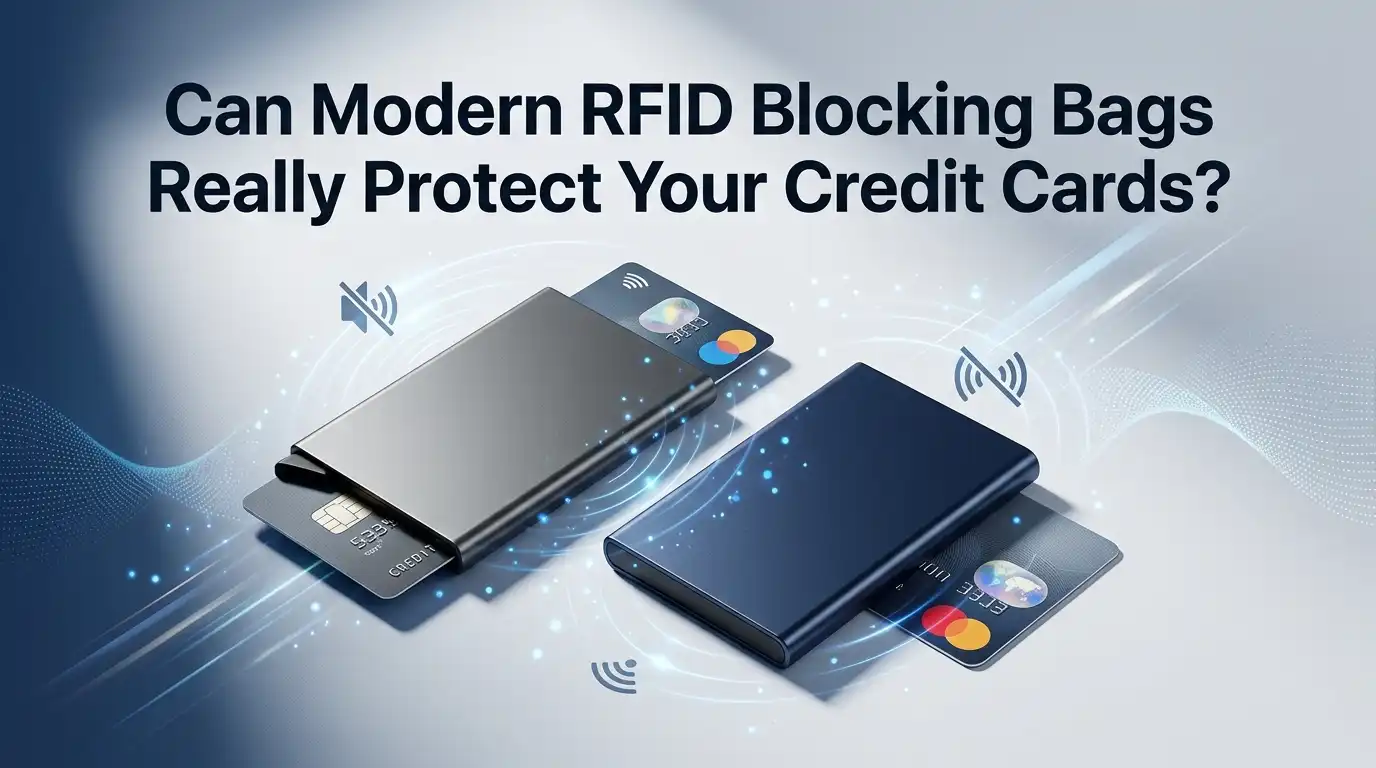
Can Modern RFID Blocking Bags Really Protect Your Credit Cards?
Have you ever held your wallet a little tighter in a crowded train station? You may have worried that a stranger with a hidden scanner could steal your card details through the air.
This fear sells millions of RFID blocking bags every year. But here is the honest question most ads never answer. Do these bags truly protect your money, or are they solving a problem that barely exists?
This guide gives you clear answers based on how the technology actually works. You will learn what RFID skimming is, how blocking bags function, and whether you need one.
Key Takeaways:
- RFID skimming is real but extremely rare. Security experts and consumer groups agree that actual cases of wireless card theft are almost unheard of in daily life. The threat is mostly theoretical.
- Modern cards already protect you. Contactless cards use encryption and tokenization, which means they send a one time code instead of your real card number. A skimmer captures almost nothing useful.
- RFID blocking bags do work physically. A quality bag creates a shield that stops radio signals from reaching your card. You can test this yourself in two minutes with a phone.
- You may already own free protection. Two cards stacked together can interfere with each other. Many passports and bank sleeves include blocking material at no extra cost.
- Your real risks lie elsewhere. Phishing, data breaches, and fake card readers steal far more money than RFID scanners ever will. Focus your energy there.
- A bag is fine as a low cost backup. If it gives you peace of mind and the price is fair, there is no harm in using one.
What Is RFID and Why Are People Worried About It?
RFID stands for Radio Frequency Identification. It is a simple technology that lets a card talk to a reader using radio waves. You see it every time you tap your card to pay.
The card holds a tiny chip and a small antenna. When the reader sends out a signal, the chip wakes up and replies.
This wireless talk is what worries people. The fear is that a thief could carry a hidden reader, walk close to you, and secretly copy your card data. This idea is called RFID skimming.
It sounds scary because it feels invisible. You would never know it happened until money disappeared. That fear is exactly what drives sales of blocking products, so let us examine if it holds up.
How RFID Skimming Actually Works in Real Life
Let us look at the attack itself. A thief needs a special RFID reader tuned to the right frequency. They must bring that reader very close to your card, usually within a few inches.
Then they hope your card replies with useful data. In theory, they could capture your card number and expiry date.
But here is where reality breaks the fear. Most stolen data is now useless. Modern contactless cards do not send your full static details. They send a unique transaction code that only works once. A thief cannot reuse it.
On top of that, the close distance needed makes the attack clumsy and obvious in a crowd. Real criminals prefer easier methods like data breaches and phishing, which steal millions of card numbers at once from a desk.
How Do RFID Blocking Bags and Wallets Work?
RFID blocking products use a clever bit of physics called the Faraday principle. The bag contains a thin layer of metal or carbon fiber woven into the fabric or lining.
This layer acts like a shield. When radio waves hit it, the metal absorbs and scatters the signal. The waves never reach the chip inside your card.
Think of it like a soundproof room for radio signals. The reader outside calls out, but your card cannot hear it. Because the chip never wakes up, it never replies.
No reply means no data to steal. This is why a good blocking bag genuinely stops scanning. The science is solid and well proven. The real debate is not whether the shield works, but whether you needed the shield in the first place.
Are Your Credit Cards Already Protected Without a Bag?
This is the question most ads ignore. The truth is your bank already built strong defenses into your card. Modern contactless cards use encryption.
This scrambles the data so a scanner reads gibberish. They also use tokenization, which replaces your real card number with a stand in token for each tap.
There is more good news. Many chip cards are not even RFID enabled. The chip you insert into a machine only talks through physical contact, not radio. Phone payments like Apple Pay and Google
Pay add another layer with dynamic codes that change constantly. So before you spend money on a bag, understand this. The companies that lose money from fraud, the banks, have already spent billions making your card hard to copy wirelessly.
Step by Step: How to Test if a Blocking Bag Truly Works
You do not need to trust the label. You can test any bag yourself in about two minutes. Follow these steps carefully for an honest result.
First, download a free NFC reader app on your phone, such as NFC Tools. Second, place a contactless card directly against the back of your phone with the app open. Confirm the app reads the card and shows data. This proves your phone and card work.
Third, put the same card fully inside the blocking bag. Close it completely. Fourth, hold the bag against your phone and try to scan again. If the bag works, the app shows nothing. Silence means success. If the app still reads the card, the bag offers little real protection and you should not rely on it.
Pros and Cons of Using an RFID Blocking Bag
Let us weigh both sides fairly so you can decide. Every product has trade offs, and honesty matters more than hype here.
The pros are clear. A quality bag gives genuine peace of mind. It physically stops scanning, so worry fades. It can protect more than cards, including key fobs and passports. Many bags are cheap and last for years. They need no batteries and ask nothing from you once bought.
The cons deserve equal attention. The bag solves a threat that is already very rare. Your cards may have free protection built in.
Some cheap bags fail the phone test entirely, giving false confidence. The bag can also block your own quick tap to pay, forcing you to remove the card each time. You pay for convenience loss plus money for low real benefit.
Free and Low Cost Alternatives to Blocking Bags
You may not need to buy anything at all. Several smart tricks cost nothing and work well. Try these before spending money.
The simplest method is stacking. Place two or more contactless cards together in your wallet. Their signals interfere with each other and confuse a reader. This natural jamming reduces the chance of a clean scan. Many people already do this without knowing.
Another option is a metal card case. A solid metal tin or aluminum sleeve can block signals like a basic Faraday shield. You can also wrap a card in aluminum foil for a temporary fix.
Single blocking sleeves often come free from banks and hotels. These cost little and let you test the idea before committing to a full bag.
How to Protect Your Cards From Real and Common Threats
Now we focus on dangers that actually drain bank accounts. RFID is not where most fraud happens. Smart protection means spending energy on the real risks first.
Watch for physical skimmers on ATMs and gas pumps. Wiggle the card slot before inserting your card. If a piece moves or looks bulky, walk away. Cover the keypad when you type your PIN. Check your bank statements every week and report odd charges fast.
Be very careful with phishing. Never click links in surprise texts about your card. Banks never ask for your full PIN by message. Use strong, unique passwords and turn on transaction alerts. These habits stop the threats that steal real money far more often than any wireless scanner ever could.
Do You Need RFID Protection for Passports and Key Fobs?
Cards are not the only chips you carry. Passports and car key fobs also use radio chips, and they raise fair questions. Let us look at each one honestly.
Modern passports often have blocking material built into the cover. As long as the passport stays closed, the chip stays shielded. So a separate bag adds little for a closed passport in your bag.
Car key fobs are a different story. Relay theft is a genuine and growing crime. Thieves capture your fob signal near your home and use it to unlock and start your car.
A blocking pouch for your keys actually makes good sense here. This is one case where the protection meets a real, rising threat. Keep your fob in a shielded pouch away from doors and windows at night.
How to Choose a Reliable RFID Blocking Bag
If you decide a bag suits you, choose wisely. Not every product on the shelf does its job. Quality varies a lot. Use these points to make a smart pick.
Look for a clear statement of the frequency range blocked, usually 13.56 MHz for cards. Read real user reviews that mention the phone test, not just vague praise. Check the build quality, since a torn lining lets signals through.
Pick a size that fits your habits. A small sleeve suits one card, while a larger bag holds keys and a passport. Always test the bag yourself after buying using the NFC app method. If a seller refuses returns or hides details about the materials, treat that as a warning sign and look elsewhere.
The Honest Verdict: Should You Buy One?
Let us bring it all together. The science behind RFID blocking bags is real, and good ones truly stop scanning. That part is not a scam. The honest issue is the size of the threat they fight. RFID skimming of credit cards is almost nonexistent in real life, and your cards already carry strong defenses.
So here is the balanced answer. If a quality bag is cheap and gives you peace of mind, buying one causes no harm. It is a low cost backup, not a vital need.
But do not let it replace the habits that matter. Watch for skimmers, dodge phishing, and check your statements. For car keys, a blocking pouch is genuinely worth it. For credit cards, it is a nice extra, not a must have.
Frequently Asked Questions
Can someone really steal my credit card number through my wallet?
It is technically possible but extremely rare. A thief needs special equipment and must get within a few inches of your card. Even then, modern encrypted cards send a one time code, so the captured data is almost always useless to them.
Do RFID blocking bags stop my phone from working?
No. Your phone signals like calls, Wi Fi, and Bluetooth are far stronger and use different frequencies than card chips. A card sized blocking bag only shields the low power chip inside the bag. Your phone keeps working normally in your pocket.
Will a blocking bag stop me from using tap to pay?
Yes, while the card stays inside the closed bag. The bag blocks the signal both ways. You must remove the card from the bag before you can tap it on a payment terminal. This is the main daily trade off of using one.
Are RFID blocking cards as good as bags?
A good blocking card placed beside your other cards can jam scanning signals across a whole wallet. They are cheap and flexible since they fit any wallet you own. Always test one with a phone app, because cheap versions sometimes fail to block effectively.
Does aluminum foil really block RFID signals?
Yes, surprisingly well. Wrapping a card fully in two layers of aluminum foil creates a basic shield that stops most card frequency signals. It is a free emergency fix. It is not as neat or durable as a real bag, but it works in a pinch.
Is my passport already protected from scanning?
Most modern passports include blocking material inside the cover. As long as the passport stays fully closed, the chip cannot be read. You usually do not need a separate sleeve for a closed passport, though one adds a small extra layer if you want it.

Hi, I’m Luna Beck — the founder and voice behind Urban Pack Vault. I’m passionate about helping people find bags that perfectly match their lifestyle. From backpacks to travel luggage, I research, review, and recommend so you never have to second-guess your next purchase.