How to Stop a Heavy Backpack From Hurting Your Shoulders?
A heavy backpack can turn your daily commute, school day, or hiking trip into a painful experience. Millions of students, professionals, and travelers deal with sore shoulders, stiff necks, and aching backs every single day.
The pain often starts as a dull ache and slowly builds into a sharp, constant discomfort that affects your posture, mood, and focus.
Here is the good news. Most backpack shoulder pain is completely preventable. The problem usually comes from carrying too much weight, wearing the backpack incorrectly, or using a bag that does not fit your body.
In a Nutshell
- Lighten your load first. Remove everything you do not absolutely need for that day. Studies from Brigham Young University confirm that backpacks exceeding 10% of your body weight increase shoulder and back pain significantly. Audit your bag contents weekly and carry only the essentials.
- Use both shoulder straps every single time. Slinging your backpack over one shoulder doubles the stress on that side of your body. This habit leads to muscle imbalance, poor posture, and long term spinal misalignment. Always wear both straps snug against your shoulders.
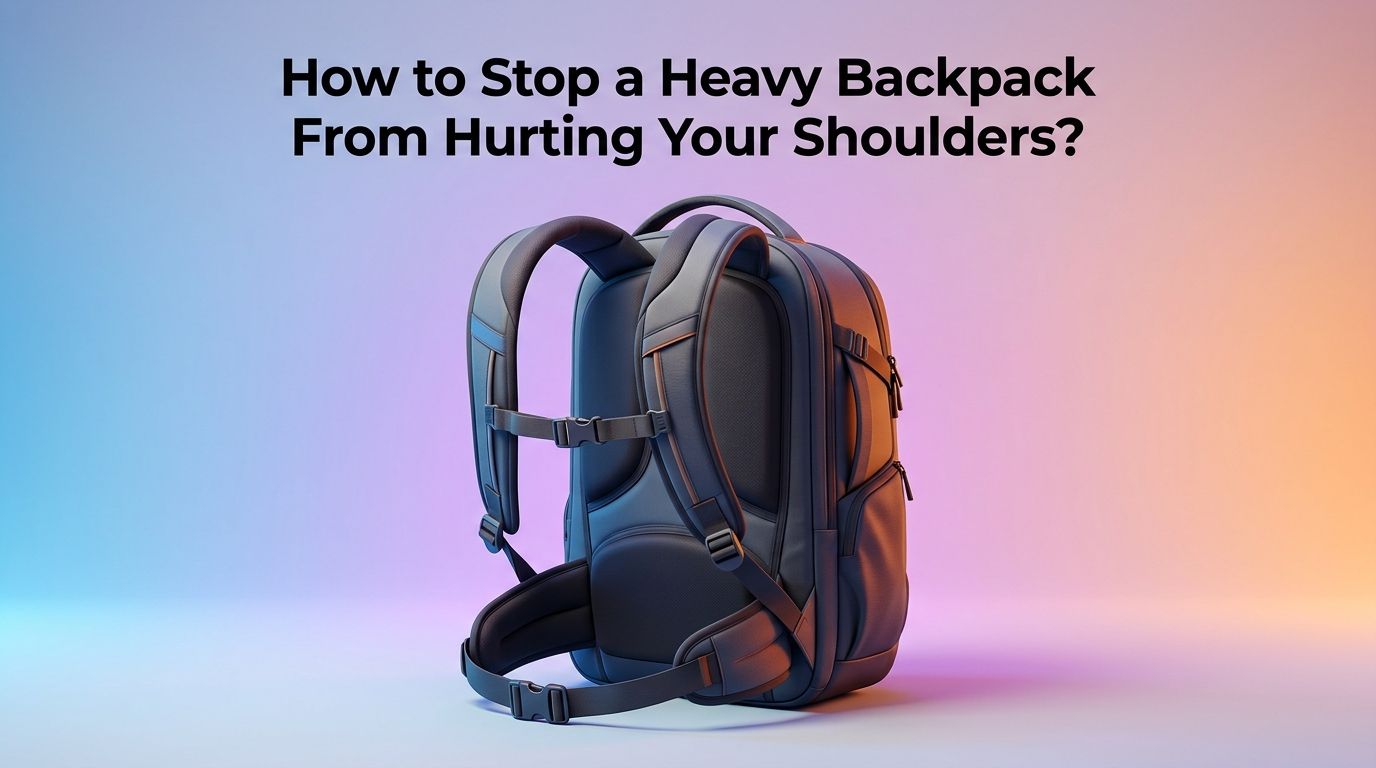
- Shift 80% of the weight to your hips. A properly adjusted hip belt transfers the bulk of the load from your shoulders to your lower body. The Appalachian Mountain Club recommends that about 80% of backpack weight should rest on the hips, leaving only 20% on the shoulders.
- Pack heavy items close to your back and between your shoulder blades. This placement keeps your center of gravity stable and prevents the bag from pulling you backward. Place lighter items on the outside and in the front pockets for balance.
- Strengthen your shoulders, upper back, and core muscles. Regular exercises like shoulder rolls, wall pushups, and scapular squeezes build the muscles that support your backpack load. A stronger body handles weight more effectively and resists fatigue.
- Watch for warning signs of nerve damage. Numbness, tingling, or weakness in your hands or arms after wearing a backpack may indicate a condition called backpack palsy. This happens when heavy straps compress the brachial plexus nerves. If you notice these symptoms, stop carrying the bag immediately and see a doctor.
Why Does a Heavy Backpack Hurt Your Shoulders?
Your shoulders are not built to bear heavy, sustained loads. The shoulder joint is the most mobile joint in your body, but it sacrifices stability for that range of motion. When a heavy backpack pulls down on your shoulders, the muscles, tendons, and ligaments must work extra hard to keep everything in place.
The shoulder straps of a backpack press directly into the trapezius muscles and can compress the brachial plexus, a network of nerves that runs from your neck down through your arms. Over time, this compression causes pain, numbness, and tingling in your hands and fingers.
Poor strap adjustment makes things worse. If your backpack hangs too low, it pulls your center of gravity backward. Your body compensates by leaning forward, which strains both your shoulders and lower back. Understanding this basic anatomy helps you see why proper fitting and weight management matter so much.
How Much Weight Is Too Much for a Backpack?
The general rule is simple. Your backpack should weigh no more than 10% to 15% of your body weight. For a person weighing 150 pounds, that means a maximum of 15 to 22 pounds. Going beyond this limit dramatically increases the risk of shoulder pain, back strain, and poor posture.
Children and teenagers should follow the stricter 10% guideline because their bodies are still developing. A 70 pound child should carry no more than 7 pounds in a school bag. Many students carry far more than this every day.
Pros of following the weight limit: Less pain, better posture, reduced risk of long term injury, and more energy throughout the day. Cons: You may need to make multiple trips, leave some items behind, or find digital alternatives for heavy textbooks. The tradeoff is absolutely worth it for your body’s long term health.
How to Adjust Your Shoulder Straps Correctly
Proper strap adjustment is the single fastest fix for backpack shoulder pain. Start by putting on your backpack and tightening both shoulder straps equally. The bottom of the bag should sit no more than four inches below your waistline.
The straps should be snug but not so tight that they dig into your skin. You should be able to slide one flat hand between the strap and your shoulder. If the straps leave red marks or indentations, they are too tight. If the bag sways or bounces as you walk, they are too loose.
Load lifter straps are small straps at the top of the shoulder straps that connect to the top of the pack. Tighten these at a 45 degree angle to pull the weight closer to your body. This simple adjustment makes a dramatic difference in comfort and stability.
Why You Should Use the Hip Belt and Sternum Strap
Most people ignore the hip belt and sternum strap on their backpacks. This is a major mistake. The hip belt is responsible for transferring up to 80% of the pack’s weight to your pelvis and legs. Your legs are far stronger than your shoulders and can handle this load easily.
Position the hip belt so it sits on top of your iliac crest, which is the bony ridge at the top of your hips. Tighten it firmly so it feels supportive but not restrictive. You should still be able to breathe deeply and walk comfortably.
The sternum strap (or chest strap) connects the two shoulder straps across your chest. It prevents the shoulder straps from sliding outward and distributes pressure more evenly.
Pros of using both straps: Significant shoulder relief, improved balance, and less fatigue. Cons: Slightly more time to put on and take off the backpack, and some bags have low quality hip belts that provide minimal support.
How to Pack Your Backpack for Better Weight Distribution
The way you pack your bag matters just as much as how much you carry. Place the heaviest items in the center of the bag, close to your back, and between your shoulder blades. This keeps your center of gravity aligned over your hips and prevents the bag from pulling you backward or to one side.
Put medium weight items around the heavy ones and lighter items in the outer pockets. Distribute weight evenly from left to right so one shoulder does not bear more load than the other. Use compression straps on the sides of your backpack to keep everything tight and stable.
Avoid dangling items from the outside of your pack. Water bottles, shoes, or gear clipped to the exterior will swing as you move and create uneven, unpredictable forces on your shoulders. Tuck everything inside and use compartments to keep your load organized and balanced.
The Role of Posture in Preventing Shoulder Pain
Bad posture and a heavy backpack create a painful cycle. The weight of the bag pulls you backward, so you lean forward at the hips or round your shoulders. This forward lean compresses the discs in your spine and overworks the muscles in your neck and shoulders.
Stand tall with your shoulders back and your core engaged when wearing a backpack. Imagine a string pulling the top of your head straight up. Keep your chin level and avoid jutting your head forward. These small posture corrections reduce strain on your shoulder muscles and spine.
Check your posture throughout the day, especially if you carry your backpack for long periods. Set a mental reminder to straighten up every 15 to 20 minutes. Over time, good posture becomes a habit that protects your body even with a loaded pack on your back.
Exercises to Strengthen Your Shoulders and Upper Back
A strong upper body handles backpack weight much better than a weak one. Shoulder rolls are one of the easiest exercises to start with. Roll your shoulders forward ten times, then backward ten times. Do this twice a day to loosen tight muscles and improve blood flow.
Scapular squeezes strengthen the muscles between your shoulder blades. Sit or stand with your arms at your sides. Squeeze your shoulder blades together and hold for five seconds. Repeat ten to fifteen times. This exercise directly builds the muscles that stabilize your backpack load.
Wall pushups work your chest, shoulders, and core without putting stress on your joints. Stand arm’s length from a wall, place your palms flat, and perform slow pushups against the wall. Do three sets of fifteen. Pros of regular exercise: Stronger muscles, less pain, better posture, and faster recovery. Cons: Requires consistent effort and a few minutes of daily commitment.
Stretches to Relieve Shoulder Pain After Carrying a Backpack
Stretching after wearing a heavy backpack helps your muscles recover and prevents stiffness. The cross body shoulder stretch is highly effective. Bring one arm across your chest and gently pull it closer with your other hand. Hold for 20 to 30 seconds on each side.
The doorway stretch opens up your chest and front shoulders. Stand in a doorway with your arms on either side of the frame at shoulder height. Step forward gently until you feel a stretch across your chest. Hold for 30 seconds. This stretch counteracts the forward rounding that backpacks cause.
Neck stretches also provide relief since shoulder tension often radiates into the neck. Tilt your head slowly to one side, bringing your ear close to your shoulder. Hold for 15 seconds and switch sides. Do these stretches immediately after removing your backpack for best results.
How to Choose a Backpack That Fits Your Body
Not every backpack fits every body. A bag that is too large or too small for your torso will cause pain no matter how you adjust it. Measure your torso length from the base of your neck to the top of your hip bones. Match this measurement to the backpack’s sizing chart.
Look for wide, padded shoulder straps that sit comfortably on your shoulders without digging in. A padded back panel adds cushioning between the bag and your spine. Ventilation channels on the back panel help reduce sweating and improve comfort during long wear.
Pros of a well fitted backpack: Even weight distribution, reduced pressure points, better posture support, and greater comfort. Cons of a poorly fitted backpack: Sore shoulders, back pain, chafing, and higher risk of nerve compression. Take the time to try on a backpack with weight inside it before making a decision.
Tips for Students Dealing With Heavy School Bags
Students carry some of the heaviest backpacks relative to their body weight. A simple solution is to use your locker or desk storage to store books and materials you do not need for homework that night. Only bring home what is absolutely necessary.
Ask your school about digital textbook options. Many publishers now offer online versions of textbooks that eliminate the need to carry heavy books. A tablet or laptop weighs far less than three or four hardcover textbooks.
Use a rolling backpack if your school allows it and the terrain is suitable. Rolling bags eliminate shoulder strain entirely. Pros: Zero weight on the shoulders, easy to transport heavy loads. Cons: Difficult on stairs, heavier than standard backpacks when you do need to lift them, and some students find them awkward. Plan your route to avoid stairs when possible.
Warning Signs That Your Backpack Is Causing Serious Damage
Not all backpack pain is just soreness. Numbness, tingling, or weakness in your arms or hands can signal a condition called backpack palsy. This occurs when heavy straps compress the brachial plexus nerves in your shoulders. If untreated, it can lead to temporary paralysis of the affected arm.
Pain that persists even after you remove your backpack is another red flag. Healthy muscles recover quickly after the load is removed. If your shoulders, neck, or back still hurt hours later, something is wrong. Persistent headaches that start at the base of your skull may also be linked to backpack related neck strain.
See a healthcare professional if you experience any of these symptoms. Early treatment prevents long term damage. Do not push through the pain, as this can turn a minor issue into a chronic problem. Your body is sending you a clear signal that something needs to change.
Quick Daily Habits to Protect Your Shoulders
Small daily habits make a big difference over time. Take your backpack off during breaks and lunch. Giving your shoulders even 10 to 15 minutes of rest reduces muscle fatigue significantly. Set the bag on a table or chair rather than the floor to avoid bending and re-straining your back.
Alternate which side you swing the backpack on when putting it on and taking it off. This prevents one shoulder from doing all the heavy lifting during transitions. Use both hands to lift the bag to your shoulders, and bend at the knees instead of the waist.
Do a weekly bag clean out. Remove old papers, snacks, water bottles, and anything else that has accumulated over the week. You would be surprised how much extra weight builds up from forgotten items. Keeping your bag light is the easiest and most effective way to prevent shoulder pain.
Frequently Asked Questions
How heavy is too heavy for a backpack?
Your backpack should weigh no more than 10% to 15% of your body weight. For a 150 pound adult, that means 15 to 22 pounds maximum. Children should stick to the 10% rule. Exceeding these limits puts excessive strain on the shoulders, spine, and neck, increasing the risk of both acute pain and long term injury.
Can a heavy backpack cause permanent damage?
Yes, it can. Prolonged use of an overloaded backpack may cause chronic back pain, poor posture, and nerve damage. A condition called backpack palsy can result from compressed nerves in the shoulder area. In most cases, the damage is reversible if caught early, but ignoring the symptoms can lead to lasting problems.
Should I use a one strap or two strap backpack?
Always use a two strap backpack and wear both straps at all times. Single strap bags place all the weight on one shoulder, which causes muscle imbalance, spinal curvature, and increased pain. Two straps distribute the load evenly across both shoulders and reduce the overall strain on your body.
How often should I adjust my backpack straps?
Check your strap adjustment every time you put on your backpack, especially if you add or remove items. Straps can loosen throughout the day from movement. A quick 10 second adjustment ensures the weight stays properly distributed and your shoulders remain comfortable.
Are waist belts really necessary on a backpack?
Waist belts are extremely helpful for any backpack carrying more than 10 pounds. They transfer up to 80% of the weight from your shoulders to your hips. If your bag has a waist belt, use it. Your hips and legs are much stronger than your shoulders and can handle the load with far less fatigue and discomfort.

Hi, I’m Luna Beck — the founder and voice behind Urban Pack Vault. I’m passionate about helping people find bags that perfectly match their lifestyle. From backpacks to travel luggage, I research, review, and recommend so you never have to second-guess your next purchase.