How to Adjust Backpack Straps for Perfect Weight Distribution?
A sore back, aching shoulders, and neck pain can ruin any hike, commute, or school day. Most people wear their backpacks wrong without even knowing it. The fix is simple, but it requires more than just pulling on two shoulder straps.
A properly adjusted backpack should transfer about 80% of its weight to your hips and legs, leaving only 20% on your shoulders. That small change can eliminate pain, improve posture, and make heavy loads feel surprisingly light.
This guide walks you through every strap on your backpack, explains exactly how to adjust each one, and shows you how to pack your bag so weight sits where your body can handle it best.
In a Nutshell
- Your hip belt does the heavy lifting. A properly positioned hip belt transfers most of the backpack’s weight to your hips and legs. The padded center of the belt should sit directly on your iliac crest (the bony top of your pelvis), not your waist or stomach. This single adjustment makes the biggest difference in comfort.
- Shoulder straps should hug, not dig. The shoulder straps keep the pack stable against your back. They should wrap around your shoulders without pinching or leaving gaps. You should be able to slide two fingers between the strap and your shoulder for the right tension.
- Load lifter straps reduce backward pull. These small straps at the top of your shoulder straps pull the upper pack closer to your body. They should form roughly a 45 degree angle from the shoulder strap to the pack. This stops the bag from pulling you backward on steep terrain.
- The sternum strap stabilizes your upper body. Position it about one inch below your collarbone. It connects the two shoulder straps across your chest and prevents them from slipping off your shoulders during movement.
- Packing order matters as much as strap adjustment. Place your heaviest items in the middle of the pack, close to your spine. Light and bulky items go at the bottom. Quick access items belong on top. This creates a stable center of gravity.
- Your torso length determines your pack size. Measure from the C7 vertebra at the base of your neck to the top of your hip bones. A mismatch between torso length and pack size makes proper strap adjustment impossible.
Why Proper Weight Distribution Matters
Carrying a poorly adjusted backpack puts uneven stress on your muscles and joints. Your body compensates by leaning forward, rounding your shoulders, or shifting your spine out of alignment. Over time, this leads to chronic back pain, neck strain, and shoulder fatigue.
A well adjusted backpack lets your skeletal system share the load. Your hips and legs are far stronger than your shoulders and upper back. Directing weight to your lower body keeps you balanced and upright.
Studies from the American Academy of Orthopaedic Surgeons recommend that a backpack should weigh no more than 10 to 20% of your body weight. Even within that limit, bad strap adjustment can cause discomfort. Good weight distribution helps you walk longer, feel less tired, and avoid injury.
Know Your Backpack Straps
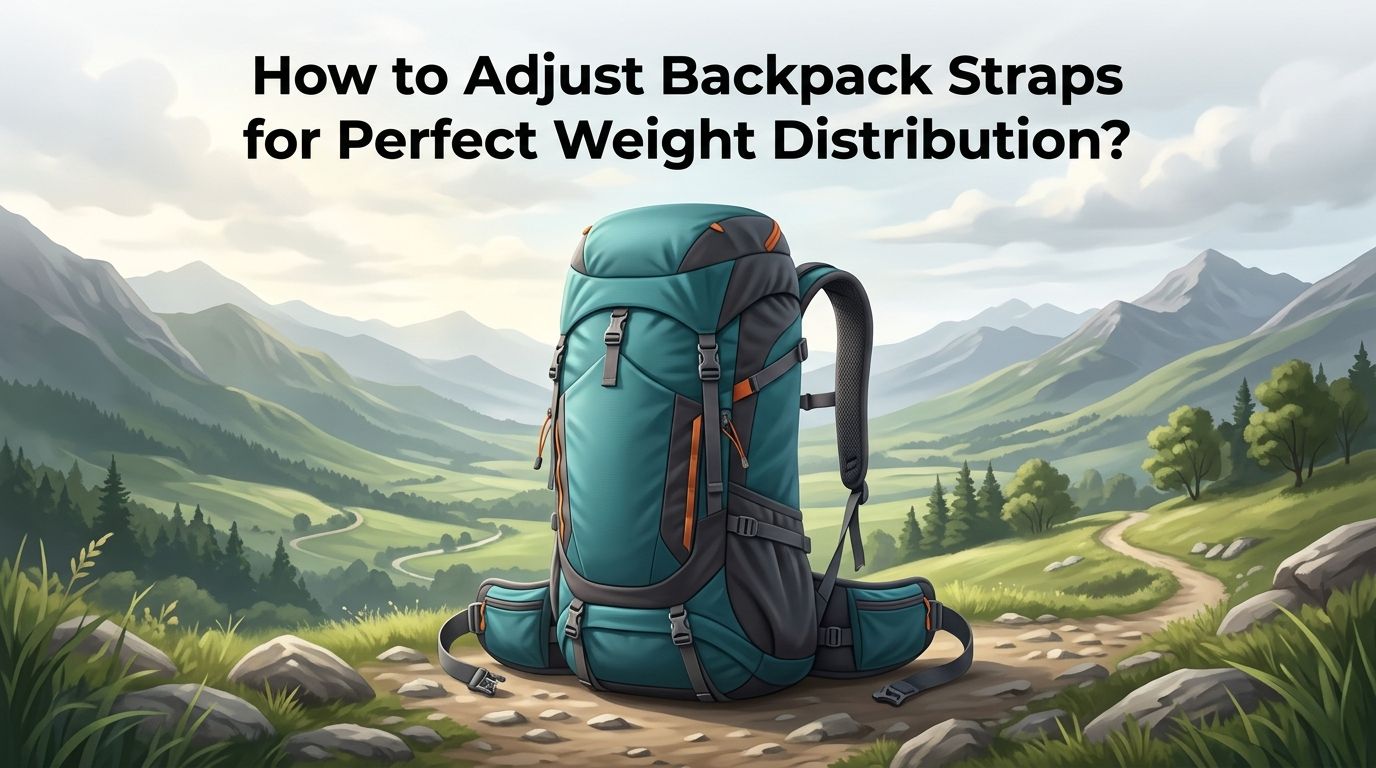
Most backpacks have five key adjustment points. Understanding each one is the first step to getting a proper fit. The hip belt wraps around your pelvis and carries the bulk of the load. The shoulder straps hold the pack against your upper back.
The load lifter straps sit at the top of the shoulder straps and angle backward to the pack’s top. They control how close the upper portion of the bag sits to your body. The sternum strap crosses your chest between the two shoulder straps.
Finally, many packs have an adjustable back panel or torso adjustment system. This changes the distance between the hip belt and the shoulder strap anchor point. Each strap has a specific job, and they all work together as a system.
Measure Your Torso Length First
Before you adjust any straps, you need to know if the pack fits your torso. Grab a flexible tape measure and ask a friend for help. Tilt your head forward and find the C7 vertebra, the bony bump at the base of your neck where your spine meets your shoulders.
Place your hands on your hips with your thumbs pointing backward. Your thumbs should rest on the iliac crest, the top ridge of your pelvis. Have your friend measure the distance from C7 down to the imaginary line between your thumbs.
This measurement is your torso length. Most backpack manufacturers list their sizing based on this number. A pack that is too long or too short for your torso will never fit right, no matter how you adjust the straps. Check your measurement against the pack’s size chart before making adjustments.
Step 1: Loosen All Straps Before Starting
Always start with a clean slate. Loosen every strap on the pack before putting it on. This includes the hip belt, shoulder straps, load lifters, and sternum strap. Load the pack with the weight you plan to carry so the adjustment reflects real conditions.
Many people skip this step and try to tighten straps while the pack is already cinched. That approach creates uneven tension and makes it hard to find the right balance between straps.
Put the loaded pack on your back with all straps hanging loose. Lean forward slightly so the bag rests on your back without sliding. You are now ready to begin adjusting from the bottom up.
Pros of the bottom up method: Each strap builds on the previous adjustment, creating a stable and balanced fit. Cons: It takes more time than randomly tightening straps, but the results are worth it.
Step 2: Secure the Hip Belt
The hip belt is the most important adjustment on your backpack. It should carry 60 to 80% of the total load. With the pack on your back, wrap the hip belt around your pelvis. The padded center of the belt should sit directly over your iliac crest, not above your waist.
Buckle the hip belt and tighten both sides evenly. Pull the straps until the belt feels snug against your hips. You should feel the pack’s weight shift from your shoulders to your lower body immediately.
A good test is to do a small hop. The pack should stay in place without bouncing or shifting. If the belt rides up above your hip bones, loosen it and reposition. If it sits too low, it will press on your thighs and restrict your stride.
Pros: Immediate pain relief in shoulders and upper back. Cons: Some people find hip belts uncomfortable at first, especially with heavy loads, and may need a break in period.
Step 3: Tighten the Shoulder Straps
With the hip belt locked in place, pull the shoulder straps down and back to tighten them. The straps should wrap smoothly around your shoulders without any gaps between the strap and your body. They should not dig into your neck or pinch the sides of your arms.
Use the two finger rule to check tension. Slide two fingers between the strap and your shoulder. If you can do this without forcing, the tension is correct. If the straps are too tight, they will cut off circulation and cause numbness.
The shoulder strap anchor point on the pack should sit about one to two inches below the top of your shoulders. If the anchor sits too high, the straps will push down on your shoulders painfully. If it sits too low, the pack will pull away from your back and cause instability.
Step 4: Adjust the Load Lifter Straps
Load lifter straps are often overlooked, but they make a huge difference in comfort. These short straps connect the top of each shoulder strap to the upper frame of the pack. Their job is to pull the top of the bag forward and closer to your body.
Tighten the load lifters until they form roughly a 45 degree angle between the shoulder strap and the pack. You should feel the upper portion of the pack shift closer to your back. This reduces the backward pulling sensation that causes fatigue on long carries.
Do not over tighten them. If the angle becomes too steep, the load lifters will pull the shoulder straps away from your shoulders and create pressure points. A gentle, steady tension is the goal.
Pros: Greatly improves balance on uneven terrain and steep climbs. Cons: Not all daypacks or school bags have load lifters, so this step may not apply to every backpack.
Step 5: Position the Sternum Strap
The sternum strap (also called the chest strap) connects the two shoulder straps across the front of your chest. Slide it up or down until it sits about one inch below your collarbone. Buckle it and tighten gently.
This strap prevents the shoulder straps from slipping off your shoulders during movement. It also distributes some pressure across your chest, which reduces strain on the front of your shoulders.
Do not crank the sternum strap tight. It should hold the shoulder straps in place without restricting your breathing or chest expansion. You should be able to take a full, deep breath without feeling constriction. If the strap sits too high, it will press against your throat. If it sits too low, it will not stabilize the shoulder straps effectively.
How to Pack Your Backpack for Better Balance
Strap adjustment alone cannot fix bad packing. How you load your bag determines where the weight sits. Use the three zone packing method for the best results.
Place light, bulky items like sleeping bags and extra clothing in the bottom zone. Heavy, dense items like food, water, and cooking gear go in the middle zone, close to your spine. Light, frequently accessed items like snacks, rain jackets, and maps belong in the top zone.
Keeping heavy items close to your back and near your center of gravity prevents the pack from pulling you backward. If heavy items sit far from your spine or too low in the bag, no amount of strap adjustment will feel comfortable. Pack side pockets evenly to avoid a lopsided load.
Common Mistakes That Cause Discomfort
The most common mistake is carrying all the weight on your shoulders. This happens when the hip belt is too loose or not positioned on the hip bones. Many people also wear their backpack too low, letting it sag below the waist. This shifts the center of gravity backward and strains the lower back.
Another frequent error is over tightening the sternum strap. This restricts breathing and creates chest pressure during physical activity. Some hikers tighten their load lifters too much, which lifts the shoulder straps off the shoulders entirely.
Using only one shoulder strap concentrates the entire load on one side of your body. This leads to muscle imbalances and spinal stress. Always use both straps, even for short distances.
Adjusting on the Trail or During Your Day
Your backpack fit is not a set it and forget it task. Your body shifts and the load changes throughout the day. You may eat food, drink water, or add layers of clothing. Each change affects how the weight sits in the pack.
Stop every hour or so to make small adjustments. Loosen the shoulder straps briefly and let the hip belt carry the full load for a few minutes. Then retighten the shoulders. This rotation gives different muscle groups a break.
On steep uphill sections, tighten the load lifters to bring the pack closer to your back. On flat ground, you can loosen them slightly for more freedom of movement. Pay attention to hot spots, numbness, or tingling. These are signals that a strap needs adjustment.
Special Tips for School and Commuter Backpacks
Most school and commuter packs lack hip belts and load lifters. This means your shoulder straps must do all the work. Keep the pack high on your back so the bottom edge does not drop below your waist. Tighten both shoulder straps evenly.
If your pack has a sternum strap, use it. It prevents the shoulder straps from sliding outward, which is common with narrow shouldered users. Choose a pack with wide, padded shoulder straps for better pressure distribution.
Limit the total weight to 10 to 15% of your body weight for daily carry without a hip belt. Remove unnecessary items each evening before the next day. Heavy textbooks should sit flat against your back in the main compartment, not stuffed in outer pockets.
Pros of using a sternum strap on commuter packs: Better stability during cycling and walking. Cons: Some users find the chest strap annoying for short trips and leave it unbuckled.
When to Replace or Upgrade Your Backpack
Even with perfect strap adjustment, a worn out backpack will not distribute weight properly. Check your pack regularly for signs of wear. Frayed strap edges, broken buckles, collapsed padding, and a bent or cracked frame all reduce performance.
If you have adjusted every strap correctly and still feel pain, the pack may not match your body. A torso length mismatch, incorrect hip belt size, or missing suspension system can all cause ongoing issues. Consider getting professionally fitted at an outdoor gear store where staff can measure your torso and recommend the right size.
Upgrading to a pack with a proper suspension system, padded hip belt, and load lifters can transform your carrying experience. The investment pays off in comfort, injury prevention, and years of reliable use.
Frequently Asked Questions
How tight should backpack shoulder straps be?
Shoulder straps should be snug but not tight. Use the two finger test by sliding two fingers between the strap and your shoulder. If they fit without forcing, the tension is correct. The straps should wrap around your shoulders smoothly without leaving gaps or digging into your skin. Over tightening causes numbness and restricted blood flow.
Where should a backpack sit on your back?
The bottom of the backpack should rest at or just above your waist. The hip belt should sit on your iliac crest, the bony ridge at the top of your pelvis. The shoulder strap anchor point should be one to two inches below the top of your shoulders. The pack should feel snug against your back without sagging or bouncing.
Can a backpack cause back pain?
Yes. A poorly adjusted or overloaded backpack is a common cause of back pain. Carrying too much weight on your shoulders forces your body to lean forward, which strains your lower back muscles. Improper hip belt placement shifts the load away from your strongest muscles. Consistent use of a badly fitting pack can lead to chronic pain over time.
How much weight should a backpack carry?
Health experts recommend keeping your backpack weight below 10 to 20% of your body weight. A person weighing 150 pounds should carry no more than 15 to 30 pounds, depending on fitness level and pack quality. Packs with proper hip belts and suspension systems can handle loads at the higher end of this range more comfortably.
Do I need a hip belt on my backpack?
A hip belt is essential for any load over 15 to 20 pounds. It transfers weight from your shoulders and spine to your hips and legs, which are far stronger. For lighter daily loads like school or commuting, a hip belt is helpful but not required. For hiking or backpacking, a padded hip belt is a must.
How often should I readjust my backpack straps?
You should check your strap adjustment every time you put the pack on and make minor adjustments every 30 to 60 minutes during extended carrying. Changes in terrain, load weight, and body fatigue all shift how the pack sits. Quick readjustments prevent hot spots, soreness, and long term discomfort.

Hi, I’m Luna Beck — the founder and voice behind Urban Pack Vault. I’m passionate about helping people find bags that perfectly match their lifestyle. From backpacks to travel luggage, I research, review, and recommend so you never have to second-guess your next purchase.