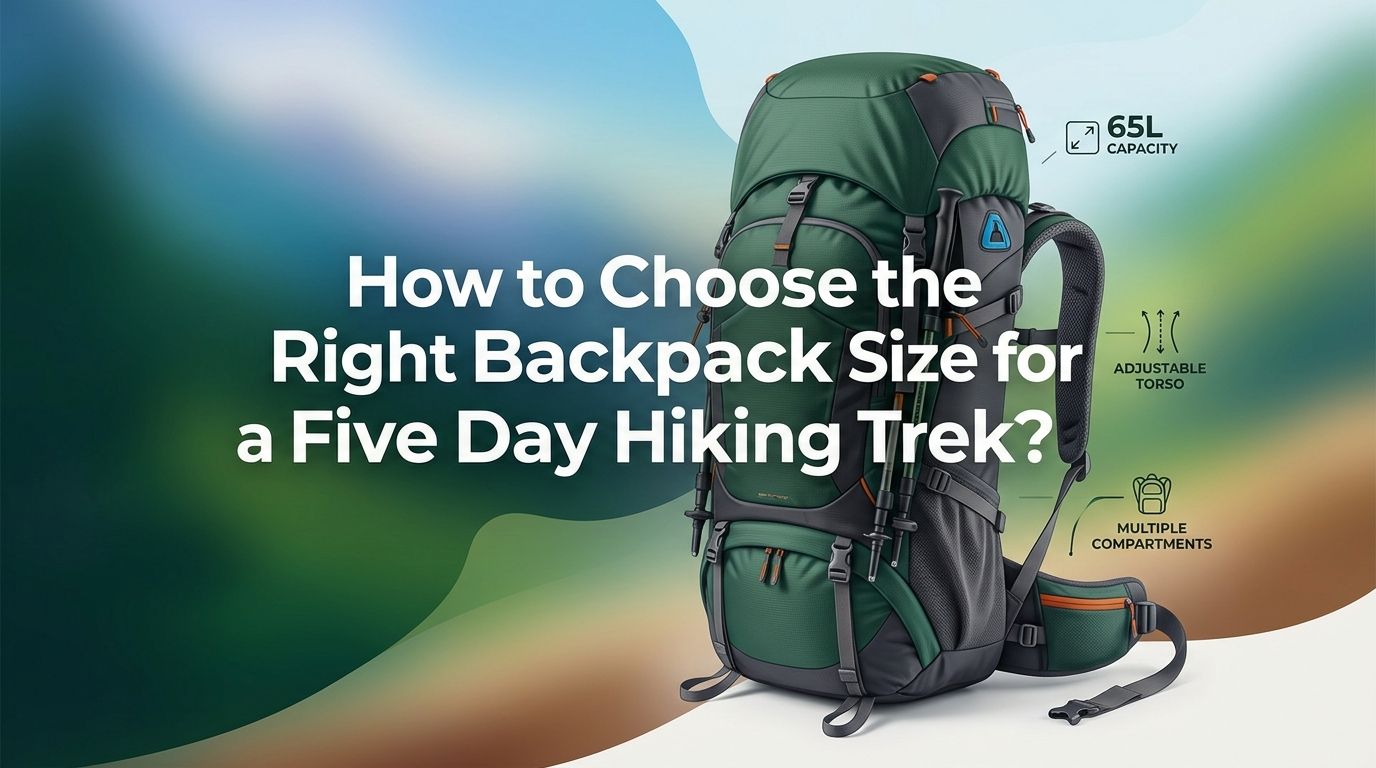
How to Choose the Right Backpack Size for a Five Day Hiking Trek?
You have a five day hiking trip ahead. Your gear list is ready. But there is one big question left: what size backpack do you actually need? Pick one too small, and you will struggle to fit everything.
Pick one too large, and you will carry extra weight that drains your energy on every climb. The truth is, the perfect backpack size depends on far more than just the number of days on the trail. Your body type, gear setup, weather conditions, and packing style all play a role.
This guide will walk you through every step of choosing the right backpack for a five day hike. You will learn how to measure your torso, understand liter capacity, compare pack styles, and avoid the most common sizing mistakes.
In a Nutshell
- A 50 to 70 liter backpack is the ideal range for a five day hiking trek. Most hikers find that 55 to 65 liters gives them enough room for food, shelter, clothing, and safety gear without encouraging overpacking. Ultralight hikers can sometimes manage with 40 to 50 liters if their gear is compact and lightweight.
- Torso length matters more than your height. Two people who are the same height can have very different torso measurements. Always measure from your C7 vertebra (the bony bump at the base of your neck) down to the top of your hip bones. This measurement determines the correct frame size of your pack.
- Total pack weight should stay below 20% of your body weight. For a five day trek, most hikers carry between 25 and 40 pounds total, including food and water. A good base weight (everything minus food and water) sits between 10 and 20 pounds for lightweight setups.
- The type of gear you carry directly affects the backpack volume you need. Bulky sleeping bags, large tents, and extra clothing take up more space and demand a bigger pack. Compact, modern gear allows you to use a smaller backpack and reduce overall strain on your body.
- Always try the pack on with weight inside before buying. A backpack that feels great empty can feel terrible under 30 pounds. Load it up and walk around the store or your home to check for pressure points, hip belt fit, and shoulder strap comfort.
- Weather and terrain change everything. Cold weather treks require bulkier insulation, heavier sleep systems, and more layers. This pushes your pack size closer to 65 or 70 liters. Warm weather trips in mild terrain let you go lighter and smaller.
How to Determine the Right Liter Capacity for Five Days?
The liter capacity of a backpack tells you how much stuff it can hold. For a five day hike, 50 to 70 liters is the standard recommendation from most outdoor experts and organizations like the Washington Trails Association and REI.
A 50 to 60 liter pack works well if you carry lightweight or compact gear. This includes a compressible sleeping bag, a small tent or tarp shelter, and minimal extra clothing. Many experienced hikers prefer this range because it limits the temptation to overpack.
A 60 to 70 liter pack suits hikers who carry standard gear, cook meals with a full stove setup, or hike in cold conditions. The extra space gives room for insulated jackets, warmer sleeping systems, and additional food supplies.
Pros of a smaller pack (50 to 60L): lighter overall weight, encourages efficient packing, easier to manage on narrow trails. Cons: less room for bulky items, requires careful gear selection, may feel tight with five days of food.
Pros of a larger pack (60 to 70L): more flexibility, fits all standard gear easily, comfortable for cold weather trips. Cons: heavier empty weight, temptation to overpack, can feel unwieldy on technical terrain.
How to Measure Your Torso for a Perfect Backpack Fit?
A backpack that matches your torso length will sit properly on your hips and shoulders. This is the single most important fit factor. Your height alone does not determine your torso size. A tall person may have a short torso and long legs, or the reverse.
To measure your torso, you need a flexible tape measure and a friend. Tilt your head forward and find the C7 vertebra, which is the bony bump at the base of your neck. This is the top of your measurement. Next, place your hands on your hips with your thumbs pointing backward along the top of your hip bones (iliac crest). Draw an imaginary line between your thumbs. Measure the distance from C7 down to that line.
Most backpack brands use these standard torso ranges: Small fits 15 to 17 inches, Medium fits 17 to 19 inches, Large fits 19 to 21 inches, and Tall fits 21 inches and above. Write down your measurement and compare it to the size chart of any pack you consider.
How to Check if the Hip Belt Fits Correctly?
The hip belt carries roughly 60 to 70 percent of your pack’s total weight. If it does not fit, your shoulders and back will absorb that load instead. This leads to pain, fatigue, and potential injury on a multi day trek.
A proper hip belt wraps around your iliac crest, which is the top ridge of your hip bones. The padding should sit centered on these bones. If the belt rides too high, it presses into your stomach. If it sits too low, it slides down and loses grip.
Measure your waist at the hip bone level with a tape measure. Most packs include an adjustable belt, but some brands offer different belt sizes separately. Make sure the buckle has at least three to four inches of extra webbing on each side so you can tighten or loosen it throughout the day.
Pros of getting the right hip belt size: weight transfers to your legs, less shoulder fatigue, better balance on uneven ground. Cons of skipping this step: back pain, bruised hips, and a miserable experience over five long days.
How to Decide Between Ultralight and Traditional Backpacks?
This choice affects your comfort both on the trail and at camp. Ultralight backpacks typically weigh between 1 and 2.5 pounds empty. Traditional backpacks weigh between 3.5 and 6 pounds. The weight difference may sound small, but it adds up over five days and dozens of miles.
Ultralight packs use thinner fabrics, minimal frames (or no frame at all), and fewer pockets. They work best for hikers who already own compact, lightweight gear. You need disciplined packing habits to make an ultralight pack work for five days.
Traditional packs feature internal frames, padded hip belts, load lifter straps, and multiple compartments. They distribute heavy loads more effectively and feel more comfortable with 30 or more pounds inside.
Pros of ultralight packs: dramatically lower pack weight, faster hiking pace, less body strain. Cons: less structure and support, thinner materials may tear more easily, less comfortable with heavy loads. Pros of traditional packs: superior weight distribution, more durable materials, comfortable with large loads. Cons: heavier empty weight, larger packed size, can feel excessive for warm weather trips.
How to Calculate Total Pack Weight for Five Days?
Knowing your total weight helps you pick the right pack size and frame type. Start by listing every item you plan to carry. Separate them into base weight items (shelter, sleep system, clothing, cooking gear, tools) and consumable items (food, water, fuel).
A good base weight for a five day trek falls between 10 and 20 pounds for lightweight hikers. Traditional setups run closer to 20 to 30 pounds. Add approximately 1.5 to 2 pounds of food per day. That means five days of food adds 7.5 to 10 pounds. Water weighs about 2.2 pounds per liter, and most hikers carry 1 to 2 liters at a time.
Your total starting weight on day one may reach 25 to 40 pounds depending on your gear choices. Packs in the 50 to 70 liter range handle this weight well. If your total exceeds 35 pounds, choose a pack with a solid internal frame and thick hip belt padding for proper support.
How to Pack a Backpack for Proper Weight Distribution?
Even the best backpack will feel terrible if you load it wrong. Follow the bottom, middle, top method used by experienced backpackers around the world.
Place light, bulky items at the bottom. This includes your sleeping bag, sleeping pad (if compressible), and extra clothes. These items create a soft base and fill space without adding concentrated weight low in the pack.
Pack heavy, dense items in the middle section, close to your back and at shoulder blade height. Food, your stove, water, and cooking supplies belong here. This position keeps the center of gravity near your body and prevents the pack from pulling you backward.
Put frequently used items at the top and in exterior pockets. Rain gear, snacks, a headlamp, sunscreen, and your map should be easy to grab without unpacking everything. Hip belt pockets are perfect for a phone, energy bars, or lip balm.
How to Account for Weather and Terrain in Your Pack Choice?
A five day summer hike through mild terrain requires very different gear than a five day winter trek in the mountains. Weather is one of the biggest factors that can push you from a 50 liter pack to a 65 or 70 liter pack.
Cold weather demands a warmer sleeping bag, which takes up more space. You will also need insulated layers, heavier rain gear, and possibly gaiters or extra socks. All of this adds volume. If you expect temperatures below freezing, plan for the larger end of the 50 to 70 liter range.
Hot weather and dry conditions allow you to cut weight and volume. A lighter sleeping bag or quilt, fewer clothing layers, and a minimal rain setup free up significant space. Terrain matters too. Rocky, steep, or technical trails benefit from a pack that sits close to your body with a snug fit. Choose a narrower profile pack for trails with scrambling or dense vegetation.
How to Test a Backpack Before You Buy It?
Never buy a backpack based on specifications alone. You must test it with weight inside to understand how it feels on your body. Many outdoor stores keep sandbags or weighted items for this exact purpose.
Load the pack with 20 to 30 pounds and wear it for at least 15 minutes. Walk around the store. Bend down, twist your torso, and simulate stepping over obstacles. Pay attention to any pressure points on your shoulders, hips, lower back, or collarbone.
Check these specific things during your test: Does the hip belt sit on your hip bones without sliding? Do the shoulder straps wrap over your shoulders without gaps? Can you reach the load lifter straps and adjust them easily? Is the sternum strap at a comfortable height across your chest?
If you buy online, choose a retailer with a good return policy. Wear the pack at home with weight for an hour or more before hitting the trail. One short test can save you from five days of discomfort.
How to Avoid Common Backpack Sizing Mistakes?
The most frequent mistake hikers make is choosing a pack based on trip length alone without considering their specific gear volume. A hiker with ultralight gear needs far less space than someone carrying traditional equipment, even for the same trip.
Another common error is ignoring torso length. Buying a “Medium” pack because it sounds average leads to poor fit for many people. Always measure. A pack that is one size off can cause serious hip and shoulder pain over multiple days.
Overpacking is the third big mistake. Hikers tend to fill whatever pack they carry. A 70 liter pack encourages you to add “just in case” items that pile up fast. If your gear fits in 55 liters, resist the urge to size up. A half empty large pack also shifts weight poorly because items move around inside.
Finally, some hikers forget to account for food volume on day one. Your pack must hold five days of food at the start. That same pack will have extra room by day three. Plan for the fullest moment, not the average.
How to Choose a Pack if You Are Between Sizes?
Many hikers find their torso measurement falls on the border between two sizes. This is common and does not need to cause stress. Most quality packs offer adjustable torso lengths that span a range of two to four inches.
If you are between sizes, try both and compare the feel under load. In general, sizing down is better than sizing up for torso length. A pack that is slightly short will still let the hip belt sit correctly. A pack that is too long will push the hip belt below your hip bones and transfer weight to your shoulders.
For liter capacity, the opposite advice applies. If you are unsure between 55 and 65 liters, the 65 liter pack gives you a buffer for extra food or unexpected weather gear. You can always compress a larger pack down with its built in straps. You cannot expand a pack that is already full.
How to Adjust Your Pack on the Trail for Maximum Comfort?
Choosing the right pack is only half the battle. You must also adjust it throughout the day as conditions change. Most hikers set their pack once and never touch the straps again. This is a mistake.
Start each morning by tightening the hip belt first. Then adjust the shoulder straps until the pack hugs your back. Pull the load lifter straps (the small straps at the top of the shoulder harness) to angle the pack’s top section closer to your body. This makes a noticeable difference on steep climbs.
On downhill sections, loosen the load lifters slightly to let the pack shift backward. This prevents it from pushing you forward. Adjust the sternum strap height if you feel any chest tightness. After lunch or a long break, re tighten everything because straps stretch and loosen during the day.
Pros of regular adjustment: consistent comfort, fewer pressure points, better balance. Cons of ignoring adjustments: sore shoulders, lower back pain, reduced hiking efficiency.
How to Use Compression Straps and External Attachments Wisely?
Compression straps are the underrated heroes of a well fitted pack. They cinch down the load and keep everything tight against your back. Use them every time you repack, especially as you consume food and your pack gets lighter.
Side compression straps prevent the load from shifting left or right. Top compression straps keep gear from bouncing upward. A snug, compressed pack moves with your body rather than swaying behind you. This reduces fatigue and protects your balance on uneven ground.
External attachment points (gear loops, daisy chains, and bungee cords) let you carry items like trekking poles, a foam sleeping pad, or wet clothing on the outside. Use these sparingly. Too many items hanging outside catch on branches, shift your center of gravity, and create noise. Attach only what does not fit inside, and always secure it tightly so nothing swings freely.
Frequently Asked Questions
How many liters do I need for a five day hike?
Most hikers need between 50 and 70 liters for a five day hike. If you carry ultralight or compact gear, 50 to 55 liters may be enough. Standard gear setups usually require 60 to 65 liters. Cold weather treks may push you to 70 liters.
Can I use a 40 liter backpack for five days?
It is possible if you are an experienced ultralight hiker with very compact gear. However, most people will find 40 liters too tight for five days of food, a shelter, a sleep system, and extra clothing. A 50 liter pack provides much more practical flexibility.
How heavy should my pack be for a five day trek?
A loaded pack should not exceed 20% of your body weight. For most hikers, total weight on day one ranges from 25 to 40 pounds. A lightweight base weight of 10 to 15 pounds combined with 8 to 10 pounds of food and 2 to 4 pounds of water is a comfortable starting point.
Does torso length or height determine backpack size?
Torso length determines the correct frame size. Two people at the same height can have different torso lengths. Measure from the C7 vertebra at the base of your neck to the top of your hip bones for an accurate torso measurement.
Should I buy a backpack with an internal or external frame?
Internal frame packs are the standard choice for most hikers today. They sit closer to your body, offer better balance on uneven trails, and work well for loads between 20 and 50 pounds. External frame packs are rare now but can be useful for very heavy loads on flat, well maintained trails.
Is it better to size up or size down for backpack capacity?
For torso length, size down if you are between sizes. A slightly shorter frame still allows proper hip belt placement. For liter capacity, size up if you are unsure. You can always compress a larger pack, but you cannot expand one that is already full.

Hi, I’m Luna Beck — the founder and voice behind Urban Pack Vault. I’m passionate about helping people find bags that perfectly match their lifestyle. From backpacks to travel luggage, I research, review, and recommend so you never have to second-guess your next purchase.