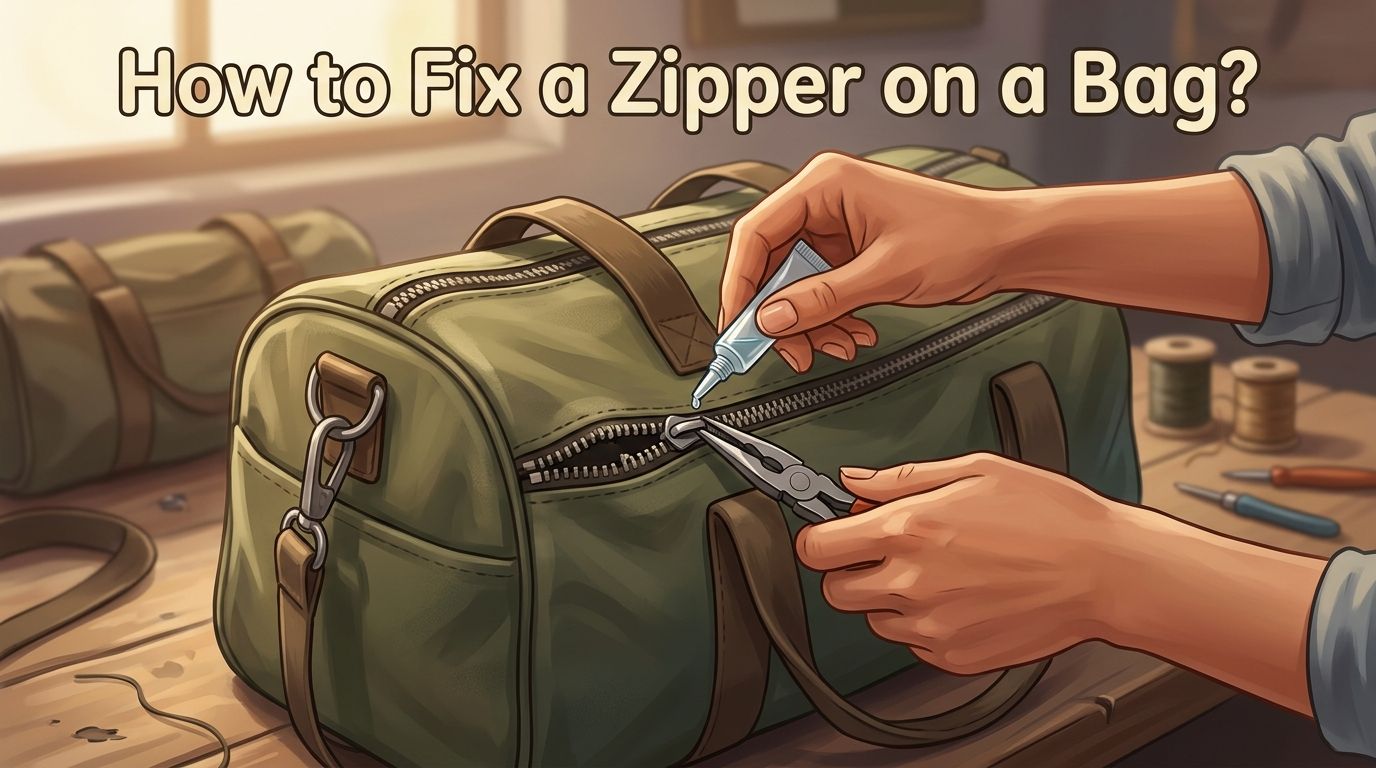
How to Fix a Zipper on a Bag? Step by Step Guide
A broken zipper on your favorite bag can ruin your entire day. You reach for your backpack, purse, or travel bag, and the zipper refuses to budge. Or worse, it splits apart right behind the slider.
The good news? Most zipper problems on bags are easy to fix at home. You do not need a tailor. You do not need expensive tools. A pair of pliers and a few minutes of patience can save your bag from the trash bin.
This guide covers every common bag zipper problem you will face. You will learn how to fix a stuck zipper, a split zipper, misaligned teeth, and a slider that has slipped off track. Each fix comes with clear, simple steps you can follow right now.
In a Nutshell
- A stuck zipper is the most common issue and usually the easiest to fix. Lubricants like graphite from a pencil, candle wax, or a bar of soap can free a stuck zipper in under a minute. You do not need to buy any special products.
- A split zipper that opens behind the slider often means the slider is worn out or too loose. You can fix this by gently squeezing the slider with pliers to tighten it. This restores the gap that holds the teeth together.
- Misaligned or bent zipper teeth cause the zipper to jam or skip. Use flat nose pliers to carefully bend individual teeth back into their correct position. If teeth are missing, you may need a full zipper replacement.
- A zipper slider that has come off one side of the track can be reattached. Remove the top stopper, slide the slider back onto both rows of teeth, and replace the stopper.
- Preventive care extends the life of your bag’s zipper significantly. Regular cleaning, gentle use, and occasional lubrication keep zippers running smooth for years.
- Full zipper replacement is a last resort but still doable at home. A seam ripper, a replacement zipper, and basic sewing skills are all you need to install a brand new zipper on your bag.
How to Identify the Type of Zipper Problem on Your Bag
Before you grab any tools, take a close look at the zipper to identify the exact issue. Different problems need different fixes, and starting with the wrong approach can make things worse.
Check if the slider moves at all. A slider that refuses to budge usually points to a stuck or jammed zipper. Look behind the slider as you zip. If the teeth separate after the slider passes, you have a split zipper caused by a worn slider.
Examine the teeth closely. Bent, crushed, or missing teeth are a different problem entirely. These require tooth repair or a full zipper replacement.
Finally, check if the slider has popped off one or both sides of the track. This is a common issue on heavily used backpacks and duffel bags. Knowing the exact problem saves you time and prevents accidental damage during repair.
How to Fix a Stuck Zipper on a Bag Using Simple Lubricants
A stuck zipper is frustrating, but it is one of the simplest problems to solve. The teeth usually need nothing more than a bit of lubrication to glide again.
Grab a graphite pencil and rub the tip along both sides of the zipper teeth. Graphite acts as a dry lubricant and will not stain fabric. Run the pencil along the area where the zipper is stuck, then gently work the slider back and forth.
Another great option is candle wax or a bar of soap. Rub the wax or soap directly on the teeth, focusing on the stuck area. The waxy film reduces friction and lets the slider move freely.
Pros: These methods are free, fast, and use household items. They leave no lasting residue on most bag materials.
Cons: Graphite can leave gray marks on very light colored fabric. Wax may attract dust over time if applied too heavily. These fixes also only address friction and will not help if the teeth are damaged.
How to Fix a Zipper That Splits Open Behind the Slider
This is one of the most common and annoying zipper failures. The slider moves along the track, but the teeth open right behind it. The cause is almost always a worn or widened slider.
Over time, the gap inside the slider widens from use. The teeth no longer lock together as the slider passes over them. Here is the fix:
Use a pair of needle nose pliers to gently squeeze the top and bottom plates of the slider together. Apply pressure evenly on both sides. Do not squeeze too hard or the slider will clamp down and refuse to move at all.
Test the zipper after each gentle squeeze. The goal is to find the sweet spot where the slider is tight enough to mesh the teeth but loose enough to glide.
Pros: This method takes under two minutes and requires only pliers. It works on metal and plastic sliders.
Cons: Over squeezing can crack a plastic slider or permanently deform a metal one. This fix is also temporary on very old sliders, and you may need to repeat it or replace the slider entirely.
How to Reattach a Zipper Slider That Came Off the Track
A slider that pops off one side of the track makes the zipper completely useless. This happens when the top stop breaks off or wears away. You can fix it without replacing the whole zipper.
Step 1: Open the zipper all the way down to the bottom. If the slider is stuck in the middle, gently wiggle it to the end.
Step 2: Use pliers to carefully remove the metal or plastic stop at the top of the zipper track. Set it aside.
Step 3: Thread both rows of zipper teeth back into the slider. Start from the bottom and feed the separated side back into the slider channel. Make sure both sides sit evenly inside the slider.
Step 4: Slide the pull up slowly to test the connection. If the teeth mesh, crimp a new stop onto the top of the track using pliers. You can buy small replacement stops or use a heavy duty thread sewn tightly as a temporary stop.
Pros: Saves you from replacing the full zipper. Works well on backpacks and tote bags.
Cons: Requires some patience and a steady hand. Plastic teeth can be more difficult to rethread than metal ones.
How to Fix Misaligned or Bent Zipper Teeth on a Bag
Bent or misaligned teeth are a frequent problem on bags that get stuffed to full capacity. A single tooth out of place can stop the entire zipper from closing.
Use flat nose pliers to gently push each bent tooth back into its correct upright position. Work slowly and apply light, even pressure to avoid snapping the tooth off entirely.
For plastic or coil zippers, you can sometimes straighten teeth by running a warm iron over a cloth placed on top of the zipper area. The gentle heat softens plastic just enough to let you reshape the teeth with your fingers.
If several teeth in a row are crushed or missing, the zipper will not function properly even after straightening. In this case, a full zipper replacement is the best option.
Pros: Straightening teeth preserves the original zipper and costs nothing.
Cons: Works only for minor misalignment. Broken or missing teeth cannot be fixed this way, and over manipulation can weaken the surrounding teeth.
How to Fix a Zipper Pull That Broke Off Your Bag
A missing zipper pull does not affect the zipper’s function, but it makes the slider very hard to grab and move. This is the easiest zipper repair you will ever do.
Thread a small key ring, paperclip, or a short loop of cord through the hole on the slider. This gives you a new grip to pull the zipper open and closed.
For a more polished look, use a zipper pull tab replacement. These are small metal or plastic tabs designed to clip or thread into the slider hole. They come in many styles and colors.
If the hole in the slider is broken and will not hold anything, you can wrap a small piece of wire through the slider body and attach your new pull to that. Make sure the wire does not interfere with the slider’s movement along the teeth.
Pros: Takes less than a minute. Replacement pulls are inexpensive and widely available.
Cons: A makeshift pull like a paperclip may snag on fabric inside the bag. It also looks less refined than the original pull.
How to Fix a Zipper on a Bag That Is Stuck on Fabric
Fabric caught in the zipper teeth is a classic problem. Pulling harder usually makes it worse. The key is to work the fabric out gently without forcing the slider.
Hold the bag fabric taut behind the stuck area. Then slowly pull the slider in the opposite direction of the jam. This often frees the trapped cloth.
If the fabric is deeply caught, use a flat head screwdriver or butter knife to carefully push the material away from the teeth. Slide the tool between the teeth and the fabric and create a small gap. Then move the slider away from the jam.
A small dab of lip balm or petroleum jelly on the stuck spot can also help. It lubricates the area and lets the fabric slide out more easily.
Never yank the slider with force. Doing so can tear the fabric and damage the zipper teeth at the same time. Patience is your best friend here.
How to Replace a Zipper Slider on a Bag Without Sewing
Sometimes the slider is too worn, cracked, or damaged to repair. Replacing just the slider is much easier than replacing the entire zipper. You can do it without any sewing.
First, remove the old stop at the top of the zipper using pliers or end cutters. Slide the old slider off the track completely.
Next, place the new slider at the bottom of the zipper teeth. Feed both rows of teeth into the slider channels. Pull the slider up slowly to check that the teeth lock together properly.
Once the slider reaches the top, crimp a new metal stop onto the zipper tape to prevent the slider from flying off again. Squeeze the stop firmly with pliers so it grips the tape.
Make sure you buy the correct slider size. Zippers come in numbered sizes like 3, 5, 8, and 10. Check the back of your old slider for a stamped number to match the replacement.
Pros: A new slider restores full zipper function quickly. No sewing is needed.
Cons: Finding the exact right slider size can be tricky. An incorrect size will not engage the teeth properly.
How to Completely Replace a Broken Zipper on a Bag
If the teeth are damaged beyond repair or the zipper tape itself is torn, a full replacement is the only reliable solution. This takes more effort, but it is still a very doable DIY project.
Use a seam ripper to carefully remove the stitching that holds the old zipper tape to the bag fabric. Work slowly to avoid cutting the bag material.
Pin the new zipper in place along the same stitch line. Make sure the zipper is the correct length. If it is too long, you can shorten it by sewing a new stop and cutting off the excess.
Sew the new zipper onto the bag using a strong thread and a zipper foot on your sewing machine. If you are sewing by hand, use a backstitch for extra strength. Double stitch the ends for durability.
Pros: A new zipper gives you a permanent fix. You can upgrade to a higher quality zipper than the original.
Cons: Requires sewing skills and a seam ripper. Hand sewing takes significant time, especially on thick bag material.
How to Prevent Zipper Problems on Your Bag in the Future
Prevention is always better than repair. A few simple habits will keep your bag’s zipper working smooth for years.
Avoid overstuffing your bag. Excess pressure on the zipper teeth forces them apart and wears out the slider faster. Close the zipper before you lift or carry the bag so the teeth do not bear the weight of the contents.
Clean the zipper teeth regularly with a soft brush. Dust, lint, and debris build up in the teeth and cause the slider to jam. A quick brush every few weeks prevents this.
Apply a light coat of beeswax or candle wax to the teeth once every few months. This keeps them lubricated and reduces friction. Avoid petroleum based products on leather bags as they can stain.
Store your bag in a cool, dry place. Humidity can corrode metal zippers, and heat can warp plastic ones. Good storage protects every component of the bag, including the zipper.
How to Know If You Should Repair or Replace Your Bag’s Zipper
Not every zipper is worth fixing. Understanding when to repair and when to replace saves you time and frustration.
If the slider is loose but the teeth are intact, a quick plier adjustment is all you need. If the zipper sticks but the teeth look straight, lubrication will solve the problem. These are clear repair scenarios.
Replace the zipper if more than two or three teeth are missing or broken. A zipper with gaps in the teeth will never seal properly, no matter how much you adjust the slider.
Also consider the value of the bag. A quality leather bag or an expensive backpack deserves a proper zipper replacement. A cheap tote might not be worth the effort. If the zipper tape itself is fraying or torn, repair will not hold for long and replacement is the smarter choice.
How to Fix a Two Way Zipper on a Bag That Will Not Close
Two way zippers use two sliders on one track. They are common on suitcases and large backpacks. When one slider fails, the entire zipper can gap open in the middle.
The fix follows the same principle as a single slider repair. Identify which slider is causing the gap. Then gently squeeze that slider with pliers to tighten the internal channel.
If both sliders are loose, tighten them one at a time. Test the zipper after adjusting each slider. Make sure both sliders meet cleanly in the center without overlapping or leaving a gap.
If one slider is damaged beyond tightening, replace just that slider. Two way zipper sliders have a specific design, so make sure you purchase the correct type. Standard single direction sliders will not work on a two way zipper track.
Keep both sliders pulled to one end when the bag is fully open. This reduces wear and prevents the sliders from colliding during use.
Frequently Asked Questions
How Do You Fix a Zipper on a Bag Without Any Tools?
You can fix minor zipper problems without tools. For a stuck zipper, rub a graphite pencil or bar of soap on the teeth and gently wiggle the slider. For a slider that is slightly loose, you can press the sides together using the edge of a table or a hard flat surface. These methods work for quick, temporary fixes when pliers are not available.
How Do You Fix a Zipper That Separates on a Bag?
A separating zipper usually means the slider is too loose. Use needle nose pliers to gently squeeze the top and bottom plates of the slider closer together. Test the zipper after each small adjustment. If squeezing does not help, the slider may be cracked and needs a full replacement.
Can You Fix a Bag Zipper Without Replacing It?
Yes, most bag zipper problems can be fixed without a full replacement. Stuck zippers respond to lubrication. Split zippers respond to slider tightening. Misaligned teeth can be straightened with pliers. Only zippers with missing teeth or torn tape require full replacement.
How Much Does It Cost to Fix a Zipper on a Bag Professionally?
Professional zipper repair typically costs between $15 and $65 depending on the bag type and the extent of the damage. A simple slider replacement is on the lower end. A full zipper replacement on a leather bag or suitcase can cost more. DIY repair costs almost nothing if you already own pliers and basic supplies.
How Do You Lubricate a Bag Zipper Safely?
The safest lubricants for bag zippers are graphite pencil, candle wax, beeswax, and bar soap. Rub the chosen lubricant directly on both sides of the zipper teeth. Avoid using cooking oils or WD 40 on fabric bags because they can stain. For leather bags, use only dry lubricants like graphite or wax to protect the material.

Hi, I’m Luna Beck — the founder and voice behind Urban Pack Vault. I’m passionate about helping people find bags that perfectly match their lifestyle. From backpacks to travel luggage, I research, review, and recommend so you never have to second-guess your next purchase.